segunda-feira, 7 de maio de 2018

DIE WALKÜRE, Viena Staatsoper, Abril / April 2018


 (review in English below)

A encenação de Sven-Eric Bechtolf da ópera A Valquíria de Wagner está já em cena na Ópera Estatal de Viena há muitos anos. É uma abordagem clássica e eficaz em que cada acto se passa num único cenário. Numa visita ao teatro, assistimos à montagem do cenário (os cavalos ainda estavam dentro dos caixotes de madeira):


 O primeiro acto decorre na casa de Sieglinde e Hunding, tem uma mesa central e a meio o tronco da árvore onde está espetada a espada Notung.


O segundo passa-se na floresta, representada por muitos troncos de árvores espalhados por todo o palco. No terceiro há 9 cavalos em tamanho real e em posições diferentes e tudo se passa ali. Quando o fogo sagrado é ateado, no final, é projectado em imagens nas paredes laterais e posterior do cenário.


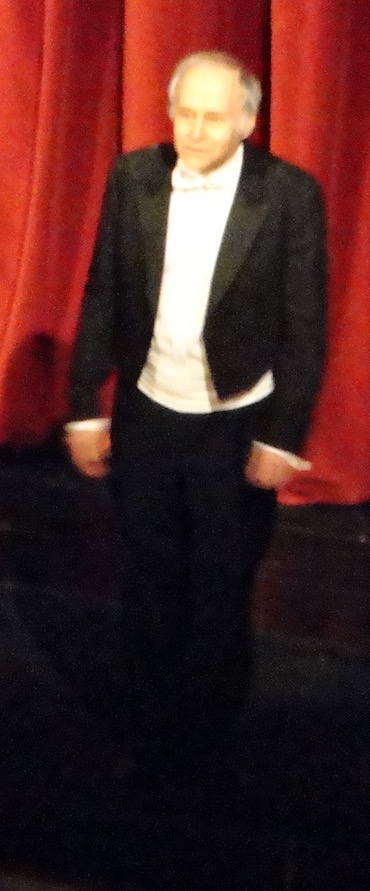
O maestro Adam Fischer dirigiu a Orquestra da Wiener Staatsoper que teve um desempenho excelente, mas aqui e acolá, no início, uma pequena falha nos metais. No 3º acto foi fantástica.


O Siegmund do tenor Christopher Ventris foi muito bom mas, no final do primeiro acto, perdeu um pouco o ímpeto, onde ele seria mais necessário. O cantor tem um timbre vocal muito bonito e a voz é cheia, oferecendo uma interpretação muito credível.


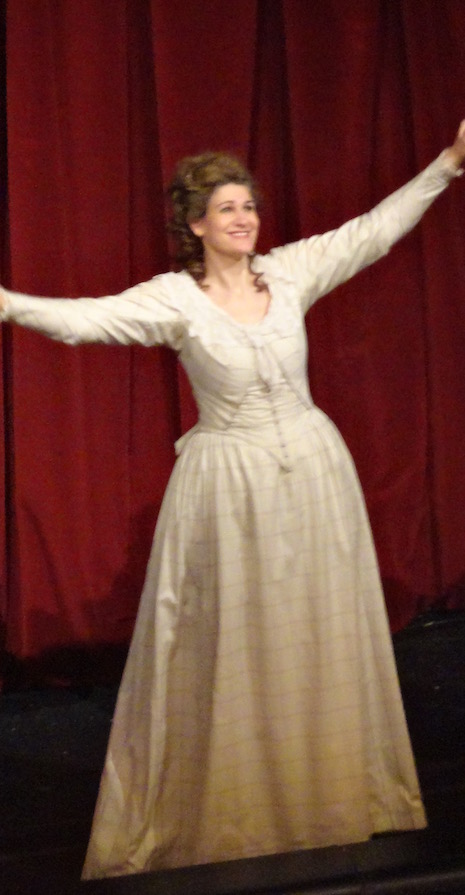
A soprano Simone Schneider foi uma Sieglinde fantástica. A voz é poderosíssima, muito agradável e a interpretação foi sempre de topo, com um final do primeiro acto marcante, foi pena que o Ventris não a tenha acompanhado nesta prestação.


O Hunding do baixo Jongmin Park impôs-se com uma voz grave cavernosa que quase fazia estremecer o chão do teatro.


A soprano Iréne Theorin foi, mais uma vez, irrepreensível no desempenho da Brünhilde. A voz é gigante, sempre afinada e ouve-se perfeitamente sobre uma orquestra wagneriana. Sempre que a tenho ouvido, canta ao mais alto nível.


O Wotan do baixo-barítono Tomasz Konieczny foi a grande surpresa para mim, pela qualidade interpretativa, cénica e vocal. Fez um Wotan muito convincente, perto da perfeição e, embora com um timbre vocal particular, ofereceu-nos uma interpretação superior sem nunca quebrar no mínimo pormenor. 


A Fricka da mezzo Michaela Schuster esteve ao nível do que esperava dela. É uma cantora que já ouvi várias vezes, nunca desilude e, mais uma vez, assim aconteceu. A voz é espessa, encorpada e sempre afinada em todos os registos.


As oito restantes valquírias tiveram desempenhos distintos, mas globalmente estiveram bem, embora não favorecidas pela encenação. No 3º acto correm, ensanguentadas, atrás dos heróis, que lhes fogem, para os levarem para o Walhalla, na parte que menos resulta da encenação. Elas foram: Helmwige (Donna Ellen), Gerhilde (Caroline Wenborne), Ortlinde (Anna Gabler), Waltraute (Stephanie Houtzeel), Siegrune (Ulrike Helzel), Grimgende (Zsuzsanna Szabó), Schweetleite (Bongiwe Nakani) e Rossweisse (Miriam Albano).


Um espectáculo fantástico!


*****


DIE WALKÜRE, Vienna Staatsoper, April 2018

The staging Wagner’s opera The Valkyrie by Sven-Eric Bechtolf has been on stage at the Vienna State Opera for many years. It is a classic and effective approach in which each act takes place in a single setting: The first act takes place in the house of Sieglinde and Hunding, it has a central table and in the middle the trunk of the tree where the sword Notung is stuck.

The second act occurs in the forest, represented by many tree trunks scattered all over the stage. In the third act there are 9 horses in real size and in different positions and everything happens there. When the sacred fire is fired, in the end, it is projected into images on the side and rear walls of the scenery.

Maestro Adam Fischer directed the Orchestra of the Wiener Staatsoper that had an excellent performance, but here and there, at the beginning, a small fault in the metals. But the 3rd act was fabulous.

Tenor Christopher Ventris’s Siegmund was very good but at the end of the first act, he lost some of the momentum, where it would be most needed. The singer has a very beautiful vocal tone and the voice is full, offering a very credible interpretation.

Soprano Simone Schneider was a fantastic Sieglinde. The voice is very powerful, very pleasant and the interpretation was always top, with a striking end of the first act, it was a pity that Ventris did not accompany her in this exalted moment.

Hunding of bass Jongmin Park imposed with a low cavernous voice that almost made the floor of the theater shake.

Soprano Iréne Theorin was once again blameless in Brünhilde's performance. The voice is giant, always tuned and it is perfectly heard over a Wagnerian orchestra. Whenever I have heard her, she always sings at the highest level.

Wotan from bass-baritone Tomasz Konieczny was the big surprise for me, for the interpretive, scenic and vocal quality. He made a very convincing Wotan, close to perfection, and though with a particular vocal timbre, he offered us a superior interpretation without ever breaking in the least detail.

Mezzo Michaela Schuster’s Fricka was at the level of what I expected from her. She's a singer I've heard several times, she never disappoints and, once again, it happened. The voice is thick, full-bodied and always in tune at every register.

The other eight Valkyries had different performances, but globally they were well, although not favored by the staging. In the third act they run, bloodied, behind the heroes, who flee to them, to take them to the Walhalla, in the part that is less convincing of the staging. They were: Helmwige (Donna Ellen), Gerhilde (Caroline Wenborne), Ortlinde (Anna Gabler), Waltraute (Stephanie Houtzeel), Siegrune (Ulrike Helzel), Grimgende (Zsuzsanna Szabó), Schweigleite (Bongiwe Nakani) and Rossweisse (Miriam Albano).

*****

terça-feira, 1 de maio de 2018

ANDREA CHÉNIER, Viena Staatsoper, Abril / April 2018


(review in English below)

A opera Andrea Chénier de Umberto Giordano esteve em cena na Ópera Estatal de Viena, tendo como atractivo principal a participação de Jonas Kaufmann como protagonista. Os bilhetes esgotaram num ápice quando a bilheteira abriu online e, no mercado negro, atingiam preços proibitivos.

A Ópera de Viena informa (verbalmente e em cartazes) que não se responsabiliza pela venda dos bilhetes que é feita por dezenas de indivíduos de países de leste, mascarados de Mozart, que o fazem á volta de todo o teatro. Se paramos para olhar para um cartaz, esteja ele onde estiver à volta do teatro, somos imediatamente abordados. Não percebo como isto é permitido, mas é sempre assim.


Depois desta primeira nota negativa, uma muito positiva. Numa das laterias do teatro está instalado um écran gigante que transmite em directo muitas das óperas em cena (foi o caso desta) permitindo a quem não conseguiu comprar bilhetes poder ter uma ideia do que se passa na sala.


A Anja Harteros, durante os aplausos, confrontada com a filmagem mesmo atrás da cortina, puxou operador de câmera para o palco, num momento hilariante.


A velha encenação de Otto Schenk é muito clássica, kitsch, desinteressante. A Orquestra da òpera de Viena foi bem dirigida pelo maestro Marco Armiliato  que, contudo, não se preocupou excessivamente com os cantores.


Quanto aos solistas, alguma heterogeneidade. O barítono Roberto Frontali fez um Carlo Gérard de grande qualidade. A interpretação cénica foi convincente e a voz é cheia, afinada e sempre bem projectada.


O Roucher do barítono Orhan Yildiz cumpriu sem deslumbrar.

Das interpretações femininas a Bresi da soprano Ilseyar Khayrullova de voz muito agradável e suave foi interessante e correcta, a Condessa de Coigny da mezzo Donna Ellen foi algo agreste e a Madelon da mezzo Zoryana Kushpler foi óptima, com uma voz grave imponente e excelente presença cénica.

Verdadeiramente sensacional e, de longe, a melhor da noite foi a soprano Anja Harteros como Maddalena di Coigny. É uma cantora de que muito gosto e hoje foi, talvez, uma das melhores interpretações que lhe ouvi. A voz é de uma beleza única e no registo mais agudo é impressionante na qualidade, suavidade e segurança. Na belíssima ária La mamma morta quase chegou ao nível divinal da Callas, a minha referencia neste trecho. Absolutamente fantástica.


Deixo para o fim o tenor Jonas Kaufmann que, como sabem os leitores regulares deste blogue, é um dos meus cantores favoritos e era a grande estrela da noite. Foi uma decepção. Tem uma voz de timbre único, grave mas com agudos fabulosos e esta característica é intrínseca e manteve-se. Mas fez um Andrea Chénier sem alma, com pouca entrega na interpretação e vocalmente deixou-se afogar pela orquestra com frequência. Foi uma pena, mas admito que também os cantores tenham dias menos bons e este foi, seguramente, um deles. Ainda assim tinha umas dezenas de pessoas à sua espera na stage door, muitas delas com flores e outros presentes mas, para decepção de todos e após mais de 1,5 horas de espera, chegou a informação de que foi o único que saiu por outra porta. Ele lá saberá porquê...


Um espectáculo aquém das minhas elevadas expectativas.


****


ANDREA CHÉNIER, Vienna Staatsoper, April 2018

Umberto Giordano’s opera Andrea Chénier was on stage at the Vienna State Opera, with the main attraction being the participation of Jonas Kaufmann as the protagonist. Tickets sold out at a glance when the box office opened online and on the black market hit prohibitive prices.

The Vienna State Opera reports (verbally and on posters) that it is not responsible for the sale of the tickets which is made by dozens of Eastern European ndividuals masked as Mozart from around the theater. If we stop to look at a poster, wherever it is around the theater, we are immediately approached. I do not understand how this is allowed, but it is always like this.

After this first negative note, a very positive one. On one side of the theater is installed a giant screen that transmits live many of the operas on the scene (it was the case of this one) allowing those who could not buy tickets to get an idea of ​​what is going on in the room.

Anja Harteros, during the applause, confronted with filming right behind the curtain, pulled the camera operator to the stage in a hilarious moment.

Otto Schenk's old staging is classic, kitsch, uninteresting. The Orchestra of the Vienna State Opera was well directed by maestro Marco Armiliato, who, however, did not care too much about the singers.

As for the soloists, some heterogeneity. Baritone Roberto Frontali was a Carlo Gérard of great quality. The stage interpretation was convincing and the voice is full, tuned and always well-projected.

Baritone Orhan Yildiz did not dazzle as Roucher.

From the female interpretations, Bresi of soprano Ilseyar Khayrullova sang with a very pleasant, correct and smooth voice, the Countess of Coigny by mezzo Donna Ellen was somewhat harsh and Madelon from mezzo Zoryana Kushpler was excellent, with an imposing low registation and excellent stage presence.

Truly sensational and by far the best of the evening was soprano Anja Harteros as Maddalena di Coigny. She is a singer I really like and today was perhaps one of the best interpretations I heard. The voice is of a unique beauty and in the highest register she is impressive in quality, softness. In the beautiful aria La mamma morta she almost reached the divine level of Callas, my reference in this area Absolutely fantastic.

I leave to the end tenor Jonas Kaufmann who, as the regular readers of this blog know, is one of my favorite singers and was the great star of the night. He was disappointing. He has a unique voice, with a strong low register but with fabulous top notes and this characteristic is intrinsic and maintained. But he interpreted a soulless and underpower Andrea Chénier vocally drowned by the orchestra often. It was a pity, but I admit that the singers also have less good days and this was, without a doubt, one of them. Yet there were dozens of people waiting for him on the stage door, many of them with flowers and other gifts, but to everyone's disappointment and after more than 1.5 hours of waiting, the information came that he was the only one who left by another door. He will know why...

****

quarta-feira, 25 de abril de 2018

FALSTAFF de Giuseppe Verdi no FESTTAGE da Staatsoper Unter den Linden, Berlim, 1.04.2018


(review in English below)

A última ópera de Verdi foi composta em grande secretismo: Verdi tinha receio de que as agruras da sua idade avançada não lhe permitissem terminar o projecto. Foi congeminada juntamente com Arrigo Boito, o seu libretista de Otello, homem que desafiara Verdi para um último esforço e que tão bem lhe escreveu um texto em torno da personagem shakespeariana Sir John Falstaff, presente nas As Alegres Comadres de Windsor e nas partes I e II de Henrique IV.

A história gira em torno do enorme Falstaff, aristocrata decaído, muito obeso e que vivia dos prazeres da comida e das mulheres. Ele tenta seduzir as damas finas de Windsor e fia-se no seu charme e sebenta posição. Estas, muito alegres e sabidas, aproveitam para o ridicularizar.

A ópera, nem sempre devidamente apreciada por ser um Verdi diferente daquele a que habituara o seu público, é de uma enorme genialidade musical, impactando pelo seu todo. Lá está: o todo não é igual à soma das partes.

Foto: Matthias Baus

A encenação do realizador de cinema italiano Mario Martone é muito interessante. Passa-se num bairro degradado cheio de graffitis onde Falstaff está sentado nuns bancos num pátio à entrada de um estabelecimento de divertimento noturno — «Panorama Bar» — onde umas profissionais do sexo se exibem à janela. Ao fundo, um portão ao meio do pátio parece revelar uma rua. É neste ambiente escuro e sombrio, que decorre toda a primeira cena. Falstaff está vestido de calças de ganga e t-shirt preta e, a bem da verdade, falta-lhe a gordura imensa. Pistola e Bardolfo vestem-se de forma andrajosa e têm bastante mau aspecto. Aqui há, ao fundo, uns figurantes que com latas de tinta de spray desenham as frases «Welcome refugees» e «No War» em panos brancos colocados no chão: duvido que da plateia fossem legíveis e nunca chegam a ser exibidos, pelo que não se compreende o propósito.

Foto: Matthias Baus

A segunda cena passa-se num elegante jardim com piscina e casa de apoio. Aí, as alegres comadres, vestidas de modo mais requintado, ou apenas de fato de banho ou biquíni e enroladas num robe, congeminam toda a trama contra Falstaff. Fenton namora Nannetta que se exibe em biquíni e o provoca, atirando-o para a piscina.

Na terceira cena, voltamos ao primeiro cenário. Mrs. Quickly aparece de vermelho e de moto retro. Ao despedir-se, sai de moto, ouvindo-se o roncar do motor da moto que é verdadeira.

A quarta cena, retoma o segundo cenário. E os pormenores estão lá todos. Falstaff, vestido de camisa rosa brilhante e de motivos florais e umas botas de cowboy, tenta seduzir Alice, chegando a mostrar-lhe uma tatuagem de muito mau gosto estampado no peito largo que descobrea. Acaba por ser atirado para trás do muro do jardim, ouvindo-se um enorme splash.

Foto: Matthias Baus

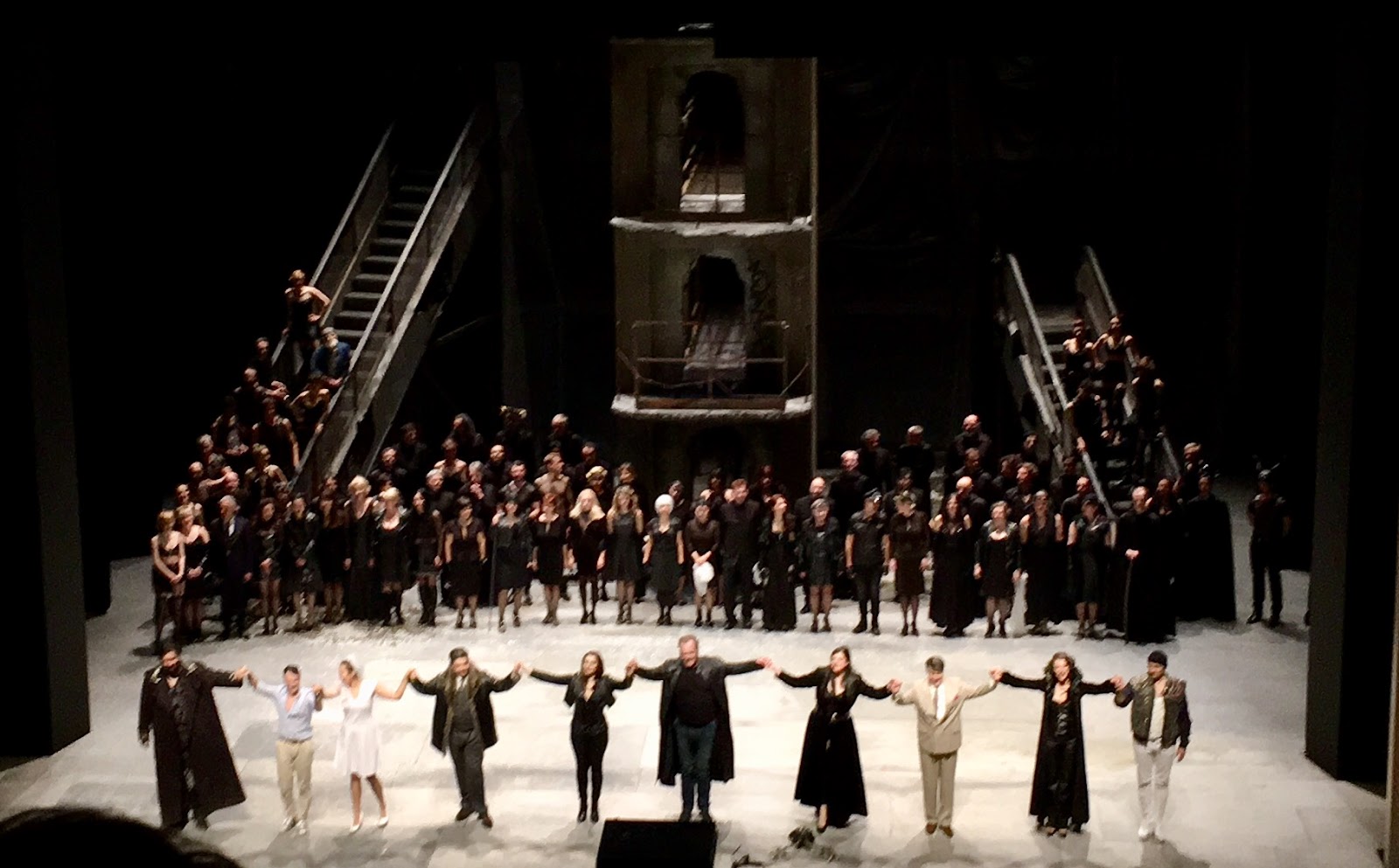
A quinta cena decorre no primeiro cenário, com um Falstaff muito andrajoso e a pedir vinho a um pouco amigável dono do bar. Logo de seguida, passa-se para a última cena: parece um edifício abandonado com escadas nas laterais e um torre no centro com varandas. Muitos figurantes surgem, naquele que é um pormenor distrator e pouco contextualizável no todo da encenação, vestidos de negro e com máscara, simulando atos sexuais, enquanto as personagens expõem ao ridículo Falstaff. 

A encenação modernizada foi um dos pontos fortes da récita: é muito dinâmica, facilita a comédia, acompanha muito bem a música e a acção, e é ainda visualmente interessante.


A Staatskapellle Berlin foi muito bem dirigida por Daniel Barenboim.

Os solistas apresentaram uma qualidade global muito homogénea.


Michael Volle foi um Sir John Falstaff imponente na desenvoltura cénica e pela enorme voz que tem. Faltou-lhe a interpretação burlesca que a personagem necessita para ser verdadeiramente cómica, ou o fraseado típico italiano que teriam dado outro colorido a uma, ainda assim, excelente prestação. Destaco a interpretação de Mondo ladro, mondo rubaldo do terceiro acto.

Ford foi o barítono Alfredo Daza que, tendo uma voz bonita e sempre audível, compôs uma personagem credível e cantou bem o seu È sogno o realtà?

Fenton foi o tenor Francesco Demuro que tem uma voz bonita, mas a que me pareceu faltarem os agudos fáceis que se pedem no seu curto papel. Cenicamente foi muito convincente.

O Dr Cajus de Jurgen Sacher, Bardolfo de Stephan Rugamer e Pistola de Jan Martiník estiveram em bom plano, destacando a prestação vocal de Martiník. 

Alice Ford foi Barbara Fritolli que compôs uma personagem credível e cenicamente irrepreensível. Vocalmente apresentou-se em bom nível, mas já não tem os agudos cristalinos de outros tempos.

Nadine Sierra como Nannetta foi a melhor das senhoras. A voz é muito bonita e tem os agudos cristalinos que tornam os seus Anzi rinnova come fa la luna perfeitos e elegantes. A sua jovialidade em palco e bonita figura ajudaram a torná-la uma Nannetta perfeita.

Daniella Barcellona, com a sua voz cheia e escura, foi uma excelente Mrs. Quickly, tendo-lhe faltado alguma comicidade para catapultar a sua interpretação para a excelência.

A Meg Page de Katharina Kammerloher esteve em bom nível no seu curto papel.


Assim, globalmente assistimos a uma excelente récita, com destaque para uma encenação de muita qualidade e com nota muito positiva para um conjunto de cantores de qualidade elevada a quem ficou apenas a faltar um pouco mais de capacidade para a comédia.

—————-
(Review in English)

Verdi's last opera was composed in great secrecy: Verdi was afraid that the hardships of his old age would not allow him to finish the project. He worked with Arrigo Boito, his librettist of Otello, a man who had challenged Verdi for one last effort, and who so well wrote a text to him about the Shakespearean character Sir John Falstaff, present in the Merry Wives of Windsor and parts I and II of Henry IV.

The story revolves around the huge Falstaff, a fallen aristocrat, very obese and living off the pleasures of food and women. He tries to seduce high-rank ladies of Windsor being confident that with his beauty and social position will grant him success. The joyful and wise ladies will expose him to ridiculousness.

The opera, not always properly appreciated for being not a typical Verdi opera, is of a great musical genius, impacting for his beauty and when heard as a whole. There it is: the whole is not equal to the sum of the parts.

The staging of the Italian film director Mario Martone is very interesting. The action is set in a dilapidated neighbourhood full of graffitied walls where Falstaff sits on benches in a courtyard at the entrance to a nightlife establishment - Panorama Bar - where sex workers hang out at the window. In the background, a gate in the middle of the courtyard seems to reveal a street. It is in this dark and gloomy environment that the entire first scene takes place. Falstaff is dressed in jeans and black t-shirt and, to be honest, he lacks immense fat. Pistol and Bardolfo dress in a ragged form and look quite bad guys. Here, in the background, there are figurines with cans of spray paint drawing the phrases "Welcome refugees" and "No War" in white cloths placed on the floor: I doubt that the audience would be able to read the statements or even see them, so that I think that it is not understandable.

The second scene takes place in an elegant garden with a swimming pool and house. There, the merry wives, dressed in a fashionable way, or just in bikini and wrapped in a robe, plot against Falstaff. Fenton dates Nannetta who shows up in a bikini and provokes him by throwing him into the pool.

In the third scene, we return to the first scenario. Mrs. Quickly appears in red and retro motorcycle. When they say goodbye, she leaves in her motorcycle, and we listened to the snoring of the real motorcycle she is in.

The fourth scene, resumes the second scenario. And the details are all there. Falstaff, dressed in bright pink shirt with floral motifs and cowboy boots, tries to seduce Alice, even showing him a bad taste tattoo stamped on the wide chest he reveals. At the end, he is thrown behind the garden wall as we listen to a huge splash.

The fifth scene takes place on the first scenario, with a very tattered Falstaff who is asking for wine to a somewhat not so friendly bar owner. Soon afterwards, we are transported to the last scene: it looks like an abandoned building with stairs on the sides and a tower with balconies in the centre. Many characters appear, in a distracting detail of the staging, dressed in black and masked, simulating sexual acts, while the characters expose Falstaff to ridiculous.

The modernized staging was one of the highlights of the recital: it is very dynamic, easily  following the music and the action. And it is visually interesting.

The Staatskapellle Berlin was very well directed by Daniel Barenboim.

The soloists singers presented a very homogeneous overall quality.

Michael Volle was an imposing Sir John Falstaff, either scenically an vocally. He failed only on the  burlesque aspect of his interpretation to be truly comical, and the typical Italian phrasing. If he managed it better he would have given us a more rich and coloured performance. I emphasize the interpretation of Mondo ladro, mondo rubaldo of the third act.

Ford was the baritone Alfredo Daza who, having a beautiful and always audible voice, composed a credible character and sang well his È sogno o realtà?

Fenton was the tenor Francesco Demuro who has a beautiful voice, but which seemed to lack the easy treble that are asked in his short paper. Cenically he was very convincing.

Jurgen Sacher’s Dr Cajus, Stephan Rugamer’s Bardolfo and Jan Martiník’s Pistol were all in good plan, highlighting the vocal performance of Martiník.

Alice Ford was Barbara Fritolli who composed a credible and radically irreproachable character. Vocally she has presented herself in good level, but she no longer has the crystalline highs of other times.

Nadine Sierra as Nannetta was the best of the ladies. Her voice is very beautiful and has the crystalline trebles that make hers Anzi rinnova come fa la luna perfect and elegant. Her playfulness on stage and beautiful figure helped make her a perfect Nannetta.

Daniella Barcellona, ​​in her full, dark voice, was an excellent Mrs. Quickly, having lacked some comedy abilities to catapult her interpretation into excellence.

Despite her short role, Katharina Kammerloher performed well as Meg Page.


Thus, globally we have seen an excellent performance, with emphasis on a very high quality Martone’s staging and with a very positive note for a group of singers of high quality who just lacked a little more capacity to do comedy.