Mostrar mensagens com a etiqueta Teatro Regio di Parma. Mostrar todas as mensagens

segunda-feira, 24 de outubro de 2022

MESSA DA REQUIEM, Verdi, Teatro Regio di Parma, Setembro / September 2022

(review in English below)

O Requiem de Verdi foi colossal!!! Isto é que é Verdi e isto é que faz qualquer um apaixonar-se por esta obra! 

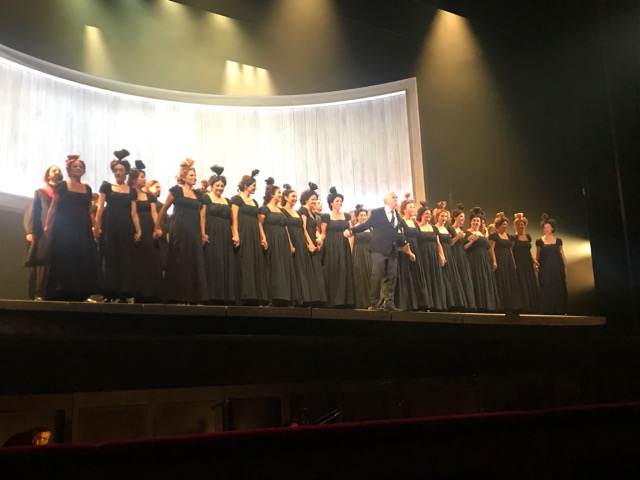
O Mariotti é um dos meus maestros verdianos favoritos e hoje, mais uma vez, pude constatar que o seu conhecimento, a sua sensibilidade, a sua entrega a Verdi é ímpar e o resultado, quando se tem uma orquestra fenomenal e um coro sólido e harmonioso, só pode ser memorável. O detalhe às indicações vocais aos cantores, a dinâmica imprimida, tudo fantástico.


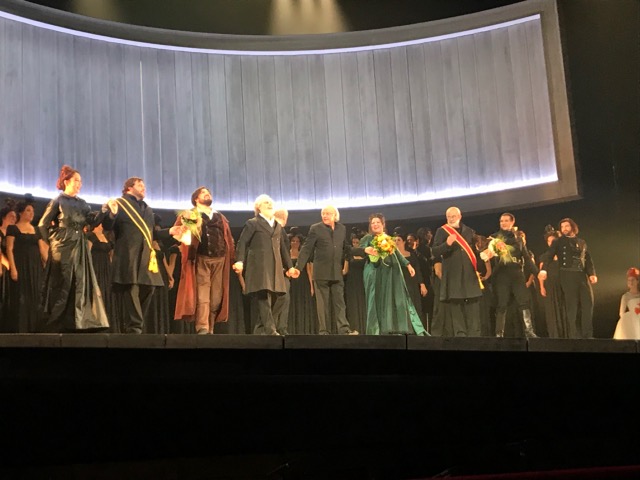
Dos solistas só não conhecia a contralto. A harmonia entre os 4 timbres individuais foi perfeita, sem sobreposições de qualidade numa homogeneidade perfeita. Riccardo Zanellato foi um autêntico sólido rochedo dramático. O Stefan Pop sublime nos seus pianos no Ingemisco e no Hostias, seguro, estabilidade vocal e emoção sincera a 100%. 


A contralto Varduhi Abrahamyan tem uma voz perfeita, timbre muito bonito e expressividade fantástica. A Marina Rebeka, já amplamente nossa conhecida, é um colosso. Voz inconfundível, daquelas que sabemos de quem é a voz só de a ouvir, com agudos seguros, transições sem falhas e suaves para os pianos e uma expressividade que o mundo da ópera lhe trouxe e que ela vai “devolvendo” sempre que canta. 


O Lacrymosa foi celestial, com uma harmonia entre todos tão… tão bonita. O Agnus Dei, uma perfeição das vozes femininas e as entradas do coro sem falhas, em uníssono, numa intensidade sonora tão equilibrada, tão celestial.

Que grande noite! 


(Texto de Wagner_fanatic)


REQUIEM, Verdi, Teatro Regio di Parma, September 2022

Verdi's Requiem was colossal!!! This is what Verdi is and this is what makes anyone fall in love with this work!

Mariotti is one of my favorite Verdian conductors and today, once again, I could see that his knowledge, his sensitivity, his dedication to Verdi is unique and the result, when you have a phenomenal orchestra and a solid and harmonious choir can only be memorable. The detail to the vocal prompts to the singers, the imprinted dynamics, all fantastic.

Of the soloists, I just didn't know the alto. The harmony between the 4 individual timbres was perfect, without quality overlaps in perfect homogeneity. Riccardo Zanellato was a solid dramatic rock. Stefan Pop sublime in his pianos at Ingemisco and Hostias, confidence, vocal stability and 100% sincere emotion.

Contralto Varduhi Abrahamyan has a perfect voice, very beautiful timbre and fantastic expressiveness. Marina Rebeka, already widely known to us, is a colossus. Unmistakable voice, of those we know whose voice it is just by listening to it, with safe highs, flawless and smooth transitions for pianos and an expressiveness that the world of opera brought her and that she “gives back” whenever she sings.

Lacrymosa was heavenly, with a harmony between everyone so… so beautiful. The Agnus Dei, a perfection of the female voices and the flawless choir entries, in unison, in a sound intensity so balanced, so heavenly.

What a great night!

(Text by Wagner_fanatic)

sexta-feira, 14 de outubro de 2022

LA FORZA DEL DESTINO, Teatro Regio di Parma, October / Outubro 2022

(review in English below)

A minha participação no Festival acabou da melhor maneira. Esta Forza del Destino foi incrível em todos os aspectos. A encenação é do mais tradicional que possa imaginar e, na sua simplicidade, foi grandiosa porque com cantores-atores deste calibre, mesmo que não existisse, em nada reduzia a experiência. Se a pudesse resumir, fá-lo-ia como uma sequência de recortes dos locais onde cada cena, cada acto, se desenrola, sobre um fundo temporal (crepúsculo, noite, luar…). O que mais gostei foi a cena do Mosteiro onde, com a simplicidade que referi, sobre um fundo de noite com lua cheia, o mosteiro é como que em formato um recorte de cartolina, inclinado para a direita, com um adro com uma cruz que se inclina para o outro lado - penso que a ideia da inclinação do mosteiro para o direita e da cruz para a esquerda, nos traz a ideia, mesmo antes da cena acabar, que Leonora vai ali conseguir apoio/proteção porque parece que se abraçam.

A direção de Roberto Abbado foi intensa e precisa, com a orquestra a responder muito bem, muito coesa e oferecendo toda a beleza de linhas melódicas líricas que esta ópera tem. O Coro, não do Regio de Parma mas o do Comunale de Bologna (algo que levou a grandes críticas na estreia…) esteve impecável, quer nas passagens mais dramáticas quer nas mais cómico-populares.

Com um elenco de grandes nomes verdianos, a expectativa de uma grande noite era imensa. E assim foi. Gregory Kunde, nos seus 68 anos, foi impressionante. Todos, mas totalmente todos, os seus passos, expressões, movimentos foram perfeitamente tradutores do correcto sentimento da personagem em cada momento. Realmente viveu o papel com uma mestria rara de se ver em palco. A voz continua em grande forma e, mais do que isso, consegue uma variedade de “cores” que não são habituais de se ouvir. A célebre ária de Don Alvaro no início do 3º acto foi perfeita, com os agudos fortes, estáveis e com timbre polido, entrecruzados com um registo médio quente, por vezes algo metalizado, e onde a dinâmica eximiamente ajustada ao sentimento, fazia parecer que ouvíamos vários tipos de vozes a sair do mesmo cantor ao mesmo tempo. 

Os duetos com o Don Carlo de Amartuvshin Enkhbat foram simplesmente geniais a todos os níveis. A voz do mongol é impressionante e ele usa-a bem do ponto de vista dramático, quase sempre expressando correctamente o sentimento do texto. Contudo, em grande parte das vezes não se tem uma clara noção da expressão facial, o que é pena porque isso elevaria ainda mais as qualidades deste barítono. 

Liudmyla Monastyrska esteve muito bem, embora com um vibrato que, se fosse menos marcado, tornaria o canto mais bonito. 

Roberto de Candia fez um Melitone equilibrado, sem exageros desnecessários no sentido cómico a que a personagem se predispõe. 

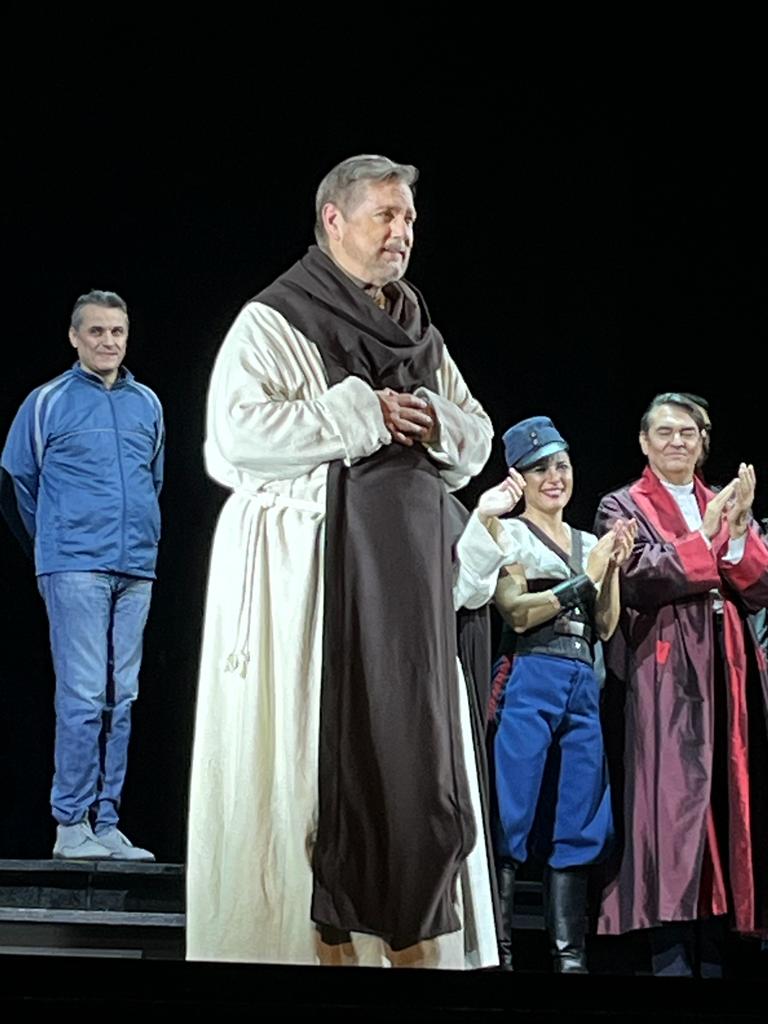
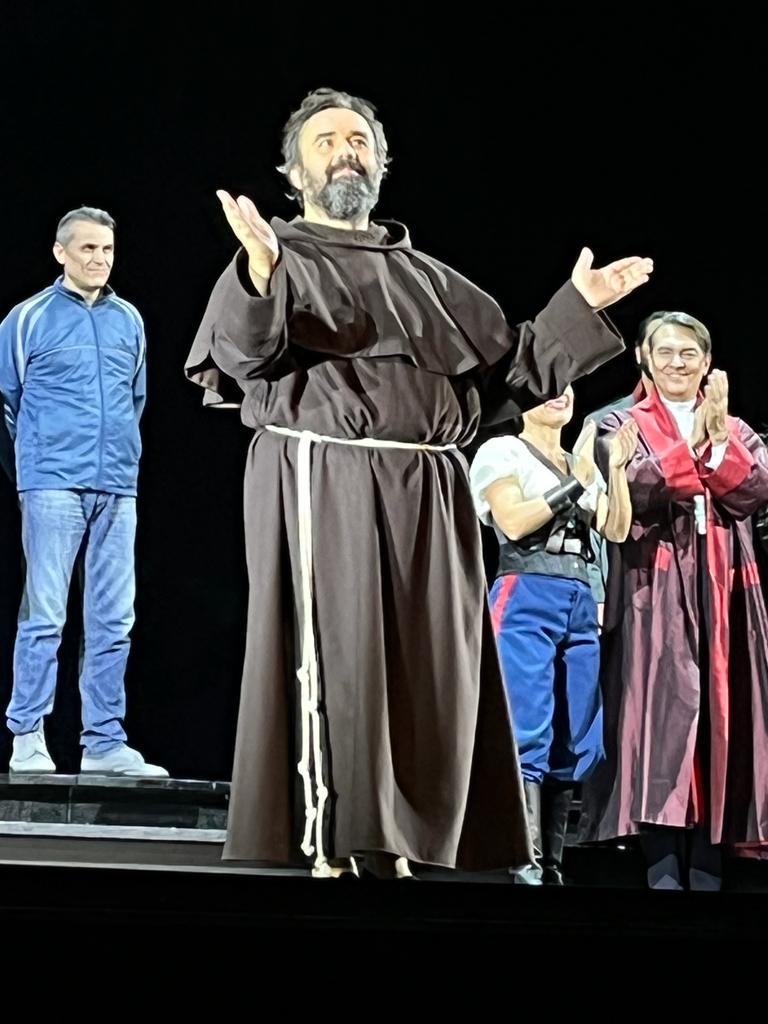
Agora as duas grandiosas surpresas para mim foram a Preziosilla de Annalisa Stroppa 

e o Padre guardiano de Marko Mimica

A italiana, de excelente figura, jovem, tem uma voz fenomenal, uma destreza em palco e uma identificação apaixonante pelo papel. Mas o baixo Marko Mimica, de 35 anos, não lhe fica atrás e, confesso, que foi o maior factor surpresa desta récita para mim. Vemos entrar um jovem, bem apessoado, em traje de monge, num papel que parece para alguém com mais idade, mas esta sensação de inconsistência desaparece quando ouvimos a voz. É brutal! 

Um espectáculo fantástico.


(Texto de Wagner_fanatic)


LA FORZA DEL DESTINO, Teatro Regio di Parma, October 2022

My participation in the Festival ended in the best way. This Forza del Destino was amazing in every way. The staging is as traditional as you can imagine and, in its simplicity, it was great because with singer-actors of this caliber, even if it didn't exist, it in no way reduced the experience. If I could summarize it, I would do it as a sequence of clippings of the places where each scene, each act, takes place against a temporal background (twilight, night, moonlight…). What I liked the most was the scene of the Monastery where, with the simplicity I mentioned, against a background of night with a full moon, the monastery is like a cardboard cutout, inclined to the right, with a churchyard with a cross that leans to the other side - I think the idea of ​​the monastery leaning to the right and the cross to the left, brings us the idea, even before the scene ends, that Leonora goes there to get support/protection because it seems that they embrace.

Roberto Abbado's direction was intense and precise, with the orchestra responding very well, very cohesive and offering all the beauty of lyrical melodic lines that this opera has. The choir, not from the Regio de Parma but from the Comunale de Bologna (something that led to great criticism at the premiere...) was impeccable, both in the most dramatic passages and in the most comic-popular ones.

With a cast of great Verdean names, the expectation of a great night was immense. And so it was. Gregory Kunde, in his 68 years old, was impressive. All, but totally all, his steps, expressions, movements were perfectly translators of the correct feeling of the character in each moment. He really lived the role with a mastery rare to see on stage. His voice is still in great shape and, more than that, it achieves a variety of “colors” that are not usual to hear. Don Alvaro's famous aria at the beginning of the 3rd act was perfect, with strong, stable highs with a polished timbre, crisscrossed with a warm midrange, sometimes something metallic, and where the dynamics expertly adjusted to the feeling, made it seem like we were listening different types of voices coming out of the same singer at the same time.

The duets with Don Carlo by Amartuvshin Enkhbat were simply genius on every level. The Mongolian's voice is impressive and he uses it well from a dramatic point of view, almost always correctly expressing the sentiment of the text. However, most of the time we don't have a clear notion of the facial expression, which is a pity because that would elevate the qualities of this baritone even more.

Liudmyla Monastyrska was very good, although with a vibrato that, if it were less marked, would make the singing more beautiful.

Roberto de Candia made a balanced Maeitone, without unnecessary exaggerations in the comic sense to which the character is predisposed.

Now the two big surprises for me were Annalisa Stroppa's Preziosilla and Father Guardiano by Marko Mimica. The Italian, with an excellent figure, young, has a phenomenal voice, a dexterity on stage and a passionate identification with the role. But the bass Marko Mimica, 35 years old, is not far behind her and, I confess, was the biggest surprise factor of this performance for me. We see a handsome young man in monk's garb enter a role that looks like an older person, but this sense of inconsistency disappears when we hear the voice. It's brutal!

A fantastic performance.

(Text by Wagner_fanatic)

segunda-feira, 3 de outubro de 2022

Simon Boccanegra, Festival Verdi, Teatro Regio di Parma, Setembro 2022


(Review in English below)

Assisti à ópera Simão Boccanegra numa encenação de Valentina Carrasco, sob a direcção musical de Riccardo Frizza.

Não sendo uma daquelas noitonas operáticas, foi especial e interessante. Em parte e ilusoriamente, senti-me como que a assistir à estreia de uma nova ópera de Verdi. O que foi levado a palco neste Festival foi a versão original de 1857 e não a que Verdi reviu em 1881 e que é a que hoje em dia conhecemos e que vai a cena em todo o lado. Os 2º e 3º actos foram pouco alterados em 1881 e, tirando algumas variações das linhas melódicas, e pareceu-me que também do texto, é quase tudo igual. No prólogo e no 1º acto é que as coisas são mais contrastantes. A “abertura” é diferente mas com alguns motivos “conhecidos” e que depois aparecem durante a ópera, ária de Fiesco é muito parecida, a da Amélia só no início, o dueto entre Simão e Amélia diria 1/4 igual, a cena do Concílio não existe e aqui é mudada para uma festa do povo. A sensação que dá a quem ouve isto pela primeira vez como me aconteceu é que esta versão de 1857 é dramática e melodicamente mais fraca que a de 1881 e esta ideia não é só porque já tenho entranhada a de 1881, mas sim porque realmente as opções melódicas não são por vezes tão felizes, harmoniosas e unificadoras da acção.

A encenação, na minha opinião, foi muito bem conseguida. A encenadora transpôs a acção para o século XX (talvez anos 50) para o Porto de Génova, com o povo a ser os trabalhadores desse mesmo porto, principalmente no negócio das carnes. Paolo (Devid Cecconi) é caracterizado como pseudo-chefe de armazém, mafioso-like, (e aqui o cantor tem o físico excelente para o efeito) 

ajudado por um Pietro (Adriano Gramigni) mais franzino mas com aspecto similar. 

No final do prólogo aparecem fotos projectadas de uma espécie de movimento revolucionário de trabalhadores, com aqueles cartazes de mão, em pau de madeira, quando na obra se exulta Simão a Doge. Aqui neste tempo, a sensação que dá é que o contexto da encenação é mais restrito, mais familiar, e que seria mais para uma espécie de líder sindical do que propriamente para uma figura de relevo político mais abrangente. A Amélia é uma florista, Gabriele Adorno talvez um dos trabalhadores (roupa pouco indicadora). A cena do Concílio não existe e é, na versão de 1857, uma festa popular. Aqui foi feita a encenação de um arraial, tipo Santos Populares, com bandeirinhas triangulares, bancas, assadores e tudo. Achei coerente. O 2º acto e 3º actos passam-se não no palácio do Doge da versão de 1881, mas sim dentro de um matadouro no Porto de Génova. Triste ver as pessoas do publico logo com “boos” antes da música começar porque vêm umas metades de vacas penduradas em cabides e trabalhadores nesses preparos. Na bancada, antes da música começar, Paolo dava ordens a uns dos trabalhadores que punham em cima da bancada um corpo humano tapado que depois sai de cena - acho que aqui uma alusão ao carácter mafioso de Paolo. Todo o 2º e 3º actos lidam com a morte (envenenamento e morte de Simão) ou desejo de morte (tentativa de assassinato de Simão por Gabriele Adorno) e por isso, no ambiente geral escolhido pela encenadora, fazer esta acção num matadouro parece-me extremamente coerente. A cena final entre Fiesco e Simão, com ambos a passarem por entre as carcaças das vacas, é genial porque, como sabe, Simão pensa que Fiesco está morto e chega a dizer “Fia ver? Risorgon dalle tombe i morti?” e Fiesco diz, seguindo a ideia, “Simone, i morti ti salutano”. Ali estão eles, no matadouro, no meio da morte. Por isso, só posso dizer que o “boo” fácil desta malta que vem para aqui passear vestidos e manias, sem perceberem nada da ópera ou de encenações, é tão triste que até dói na alma, tanta é a estupidez e a iliteracia…

No final, com tudo o que antecede a morte de Simão, os ganchos com as carcaças sobem do palco até desaparecerem e surge no fundo do mesmo, uma foto de um céu em crepúsculo, com uns holofotes colocados a meia luz simbolizando, a meu ver, as duas possibilidades de crepúsculo - um nascer de um novo dia, uma nova vida, para Amelia e Gabriele Adorno porque se acabaram de casar (aparecem ambos vestidos de branco, roupa muito simples) ao mesmo tempo que cresce no chão trigo, sinal também de vida, de alimento, de força; e um final de dia, final de vida, para Simão que agora morre. O corpo de Simão é coberto por espigas de trigo, colocadas por homens e mulheres vestidas de branco, simbolizando possivelmente a ascensão ao céu de Simão tal como o dia da espiga o é para os cristãos na ascensão de Jesus; e uma dessas mulheres com uma ovelha/cordeiro vivo ao colo, penso que também aqui com uma alusão ao seu simbolismo católico transposto para esta cena final.

Do ponto de vista dos principais cantores estiveram todos num grande momento. Piero Pretti, que ouvi ao vivo pela primeira vez, esteve fenomenal, bastante expressivo, muito emotivo, a voz muito bonita e perfeita para o papel. 


A sua interacção/química com Roberta Mantegna foi muito natural tendo esta também cantado com grande segurança e dramatismo. 

Riccardo Zanellato foi um Fiesco colossal a todos os níveis. 


Vladimir Stoyanov, embora vocalmente bastante bem, por vezes faltou-lhe alguma credibilidade cénica. Contudo, arrasou completamente no final, do ponto de vista dramático.

Foi pena que os aplausos do público tivessem sido tão contidos. Vi alguma desilusão, por isso, na cara de Stoyanov e Pretti nos agradecimentos. Não se ouviu a melhor versão do Simão Boccanegra, é certo (a de 1881 bate a original em tudo) mas foi uma grande produção, com cantores, maestro, orquestra e encenadora que mereciam muito mais reconhecimento do público no final.


(Texto de Wagner_fanatic)


Simon Boccanegra, Festival Verdi, Teatro Regio di Parma, September 2022

I watched the opera Simon Boccanegra produced by Valentina Carrasco, under the musical direction of Riccardo Frizza.

Not being one of those operatic nights, it was special and interesting. In part and delusionally, I felt as if I were attending the premiere of a new Verdi opera. What was put on stage at this Festival was the original version from 1857 and not the one that Verdi revised in 1881 and which is the one we know today and which is on stage everywhere. The 2nd and 3rd acts were little changed in 1881 and, apart from some variations in the melodic lines it seems to me that the text is almost the same. In the prologue and in the 1st act, things are more contrasting. The “opening” is different but with some “known” motifs that later appear during the opera, Fiesco’s aria is very similar, Amélia’s only at the beginning, the duet between Simon and Amelia would say 1/4 the same, the scene of the Council does not exist and here it is changed to a people's party. The feeling it gives to those who hear this for the first time as it happened to me is that this 1857 version is dramatically and melodically weaker than the 1881 one and this idea is not just because I already have the 1881 version ingrained, but because really the melodic options are sometimes not so happy, harmonious and unifying of the action.

The staging, in my opinion, was very well done. The director transposed the action to the 20th century (perhaps the 50s) to the Port of Genoa, with the people being the workers of that same port, mainly in the meat business. Paolo (Devid Cecconi) is characterized as a mobster-like, pseudo-warehouse boss (and here the singer has the excellent physique for the purpose) helped by a thinner Pietro (Adriano Gragnini) with a similar appearance.

At the end of the prologue, there are projected photos of a kind of revolutionary movement of workers, with those hand-held posters, on wooden sticks, when Simon and the Doge are exulted in the work. Here at this time, the feeling it gives is that the context of the staging is more restricted, more familiar, and that it would be more for a kind of union leader than for a figure of broader political importance. Amelia is a florist, Gabriele Adorno perhaps one of the workers (clothing not very indicative). The Council scene does not exist and is, in the 1857 version, a popular festival. Here, a staging of a village was made with triangular flags, stalls, roasters and everything. I found it coherent. The 2nd and 3rd acts take place not in the Doge's palace of the 1881 version, but inside a slaughterhouse in the Port of Genoa. Sad to see people in the audience with “boos” right before the music starts because there are halves of cows hanging on hangers and workers in these preparations. On the bench, before the music started, Paolo would give orders to one of the workers who would place a covered human body on top of the bench that later leaves the scene - I think here an allusion to Paolo's mafia character. All the 2nd and 3rd acts deal with death (poisoning and death of Simon) or death wish (attempted murder of Simon by Gabriele Adorno) and therefore, in the general environment chosen by the director, doing this action in a slaughterhouse seems to me extremely coherent. The final scene between Fiesco and Simon, with both passing between the carcasses of the cows, is brilliant because Simon thinks Fiesco is dead and even says “Fia ver? Risorgon dalle tombe i morti?” and Fiesco says, following the idea, “Simone, i morti ti salutano”. There they are, in the slaughterhouse, in the midst of death. Therefore, I can only say that the easy “boo” of these people who come here to walk around dressed and quirky, without understanding anything about the opera or staging, is so sad that it even hurts the soul, so much is the stupidity and illiteracy...

In the end, with everything that precedes Simon's death, the hooks with the carcasses go up from the stage until they disappear and a photo of a twilight sky appears at the back of the stage, with spotlights placed in half light, symbolizing the two possibilities of twilight - a dawning of a new day, a new life, for Amelia and Gabriele Adorno because they have just got married (they are both dressed in white, very simple clothes) at the same time that wheat grows on the ground, a sign also of life, of strength; and an end of day, end of life, for Simon who is now dying. Simon's body is covered with ears of wheat, placed by men and women dressed in white, possibly symbolizing Simon's ascension to heaven as the day of the ear is for Christians in the ascension of Jesus; and one of those women with a live lamb on her lap, I think also here with an allusion to her Catholic symbolism transposed to this final scene.

From the point of view of the main singers, they were all of top quality. Piero Pretti, who I heard live for the first time, was phenomenal, very expressive, very emotional, his voice very beautiful and perfect for the role.His interaction / chemistry with Roberta Mantegna was very natural and she also sang with great confidence and drama. Riccardo Zanellato was a colossal Fiesco on every level. Vladimir Stoyanov, although vocally quite good, sometimes lacked some stage credibility. However, he completely rocked it in the end, from a dramatic point of view.

It was a pity that the audience's applause had been so restrained. I saw some disappointment on the faces of Stoyanov and Pretti. The best version of Simon Boccanegra was not heard, it is true (the 1881 version beats the original in everything) but it was a great production, with singers, conductor, orchestra and director that deserved much more recognition from the public at the end.

(Text by Wagner_fanatic)

sábado, 30 de novembro de 2019

GALA VERDIANO, Leo Nucci, Teatro Regio di Parma, Outubro 2019


(text in English below)

Texto de wagner_fanatic

Integardo na 19ª edição do Festival Verdi, a Gala Verdiana no Teatro Régio de Parma contou com as interpretações da Orchestra Giovanile della Via Emilia sob a direcção do maestro Francesco Ivan Ciampa, a soprano Anastasia Bartoli e o grande barítono italiano Leo Nucci.


Foram interpretados trechos de Otello, Don Carlo, Macbeth, Un ballo in maschera, Luisa Miller, Nabucco, I Masnadieri, La forza del destino, I Vespri siciliani, Il trovatore e Rigoletto.


Foram emoções fortes em Parma neste 206º ano do nascimento de Verdi e no adeus de Leo Nucci a Parma. Confirma-se o seu abandono em 2020, já cancelou espectáculos que tinha aceite para 2021 segundo a Gazetta di Parma, e talvez cante só mais 3 récitas encenadas.


GALA VERDIANO, Teatro Regio di Parma, October 2019

(Text by wagner_fanatic)

As part of the 19th edition of the Verdi Festival, the Gala Verdiano at the Teatro Regio di Parma featured performances by Orchestra Giovanile della Via Emilia under the direction of conductor Francesco Ivan Ciampa, soprano Anastasia Bartoli and the great Italian baritone Leo Nucci.

Excerpts from Otello, Don Carlo, Macbeth, Un ballo in maschera, Luisa Miller, Nabucco, I Masnadieri, La Forza del Destino, I Vespri siciliani, Il trovatore and Rigoletto were interpreted.

They were strong emotions in Parma this 206th year of Verdi's birth and in Leo Nucci's farewell to Parma. It is confirmed his abandonment in 2020, he has already cancelled performances that he had accepted for 2021 according to Gazetta di Parma, and perhaps he will sing only 3 more staged performances.

sexta-feira, 22 de novembro de 2019

I DUE FOSCARI, Teatro Regio di Parma, Outubro 2019


(review in English below)

Texto de wagner_fanatic

Récita excelente! A par com a Luisa Miller, I due Foscari é uma das minhas descobertas verdianas de 2018 e hoje foi a 1ª vez ao vivo. É mesmo uma obra potente, pouco exibida não sei porquê.


Para mim, a grande estrela da noite foi Stefan Pop como Jacopo Foscari. Conheço-o bem, apesar de ao vivo só Nemorino na ROH há uns anos e foi o Duque no Rigoletto aqui em Parma no ano passado. Os agudos ocasionalmente perdem beleza de timbre talvez por roçarem o limite da tessitura, ou talvez pela técnica, mas tirando isto, hoje foi de uma qualidade brutal, ainda mais para quem está a estrear o papel. O papel assenta-lhe que nem uma luva e a interpretação cénica e as nuances emotivas na voz foram irrepreensíveis.


Maria Katzarava esteve igualmente em alto nível como Lucrezia Contarini, com uma voz muito bonita, emotivamente plástica, grande técnica e agudos sem gritos num papel de extrema exigência para a soprano. Procurei imagens dela na net e o que é que aconteceu a esta mulher?!  O Pop está gordo, e sempre foi, mas mesmo aqui disfarça bem... Ela não. Talvez daí tenham vindo alguns dos boos do final.


Giacomo Prestia é um baixo italiano com a grande consistência vocal que se conhece e cumpriu muito bem o papel de Jacopo Loredano.


Vladimir Stoyanov era outra estreia ao vivo para mim. Boa impressão de muitos videos do youtube e das poucas gravações que tem e não desiludiu como Francesco Foscari. Bem... não completamente... Defendeu-se um pouco no início mas em crescendo até a um final de grande nível vocal e interpretativo. Também ele a estrear-se no papel falta-lhe alguma maturação do mesmo mas promete. Falta-lhe fazer tudo ainda mais como os últimos 2 minutos, sair das garras quadradas da escrita musical e colocar-lhe ainda mais naturalidade. Faltam-lhe os anos (tem 50) para o papel sair ainda melhor porque fazer-se de velho é difícil. A caracterização ajuda mas não se consegue maquilhar a voz. Falta-lhe isto... falta(-lhe) Nucci...


Orquestra Filarmonica Arturo Toscanini excelente, sob a direcção do maestro Paolo Arrivabeni


Encenação de Leo Muscato, simples mas de bom gosto e eficaz no suporte da acção. Viva Verdi!!! (e isto vindo de um Wagneriano... a entranhar-se a pouco e pouco, o “Bussetiano”...).


I DUE FOSCARI, Teatro Regio di Parma, October 2019

Text by Wagner_fanatic

Excellent performance! Alongside Luisa Miller, I due Foscari is one of my 2018 Verdean discoveries and today was the first time live. It really is a powerful work, few times on stage I don't know why.

For me, the great star of the night was Stefan Pop as Jacopo Foscari. I know him well, although I have only seen him as Nemorino at the ROH a few years ago and was Duke in Rigoletto here in Parma last year. The top register occasionally loses his beauty of tone perhaps because he touches the boundary of the texture, or perhaps the technique, but aside from that, today was of a top quality, especially for those who are debuting the role. The role fits him like a glove and the scenic interpretation and the emotional nuances in the voice were excellent.

Maria Katzarava was also at the highest level as Lucrezia Contarini, with a very beautiful voice, emotionally plastic, great technique and high-pitched top register in an extremely demanding role for the soprano. I searched for her images on the net and what happened to this woman?! Pop is fat, and always has been, but even here he disguises well ... She doesn't. Maybe from theis came some of the boos at the end.

Giacomo Prestia is an Italian bass with the great vocal consistency that is known and fulfilled the role of Jacopo Loredano very well.

Vladimir Stoyanov was another live debut for me. Good impression of many youtube videos and the few recordings available. He has not disappointed as Francesco Foscari. Well ... not completely ... He defended himself a little at first but growing up to a high vocal and interpretive final level. He, too, making his debut on the role lacks some maturation but promises. He still has to do everything even more like the last 2 minutes, get out of the square clutches of musical writing and make it even more natural. He has the years (50s) left for the role to go even better because being old is hard. Characterization helps but you cannot make up your voice. Missing you ... Missing you Nucci ...

Excellent Arturo Toscanini Philharmonic Orchestra, under the direction of maestro Paolo Arrivabeni. Production by Leo Muscato, simple but pleasant and effective in supporting the action. Long live Verdi !!! (And this coming from a Wagnerian ... gradually becoming entrenched, the "Bussetian" ...).