(review in English below)
“Siegfried” é a terceira ópera e
o segundo dia da tetralogia “Der Ring des Nibelungen”.
Ao contrário do que sucede com “Die Walküre”, “Siegfried”
é, porventura, a ópera do ciclo que menos sobe à cena de forma autónoma.
Para a explicação deste facto podem concorrer algumas
razões. A mais relevante será a da extrema dificuldade do papel do personagem
que dá nome à opera. Não só é um papel longuíssimo, em que o tenor está em
palco praticamente durante as quatro horas da ópera, como exige uma tessitura
heróica, que não é fácil de encontrar.
Por outro lado, a maior parte da ópera está entregue a
personagens masculinos. Com excepção do curtíssimo papel do pássaro da floresta
e de uma intervenção de Erda no 3º acto, só na parte final deste temos uma
intervenção feminina com substância.
Nesta medida, o seu sucesso depende não só da qualidade
vocal e interpretativa do protagonista, como também da capacidade da encenação
e da direcção musical para transmitirem um sentido de progressão que ilustre a
evolução de Siegfried do jovem imaturo e arrogante até ao herói sem medo que
enfrenta Wotan, o seu avô e conquista o amor de Brünnhilde.
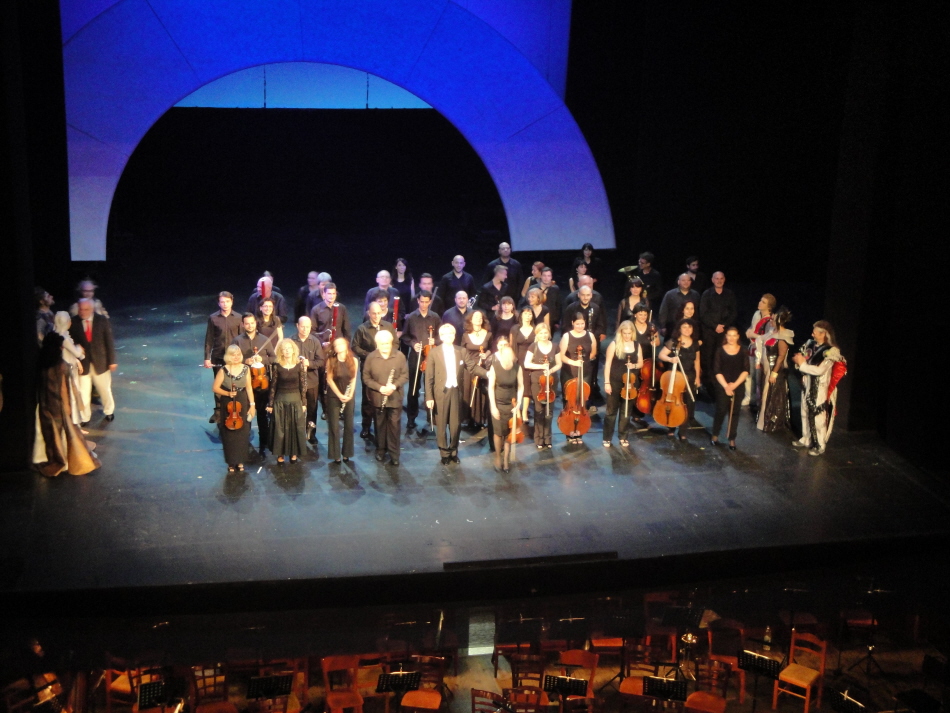
A direcção musical de Erich Wächter continuou a ser algo
rotineira, branda e insuficientemente dinâmica. A música dos “murmúrios da
floresta” não foi particularmente misteriosa e envolvente e faltou algum fogo
no dueto que encerra o terceiro acto.
Paralelamente, a orquestra continuou a exibir fragilidades
técnicas acentuadas, com desacertos constantes nos ataques, fífias frequentes
dos metais e cordas muitas vezes desafinadas.
A encenação manteve a coerência com as opções anteriores.
Utilização inteligente dos objectos cénicos para obter jogos de significados e
simbolismos interessantes; excelente utilização das luzes e projecções de vídeo
e ausência de condicionamento da fluidez musical e dramática.
O principal defeito que posso apontar à encenação é o já
recorrente recurso à explicitação cénica da acção que é simplesmente narrada
pelas personagens. Quando Mime revela a Siegfried a sua verdadeira ascendência
e as circunstâncias do seu nascimento e da morte de Sieglinde, lá aparece esta
como um fantasma.
(Acto I - Foto do site da Ópera de Sófia / Act I - Photo by Sofia Opera House site)
Outro aspecto que achei menos bem conseguido foi o recurso
a alguma infantilização de Siegfried, em especial no 1º acto. Quando o
protagonista regressa à caverna de Mime após a caçada do urso, surge com um
enorme boneco de pelúcia, comportando-se de modo algo ridículo. Penso que, numa
encenação que pretende “contar a história tal como ela é”, este tipo de opções
não faz muito sentido, na medida em que Siegfried é um herói, ainda que
imaturo, inconsciente, facilmente manipulável e mesmo arrogante.
(Acto I - Foto do site da Ópera de Sófia / Act I - Photo by Sofia Opera House site)
Quando o pano abre e durante a abertura vemos a mesma cena
que encerrou “Die Walküre”, ou seja, Brünnhilde adormecida e rodeada pelo fogo
mágico projectado numa metade do anel, que serve de arco.
A valquíria rapidamente desaparece e vemos entrar em palco
o cubo já visto na ópera anterior, no cimo do qual está Sieglinde em trabalho
de parto. A encenação mostra então a morte desta e a forma como Mime recolhe
Siegfried ainda bebé.
Durante o resto do primeiro acto, o cenário é composto por
um duplo arco, construído com as duas metades do omnipresente anel e uma
passadeira suspensa, que atravessa toda a cena da esquerda à direita.
(Acto I - Foto do site da Ópera de Sófia / Act I - Photo by Sofia Opera House site)
O surgimento de Wotan, disfarçado de viandante, está bem
conseguido, pois que este usa uma bola insuflável que representa o globo
terrestre, simbolizando que se trata do seu domínio e que o pode usar para
brincar a seu gosto.
O traje de Wotan é interessante, pois que enverga um
chapéu no cimo do qual vemos a representação do Walhalla, mas com as torres
cónicas já em queda. Chapéu que, por um lado, trai a verdadeira identidade da
personagem e, por outro lado, mostra que estamos perante um deus a caminho do
seu ocaso.
(Acto II - Foto do site da Ópera de Sófia / Act II - Photo by Sofia Opera House site)
(Acto II - Foto do site da Ópera de Sófia / Act II - Photo by Sofia Opera House site)
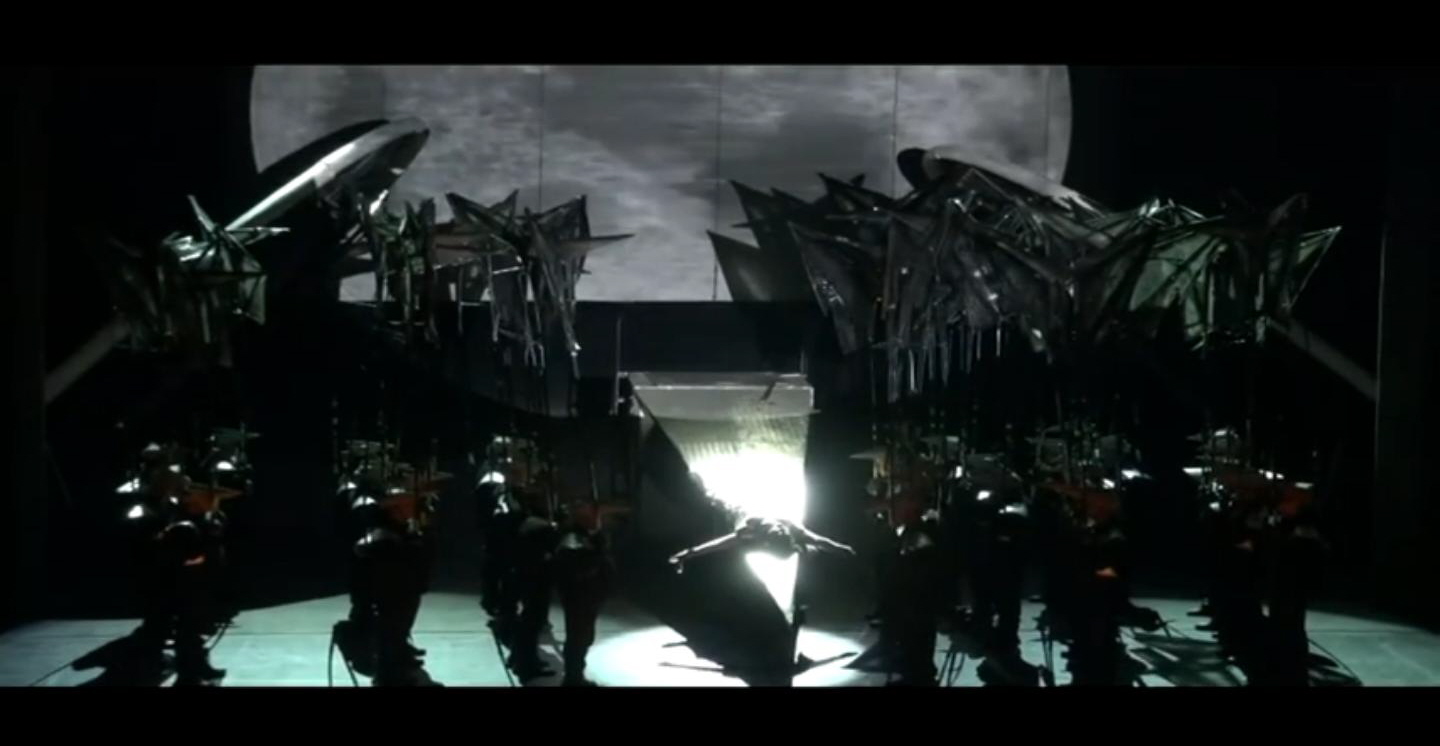
O cenário do segundo acto é dominado por um círculo que
representa não só o anel, como a entrada da gruta de Fafner, tudo ladeado por
uma espécie de andaimes metálicos bastante intrincados. Permanentemente dentro
deste andaimes vemos Alberich, como uma aranha que aguarda na sua teia que a
vítima nela se enrede. A ideia é engenhosa e perfeitamente adequada à história
da ópera.
(Acto II - Foto do site da Ópera de Sófia / Act II - Photo by Sofia Opera House site)
O dragão Fafner está muito bem conseguido, sendo composto
por pontiagudos cones que saem do interior do círculo.
(Acto III - Foto do site da Ópera de Sófia / Act III - Photo by Sofia Opera House site)
O início do terceiro acto é magnífico: Erda surge no
interior de uma espécie de mandorla dobrada sobre o seu eixo, enquanto Wotan
circula à sua volta por cima do anel que domina o resto do espaço e que serve
também de cenário ao terrível confronto entre o deus e Siegfried.
(Acto III - Foto do site da Ópera de Sófia / Act III - Photo by Sofia Opera House site)
(Acto III - Foto do site da Ópera de Sófia / Act III - Photo by Sofia Opera House site)
(Acto III - Foto do site da Ópera de Sófia / Act III - Photo by Sofia Opera House site)
Na cena final, a mesma mandorla que acolhia Erda, servirá
depois de ponto de união entre Brünnhilde e Siegfried, numa espécie de tálamo
amoroso.
Siegfried
Siegfried foi encarnado pelo tenor Kostadin Andreev. Como
referi, trata-se de um dos mais difíceis papéis operáticos, por ter exigências
quase contraditórias. É o papel por excelência para um Heldentenor,
capaz de aguentar as quatro horas da ópera, de se confrontar com uma orquestra
poderosa em cenas como a da forja da espada, de assumir uma tonalidade mais
suave quando na floresta, transmitindo a inocência e o despertar da paixão na
parte final da ópera.
Na avaliação de quem canta este papel não podemos usar
como termo de comparação tenores verdadeiramente singulares como Lauritz
Melchior ou Max Lorenz, o que seria injusto.
Kostadin Andreev foi um Siegfried de grande mérito,
mostrando uma stamina impressionante. Manteve um excelente nível vocal
ao longo de toda a récita, não mostrando sinais de degradação ou cansaço. O
timbre, não sendo baritonal, também não é particularmente brilhante.
A concepção da personagem esteve bastante bem,
especialmente ao transmitir o carácter juvenil e ingénuo da personagem. Apenas
no confronto com Wotan faltou algum peso à voz e à atitude.
Mime
Mime foi excelentemente interpretado pelo tenor Krasimir
Dinev, que foi um dos mais aplaudidos da noite e com toda a razão. Mostrou
excelentes dotes de actor e não privilegiou uma concepção de carácter, o que
pessoalmente me agrada mais. O seu timbre é bonito e mostrou a potência e
distinção necessárias para não ser obliterado pelo do Siegfried.
Wotan
Wotan foi desta vez interpretado por Martin Tsonev. No
geral, penso que foi ligeiramente inferior a Nicolay Petrov, exibindo uma voz
com um timbre mais baço, menos nobre. Foi dramaticamente menos expressivo,
especialmente na cena capital com Siegfried.
Brünnhilde
Nesta noite ouvimos a segunda Brünnhilde, desta vez
interpretada pela soprano Radostina Nikolaeva e com melhores resultados, embora
ainda não totalmente satisfatórios. A sua voz é mais pesada e ostenta um
vibrato bastante pronunciado. Não se trata de uma voz muito grande, o que, por
vezes, se deixasse de ouvir quando a orquestra aumentava o nível sonoro. Em
termos dramáticos, embora lhe tenha faltado algum fulgor vocal, foi eficaz a
traduzir o dilema da escolha de Brünnhilde, entre a sua natureza guerreira e
orgulhosa de Valquíria e o papel mais frágil e humano, de amante.
Erda
Erda foi novamente Blagovesta Mekki-Tsvetkova, que manteve
a linha interpretativa que já havíamos visto no “Das Rheingold”.
Alberich
Biser Georgiev continuou a agradar como Alberich e Petar
Buchkov cumpriu no papel do dragão Fafner, tendo visto a sua voz amplificada
artificialmente.
Pássaro da floresta - Forest bird
Milena Gyurova cantou o pássaro da floresta, mostrando um
registo agudo adequado.
Podemos ver
aqui um vídeo com o resumo da produção.
“Siegfried” é, por vezes,
caracterizado como o scherzo da tetralogia, querendo com isto dizer-se
que é o mais leve dos quatro dramas musicais. Penso que essa ideia foi
conseguida nesta récita, que teve um saldo claramente positivo.
*
*
SIEGFRIED
– Sofia, 7th July 2015
“Siegfried” is the third opera and the
second day of the tetralogy ”Der Ring des Nibelungen”.
Contrary to what happens with "Die
Walküre", "Siegfried" is perhaps the opera of this cycle that is
singly presented.
This fact can be explained by some reasons. The
most significant is the extreme difficulty of the main character, which gives
its name to the opera. Not only is it a very long role, in which the tenor is
on stage virtually during the four hours of the opera, as it requires an heroic
tessitura, which is not easy to find.
On the other hand, the vast majority of the
opera is assigned to male characters. With the exception of very short Forest
Bird role and of Erda’s intervention in the 3rd act, only at the end of this we
have a weighty female intervention.
Therefore, its success depends not only on
vocal and interpretative quality of the protagonist, but also from the ability
of staging and musical direction to convey a sense of progression that
illustrates the evolution of Sigfried as an immature and arrogant young man to
the hero without fear that faces Wotan, his grandfather, and wins the love of
Brünnhilde.
The musical direction of Erich Wächter remained
routine, bland and insufficiently dynamic. The music of the "Forest
murmurs" was not particularly mysterious and enveloping and lacked some
fire in final duet of the third act.
At the same time, the orchestra continued to
show marked technical weaknesses, with constant fails in the attacks, frequent
blunders of brass and strings often out of tune.
The staging maintained coherence with the past
operas. Intelligent use of scenic objects for games of meanings and interesting
symbolisms; excellent use of lights and video projections and lack of embarass
of the musical and dramatic flow.
The main weakness that we can point to the
staging is the recurrent appeal to the excessive scenic explanation of the
action that is narrated by the characters. When Mime shows Siegfried his true
parentage, and the circumstances of his birth and of Sieglinde’s death, there she
shows up as a ghost.
Another aspect that I found less well done was
some infantilization of Siegfried, especially in the 1st act. When the
protagonist returns to Mime's cave after the bear hunt, it comes up with a huge
teddy bear, behaving in ridiculous way. I think that, in a production that aims
to "tell the story as it is," this kind of options does not make much
sense, because Siegfried is a hero, although immature, unconscious, easily
manipulated and even arrogant.
When the curtain opens during the opening, we
see the same scnene that ended "Die Walküre", i.e., Brünnhilde asleep
and surrounded by the magic fire, projected in the ring half, working as an
arch.
The Valkyrie quickly disappears and we see on
stage the cube seen in the previous opera, on top of which is Sieglinde in
labor. The scenario then shows her death and how Mime takes baby Siegfried with
him.
In the rest of the first act, the scene
consists of a double arch, built with both halves of the ubiquitous ring and a
suspended walkway that crosses horizontally the whole scenario.
The arrival of Wotan, disguised as a wanderer,
is well done, since it uses an inflatable ball that represents the globe,
symbolizing that it is his domain and that he can plays with it as he wishes.
The Wotan costume is interesting because it
features a hat on top of which we see the representation of Walhalla, but with
the conical towers already falling. That hat also let us guess the true
identity of the character and, at the same time, shows us that we are before a
God in its twilight.
The scene of the second act is dominated by a
circle representing not only the ring, but also the entrance of Fafner's cave,
all surrounded by a kind of quite intricate metal scaffolding. Permanently
within this scaffolding we see Alberich, like a spider in its web waiting for
the victim. The idea is ingenious and perfectly suited to the plot of the
opera.
The dragon Fafner is ingeniously built,
comprising pointed cones that come out from inside the circle.
The beginning of the third act is magnificent:
Erda comes within a kind of mandorla bent on its axis, while Wotan circulates
around over the ring that dominates the rest of the space and also serves as a
backdrop to the terrible confrontation between the God and Siegfried.
In the final scene, the same mandorla that
sheltered Erda, will serve of union crib between Brünnhilde and Siegfried, a
sort of lovers’ bed.
Siegfried was incarnate by the tenor Kostadin
Andreev. As I said, this is one of the most challenging operatic roles, having
almost contradictory requirements. It is the role par excellence for a
Heldentenor, which must be able to endure four hours of the opera, to confront
a powerful orchestra in scenes like the forge of the sword, but also to take a
softer tone when in the forest and transmit innocence and the awakening of
passion at the end of the opera.
In evaluating who sings this role, we can not
use as a benchmark tenors truly unique as Lauritz Melchior or Max Lorenz, which
would be unfair.
Kostadin Andreev was a Siegfried with great
merit, showing an impressive stamina. He maintained an excellent voice
condition throughout the whole opera, showing no signs of degradation or
fatigue. The timbre, not being baritonal, is also not particularly bright.
The conception of the role was quite good,
especially when conveying the youthful and naive nature of the character. Only
in the confrontation with Wotan he lacked some voice weight and presence.
Mime was excellently sang by tenor Krasimir
Dinev, who was one of the most applauded of the night and with good reason. He
showed to be a gifted actor and did not opt for a a caractere approach,
which personally thought as a good choice. Its timbre is beautiful and showed
the power and necessary distinction not to be obliterated by Siegfried.
Wotan was this time played by Martin Tsonev.
Overall, I think it was not as good as Nicolay Petrov, showing a voice with a
duller tone and less noble. It was dramatically less expressive, especially in
the capital scene with Siegfried.
Tonight we heard the second Brünnhilde, this
time played by soprano Radostina Nikolaeva and with better results, although
not fully satisfactory yet. Her voice is heavier and boasts a fairly pronounced
vibrato. It is not a very large voice, and at times failed to be heard when the
orchestra increased the sound level. In dramatic terms, although it lacked some
vocal glow, it was effective in translating the dilemma of Brünnhilde of
choosing between her warrior and proud nature of Valkyrie and the most fragile
and human role as a lover.
Erda was again Blagovesta Mekki-Tsvetkova, who
kept the interpretative line that we'd seen in "Das Rheingold".
Biser Georgiev continued to please as Alberich
and Petar Buchkov fulfilled the role of the dragon Fafner, having seen his
voice amplified artificially.
Milena Gyurova sang the forest bird, showing a
suitable high register.
We can see here a video with the summary of
this production.
"Siegfried" is sometimes
characterized as the scherzo of the tetralogy, meaning that this is the
lightest of the four musical dramas. I think that this idea was achieved in
this production, which was clearly positive.