Mostrar mensagens com a etiqueta Danielle de Niese. Mostrar todas as mensagens

domingo, 9 de setembro de 2018

LA BOHÈME, Royal Opera House, Julho / July 2018


(text in English below)

La Bohème de G Puccini. Royal Opera House, Londres.
Encenação – Richard Jones
Maestro – Nicola Luisotti
Mimí – Maria Agresta
Rodolfo – Matthew Polenzani
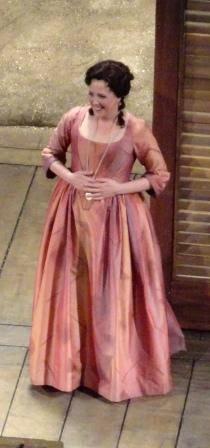
Musetta – Danielle de Niese
Marcello – Etienne Dupuis
Shaunard – Duncan Rock
Colline – Fernando Radó

La Bohème muito boa mas não excelente.
Uma Mimi (Agresta) vocalmente “pesada” embora melhor no decurso da récita, mas não me emocionou. Rodolfo (Polenzani) muito bom e espectacular cenicamente no final.
Mas a rainha e o rei da noite foram a Musetta e o Marcello! Que grande barítono é este francês (Etienne Dupuis)!! E a De Niese excepcional!!


Texto e fotografias de wagner_fanatic


LA BOHÈME, Royal Opera House, July 2018

La Bohème by G Puccini. Royal Opera House, London.
Director - Richard Jones
Maestro - Nicola Luisotti

Mimi – Maria Agresta
Rodolfo - Matthew Polenzani
Musetta - Danielle de Niese
Marcello - Etienne Dupuis
Shaunard - Duncan Rock
Colline - Fernando Radó

La Bohème was very good but not excellent.
Mimi (Agresta) vocally "heavy" although better in the course of the performance, but did not move me. Rodolfo (Polenzani) very good and spectacular stage performance at the end.
But the queen and king of the night were Musetta and Marcello! What a great baritone this French (Etienne Dupuis)!! And De Niese was exceptional!!

Text and photos by wagner_fanatic

sexta-feira, 2 de maio de 2014

COSÌ FAN TUTTE, METropolitan OPERA, Nova Iorque, Abril de 2014 /METropolitan Opera, New York, April 2014

(review in English below)

 Cosi fan tutte é a ópera de W A Mozart com libretto de Lorenzo da Ponte que mais gosto. Vi-a recentemente num dia de chuva diluviana em Nova Iorque!


 A encenação, magnífica, é de Lesley Koenig. Toda a cenografia é de grande impacto visual, mas o primeiro quadro é fabuloso. Vêem-se em fundo, na penumbra, dois barcos, que parecem uma tela pintada. Mas não é, as personagens entram neles e um desloca-se. O jogo de luzes (de Duane Schuler) é muito eficaz, criando diversas atmosferas ao longo do quadro. Do melhor que tenho visto. Também os outros quadros são bonitos e estão muito bem conseguidos, mas o primeiro é único. A movimentação cénica é outra mais valia assinalável.

A Orquestra da Metropolitan Opera esteve ao mais alto nível mas, verdadeiramente sensacional, foi a direcção do maestro James Levine. Tempos e sonoridade perfeitos, primazia para os cantores, uma maravilha.


 Os solistas foram muito uniformes de de excelente nível.

O tenor americano Matthew Polenzani foi um Ferrando irrepreensível. Voz sempre bem colocada, timbre belíssimo, potência assinalável e interpretação cénica de qualidade. Transmitiu uma expressividade vocal marcante.


Também o Guglielmo do barítono russo Rodion Pogossov (um desconhecido para mim) esteve à altura da personagem, que interpretou com muita qualidade vocal e boa presença em palco.


 O veterano baixo barítono italiano Maurizio Muraro fez um grande Don Alfonso, muito correcto, de voz forte e afinada.


Isabel Leonard, mezzo “da casa”, foi uma Dorabella de boa presença cénica e voz bonita e afinada ao longo de toda a récita. Teve como ponto mais alto a ária È amore un ladroncello, no 2º acto. 


 O soprano australiano Danielle de Niese fez uma Despina excelente, tanto em comicidade como em interpretação vocal. Mostrou grande versatilidade artística, bem evidente quando encarnou o médico e o notário. Foi sempre muito viva, cómica e alegre.


 Finalmente outra interpretação fantástica foi de Susanna Philips, jovem soprano americano, que deu vida à Fiordiligi. A cantora é sempre muito expressiva (como se viu recentemente na excelente Musetta da La Bohème de há poucas semanas) e a voz é também magnífica. Timbre muito agradável, sempre sobre a orquestra, mantendo uniformidade qualitativa em todos os registos. Na ária dramática do 1º acto Come scoglio deu-nos uma interpretação acrobática e quase jocosa, como é desejável, contrastando com o lamento mais genuíno e humano na longa ária Per pieta no 2º acto, onde foi notável. Excelente!


 Uma daquelas poucas (infelizmente) récitas que não esquecerei rapidamente.


*****


Cosi fan tutte, Metropolitan Opera, New York, April 2014

Cosi fan tutte is my favorite Mozart 's opera with libretto by Lorenzo da Ponte. I saw it recently on a day of diluvian rain in New York!

The staging, magnificent, is by Lesley Koenig. The whole scenery is of great visual impact, but the first part is fabulous. We see in the background, in the shadows , two boats, which look like a painting. But it is not, we see the people enter in them and one then moves away. The lights (by Duane Schuler) are very effective, creating different atmospheres along the performance. Of the best I have seen. The rest of the scenery is also beautiful, but but the first part is unique.

The Orchestra of the Metropolitan Opera was at the highest level but, truly sensational, was the direction of conductor James Levine. Tempi and perfect sound, primacy for the singers, wonderful.

The soloists were very uniform and excellent.

American tenor Matthew Polenzani was a faultless Ferrando. His voice was powerful and with a beautiful timbre.Also a remarkable stage interpretation.

Also Russian baritone Rodion Pogossov (unknown to me) was a good Guglielmo, who sang with great quality and good stage presence.

Veteran Italian bass baritone Maurizio Muraro was a great Don Alfonso, very correct on stage and showing a strong and refined voice.

Isabel Leonard , mezzo from the " house " , composed Dorabella with good stage presence and beautiful and refined singing throughout the performance. She had the highest moment in the aria È amore un ladroncello in the 2nd act .

Australian soprano Danielle de Niese was
​​an excellent Despina, both in comedy and in vocal performance. She showed great artistic versatilitys, evident when he playied the doctor and the notary characters. She was always very lively, comic and cheerful.

Finally another fantastic interpretation was by young American soprano Susanna Philips who was Fiordiligi. The singer was always very expressive (as recently seen in the excellent Musetta in La Bohème a few weeks ago) and the voice is also magnificent. The timbre is very beautiful, the voice was always above the orchestra, keeping qualitative uniformity in all registers . In dramatic aria from Act 1 Come scoglio she gave us an acrobatic interpretation and almost playful, as it is desirable, contrasting with the more humain and genuine regret in the long aria Per pieta in the 2nd act, which was remarkable. Excellent!

One of those few (unfortunately) performances that I will not forget quickly.
*****

domingo, 5 de fevereiro de 2012

THE ENCHANTED ISLAND – Met Live em HD, Fundação Gulbenkian, Fevereiro de 2012

(review in english below)


The Enchanted Island é uma opera concebida por Jeremy Sams, também autor do libretto, em inglês. Foi inspirada no pasticcio, tradição do Séc. XVIII que combinava música pré-existente com novos textos ou enredos. A música é de vários compositores, incluindo Händel, Vivaldi e Rameau. A história teve por base duas obras de Shakespeare, The Tempest e A Midsummer Night’s Dream.


A encenação de Phelim McDermott juntou cenários à moda do barroco com tecnologia actual. O resultado foi vistoso, com partes de gosto discutível (a cena de Neptuno no fundo do mar não podia ser mais kitsch) e outras muito bem conseguidas (o final do primeiro acto, com a saída minimalista de Próspero).

(fotografias /Photos de Ken Howard / Met Opera)

O elenco foi de grande peso e muito equilibrado. Wiliam Christie, um reputado especialista no barroco, dirigiu.

O contratenor David Daniels foi um Próspero de qualidade. Mantém as características vocais que sempre lhe conheci e é um cantor respeitável mas sem grandes atributos cénicos, como mais uma vez demonstrou.

O mezzo Joyce DiDonato, no papel da feiticeira Sycorax, foi a melhor cantora em cena. Começou muito bem no registo grave e subiu facilmente para agudos fantásticos, mantendo a qualidade em toda a extensão e em todas as intervenções.


O baixo barítono Luca Pisaroni cumpriu como Caliban, dando boa nota das suas qualidades vocais.

O soprano Danielle de Niese foi um Ariel marcante cenicamente. A voz é muito digna mas achei que a cantora teve dificuldades nas árias de bravura e, no registo mais agudo, tendeu para a estridência.


O Neptuno de Plácido Domingo foi ao nível do que nos tem habituado nas suas recentes interpretações.

Também estiveram bem o soprano Lisette Oropesa (voz clara, cristalina e de grande beleza), o contratenor Anthony Roth Costanzo (excelente na sua única ária), o soprano Layla Claire, o mezzo Elizabeth DeShong, o tenor Paul Appleby e o barítono Elliot Madore.


Apesar de tudo isto, confesso que nunca me senti entusiasmado. Estamos no Séc. XXI e não consigo assimilar com naturalidade a tradição barroca do pasticcio. Logo a primeira ária de Vivaldi cantada por Próspero / David Daniels Ah, if you would earn your freedom, copiada de Ah, ch’infelice sempre da cantata Cessate, omai cessate causou-me alguma estranheza e desconforto. Nunca consegui ultrapassá-lo e, quando ouvi a ária Mother why not? – Mother my blood is freezing cantada por Caliban / Luca Pisaroni, copiada de Gelido in ogni vena de Il Farnace de Vivaldi, não mais perdi a sensação que se estavam a banalizar alguns trechos musicais sublimes. Recordei imediatamente a interpretação superlativa de Cecilia Bartoli, que consegue transmitir uma dor dilacerante (gravação disponível no CD The Vivaldi Album). Comparando as duas, a interpretação nesta ópera foi quase grotesca.
Este é “apenas” um pormenor, mas foram eles que fizeram com que não conseguisse achar que assisti a um espectáculo empolgante.

***


THE ENCHANTED ISLAND - Met Live in HD, Gulbenkian Foundation, February 2012

The Enchanted Island is an opera concieved by Jeremy Sams who also wrote the English libretto. It was inspired in pasticcio, an eighteenth-century tradition that combined pre-existing music with new texts or plots. The music was by various composers, including Händel, Vivaldi and Rameau. The story was based on two Shakespeare’s pieces, The Tempest and A Midsummer Night's Dream.

The staging of Phelim McDermott joined stylish baroque scenarios with modern technology. The result was showy, with parts of questionable interest (the scene of Neptune in the sea could not be more kitsch) and others very good (the end of the first act, with the minimalist exit of Prospero).

The cast was of top quality and well balanced. William Christie, a renowned baroque specialist, directed.

Countertenor David Daniels was a Prospero of quality. He keeps his vocal characteristics preserved, and he is a respectable singer, but not with great scenic attributes, as we could see once again.

Soprano Danielle de Niese was,a striking Ariel on stage. The voice is powerful but I thought the singer had difficulties in bravura arias, and in the register she tended to stridency.

Mezzosoprano Joyce DiDonato, as the witch Sycorax, was the best singer on the scene. She started very well in the lower register and she easily achieved fantastic top notes, maintaining the highest quality throughout the entire vocal range and in all her interventions.

Bass baritone Luca Pisaroni was a very decent Caliban, showing his good vocal form.

Placido Domingo’s Neptune maintained the interpretative quality that we have seen in his recent performances.

Also very well were soprano Lisette Oropesa (clear, cristal and beautiful voice), countertenor Anthony Roth Costanzo (excellent in his single aria), soprano Layla Claire, mezzo Elizabeth DeShong, tenor Paul Appleby and baritone Elliot Madore.

Despite all this, I confess that I never felt excited. We are in the XXI century and I can not assimilate naturally the baroque tradition of the pasticcio. The first Vivaldi aria sung by Prospero / David Daniels Ah, if you would earn your freedom, copied from Ah, ch'infelice sempre from the cantata Cessate, omai cessate caused me immediately some strangeness and discomfort. I could never overcome this discomfort, and when I heard the aria Mother why not? - Mother my blood is freezing sung by Caliban / Luca Pisaroni, copied from Gelido in ogni vena from Vivaldi’s Il Farnace I no longer lost the feeling that some sublime pieces of exquisite baroque music were being trivialized. I remembered immediately the sublime interpretation of Cecilia Bartoli of this aria, who manages to convey an excruciating pain (available on CD The Vivaldi Album).  Comparing the two, the interpretation in this opera is almost grotesque.

This is "only" a detail, but several of these "details" made me feel that I was not watching an exciting performance.

***