(review in English below)
Esta abertura do Festival de Páscoa na Casa do Festival de Baden Baden com o Parsifal foi sublime e colossal!
A acústica desta sala é fenomenal. E a Orquestra de hoje é considerada uma
das melhores do mundo (quiçá a melhor) e com toda a justiça. A Filarmónica de Berlim esteve
estratosférica! Que som, que precisão, que clareza de cada linha melódica!...
na minha opinião, Rattle podia só ter
feito mais lento duas passagens da ópera e que lhe conferem assim, mais lentas,
uma maior intensidade dramática. Mas isto são gostos pessoais e em nada quero
diminuir a espetacular prestação do conjunto.

A encenação foi do mais tradicional possível mas agradável e sem invenções
sem nexo ou tentativas falhadas de inovar o tema. Simplesmente foi... o
Parsifal. E sendo “o Parsifal” foi ser fiel a Wagner, incluindo as correctas
alturas para as ações cénicas acompanharem o apoio e as indicações da música. São
aqueles momentos como por exemplo a correcta altura para o Parsifal tirar a
máscara da armadura e se revelar no 3º acto ou cair de joelhos em prece na
altura correcta do 2º acto. Hoje aqui nada falhou e, quando isso acontece, o
drama eleva-se a um nível justo para a sublime música que se está a ouvir.


Resumindo, o fundo do 1º acto são uns painéis de madeira com imagens de
montes e vales de aspecto pintado a carvão e que representam a localização
pouco definida de Monsalvat. No verso destes painéis móveis, estão 2 andares de
bancadas de madeira onde os cavaleiros se vão sentar para o ritual do Graal.
Também aqui, num dos painéis 2 cadeiras - uma no alto com Titurel e outra em
baixo com Amfortas. O cisne é um homem com assas de cisne e com a flecha no coração
e vem acompanhado de outro que morre também. O Graal é um cálice :) Amfortas
tem a ferida no baixo ventre. Após o ritual, circulam pão em cestos de verga e
vinho em vasos de barro. Quando Gurnemanz expulsa Parsifal e se ouve a voz que
repete a profecia, Gurnemanz volta-se para a porta e estende a mão como que
duvidando se não estará a afugentar o puro tolo profetizado (isto é mais um
daqueles momentos que tem sempre que estar presente em qualquer encenação, não
se pode perder este pormenor! E aqui esteve presente).
O reino de Klingsor é um conjunto de paralelepípedos e no chão várias
formas que estão tapadas por lençol branco e que quando retirado revela os
cavaleiros de Klingsor que vão impedir Parsifal, e as mulheres flor,
inicialmente só com quase o que parece vestidos de dormir de cetim salmão mas
que depois acabam por ficar adornadas com o que pretende imitar pétalas de
diversas cores. Kundry surge do chão em cima de cama redonda de pele e todo o
2º acto se passa neste ambiente, sendo a destruição do mesmo no final, 2
aberturas entre os paralelepípedos iniciais, com luzes atrás.
O 3º acto tem os mesmos painéis mas faltam-lhe algumas peças. Parsifal vem
de armadura e com a lança. Nada de novo aqui. Caem pétalas do tecto quando se
fala das lágrimas dos pecadores que regam a relva e flores. Tudo o resto é
tradicional no que se espera numa encenação clássica.
Agora os cantores. Todos absolutamente surreais!
O Franz Josef-Selig é o meu
Gurnemanz favorito. Encarna o papel na perfeição, é um baixo descomunal e os
pormenores emotivos vocais saem com uma segurança e credibilidade que me
arrepiam sempre.
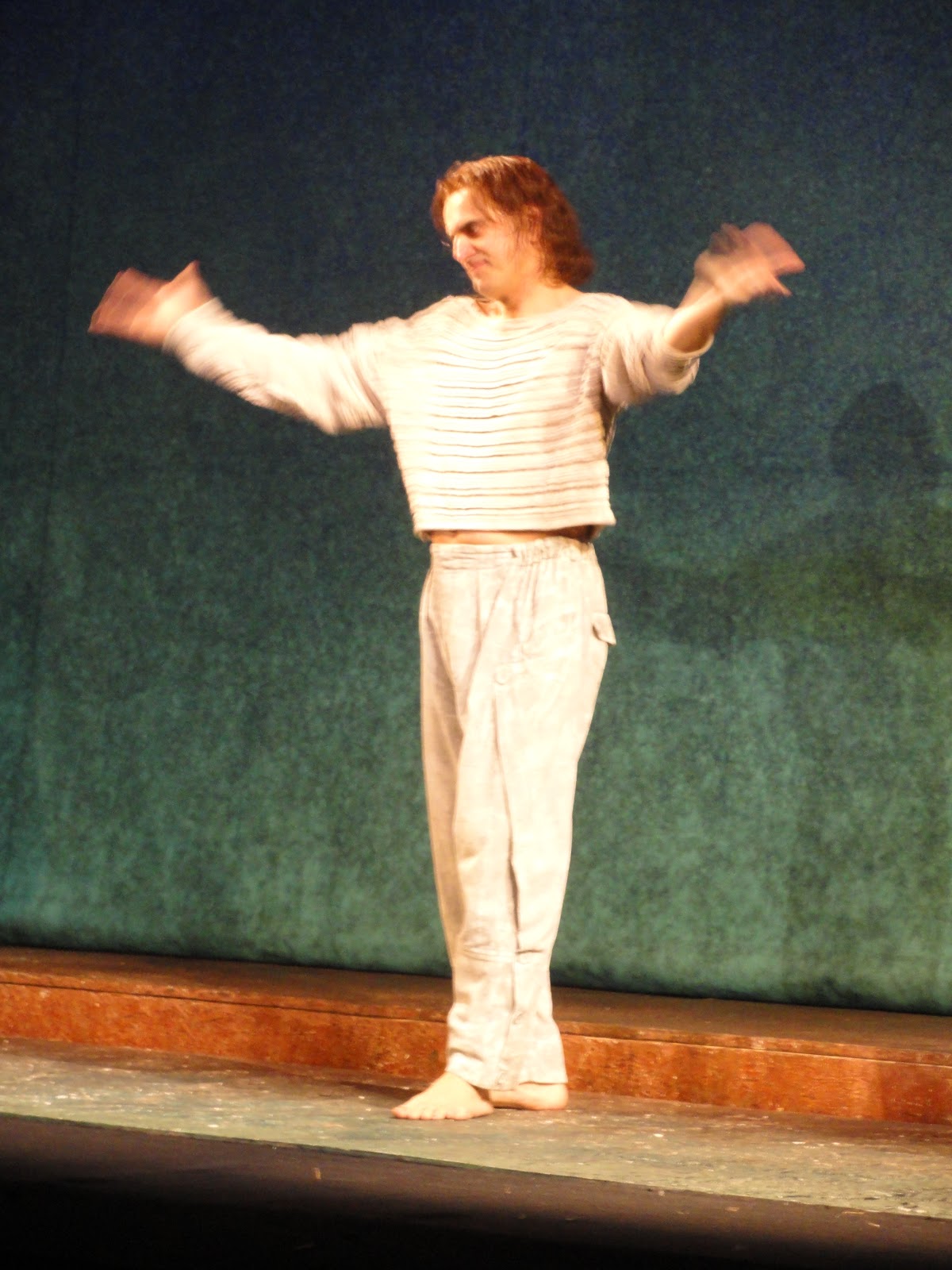
Stephen Gould, que só tinha ouvido
como Tristão, foi também surreal. O 2º acto, no duo com a Kundry, foi de uma
expressividade ímpar e apoiado pela estreante no papel Ruxandra Donose. Esta mulher é perfeita para Kundry. O timbre vocal
é o ideal, tem uma boa tessitura e é estável em todos os registos (só fez o
penúltimo e ante penúltimo agudos do final do 2º acto uma oitava abaixo :)
talvez estivesse com receio de lhe faltar a voz no ultimo agudo mas não faltou
:)) e, a par com Gould, transmitiu as emoções de Kundry de forma correctíssima
o que eleva ainda mais a sua qualidade ao se saber que foi a sua estreia no
papel. Há muitas Kundrys já batidas que não emocionam tanto como ela o fez.
O Nikitin foi um Klingsor
excelente. Vocalmente muito bem, pesa o facto de em alguns momentos, o
encenador o ter colocado mais fundo no palco e isso comprometeu um pouco a
intensidade da voz que, no meio do palco foi fantasticamente maléfica.
Robert Lloyd tem 78 anos (!) e ainda
tem uma profundidade vocal que lhe permitiu fazer um Titurel ao mais alto
nível.
Agora o sempre esperado Amfortas e a habitual pedra o sapato dos meus
Parsifais. Hoje, Gerald Finley
esteve ao nível daquilo que eu procuro ouvir num Amfortas. Teve mais liberdade
cénica do que em Viena no ano passado e acho que isso facilitou. Isso e já ter
mais umas récitas antes no papel e mais um ano para rever o mesmo. Foi impressionante,
especialmente no 2º monólogo. Um bom Amfortas é aquele que transmite
adequadamente o seu sofrimento pela voz, em que os “Ha” são em lamento ou até
mesmo suspirados/falados, em que transmite algum escárnio quando chama de
heróis aos cavaleiros no final... E Finley foi tudo isto hoje, completando este
espetacular “embrulho pascal” de Parsifal.
Valeu e valeu muito vir! Era um dos imperdíveis da temporada e cumpriu a
todos os níveis, fazendo esquecer o de Zurique do início do mês (esse não era
imperdível no global e deixei-me levar pela minha vontade de ver a encenação do
Guth novamente...).
Texto e fotografias de
wagner_fanatic.
PARSIFAL,
Baden Baden, March 2018
This
opening of the Easter Festival at the Baden
Baden Festival House with Parsifal
was sublime and colossal!
The
acoustics of this room is phenomenal. And the Orchestra of today is considered
one of the best in the world (perhaps the best) and in all fairness. The Berlin Philharmonic was stratospheric!
What sound, what precision, what clarity of each melodic line! ... in my
opinion, Rattle could only have
slowed down two operatic passages, and thus slowed him down to a greater
dramatic intensity. But these are personal tastes and I do not want to diminish
the whole spectacular performance.
The staging
was as traditional as possible but pleasant and without inventions without
nexus or failed attempts to innovate the theme. It just was ... the Parsifal.
And being "the Parsifal" was to be faithful to Wagner, including the
right heights for the scenic actions to accompany the support and indications
of the music. It is those moments, such as the correct time for the Parsifal to
take off the mask of the armor and reveal itself in the 3rd act or fall on his
knees in prayer at the correct time of the 2nd act. Nothing has failed here
today, and when that happens, the drama rises to a level just for the sublime
music we are listening to.
In short,
the background of the1st act are wooden panels with images of hills and valleys
with charcoal-like appearance and representing the poorly defined location of
Monsalvat. On the back of these movable panels are 2 levels of wooden benches
where the knights sit for the Grail ritual. Also here, on one of the panels 2
chairs - one on top with Titurel and another on the bottom with Amfortas. The
swan is a man with swan wings and with the arrow in his heart and is
accompanied by another who dies as well. The Grail is a chalice :) Amfortas has
the wound in the lower abdomen. After the ritual, they circulate bread in baskets
of wick and wine in pots of clay. When Gurnemanz expels Parsifal and the voice
that repeats the prophecy is heard, Gurnemanz turns to the door and holds out
his hand as if doubting whether he will not be chasing away the prophesied fool
(this is yet another of those moments that must always be present in any
performance, this detail must not be missed!).
The kingdom
of Klingsor is a set of parallelepipeds and on the ground various forms that
are covered by white sheet and that when removed reveals the knights of
Klingsor that will prevent Parsifal, and women flower, initially only with
almost what looks like sleeping dresses of salmon satin but that later end up
being adorned with petals of various colors. Kundry emerges from the floor on
top of a round bed of fur and the whole 2nd act takes place in this
environment, with the destruction of it at the end, 2 openings between the
initial parallelepipeds, with lights behind.
The 3rd act
has the same panels but they lack some pieces. Parsifal comes in armor and with
the spear. Nothing new here. Falling petals fall from the ceiling when one
speaks of the tears of sinners who water the grass and flowers. Everything else
is traditional in what is expected in a classic scenario.
Now the
singers. All absolutely surreal!
Franz Josef-Selig is my favorite Gurnemanz. He embodies the role
in perfection, he is a huge bass and the vocal emotive details come out with a
security and credibility that always shivers me.
Stephen Gould, who I had only heard as Tristan, was also
surreal. The second act, in the duet with Kundry, was of a unique expressivity
and supported by the debutant in the paper Ruxandra
Donose. This woman is perfect as Kundry. Vocal timbre is ideal, has a good
texture and is stable in all registers (only sung the penultimate and before top
notes of the end of the second act an octave below :) maybe she was afraid of
missing her voice in the last top notes but she did not miss :)) and, along
with Gould, transmitted the emotions of Kundry in a very correct way which
increases her quality even more by knowing that it was her debut in the role.
There are many experienced Kundrys that do not thrill as much as she did.
Nikitin was an excellent Klingsor. Vocally very well,
it is a fact that in some moments, the director has put him deeper on the stage
and this has slightly compromised the intensity of the voice that, in the
middle of the stage was fantastically evil.
Robert Lloyd is 78 years old (!) And still has a vocal
depth that allowed him to make a Titurel at the highest level.
Now the
ever-awaited Amfortas and the usual difficulty for me in Parsifal. Today, Gerald Finley was at the level of what
I try to hear in an Amfortas. He had more scenic freedom than in Vienna last
year and I think that made it easier. He had several performances before in the
role and another year to review the character. He was impressive, especially in
the 2nd monologue. A good Amfortas is one who adequately conveys his suffering
through his voice, in which the "Ha" are moaning or even whispering,
in which he conveys some scorn when he calls the knights heroes in the end ...
And Finley was everything this today, completing this spectacular "paschal
wrap" of Parsifal.
It was
worth to come! It was one of the must-sees of the season and fulfilled all
levels, making forget the Zurich’s Parsifal of the beginning of the month (this
was not a must-see and I let myself be driven by my desire to see Guth staging
again ...).
Text and photos of wagner_fanatic.