Mostrar mensagens com a etiqueta Götterdämmerung. Mostrar todas as mensagens

quinta-feira, 18 de agosto de 2022

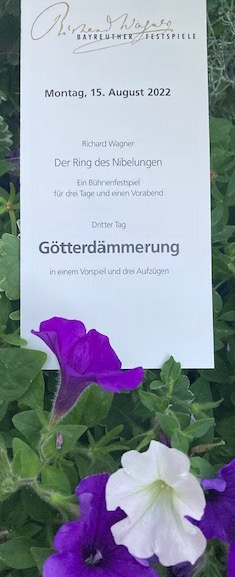
GÖTTERDÄMMERUNG / O CREPÚSCULO DOS DEUSES / THE TWILIGHT OF THE GODS, Festival de Bayreuth / Bayreuther Festspiele, Agosto / August 2022

(review in English below)

O Crepúsculo dos Deuses começa no quarto de Siegfried e Brünhilde que têm um filho. As 3 Norns aparecem vestidas como seres fantasmagóricos, elementos de um sonho da criança, outra novidade desta encenação. Na sala abastada dos Gibichung, encimada por uma fotografia de caça "pesada" (à zebra) do Hagen, Gunter e Gutrune, Hagen põe em prática o seu plano de casar Brünhilde com Gunter e Gutrune com o Siegfried. O Gunter tem escrito na camisola “Who the fuck is Grane?”, mesmo antes de conhecer a Brünhilde e o seu companheiro humano (Grane seria originalmente o cavalo). A frase diz muito da abordagem do encenador. Para conseguir os seus intentos, a poção mágica preparada não é bebida pelo Siegfried, mas antes derramada sobre a cabeça do Grane. Novamente nos aposentos do casal, o diálogo entre a Waltraute e a irmã Brünhilde não conduz a nada de concreto e Gunter maltrata a criança e amarra-a à cadeira. Um desenho da máscara alada encarnada volta a aparecer.



No 2º acto Hagen luta com o pai Alberich num recinto de boxe. Ao convocar os vassalos para receberem os novos casais, aparecem os membros do coro vestidos de negro e com as máscaras aladas encarnadas em bastões, num dos momentos de maior impacto visual de todo o Anel. 


O 3º acto passa-se numa piscina vazia, mas onde Siegfried e o filho pescam à linha. Hagen continua a comportar-se como amigo do Siegfried, mas mata-o com uma punhalada nas costas. Ele fica caído no local até a ópera terminar. A marcha fúnebre, magnificamente interpretada pela orquestra, não é marcha nem é acompanhada de qualquer acção no palco. Pelo menos podemos concentrar-nos totalmente num dos momentos mais belos e marcantes da música de todo o Anel. 

O Gunter deixa um saco de plástico na piscina e desaparece. A criança acaba também por morrer com uma das máscaras encarnadas na mão. A morte da Brünhilde acontece com ela deitada ao lado do Siegfried, depois de se ter regado, inconsequentemente, com gasolina, e de ter ido buscar ao saco deixado por Gunter a cabeça do Grane, e com ela estabelecer contacto íntimo (por momentos pensei estar a ver a cena final da Salome de Strauss, mas não, foi mesmo o fim do Crepúsculo dos Deuses!). Não houve qualquer fogo nem destruição visível do Valhalla. A ópera termina como começou, com o filme dos dois gémeos in utero, desta vez abraçados um ao outro.


A Orquestra foi excelente e o maestro Cornelius Meister fez um bom trabalho, embora com algumas inconsistências. Houve no público quem não tenha gostado, dado que foi bastante vaiado.


O tenor Stephen Gould foi um bom Siegfried, voz poderosa, afinada, sempre sobre a orquestra. O barítono Albert Dolmen tem um papel muito importante como Hagen e foi um dos melhores da noite. Para além da excelente interpretação vocal, representou como um ser pérfido, como lhe competia. No final não morre, apenas sai de cena. O seu pai Alberich foi novamente bem cantado pelo barítono Ólafur Sigurdarson. Michael Kupfer-Radecky foi outro barítono excelente como Gunter, interpretando uma personagem tonta e desequilibrada. 

A Brünhilde voltou a ser a soprano Iréne Teorin que, cantando alto, manteve os problemas da ópera anterior, vibrato excessivo e estridência no registo mais agudo. Excelente foi a soprano Elisabeth Teige como Gutrune (já tivera uma interpretação notável como Freia), de voz clara, versátil, bonita e sempre audível sobre a orquestra. A mezzo Christa Mayer voltou a impressionar pela qualidade interpretativa, desta vez como Waltraute. As 3 Norns foram fantásticas (Okka von der Dammerau, Stéphanie Müther e Kelly God) e as 3 Filhas do Reno não lhes ficaram atrás (Lea-ann Dunbar, Stephanie Houtzeel, Katie Stevenson).

Um naipe de cantores de topo para encerrar um Anel memorável!


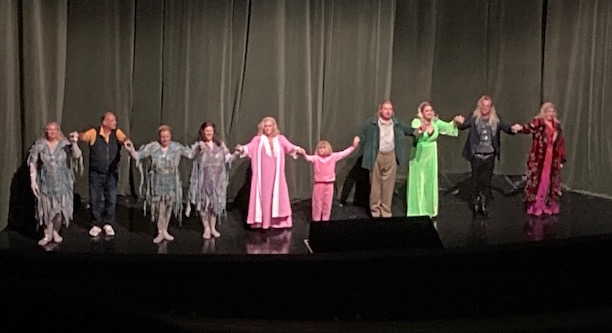
No final houve grandes protestos, alternados com aplausos, inicialmente penso que dirigidos à encenação. Os cantores foram muito ovacionados, com excepção de Iréne Teorin que, no meio dos aplausos, também ouviu muitos boos. O maestro foi também contestado, os protestos competiram com os aplausos. O responsável pela produção, Valentin Schwarz, não teve a coragem de aparecer, antecipando a vaia monumental que ouviria, como aconteceu na semana anterior na estreia, dizem que a maior alguma vez ouvida em Bayreuth.

Não tenho nada contra as encenações modernas, desde que se percebam e façam sentido. Não foi para mim o caso deste inesquecível Anel que está muito distante do que Wagner escreveu. Mas mais tarde voltarei ao assunto.

****

GÖTTERDÄMMERUNG / THE TWILIGHT OF THE GODS, Bayreuther Festspiele, August 2022

The Twilight of the Gods begins in the bedroom of Siegfried and Brünhilde who have a child. The 3 Norns appear dressed as phantoms, elements of the child's dream, another novelty of this staging. In the Gibichungs' rich living room, topped by a zebra-hunting photograph of Hagen, Gunter and Gutrune, Hagen puts into practice his plan to marry Brünilde to Gunter and Gutrune to Siegfried. Gunter has written “Who the fuck is Crane?” on his shirt, even before he met Brünhilde and her human companion (Grane is originally a horse). The phrase says a lot about the scenic approach. To achieve his aims, the magic potion is not drunk by Siegfried, but poured over Grane's head. Back at the couple's house, the dialogue between Waltraute and her sister Brünhilde leads nowhere and Gunter mistreats the child and ties her to the chair. A drawing of the red winged mask reappears.

In the 2nd act Hagen fights with his father Alberich in a boxing arena. When summoning the vassals to receive the new couples, the members of the choir appear dressed in black and with red winged masks, in one of the moments of greatest visual impact in the entire Ring.

The 3rd act takes place in an empty swimming pool, but where Siegfried and his son are fishing by line. Hagen kills Siegfried with a stab in the back. He lies there dead until the opera is over. The funeral march, magnificently performed by the orchestra, is not a march, unaccompanied by any action on stage. At least we can fully focus on one of the most beautiful and memorable moments of music in the entire Ring. Gunter leaves a plastic bag in the pool and disappears. The child also ends up dying with one of the winged red masks in his hand. Brünhilde's death happens with her lying next to Siegfried, after having showered herself with gasoline, inconsequentially, and having gone to get Grane's head from the bag and making intimate contact with it (for a moment I thought I was watching the final scene of Salome by Strauss, but no, that was the end of Twilight of the Gods!). There was no fire or destruction of Valhalla. The opera ends as it began, with the film of the two twins in utero, this time embracing each other.

The Orchestra was excellent and the conductor Cornelius Meistner did a good job, although with some irregularities, that some members of the public did not appreciate at all.

Tenor Stephen Gould was a good Siegfried, powerful voice, in tune, always over the orchestra. Baritone Albert Dolmen plays a very important role as Hagen and was one of the best of the night. In addition to the excellent vocal interpretation, he played the role as a perfidious being, as he was supposed to. In the end he doesn't die, he just leaves the scene. His father Alberich was again well sung by the baritone Olafur Sigurdarson. Michael Kupfer-Radecky, another excellent baritone as Gunter, despite playing a dizzy and unbalanced character.

Brünhilde was again soprano Iréne Teorin who, singing loudly, kept the problems of the previous opera, excessive vibrato and some stridency in the upper register. Elisabeth Teige was an excellent soprano (she had already had a remarkable performance as Freia), with a clear, versatile, beautiful voice that was always audible over the orchestra. Mezzo Christa Mayer impressed again for her interpretive quality, this time as Waltraute. The 3 Norns were fantastic (Okka von der Dammerau, Stéphanie Müther and Kelly God) and the 3 Daughters of the Rhine were not far behind them (Lea-ann Dunbar, Stephanie Houtzeel, Katie Stevenson).

A group of top singers to end a memorable Ring!

In the end there were big protests, alternating with applause, initially I think aimed at the staging. The singers received a great ovation, with the exception of Iréne Teorin who, in the midst of the applause, also heard a lot of boos. The conductor was also contested, the protests competed with the applause. Production manager Valentin Schwarz didn't have the courage to show up, anticipating the monumental booing he would hear, as happened last week at the premiere, said to be the biggest ever heard in Bayreuth.

I have nothing against modern staging, as long as they are perceived and make sense. This was not the case for me in this unforgettable Ring that is much far away from what Wagner wrote. But I will come back to the subject later on.

****

segunda-feira, 5 de abril de 2021

GÖTTERDÄMMERUNG / O CREPÚSCULO DOS DEUSES, Wiener Staatsoper, Transmissão / Streaming, Abril / April 2021


Das óperas do Anel do Nibelungo de R Wagner recentemente transmitidas pela Ópera de Viena, também tive oportunidade de ver O Crepúsculo dos Deuses, sob a competente direcção musical de Adam Fischer.

A encenação clássica de Sven-Eric Bechtolf é clássica, agradável e cumpre.

Os cantores principais foram Monika Bohinec (Primeira Norna), Ulrike Helzel (Segunda Norna) e Ildikó Raimondi (Terceira Norna) que cumpriram sem encantar.

O Siegfried foi bem interpretado por Christian Franz.


O Gunther foi Boaz Daniel (bem), a Gutrune Regine Hangler (boa) e o Hagen Eric Halfvarson (muito bom).


A Waltraute foi Anna Larsson, bem.


E a Brünhilde foi a Linda Watson, também bem.

***

Götterdämmerung, Wiener Staatsoper, streaming, April 2021

From the operas of R Wagner's Ring of Nibelung recently transmitted by the Vienna Opera, I also had the opportunity to see The Twilight of the Gods, under the competent musical direction of Adam Fischer.

The classic direction by Sven-Eric Bechtolf is classic and pleasant.

The main singers were Monika Bohinec (First Norna), Ulrike Helzel (Second Norna) and Ildikó Raimondi (Third Norna), who fwere ok without enchantment.

Siegfried was well sung by Christian Franz.

Gunther was Boaz Daniel (good), Gutrune was Regine Hangler (good) and Hagen was Eric Halfvarson (very good).

Waltraute was Anna Larsson, also good.

And Brünhilde was Linda Watson, ok.

***

domingo, 28 de março de 2021

GÖTTERDÄMMERUNG, San Francisco Opera, Transmissão / Streaming, Março / March 2021

(Text in English below)

Um bom espectáculo para quem pôde ver. A encenação de Francesca Zambello é vistosa mas com componentes discutíveis. Uma abordagem original para a marcha fúnebre do Siegfried e no final uma mensagem positiva de renascimento muitas vezes usada.

A Orquestra e o Coro estiveram muito bem e a direcção musical de Donald Runnicles foi muito boa.

Quanto aos solistas, as Nornas Ronitta Miller (1ª Norna) e  Jamie Barton (2ª Norna) excelentes e Sarah Cambridge (3ª Norna) bem.


Daniel Brenna foi Siegfried muito agradável e manteve a qualidade interpretativa até ao fim.


Outro cantor excelente foi Andrea Silvestrelli que construiu um Hagen fantástico. Voz magnífica e interpretação cénica ao mais alto nível. Brian Mulligan (Gunther) e Melissa Citro (Gutrune) cumpriram sem deslumbrar.

Jamie Barton foi também a Waltraute e foi excelente.

Falk Struckmann fez um Alberich correcto.

As filhas do Reno também estiveram bem.


Excelente foi a Iréne Theorin como Brünhilde. Esteve sempre bem, mas no final do 3º acto foi excepcional.


Um excelente espectáculo.

****


GÖTTERDÄMMERUNG, San Francisco Opera, Streaming, March 2021

A good show for those who could see it. Francesca Zambello's staging is showy but with debatable components. An original approach to Siegfried's funeral march and in the end a positive rebirth message often used.

The Orchestra and the Choir were very good and the musical direction of Donald Runnicles was of top quality.

As for the soloists, the Norns Ronitta Miller (1st Norn) and Jamie Barton (2nd Norn) were excellent and Sarah Cambridge (3rd Norn) was good.

Daniel Brenna was a very pleasant Siegfried and maintained his interpretive quality until the end.

Another excellent singer was Andrea Silvestrelli who built a fantastic Hagen. Magnificent voice and scenic interpretation at the highest level.

Brian Mulligan (Gunther) and Melissa Citro (Gutrune) fulfilled without being dazzled.

Jamie Barton also sang Waltraute and was excellent. Falk Struckmann was a correct Alberich. The Rhine's daughters also did well.

Excellent was Iréne Theorin as Brünhilde. She was always well, but at the end of the 3rd act she was exceptional.

An excellent performance.

****

terça-feira, 23 de março de 2021

O CREPÚSCULO DOS DEUSES / GÖTTERDÄMMERUNG, San Francisco Opera, March / March 2021


(Text in English below)

No próximo fim de semana a Ópera de San Francisco termina a transmissão co ciclo do Anel de Wagner com a derradeira opera O Crepúsculo dos Deuses / Götterdämmerung.


A encenação é de Francesca Zambello e a direcção musical de Donald Runnicles. Orquestra e Coro da Ópera de San Francisco.

Nos protagonistas teremos Iréne Theorin (Brünhilde), Daniel Brenna (Siegfried), Brian Mulligan (Gunther), Melissa Citro (Gutrune), Andrea Silvestrelli (Hagen), Jamie Barton (Waltraute e 2ª Norn), Falk Struckmann (Alberich), Ronitta Miller (1ª Norn) e Sarah Cambridge (3ª Norn).

Mais um bom espectáculo em perspectiva no site da Ópera de San Francisco:

https://sfopera.com/


THE TWILIGHT OF THE GODS / GÖTTERDÄMMERUNG, San Francisco Opera, March 2021

Next weekend, the San Francisco Opera concludes the broadcast with the Wagner Ring cycle with the final opera The Twilight of the Gods / Götterdämmerung.

Produced by Francesca Zambello and musical direction by Donald Runnicles. San Francisco Opera Orchestra and Choir.

The soloists will have Iréne Theorin (Brünhilde), Daniel Brenna (Siegfried), Brian Mulligan (Gunther), Melissa Citro (Gutrune), Andrea Silvestrelli (Hagen), Jamie Barton (Waltraute and 2nd Norn), Falk Struckmann (Alberich), Ronitta Miller (1st Norn) and Sarah Cambridge (3rd Norn).

Another good show in perspective on the San Francisco Opera website:

https://sfopera.com/

quinta-feira, 23 de janeiro de 2020

GÖTTERDÄMMERUNG / O CREPÚSCULO DOS DEUSES, Royal Opera House, Novembro / November 2018


 (review in English below)

A última ópera do Anel de Londres foi talvez a melhor. A encenação manteve a linha desinteressante. As Nornas no início vão manipulando as cordas vermelhas do destino já vistas anteriormente, numa abordagem muito convencional.


A sala dos Gibichung está enquadrada por paredes que imitam o Tarnhelm, mas nada mais há digno de nota. Aparecem umas estátuas douradas dos deuses evocados, Freia, Fricka, Froh e Donner.
Na cena de caça, é morto um antílope que é posteriormente desmembrado e distribuído por vários figurantes, mas o animal continua intacto quando sai de cena. O Siegfried, depois de morto pelo Hagen, fica caído no palco, sozinho, e durante a marcha fúnebre nada acontece, para além de o palco recuar um pouco. Depois é totalmente embrulhado em panos brancos e assim permanece num barco.
No final os 3 quadrados que aparecem na base do cenário (onde anteriormente era o Reno) incendeiam-se e as estátuas dos deuses já referidas são içadas por cordas e neles introduzidas. A Brünhilde atira-se às chamas e a ópera termina com ela a ser içada numa estrutura metálica, depois de tudo ser consumido pelo fogo.


A Orquestra esteve quase sempre muito bem, mas achei que a marcha fúnebre, talvez o momento mais belo e solene da ópera, esteve aquém do desejável. Houve algumas entradas tardias dos metais e o andamento imposto pelo Antonio Pappano não foi o melhor. E foi uma pena.


Já o Coro esteve ao mais alto nível. Quanto aos solistas, houve de tudo, desde o aceitável ao transcendental.

As 3 Nornas foram muito uniformes e vocalmente irrepreensíveis (Primeira Norna, Claudia Huckle; Segunda Norna, Irmgard Vilsmaier; Terceira Norna, Lise Davidsen).


Também as 3 Filhas do Reno estiveram muito bem, Lauren Fagan (Woglinde),
Christina Bock (Wellgunde) e Angela Simkin (Flossilde). 


O Siegfried do Stefan Vinke teve boa presença cénica mas foi irregular na linha de canto, alternando períodos em que quase se não ouvia com outros em que cantava muito alto. O 3º acto foi a sua melhor prestação em todo o Anel.


Johannes Martin Kränzle manteve uma óptima actuação como Alberich, embora o papel seja pequeno nesta ópera, mas ainda assim foi suficiente para o encenar de forma ridícula, num barco e com máscara de oxigénio.


Karen Cargill foi uma excelente Waltraute de voz grave e poderosa, e timbre bonito e cativante.


O Gunter do Markus Butter esteve muito aquém do desejável num elenco destes. O desempenho cénico até foi bom, mas o cantor tem uma voz pequena, mal projectada e foi frequentemente afogado pela orquestra.


Também a Emily Magee (Sieglinde na Valquíria) voltou a decepcionar como Gutrune. Muito exuberante em palco mas a voz ouviu-se mal e foi algo monocórdica em toda a actuação.


Fantástico foi o baixo Stephen Milling como Hagen. Voz muito bonita, forte, sempre audível sobre a orquestra e uma presença cénica irrepreensível no papel cínico e malévolo da ópera. O melhor de entre os homens.


Finalmente a Brünhilde da Nina Stemme. Foi excelente nos dois primeiros actos, o diálogo com a Waltraute foi marcante, mas no final da ópera foi arrasadora! Os últimos 20 minutos foram os melhores de todo o Anel. A Stemme esteve ao nível da sua compatriota Birgit Nilsson e cantou com uma intensidade dramática comovente, como raramente se tem oportunidade de ver e ouvir. Não tenho palavras para descrever com fidelidade aqueles momentos transcendentais a que assistimos.


A Royal Opera só vendeu bilhetes para o Anel inteiro. No final, o público, maioritariamente conhecedor (um anel completo não é nem para curiosos, nem para amadores, nem para principiantes) brindou a Nina Stemme, e apenas ela, com uma explosão de aplausos que a casa quase veio abaixo. E esta expressão aqui aplica-se literalmente porque a pateada, gigantesca e demorada, é rara e apenas surge quando a coisa é excepcional, ao contrário do que se passa em Portugal (onde é sinal de desagrado). Estive no balcão e o chão literalmente tremeu durante uns largos minutos. Grande Stemme!!


****


GÖTTERDÄMMERUNG / THE TWILIGHT OF THE GODS, Royal Opera House, November 2018

The last opera of the Ring of London was perhaps the best. The production kept uninteresting. The Norns at the beginning manipulate the red strings of fate previously seen in a very conventional approach.
The room of the Gibichungs is framed by walls that imitate the Tarnhelm, but nothing else is worth noting. Some golden statues of the evoked gods Freia, Fricka, Froh and Donner appear.
In the hunting scene, an antelope is killed and is later dismembered and distributed by several people, but the animal remains intact when it is removed from the scene. Siegfried, after being killed by Hagen, lies on the stage alone, and during the funeral march nothing happens, in addition to the stage retreating a little. Then he is totally wrapped in white cloths and so stays in a boat.
At the end the three squares that appear at the base of the scene (where previously it was the Rhine) are set fire and the statues of the already mentioned gods are lifted by ropes and introduced in them. Brünhilde throws herself into the flames, and the opera ends with her being hoisted into a metal frame, after everything is consumed by fire.

The Orchestra was almost always very well, but I thought that the funeral march, perhaps the most beautiful and solemn moment of the opera, was far from desirable. There were some late innings of the metals and the tempo imposed by Antonio Pappano was not the best. And it was a pity.

In contrary, the Choir was at the highest level. As for the soloists, there was everything from the acceptable to the transcendental.

The 3 Norns were very uniform and vocally irreproachable (First Norn, Claudia Huckle, Second Norn, Irmgard Vilsmaier, Third Norn, Lise Davidsen).

Also the 3 Daughters of the Rhine were very good, Lauren Fagan (Woglinde),
Christina Bock (Wellgunde) and Angela Simkin (Flossilde).

Stefan Vinke's Siegfried had a good stage presence but was irregular on the singing line, alternating periods when he almost was not listened to others in which he sang very loudly. The 3rd act was his best performance throughout the Ring.

Johannes Martin Kränzle maintained a great performance as Alberich, although the role is small in this opera, but was still enough to stage him ridiculously, in a boat and with an oxygen mask.

Karen Cargill was an excellent Waltraute with a powerful low voice, and a beautiful and captivating timbre.

Markus Butter's Gunter was far from desirable in a cast such as these. The scenic performance was even good, but the singer had a small voice, poorly projected and was often drowned by the orchestra.

Also Emily Magee (Sieglinde in Valkyrie) again disappointed as Gutrune. Very exuberant on stage but the voice was badly heard and was something monoric throughout the performance.

Fantastic was bass Stephen Milling as Hagen. Very beautiful voice, strong, always audible over the orchestra and an irreprehensible stage presence in the cynical and malicious role of the opera. The best singer among men.

Finally Nina Stemme’s Brünhilde. She was excellent in the first two acts, the dialogue with Waltraute was remarkable, but at the end of the opera she was devastating! The last 20 minutes were the best of the entire Ring. Stemme was at the level of her compatriot Birgit Nilsson and sang with dramatic intensity, as we rarely get a chance to see and hear. I have no words to faithfully describe those transcendental moments we have witnessed.

The Royal Opera only sold tickets for the entire Ring. In the end, the mostly knowledgeable audience (a complete ring is neither for the curious, nor for amateurs, nor for beginners) offered Nina Stemme, and only her, with an explosion of applause that the house almost came down. And this expression here applies literally because the gigantic and long foot kick is rare and only comes when the thing is exceptional, unlike what happens in Portugal (where it is a sign of displeasure). I was on the balcony and the floor literally shook for long minutes. Great Stemme!!

****