

(review in English below)
Uma Maria Stuarda de luxo no Teatro de São Carlos!
Maria Stuarda, de G Donizetti com libreto de Giuseppe Bardari é baseada na peça
Maria Stuart de F. Schiller. O enredo passa-se no período histórico dos Tudor
em Inglaterra e é uma das três óperas (Anna Bolena, Maria Stuarda e Roberto
Devereux) habitualmente designadas como “as rainhas de Donizetti” pelos papéis primordiais
por estas assumidas. A presente é dominada pelo confronto entre as duas
rainhas, Elisabetta (Isabel I) e Maria Stuarda, culminando com a decapitação da
última.

É uma ópera romântica, onde o compositor caracteriza
musicalmente as personagens e seus dramas. (A primeira grande ópera romântica de
Donizetti, Anna Bolena, fora escrita 4 anos antes, em 1830). É musicalmente de
uma beleza inegável, fruto da expressão de todos os conflitos entre as
principais personagens. Foi censurada pela forma como representava as rainhas,
nomeadamente pela expressão ultrajante como Maria Stuarda acusa Elisabetta (Figlia impura di Bolena parli tu di
disonore? Meretrice indigna, oscena, in te cade il mio rossone. Profanato è il
soglio inglese, vil bastarda, das tui piè!) no confronto directo das duas (que na vida real nunca aconteceu),
uma das componentes de maior impacto da ópera.

Para os apreciadores do estilo, como é o meu caso, é um
pitéu musical. Exige pelo menos três cantores de grande qualidade e foi o que
aconteceu.
Mas comecemos pela encenação de Andrea de Rosa, com cenografia de Sergio Tramonti, figurinos lindíssimos de Ursula Patzak e magnífico desenho de luz de Pasquale Mari. É uma produção do Teatro dell’Opera de Roma.
É muito clássica, minimalista, muito bonita, com um
excelente guarda roupa, boa iluminação, a direcção de atores a privilegiar o
canto e a colocar os cantores sempre em palco. Sem exorbitâncias. Simples,
direta, eficaz e muito agradável. Como devia ser sempre. Várias partes são
notáveis, nomeadamente o parque do castelo de Fotheringay onde Maria Stuarda está presa e o final da
ópera com o carrasco em fundo. É a demonstração que, com muito poucos adereços,
se conseguem fazer encenações de grande qualidade.

O Coro do
Teatro Nacional de São Carlos e a Orquestra
Sinfónica Portuguesa estiveram muito bem. A direcção musical esteve a cargo
do maestro Fabrizio Maria Carminati.

Em relação aos cantores, uma maravilha! Todos excelentes,
jovens, vozes fantásticas e actores exímios.
A mezzo italiana Alessandra
Volpe foi uma Elisabetta impressionante, sempre com bom volume e projeção,
timbre bonito, boa presença, numa interpretação por vezes contida mas muito
eficaz. Foram marcantes os duetos com o Leicester e a confrontação com a
Stuart.

Leonardo Cortellazzi foi um
óptimo Leicester tanto na interpretação vocal como cénica. É um tenor italiano
excelente, com presença forte, tem um timbre muito bonito e a voz sempre com
volume e afinada. Fantástico. O dueto
no 1º acto com a Elisabetta Era d'amor l'immagine foi um dos momentos mais marcantes da
interpretação, mas esteve sempre ao mais alto nível.


A Maria Stuarda da soprano russa Ekaterina Bakanova foi fabulosa. A cantora tem uma figura óptima,
magra e alta, algo frágil, mas uma voz impressionante. Timbre magnífico,
projecção imponente, sem estridências, registo agudo notável e interpretação
muito emotiva. Foi suave e muito lírica na abertura quando recorda a sua
liberdade e felicidade em França (Ah!
nebe che lieve per l’aria aggiri), comovente quando pede ao Talbot para a
ouvir em confissão (Quando di luce rosea) e arrasadora
quer na famosa aria Deh! Tu di un umile
preghiera, quer no final Di un cor
che more. Um luxo!


Nos papeis secundários a qualidade do canto e da
interpretação não destoou, foram também óptimos os barítonos Luís Rodrigues (Talbot)
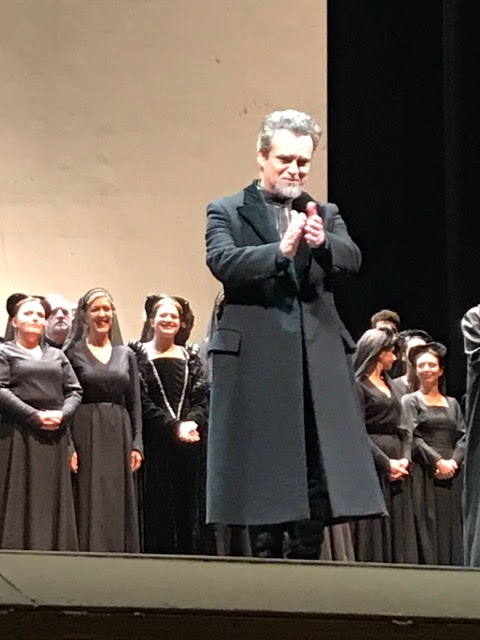
e Christian Luján
(Cecil),
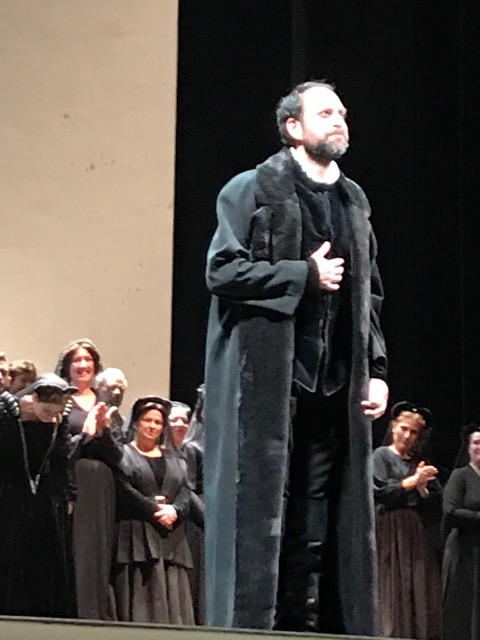
e a soprano Rita Marques (Anna Kennedy).

Um magnífico espectáculo de ópera, para mim o melhor em
muitos anos no Teatro de São Carlos.


*****
A luxurious
Maria Stuarda at the Teatro São Carlos!
Maria Stuarda, by G Donizetti
with libretto by Giuseppe Bardari is
based on the play Maria Stuart by F. Schiller. The plot takes place in the
historic period of the Tudor dynasty in England and is one of the three operas
(Anna Bolena, Maria Stuarda and Roberto Devereux) usually referred to as “the
queens of Donizetti” for their primordial roles. The present is dominated by
the confrontation between the two queens, Elisabetta and Maria Stuarda,
culminating in the beheading of the latter.
Maria
Stuarda is a romantic opera, where the composer musically characterizes the members
of the plot and their dramas. (The composer's first great romantic opera, Anna
Bolena, was written 4 years earlier, in 1830). It is musically undeniably
beautiful, the result of the expression of all the conflicts between the main
characters. It was censored for the way it represented the queens, namely for
the outrageous expression as Maria Stuarda accuses Elisabetta (Figlia impura di Bolena parli tu di
disonore? Unworthy, oscena meretrice, in te cade il mio rossone. Profanato is
the soglio inglese, vil bastarda, das tui piè!) in the direct confrontation
of the two queens (which never happened in real life), one of the most
impactful components of opera.
For lovers
of style, as is my case, it is a musical delight. It requires three singers of
great quality and that's what happened.
But let's
start with the direction by Andrea de
Rosa, with scenography by Sergio
Tramonti, beautiful costumes by Ursula
Patzak and magnificent lights by Pasquale
Mari. It is a production of the Teatro dell'Opera in Rome.
It is very
classic, minimalist, very beautiful, with excellent costumes, good lights, the
direction of the actors to privilege the singing and to always put the singers
on stage. No exorbitances. Simple, direct, effective and very pleasant. As it
should always be. Several parts are notable, namely the Fotheringay castle’s
park where Maria Stuarda is imprisoned and the end of the opera with the
executioner in the background. It is the proof that, with very few props, it is
possible to make high quality productions.
The Choir of the Teatro National de São
Carlos and the Portuguese Symphony
Orchestra were very good. The musical direction was in charge of the
maestro Fabrizio Maria Carminati.
Regarding
the singers, a marvel! All excellent, young, fantastic voices and excellent
actors.
Italian
mezzo Alessandra Volpe was an
impressive Elisabetta, always with good volume and projection, beautiful
timbre, good presence, in an interpretation sometimes contained but very
effective. The duets with Leicester and the confrontation with Stuart were
remarkable.
Leonardo Cortellazzi was a great Leicester in both vocal
and scenic interpretation. He is an excellent Italian tenor, with a strong presence,
has a very beautiful timbre and his voice is always with good volume and in
tune. Fantastic. The duet in 1st act with Elisabetta Era d'amor l'immagine was one of the most striking moments of the
interpretation, but he was always at the highest level.
Maria Stuarda
by Russian soprano Ekaterina Bakanova
was fabulous. The singer has an excellent figure, thin and tall, somewhat
fragile, but an impressive voice. Magnificent timbre, imposing projection,
without stridency, remarkable top register and very emotional interpretation.
She was soft and very lyrical in the opening when she recalls her freedom and
happiness in France (Ah! Nebe che lieve
per l'aria aggiri), moving when she asks Talbot to hear her in confession (Quando di luce rosea) and smaching in
the famous aria Deh! Tu di um umile
preghiera, and in the end Di un cor
che more. A luxury!
In supproting
roles, the quality of singing and stage performance did not clash, baritones Luís Rodrigues (Talbot) and Christian Luján (Cecil) were also great, as
well as soprano Rita Marques (Anna
Kennedy).
A
magnificent opera performance, for me the best in many years at Teatro de São
Carlos.
*****


