Mostrar mensagens com a etiqueta Gerald Finley. Mostrar todas as mensagens

sexta-feira, 17 de abril de 2020

COSÌ FAN TUTTE, METropolitan Opera, Fevereiro / February 2020


(review in English below)

A encenação de Phelim McDermott da ópera Così fan Tutte de Mozart coloca a acção num parque de diversões inspirado na Coney Island em Nova Iorque nos anos 1950.


Apesar de diferente, é um espectáculo muito bem conseguido, dinâmico, cheio de momentos cómicos, com as cenas a alternarem entre um motel e o parque. Logo no início, de um baú do mágico, saem muitas personagens das múltiplas atracções do parque com painéis com palavras que, alternando entre si as posições, constroem várias frases que definem o que vai acontecer.

A orquestra foi estupenda, sob a competente direcção do maestro Harry Bicket.


Os cantores, jovens e dinâmicos em palco, tiveram desempenhos excelentes, foram todos de grande qualidade e a música de Mozart e o libreto de Lorenzo da Ponte fizeram o resto.

O tenor Ben Bliss foi um Ferrando de voz suave e melodiosa e o seu momento alto foi a ária Una aura amorosa.


O barítono Luca Pisaroni interpretou o Guglielmo de forma viril e com voz potente e sempre afinada, a par de uma componente cénica excelente.


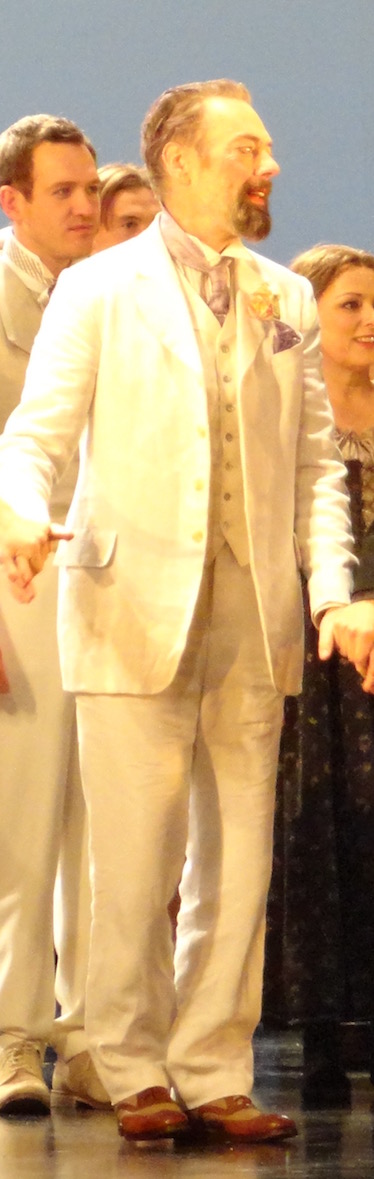
Don Alfonso foi o barítono Gerald Finley, quase maquiavélico, também detentor de uma excelente voz e óptima presença. A encenação também o ajuda muito.


A soprano Nicole Car fez uma Fiordiligi fabulosa, para mim a melhor da noite, embora dentro de um conjunto excelente. Tem um timbre belíssimo e foi muito emotiva na interpretação. No 1º acto foi notável na ária Come scoglio e comovente na Per pieta do 2º.


Também fantástica foi a mezzo Serena Malfi como Dorabella. Voz bonita, afinada e excelente presença cénica.


A Despina de Heidi Stober foi o elemento feminino mais cómico, como é esperado, e esta encenação ajuda muito. Também cantou muito bem, sempre agradável e sobre a orquestra, e mostrou uma versatilidade assinalável.


Um excelente espectáculo.


****


COSÌ FAN TUTTE, METropolitan Opera, February 2020

Phelim McDermott's production of Mozart's Così fan Tutte opera brings the action in a Coney Island-inspired amusement park in New York in the 1950s.
Although different, it is a very successful show, dynamic, full of humorous moments, with scenes alternating between a motel and the park. Right at the beginning, from a magician's chest, many characters of the park's multiple attractions come out with panels with words that, alternating positions between themselves, construct several sentences that define what will happen.

The orchestra was wonderful, under the competent direction of maestro Harry Bicket.

The singers, young and dynamic on stage, had excellent performances, they were all of great quality and Mozart's music and Lorenzo da Ponte's libretto did the rest.

Tenor Ben Bliss was a Ferrando with a soft and melodious voice and his top moment was the aria Una aura amorosa.

Baritone Luca Pisaroni interpreted Guglielmo in a manly manner and with a powerful and always in tune voice, along with an excellent scenic component.

Don Alfonso was baritone Gerald Finley, almost machiavellian, who also had an excellent voice and great presence. The staging also helps him a lot.

Soprano Nicole Car was a fabulous Fiordiligi, for me the best of the night, although within an excellent set. She has a beautiful tone and was very emotional in the interpretation. In the first act, she was notable in the aria Come scoglio and touching in Per pieta in the second act.

Also fantastic was mezzo Serena Malfi as Dorabella. Beautiful, tuned voice and excellent stage presence.

Despina by Heidi Stober was the most comical female element, as expected, and this staging helps a lot. She also sang very well, always pleasant and above the orchestra, and showed remarkable versatility.

An excellent show.

****

terça-feira, 26 de novembro de 2019

MORTE EM VENEZA / DEATH IN VENICE, Royal Opera House, Novembro / November 2019


(review in English below) 

A última ópera de Benjamin Britten, Morte em Veneza (segundo a obra homónima de Thomas Mann) foi apresentada pela Royal Opera de Londres numa encenação de David McVicar.


O escritor alemão Gustav von Aschenbach viaja para Veneza na procura de inspiração criativa. No hotel impressiona-se com a beleza de um jovem polaco, Tadzio, que está de férias com a família. Observa-o diariamente na praia, onde brinca com outros rapazes, e segue-o nas ruas de Veneza, mas não lhe consegue falar. Reconhece que está apaixonado por ele. Surgem notícias de um surto de cólera em Veneza, a maioria dos turistas abandona rapidamente a cidade, sucedem-lhe uma série de incidentes mas a obsessão por Tadzio impede-o de partir. No dia em que a família polaca sai do hotel, von Aschenbach observa o rapaz mais uma vez na praia, este luta com outro e, quando se levanta para tentar parar a luta, cai morto.


A encenação de McVicar é excelente. A acção decorre na época e o guarda roupa é magnífico. O palco tem uma série de colunas móveis e os cenários são muitos e dinâmicos, permitindo acompanhar perfeitamente a acção: o escritório de von Aschenbach na Alemanha, as viagens de Gôndola e os canais, os vários cenários no hotel, as ruas de Veneza, a Praça de São Marcos, a praia no Lido, tudo aparece em cenários bem conseguidos. 


Apenas achei a encenação escura no início (o nevoeiro nos canais é excelente, mas a ópera só “escurece” na segunda metade). 
Nesta produção o Tadzio não é um rapaz mas um homem jovem e todas as cenas passadas na praia são coreografadas e interpretadas (ao mais alto nível) por bailarinos, o que beneficia muito o espectáculo.

Dirigiu a Orquestra da Royal Opera o maestro Richard Farnes.


O tenor Mark Padmore foi excelente como Gustav von Aschenbach. Está quase sempre em cena e manteve a qualidade interpretativa sem vacilar até ao final. Tem uma dicção perfeita, das partes quase faladas às mais cantadas, tudo tão perceptível que dispensaria legendas.


Outro cantor de nível excepcional foi o barítono Gerald Finley nas 7 personagens que representa. Tem um timbre bonito, a voz é magnífica, e interpretou as diferentes personagens com um cariz específico para cada uma. À parte desta ópera, foi também homenageado por completar 30 anos de interpretações na Royal Opera.


O contratenor Tim Mead esteve também irrepreensível na interpretação de Apollo.


Leo Dixon, que interpretou o Tadzio, é um jovem bailarino do Royal Ballet que dançou superiormente. A coreografia (de Lynne Page) é óptima. 


Participaram muitos outros intervenientes, cantando papéis secundários, dançando ou representando.

(os bailarinos)

(os bailarinos)


(equipa de produção)


A música de Britten não é fácil, mas foi um excelente espectáculo.

****


DEATH IN VENICE, Royal Opera House, November 2019

Benjamin Britten's last opera, Death in Venice (according to the homonymous novel by Thomas Mann) was presented by the Royal Opera in a production by David McVicar.

German writer Gustav von Aschenbach travels to Venice for creative inspiration. At the hotel he is struck by the beauty of a young Polish boy, Tadzio, who is on holiday with his family. He watches him daily on the beach, where he plays with other boys, and follows him on the streets of Venice, but cannot speak to him. He realises he is in love with him. There is news of a cholera outbreak in Venice, most tourists leave the city quickly, a series of incidents follows, but his obsession by  Tadzio keeps him from leaving. The day the Polish family leaves the hotel, von Aschenbach watches the boy once again on the beach that fights with another boy. When he gets up to try to stop the fight, he falls dead.

McVicar's staging is excellent. The action takes place at the time and the dresses are magnificent. The stage has a series of moving columns, and the scenery is dynamic, making it perfectly possible to follow the action: von Aschenbach's office in Germany, the gondola rides and canals, the various parts in the hotel, the streets of Venice, St. Mark's Square, the beach in Lido, all appear in well-done scenarios. I just found the staging dark at first (the fog in the canals is great, but the opera only “gets dark” in the second half). In this production Tadzio is not a boy but a young man and all the scenes on the beach are choreographed and performed (at the highest level) by dancers, what is good for the show.

The Royal Opera Orchestra was conducted by Richard Farnes.

Tenor Mark Padmore was excellent as Gustav von Aschenbach. He is almost always on stage and has maintained interpretive quality without wavering until the end. He has a perfect diction, from almost spoken parts to the most sung, all so clear that it would require no subtitles.

Another exceptional level singer was baritone Gerald Finley in the 7 characters he performs. He has a beautiful tone, the voice is magnificent, and interpreted the different characters with a specific touch for each one. Apart from this opera, he was also honored for completing 30 years of performances at the Royal Opera.

Countertenor Tim Mead was also impeccable in Apollo's interpretation.

Leo Dixon, who played Tadzio, is a young Royal Ballet dancer who danced superiorly. The choreography (by Lynne Page) is great. Many other actors participated, singing secondary roles, dancing or acting.

Britten's music is not easy, but it was a great performance.

****

quarta-feira, 6 de março de 2019

O CASTELO DO BARBA AZUL, METropolitan Opera, Nova Iorque / New York, Fevereiro / February 2019


(review in English below)

A Metropolitan Opera de Nova Iorque voltou a oferecer a ópera O Castelo do Barba Azul de Bela Bartók numa encenação magnífica de Mariusz Trelinsky.


O espectáculo tem um início escuro com um narrador de voz grave e penetrante no meio do crepitar dos troncos de árvores. O efeito é magnífico e coloca-nos de imediato no ambiente dramático e sinistro da ópera.


Judith decide ir viver com o Barba Azul porque o ama, apesar dos terríveis rumores que ouviu sobre ele. Fechada no seu castelo, pede-lhe para abrir as 7 portas que estão trancadas. Ele opõe-se mas, após sua insistência, o interior das salas vai-lhe sendo sucessivamente revelado: uma câmara de tortura, armas, um tesouro, um jardim, um reino. Judith vê sangue em tudo mas reafirma o seu amor. A sexta sala contem um mar de lágrimas. Finalmente na sétima estão as 3 primeiras mulheres do Barba Azul. Judith admite que o sangue que vê é o das mulheres que terão sido assassinadas e o lago é das suas lágrimas. Junta-se a elas e tudo fica na escuridão.


A direcção musical foi excelente, do maestro húngaro Henrik Nánási.


A ópera tem apenas dois cantores, Judith (soprano alemã Angela Denoke


e o Barba Azul (baixo-barítono canadiano Gerald Finley). 


Ambos tiveram boas interpretações, vocais e cénicas, mas ocasionalmente foram abafados pela orquestra.


***


THE BLUEBEARD’S CASTLE, METropolitan Opera, New York, February 2019

The Metropolitan Opera of New York again offered the opera Bluebeard’s Castle by Bela Bartók in a magnificent staging of Mariusz Trelinsky.

The performance has a dark beginning with a low, penetrating narrator voice in the midst of the crackling of tree trunks. The effect is magnificent and puts us immediately in the dramatic and sinister atmosphere of the opera.

Judith decides to go live with the Bluebeard because she loves him, despite the terrible rumors she heard about him. Closed in her castle, she asks him to open the 7 doors that are locked. He opposes it but, after Judith's insistence, the interior of the rooms is being revealed successively: a torture chamber, weapons, a treasure, a garden, a kingdom. Judith sees blood in everything but reaffirms her love. The sixth room contains a sea of ​​tears. Finally in the seventh are the first 3 wives of the Bluebeard. Judith admits that the blood she sees is that of the women who have been murdered and the lake is her tears. She joins them and everything is in the dark.

The musical direction was excellent, by the Hungarian conductor Henrik Nánási.

The opera has only two singers, Judith (German soprano Angela Denoke) and Bluebeard (Canadian bass-baritone Gerald Finley). Both had good performances, vocal and on stage, but occasionally were drowned by the orchestra.

***