Mostrar mensagens com a etiqueta Faust. Mostrar todas as mensagens

quarta-feira, 26 de junho de 2019

FAUST, Royal Opera House, Londres / London, Maio / May 2019


(review in English below)

A Royal Opera House voltou a apresentar a encenação de David McVicar da opera Faust de C-F Gounod (libretto de Jules Barbier e Michel Carré). 


Esta produção já foi comentada no blogue aqui. Como referido então, a encenação é muito vistosa mas tem algumas bizarrias e uma cena orgiática de gosto muito duvidoso perto do final.


O maestro Dan Ettinger foi banal na direcção da orquestra que não esteve perfeita. Os cantores, com uma excepção, foram banais. E foram uma sombra em relação aos que vi e ouvi em 2011, num elenco de luxo: Vittorio Grigolo, René Pape, Angela Gheorghou e o saudoso Dmitri Hvorostovsky.


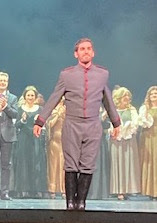
Michael Fabiano (Faust) tem uma má dicção do francês e canta com uma emissão algo irregular e teve manifestas dificuldades no registo mais agudo, quase cantou em falsete. Erwin Schrott (Méphistophélès), mais à vontade em palco, também não foi regular na linha de canto. Irina Lungu (Marguerite) que substituiu Diana Damrau, foi dura e nada expressiva. Carole Wilson (Marthe) e Germán Alcántara (Wagner) cumpriam sem impressionar. Contudo houve duas grandes interpretações, ao nível da qualidade habitual deste teatro, mas que não salvaram a récita, a jovem  Hongni Wu (Siébel), fantástica e Stéphane Degout (Valentin), excelente em cena, na interpretação vocal muito emotiva e sempre bem audível e, na verdade, o único que cantou em francês perceptível.


**


FAUST, Royal Opera House, London, May 2019

The Royal Opera House presented again David McVicar's staging of C-F Gounod's opera Faust (libretto by Jules Barbier and Michel Carré). This production has already been commented in the blog here. As stated then, the staging is very showy but has some bizarre and an orgiastic scene of very dubious interest near the end.

Conductor Dan Ettinger was banal in the direction of the orchestra that was not perfect. The singers, with one exception, performed without impressing. And they were a shadow over what I saw and heard in 2011, with a luxury cast: Vittorio Grigolo, René Pape, Angela Gheorghou and Dmitri Hvorostovsky.

Michael Fabiano (Faust) has a bad diction of French and sings with a somewhat irregular emission and had manifest difficulties in the top register, almost sang in falsetto. Erwin Schrott (Méphistophélès), more at ease on stage, was also not regular on the singing. Irina Lungu (Marguerite) who replaced Diana Damrau, was harsh and not expressive. Carole Wilson (Marthe) and Germán Alcántara (Wagner) performed without impressing. However, there were two top quality interpretations in the usual quality of this theater, but they did not save the performance: Hongni Wu (Siébel) was fantastic, and Stéphane Degout (Valentin), excellent on stage, in a very emotional and always well audible vocal performance and, in fact, the only one who sung in understandable French.

**

segunda-feira, 14 de maio de 2012

O Faust ideal em 2011-2012


Tive o privilégio de assistir, na presente temporada, a 4 representações da Ópera Faust, de Gounod.
Duas ao vivo e encenadas, na Royal Opera House de Londres,


uma ao vivo em versão concerto no Liceu de Barcelona


e uma em transmissão do Met (Met Live em HD, Gulbenkian).


 Aqui deixo a minha sugestão do que seria o Faust ideal na presente temporada.

Faust – Uma escolha muito difícil entre o mais dinâmico em palco - Vitorio Griggolo (Londres), o mais experiente - Roberto Alagna (Paris), o mais lírico -  Piotr Beczala (Barcelona) e o mais marcante -  Jonas Kaufmann (Nova Iorque).


Marguerite – Neste caso, Inva Mula (Paris) e Marina Poplavskaya (Nova Iorque) estiveram bem aquém das fantásticas interpretações de Angela Gheorghiu (Londres) e de Krassimira Stoyanova (Barcelona).


 Mefistóphélès – Foi a escolha mais fácil. O impressionante René Pape (Londres e Nova Iorque) foi, cénica e vocalmente, muito superior a Paul Gay (Paris) e Erwin Schrott (Barcelona).


(Fotografia / Photo Catherine Ashmore / Royal Opera House)


Valentin – Se Tassis Christoyannis (Paris) e Russel Braun (Nova Iorque) cumpriram sem encantar, Dmitri Hvorostovsky (Londres) e Ludovico Tézier (Barcelona) foram ambos sensacionais. A escolha foi exclusivamente baseada na interpretação vocal.


Siebel – Foram todas interpretações interessantes, Karine Deshayes (Barcelona), Angélique Noldus (Paris) e  Michèle Loiser (Londres e Nova Iorque).


Maestro – Pierre Vallet (Barcelona) foi fraco, Alain Altinoglu (Paris) foi banal, Evelino Pidó (Londres) foi infeliz e Yannick Nézet-Séguin (Nova Iorque) foi notável.

Encenação – Em Londres, de David McVicar, foi vistosa mas com algumas bizarrias. Em Paris, de Jean-Louis Martinoty, foi rica mas com vários apontamentos de gosto muito duvidoso. Em Nova Iorque, de Des McAnuff. foi simples e banal. Nenhuma foi marcante. Em Barcelona não houve.


O Faust ideal em 2011-2012 seria:

Encenação – David McVicar (Royal Opera House)
Maestro – Yannick Nézet-Séguin
Faust – Piotr Beczala
Marguerite – Krassimira Stoyanova
Mephistóphélès – René Pape
Valentin- Ludovico Tézier
Siebel - Michèle Loiser


The ideal Faust in 2011-2012

I had the privilege to watch this season four performances of the opera Faust, by Gounod.
Two live and staged (Royal Opera House in London and Bastille in Paris), one live in concert version (Liceu in Barcelona) and one transmission from the Met (Met Live in HD, Gulbenkian).
Here I leave my suggestion of what would be the ideal Faust this season.

Faust - A very difficult choice among the most dynamic on stage - Vitorio Griggolo (London), the most experienced - Roberto Alagna (Paris), the most lyrical - Piotr Beczala (Barcelona) and the most remarkable - Jonas Kaufmann (New York).

Marguerite - In this case, Inva Mula (Paris) and Marina Poplavskaya (New York) were far from the fantastic performances of Angela Gheorghiu (London) and Krassimira Stoyanova (Barcelona).

Mefistóphélès – This was the easiest choice. The impressive René Pape (London and New York) was artistically and vocally much superior to Paul Gay (Paris) and Erwin Schrott (Barcelona).

Valentin - If Tassis Christoyannis (Paris) and Russell Braun (New York) were OK, Dmitri Hvorostovsky (London) and Ludovico Tézier (Barcelona) were both sensational. My choice was based solely on the vocal performance.

Siebel – All singers gave us interesting interpretations, Karine Deshayes (Barcelona), Angélique Noldus (Paris) and Michele Loiser (London and New York).

Conductor - Pierre Vallet (Barcelona) was weak, Altinoglu Alain (Paris) was trivial, Eveline Pido (London) was unfortunate, and Yannick Nézet-Séguin (New York) was remarkable.

Staging - In London, David McVicar’s, was interesting but with a few oddities. In Paris, Jean-Louis Martinoty’s was rich but with several very doubtful options.
In New York, Des McAnuff’s. was simple but trivial.. None was significant. In Barcelona there was no staging.


The ideal Faust in 2011-2012 would be:

Staging - David McVicar (Royal Opera House)
Maestro - Yannick Nézet-Séguin
Faust - Piotr Beczala
Marguerite - Krassimira Stoyanova
Méphistophélès - Rene Pape
Valentin - Ludovico Tézier
Siebel - Michèle Loiser

domingo, 11 de dezembro de 2011

FAUST – Met Live em HD, Fundação Gulbenkian, Dezembro de 2011

(Review in English below)


 Faust de Charles Gounod é uma ópera lírica em cinco actos com libretto de Jules Barbier e Michel Carré. O enredo pode ler-se aqui


A encenação no Met foi do canadiano Des McAnuff. A acção foi transportada para o início do século XX, no período entre as duas guerras mundiais. O filósofo Faust é aqui um velho físico nuclear que trabalha num laboratório onde se desenvolve a bomba atómica.

(Fotografias / Photographs de Ken Howard / Met Opera)

 Pensa suicidar-se ingerindo veneno mas, depois de invocar o diabo e lhe vender a alma aparece, do meio do fumo, jovem e impecavelmente vestido e assim continuará até à cena final. Mefistófeles está vestido de forma idêntica a Faust, mas usa um laço, uma gravata ou uma flor escarlate na lapela.


 O cenário é em metal, relativamente vazio, ladeado por duas escadas de caracol, com três voltas, constantemente utilizadas nos movimentos cénicos, semelhante à encenação que Jean-Louis Martinoty concebeu para o Faust de Paris, como se pode ver aqui. Esta estrutura serve de base a toda a encenação que beneficia de frequentes projecções vídeo.
No 4º acto, a chegada dos militares da guerra e o reencontro com as famílias é um dos momentos mais bem conseguidos.
No final, Marguerite sobe ao céu numa escada que surge no centro (posterior) do palco e Faust, novamente velho, reaparece no seu laboratório e suicida-se por ingestão do veneno.

Confesso que de início não gostei mas, com o desenrolar do espectáculo, fui achando que acabou por funcionar, apesar de não ter trazido nada de muito inovador.
A direcção musical foi do jovem maestro canadiano Yannick Nézet-Séguin. Foi uma direcção superior, fez justiça à partitura de Gounod e apoiou muito os cantores com algumas alterações nos tempos sem perturbar a narrativa vocal, permitindo que fossem sempre ouvidos.
A Orquestra e o Coro do Met estiveram, como sempre, ao mais alto nível.

Jonas Kaufmann, tenor alemão, foi um Faust extraordinário. A sua voz é de tenor lírico spinto mas consegue descer ao registo baritonal ou subir às notas mais agudas sem qualquer perda de qualidade. E fá-lo aparentemente sem esforço, sempre audível e sem estridência. A interpretação esteve repleta de frases de um lirismo invulgar, alguns pianíssimos de cortar a respiração, mezza voce ou voz forte e encorpada sempre que as passagens o exigiam. Foi também excelente a sua interpretação cénica, expressando curiosidade, desejo, arrependimento e desespero. As cenas com Marguerite foram marcantes e, no início, revelando algum cinismo também. É um artista completo e mais uma vez o demonstrou. A ária Salut! demeure chaste et pure no 3º Acto foi muito aplaudida mas as intervenções nos dois últimos actos foram arrebatadoras.


 O soprano russo Marina Poplavskaya foi Marguerite. A cantora não está no grupo das minhas favoritas mas esta foi a sua melhor interpretação que assisti. Tem uma voz forte, dura e, por vezes, estridente para algumas das personagens que tem interpretado e, no presente caso, também assim penso. Começou mal mas conseguiu transmitir a inocência desejável à personagem. Também achei que melhorou vocalmente ao longo da récita. Artisticamente esteve muito bem, de frágil e pura a destroçada e enlouquecida no final. O pormenor do cabelo, longo e belo no início e curto e descuidado no fim foi muito bem conseguido.
Na ária Ah! Je ris de me voir, a célebre ária das jóias (que inspirou “As Jóias da Castafiore” de Tintin / Hergé), revelou algumas limitações técnicas. Contudo, esteve bem melhor no dueto amoroso do final do 3º acto e também muito bem no 5º acto.


 René Pape, baixo alemão, foi um Méphistophélès assinalável. A voz é potente, cheia e grave, com alterações cromáticas ajustadas ao que canta. A figura e a encenação ajudam mas, apesar da sua presença dominadora, não foi tão maléfico e assustador como o vi anteriormente. Na ária Le véu d’or foi irrepreensível e teve várias outras intervenções de grande qualidade.


Valentin, irmão de Marguerite foi interpretado pelo barítono canadiano Russell Braun. A voz, bem audível, é igual a tantas outras. Artisticamente, na cena da morte após ter sido ferido por Faust, esteve muito bem.


 Michèle Loisier, mezzo canadiano de voz bem timbrada, foi um Siebel de qualidade.


 Este foi o quarto Faust que vi na presente temporada (e a este assunto voltarei brevemente).
Esta tarde foi mais um bom espectáculo na Gulbenkian.


****


FAUST - Met Live in HD,  Gulbenkian Foundation, December 2011

Charles Gounod's Faust is a lyric opera in five acts with libretto by Jules Barbier and Michel Carré. The plot can be read here.

The staging at the Met was by Canadian director Des McAnuff. The action was set at the early twentieth century, the period between the two world wars. The philosopher Faust is here an old nuclear physicist who works in a lab where the atomic bomb is developed. He wants to commit suicide by drinking poison, but after invoking the devil he appears and he sells his soul to him. Then he comes from the middle of smoking, young, impeccably dressed and so will he continue until the final scene. Mephistopheles is dressed identically to Faust, but always wears a tie or a scarlet flower in his lapel.
The scenario is metalic, relatively empty, flanked by two spiral staircases with three loops that are continuously used in scenic movements. This approach is similar to the scenario that Jean-Louis Martinoty designed recently to Faust in Paris, as can be seen here.
This structure provides the basis for all the opera that benefits from frequent video projections.
In the 4th act, the arrival of the soldiers from the war and the meeting with their families was one of the most well done parts.
In the end, Marguerite ascends to heaven on a stairway that appears on back center stage and Faust, old again, reappears in his lab and commits suicide by swallowing poison.
I confess that at first I did not like the staging but, with the course of the show, I realized that it finally worked, although without anything very innovative.

The musical direction was of the young Canadian conductor Yannick Nézet-Séguin. It was a superior direction, he has done justice to the score of Gounod and supported the singers with a few changes in tempi without disrupting the vocal narrative and allowing the singers to be always heard.
The Met Orchestra and Choir were, as always, at the highest level.

Jonas Kaufmann, German tenor, was an extraordinary Faust. His lyric spinto tenor voice is capable to descend to the baritonal register or to climb to top nnotes without any loss of quality. And he does it so seemingly effortless, always audible and without stridency. His singing was full of uncommon beautiful lyric parts, some breathtaking pianissimi, and either mezza voce or strong and full-bodied passages whenever adequate. Artistically he was also excellent, expressing curiosity, desire, regret and despair. The scenes with Marguerite were remarkable, also revealing some cynicism at the beginning. Kaufmann is a complete artist, and he confirmed that once again. The aria Salut! Demeure chaste et pure in the 3rd Act was very good but his singing in the last two acts was breathtaking.

Russian soprano Marina Poplavskaya was Marguerite. I confess that she is not one of my favourite singers but this was her best performance I attended. She has a strong hard voice, and sometimes strident for some of the characters that she interprets. She did not have a good start but she managed to convey the desirable character's innocence. I also think that she improved vocally over the performance. Artistically she was fine, fragile and pure at first, mad and shattered at the end. The detail of her hair, long and beautiful at the beginning, and short and careless at the end was very good.
In the aria Ah! Je ris de me voir, the famous aria of the jewels (which inspired "The Castafiore Jewels" of Tintin / Hergé) she revealed some technical problems. However, she was much better in the love duet at the end of the 3rd act and she was also very well in the 5th act.

René Pape, German bass, was a remarkable Méphistophélès. The voice is powerful and with a beautiful low register, with colour changes adjusted to singing. The figure and the staging helped but, despite his constant commanding presence, he was not so evil and scary as I have seen him previously. In the aria Le veil d'or he was blameless and he had several other high-quality interventions.

Valentin, Marguerite's brother was interpreted by Canadian baritone Russell Braun. The voice, strong and with a nice timbre, is like many others. Artistically, at the death scene after being wounded by Faust, he was excellent.

Michèle Loisier, Canadian mezzo with a beautiful voice was a very good Siebel.

This was the fourth Faust I've seen this season (and I will come to this issue soon).
This afternoon was another good performance seen at the Gulbenkian Foundation.

****

quarta-feira, 2 de novembro de 2011

FAUST, Liceu, Barcelona, Outubro de 2011

(review in English below)

Faust no Liceu de Barcelona – Canto de elevada qualidade, mas amputado e em versão concerto.

Foi uma pena a ópera não ter sido encenada, dado que contou com um conjunto de solistas de primeira água. Vi o Faust há poucas semanas em Londres e em Paris e, apesar de algumas opções cénicas mais discutíveis, esta é uma daquelas óperas que, sem encenação, fica ferida de morte. Mas, pior ainda, o Liceu não apresentou a ópera na íntegra, amputou-a, e foram tocadas e cantadas apenas algumas partes. Em vez de “Fragmentos em versão concerto”, como está escrito no programa, foram “estilhaços” ou “cacos” de uma bela obra de Gounod. Lamentável!


 E o público de Barcelona não deixou de dar um sinal negativo. Estavam bastantes lugares vagos, talvez um terço, facto que nunca havia constatado nas minhas anteriores visitas a este teatro.


 A orquestra estava sobre o palco e os solistas cantavam à frente mas sempre de um dos lados, sem qualquer interacção eficaz entre eles. Apenas entravam e saíam. Uma lástima!


 A direcção musical do maestro francês Pierre Vallet foi deficiente. Não empolgou e não teve em conta o facto de a orquestra estar sobre o palco, abafando os solistas quando cantavam em mezza voce ou em piano.

Piotr Beczala, tenor polaco, foi um Faust excepcional. É um dos tenores actuais que mais aprecio e, mais uma vez, esteve ao mais alto nível. O timbre é belíssimo, a voz poderosa, os agudos de belo efeito e aparentemente alcançados sem esforço. São ainda notáveis o legatto e a mezza voce. Foi muito aplaudido na cavatina “Salut! Demeure chaste et puré” que foi impressionante mas foi igualmente fantástico em todas as outras intervenções.


 Outro intérprete de excepção foi o soprano búlgaro Krassimira Stoyanova como Marguerite. A voz é forte, sempre afinada, capaz de transmitir emoção tanto nos momentos mais líricos como nos mais dramáticos. Na ária “Ah! Je ris de me vois si belle” esteve muito bem e mostrou uma coloratura de elevada qualidade, mas foi ainda melhor nos duetos com Faust “Il se fait tard, adieu!” e “Oui, c’est toi! Je t’aime!” e, sobretudo, na ária “Il ne revient pas”.


Erwin Schrott, baixo-barítono uruguaio, foi o elemento menos forte de entre os solistas. Apesar de nos ter dado uma boa interpretação, foi um Mefistófeles irregular, ora com momentos de qualidade superior, ora com intervenções banais. O timbre é muito agradável e o registo baixo poderoso, mas foi inconstante.


 O Valentin do barítono francês Ludovic Tézier foi irrepreensível. Nunca lhe tinha presenciado uma interpretação de tão elevado nível. A voz é de qualidade apreciável, o registo médio e, sobretudo, o grave, são notáveis. A cavatina “Avant de quitter ces lieux” foi um dos momentos altos da noite, devidamente reconhecido pelo público.


 Também estiveram bem o Siebel do mezzo francês Karine Deshayes e a Marthe do mezzo Julia Juon.


 Em Barcelona, um Faust de grande potencial, mas amputado e ferido de morte!

***


 FAUST, Liceu, Barcelona, ​​October 2011

Faust at the Liceu in Barcelona – High quality singing, but amputated and in concert version.

It was a pity the opera was not staged. The soloists were of first quality. I saw Faust a few weeks ago in London and in Paris and, despite some questionable staging choices, this is one of those operas that becomes fatally wounded without staging.. But, even worse, the Liceu did not present the whole opera. It was amputated and only a few parts were played and sung. Instead of "Fragments in concert version," as it is written in the program, it should be mentioned "shattered" or "shards" of a beautiful work of Gounod. Regrettable
!

And the Barcelona audience gave a clear negative sign. There were plenty of vacant seats, perhaps a third. This I had never seen in my previous visits to this theatre.

The orchestra was on stage and the soloists sang in the front, but always on one side, without any effective interaction among them. They just came inand went out. It was a pity!

The musical direction of French maestro Pierre Vallet was deficient. He did not achieve musical excitement and he did not take into account the fact that the orchestra was on the stage, drowning out the soloists when they sang in mezza voce or piano.

Polish tenor Piotr Beczala was an exceptional Faust. He is one of  my favourite current tenors and, again, he was at his highest level. The timbre is beautiful, the voice powerful, the top notes are of  beautiful effect and seemingly effortless. Still outstanding in mezza voce and the legatto. He was very applauded in the cavatina "Salut! Demeure chaste et pure" which was impressive but he was also fantastic in all other of his interventions.

Another outstanding singer was Bulgarian soprano Krassimira Stoyanova as Marguerite. The voice is strong, always in tune, able to convey emotion both in the most lyrical as well as in the most dramatic parts. In the aria "Ah! Je ris de me vois si belle" she was very well and showed a high quality coloratura, but she was even better in duets with Faust “Il se fait tard, adieu!” and “Oui, c’est toi! Je t’aime!” and, especially, in the aria “Il ne revient pas”.

Uruguayan bass-baritone Erwin Schrott was the least strong element among the soloists. Although he has always given a good interpretation, he was an irregular Mephistopheles, either with moments of superior quality or with banal interventions. The timbre is very nice, the low register powerful, but he was inconsistent.

Valentin, by French baritone Ludovic Tézier, was blameless. I never had seen him at such a high level of interpretation. The voice quality is appreciable, the medium and, especially, the low register are remarkable. The cavatina “Avant de quitter ces lieux” was one of the highlights of the evening, duly recognized by the public.

There were also good interpretations of French mezzo Karine Deshayes as Siebel and of mezzo Julia Juon as Marthe.

In Barcelona,
​​a Faust of great potential, but amputated and deadly wounded!
***

domingo, 9 de outubro de 2011

FAUST, Bastilha, Paris, Outubro de 2011

(in English below)

Faust de Charles Gounod é uma ópera lírica em cinco actos com libretto de Jules Barbier e Michel Carré. O enredo podem ler-se aqui.


 Em Paris a encenação de Jean-Louis Martinoty é luxuosa e vistosa, com muitos elementos bem conseguidos, mas também com outros altamente controversos.


 O pano abre e estamos nos aposentos de Faust. O cenário é uma enorme biblioteca que se estende por três andares, com duas escadas de caracol com três voltas em cada lado.
Esta estrutura permanecerá ao longo de toda a récita, embora com grande mobilidade e, a partir de dada altura, os livros desaparecem e ficam apenas as prateleiras.


 Ao centro, dominando a cena, uma enorme cruz de Cristo, ela própria também feita com suportes de livros da biblioteca. O Cristo está pregado.


 Há também um imponente telescópio, um planisfério, paisagens exteriores, vários instrumentos de estudo, um modelo do corpo humano, um rinoceronte, uma estátua representando a juventude feminina. E um quadro do diabo, donde sai Mefistófeles quando é invocado.
Faust, velho, escreve Rien num quadro ao fundo do palco, a primeira palavra que canta. Ficará escrita em letras fluorescentes até ao final da ópera. Faust, jovem, chega do fundo do palco, dentro de uma cúpula redonda de vidro (nesta produção são duas personagens diferentes no Faust).

No 2º acto, na festa de despedida de Valentin, o coro aparece em trajos campestres e em bonecos populares de grande efeito cénico. Há um desfile de “Misses” e vários pares numerados dançam uma valsa, como se estivessem numa competição de danças de salão. Tudo é observado de cima por um esqueleto de Cristo, só a metade superior, com uma coroa de flores à volta do crânio. (Assim começam as excentricidades).


 Na cena das jóias, no 3º acto, é Mefistófeles que as vai dando a Marguerite e lhe vai mostrando a sua imagem num espelho. Quando não está directamente envolvido na acção cénica, Mephistófeles está quase sempre presente, num dos três níveis do palco, observando (e comandando) o que se passa. Está impecavelmente vestido, com casaca debruada a encarnado. (Apenas no 5º Acto, quando descem aos seus domínios, aparece todo de encarnado).

No 4º acto os militares chegam da guerra, muitos estropiados e cegos. Entre eles Valentim que, de forma cenicamente bizarra (procura mostrar-se o poder do diabo?) é morto por Faust. Marguerite tenta entrar na igreja (decorrem as cerimónias fúnebres do irmão, que a amaldiçoou) mas é impedida por Mefistófeles.

No último acto o Cristo que domina sempre o cenário aparece amputado da sua metade inferior. Marguerite mata o filho e é presa e condenada à morte. É guilhotinada e a sua cabeça colocada num andor, saindo em procissão no final da ópera, enquanto Mefistófeles e Faust se afastam. O bailado não foi apresentado.

Uma abordagem muito controversa, sobretudo no final, que não agradou a muitos dos presentes. Houve uma vaia enorme para a encenação.

A direcção musical foi do maestro francês Alain Altinoglu. Gostei, acho que fez justiça à partitura de Gounod. A Orquestra e o Coro da Ópera Nacional de Paris estiveram muito bem.


 Passando aos cantores, devo dizer que acho quase humanamente impossível que qualquer um, sem amplificação da voz (o que seria horrível), se consiga fazer ouvir bem num teatro com estas dimensões. Apesar de ter menos espectadores que o Met de Nova Iorque, acho que a volumetria é maior.

Faust foi interpretado pelo tenor francês Roberto Alagna. Esteve à altura do papel. A voz tem um timbre bonito, fez-se ouvir sempre, embora algumas vezes em esforço nos agudos. Cenicamente não foi muito eficaz e achei que a relação com Marguerite nunca foi emotiva.


 Paul Gay, baixo barítono francês, foi um Mefistófeles competente, com uma boa voz, mas sem nenhuma característica digna de realce que, ocasionalmente, se deixava de ouvir, sobretudo quando a orquestra soava mais forte. Em cena teve uma presença interessante.


 Marguerite foi interpretada pelo soprano albanês Inva Mula. Para mim foi a melhor intérprete da noite. Tem uma voz potente e afinada tanto no registo médio como no agudo. Teve uma boa presença cénica.


 Tassis Christoyannis,  barítono grego, foi um Valentin  que cumpriu sem deslumbrar e a voz, por vezes, ficou afogada na orquestra.


 Merece ainda referência Angélique Noldus mezzo soprano belga, que compôs um Siebel  (rival de Faust) interessante.


 Como já referi, o público vaiou ruidosamente a produção e, de entre os cantores, Roberto Alagna também foi brindado com algumas manifestações de desagrado.


****


FAUST, Bastille, Paris, October 2011


Charles Gounod's Faust is a lyric opera in five acts with libretto by Jules Barbier and Michel Carré. The plot can be read here.

In Paris the staging of Jean-Louis Martinoty is luxurious and eye-catching, well done concerning many elements, but is also highly controversial. with others
The curtain opens and we are in the Faust´s world. The setting is a huge library that spans three floors, with two spiral staircases with three rounds in each side of the stage.
This structure will remain throughout the opera, though with great mobility and, from some point, the books disappear and are just shelves remain.

In the center, dominating the scene, a huge cross of Christ, also made with shelves and books. The Christ is preached. There is also a massive telescope, outdoor representations, various study instruments, a model of the human body, a rhino, a statue representing the female youth. And a picture of the devil, from where Mephistopheles appears when he is invoked.
Faust, as an old man writes the word Rien on frame at the back of the stage. This is the first word he sings. It will be written in fluorescent letters until the end of the opera. Faust, as a young man, comes from the bottom of the stage, in a round glass dome (in this production there are two different artists for Faust).

In the 2nd act, in the farewell party of Valentin, the chorus appears in costumes and folk figures of great scenic effect. There is a parade of "Misses" and several numbered pairs dance a waltz, as if in a ballroom dancing competition. All is observed from above by a skeleton of Christ, only the upper half, with a wreath around the skull. (Thus begin the eccentricities).

At the scene of the jewels in the 3rd act, it is Mephistopheles himself that gives Marguerite the jewels and shows her image in a mirror. When not directly involved in the action Mephistófeles is almost always present in one of three levels of the stage, watching (and commanding) what is happening. He is always well dressed, with a coat trimmed in red. (Only in Act 5, when he descendsto his territories, he is dressed all-red).

In 4th act the military warriors arrive, many crippled and blind. Valentin is among them. He is killed by Faust in a bizarre way (to the power of the devil?) Marguerite tries to enter the church (where the funeral ceremonies of his dead brother are taking place) but she is prevented by Mephistopheles.

In the last act the Christ who always dominates the scene appears cut off from the lower half. Marguerite kills her son and is arrested and sentenced to death. She is guillotined and her head is placed on a litter, leaving in procession at the end of the opera, Meanwhile, Faust and Mephistopheles walk away. The ballet was not presented.

A very controversial approach, especially towards the end, which did not please many of those present. There was a huge boo for the staging.

The musical direction was the French conductor Alain Altinoglu. I liked it, I think he payed justice to the score of Gounod. The Orchestra and Chorus of the Opera National de Paris were very good.

Concerning the singers, I must say that I think it is almost humanly impossible for anyone, without amplification of the voice (which would be horrible), to be heard well in a theater of this size. Despite having fewer seats than the Met in New York, I think its “volume” is greater.

Faust was played by French tenor Roberto Alagna. He was OK. The voice has a beautiful timbre, it is always heard, though sometimes in the high notes, he was in effort. Artistically he was not very effective and I thought the relationship with Marguerite was never emotional.

Paul Gay, French bass baritone, was a competent Mephistopheles, with a good voice, but with no other special features. Occasionally we could not hear him, particularly when the orchestra sounded forte. Had an interesting artistic presence.

Marguerite was interpreted by Albanian soprano Inva Mula. For me she was the best performer of the night. She has a powerful tuned voice both in the medium and the top registers. She had a good stage presence.

Tassis Christoyannis, Greek baritone, was Valentin. He had a regular performance and was, sometimes, drowned by the orchestra.

Finally Angélique Noldus Belgian mezzo, deserves to be mentioned as she sang in an interesting way the role of Siebel (Faust´s rival).

As already mentioned, the audience booed loudly the production. Among the singers, Roberto Alagna was also booed by some members of the public, but mostly he was applauded.

****