Mostrar mensagens com a etiqueta Ein Deutsches Requiem. Mostrar todas as mensagens

sexta-feira, 4 de novembro de 2022

EIN DEUTSCHES REQUIEM, Fundação Gulbenkian, Lisboa, Novembro 2022

(review in English below)

A Fundação Gulbenkian ofereceu-nos a magnífica obra Um Requiem Alemão de Johannes Brahms, uma das peças sinfónicas corais que mais aprecio. E foi um excelente presente, dada a qualidade do espectáculo. Toda a peça é marcante mas, para mim, os 2º e 6º andamentos, pela sua monumentalidade instrumental e coral, são os mais impressionantes.


O maestro Stanislav Kochanovsky dirigiu o Coro e a Orquestra Gulbenkian. Se a Orquestra esteve muito bem, o Coro foi excelente (a Maestrina do Coro Inês Tavares Lopes merece um grande elogio).

E os solistas foram de topo. O barítono André Baleiro tem uma voz magnífica, bem timbrada e com uma técnica irrepreensível. Junta às fantásticas qualidades vocais a juventude e a boa figura. Estou certo que terá uma merecida carreira internacional nos grandes teatros de ópera mundiais.


A soprano Sónia Grané, surpreendeu-me com uma bela interpretação, voz afinada, e com um registo agudo surpreendente. 


Um excelente espectáculo.


*****


EIN DEUTSCHES REQUIEM, Gulbenkian Foundation, Lisbon, November 2022

The Gulbenkian Foundation offered us the magnificent work Ein Deutsches Requiem by Johannes Brahms, one of the choral symphonic pieces that I most appreciate. And it was an excellent gift, given the quality of the performance. The whole piece is remarkable but, for me, the 2nd and 6th movements, due to their instrumental and choral monumentality, are the most impressive.

Conductor Stanislav Kochanovsky directed the Choir and the Gulbenkian Orchestra. If the Orchestra was very good, the Choir was magnificent (the Conductor of the Choir Inês Tavares Lopes deserves great praise).

And the soloists were excellent. Baritone André Baleiro has a magnificent voice, well-toned and with excellent technique. He adds youth and good figure to the vocal qualities. I am sure he will have a great and well deserved international career in the world's great opera houses.

Soprano Sónia Grané surprised me with a remarkable interpretation, beautiful voice, in tune, and with a surprising top quality high register.

*****

sábado, 3 de fevereiro de 2018

Um Requiem alemão / Ein deutsches Requiem, Fundação Gulbenkian, Fevereiro de 2018


(text in English below)

A Fundação Gulbenkian ofereceu-nos uma das grandes obras corais do reportório alemão, o magnífico Requiem Alemão de Brahms.

A Orquestra Gulbenkian, dirigida pela maestrina Laurence Equilbey, esteve algo contida. O barítono Thomas Hampson, sem necessidade da partitura, esteve em grande nível, voz ampla de timbre bonito e bem sobre a orquestra, embora no registo mais agudo perdesse alguma pujança. A soprano Miah Persson tem uma voz e uma intervenção pequenas, mas não destoou. O Coro Gulbenkian esteve ao mais alto nível e foi o melhor da noite.


Na primeira parte do concerto ouviram-se canções bíblicas de A. Dvorak, cantadas por Thomas Hampson. Confesso que, para mim, não foram uma mais valia para o concerto.


O comportamento do público foi, mais uma vez, deplorável! Tocaram telemóveis durante todo o concerto. E o que não consigo perceber é a necessidade compulsiva de tossir ruidosamente, quer durante o concerto, quer nos intervalos entre andamentos. Dando de barato que a maioria dos que tossem não têm tuberculose activa nem outras infecções pulmonares graves, talvez os psiquiatras saibam explicar este comportamento, que não se vê noutras latitudes onde o Inverno é bem mais rigoroso!

****


Ein deutsches Requiem, Fundação Gulbenkian, February 2018

The Fundação Gulbenkian offered us one of the great choral works of the German repertoire, Brahms' magnificent Ein deutsches Requiem.

The Gulbenkian Orchestra, directed by Laurence Equilbey, was somewhat restrained. Baritone Thomas Hampson, without the need for the score, was on a top level, with a beautiful voice over the orchestra, although in the higher register he lost some strength. Soprano Miah Persson has a small voice and a small participation, but she was ok. The Gulbenkian Choir was at the highest level and was the best of the night.

In the first part of the concert we heard biblical songs by A. Dvorak, sung by Thomas Hampson. I confess that for me they were not an asset to the concert.

The behavior of the public was, once again, deplorable! Cell phones were heard throughout the concert. And what I cannot understand is the compulsive need to cough noisily, both during the concert and between breaks. Admitting that most of those who cough do not have active tuberculosis or other serious pulmonary infections, psychiatrists may be able to explain this behavior, which is not seen in other latitudes where the Winter is much more rigorous!


****

quarta-feira, 20 de abril de 2011

UM REQUIEM ALEMÃO / EIN DEUTSCHES REQUIEM, Frauenkirche, Munique, Abril de 2011


(review in English below)

Tive a sorte de estar em Munique no dia em que foi realizado um concerto de solidariedade para com o povo japonês, na sequência do devastador terramoto (e tsunami) de há poucas semanas.


Foi fácil obter o bilhete pela Internet, através do site da Bayerische Staatsoper, responsável pela organização, apesar de os lugares terem esgotado muito rapidamente.

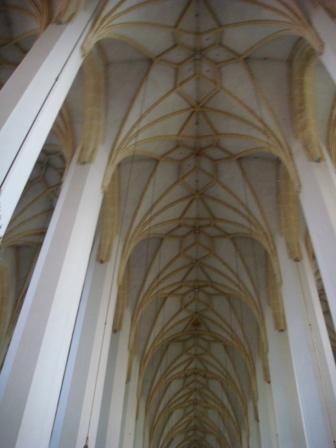
O local do concerto foi a belíssima Catedral da Nossa Senhora, Frauenkirche.


A Orquestra e Coro da Bayerische Staatsoper, os coros da Catedral e juvenil de Windsbacher e os solistas Michael Volle (barítono) e Soile Isokoski (soprano) interpretaram o Requiem Alemão de Johannes Brahms, sob a direcção do maestro Kent Nagano.


Logo no início, o Arcebispo e o Governador do estado da Baviera disseram umas brevíssimas palavras sobre a solenidade do momento (cinco minutos os dois) e o soprano japonês Eri Nakamura interpretou duas canções infantis japonesas.


Assistir a este Requiem foi um acontecimento que jamais esquecerei. Já há muito que conheço e aprecio a beleza da peça mas ouvi-la assim cantada (coros e solistas superlativos) com a sonoridade só conseguida numa catedral como esta foi uma experiência arrepiante que, durante aquela breve hora, nos transportou para uma dimensão etérea. Não há palavras para o descrever.


Mais uma vez, o civismo do povo alemão foi notável. Os bancos corridos da catedral estavam numerados no topo (para os portadores de bilhete “sentado”) e, mesmo quando havia muito espaço vazio e largas dezenas de pessoas em pé (os com bilhete “em pé” que eram a maioria), ninguém se sentou indevidamente.


No final do concerto houve um período de silêncio absoluto de cerca de cinco minutos. Depois, todos saíram tranquilamente, sem um aplauso sequer, mas várias pessoas ainda com lágrimas nos olhos.


Confesso que tenho grande admiração pela Alemanha e, neste dia, ter-me-ia sentido muito orgulhoso se fosse alemão. Quão pequeninos e humildes somos na grandiosidade espiritual e humana de um momento sublime como este!


EIN DEUTSCHES REQUIEM, Frauenkirche, Munich, April 2011

I was lucky to be in Munich on the day that a concert for the people of Japan was performed, following the devastating earthquake (and tsunami) a few weeks before.

It was easy to get a ticket on the Internet, through the website of the Bayerische Staatsoper that organized the concert, although the seats were sold out (free of charge) very quickly.

The venue was the beautiful Cathedral of Our Lady, the Frauenkirche.

The Orchestra and Chorus of the Bayerische Staatsoper the choir of the Cathedral and the children’s choir Windsbach and soloists Michael Volle (baritone) and Soile Isokoski (soprano) interpreted the German Requiem (Ein Deutsches Requiem) directed by Kent Nagano.

Before the concert, the archbishop and the governor of Bavaria said some few words about the solemnity of the moment (five minutes both) and Eri Nakamura, Japanese soprano, sang two Japanese children's songs.

This concert was an experience I will never forget. I know and appreciate the beauty of the musical piece from long ago, but the chance to hear it in a cathedral, with the sonority that can be heard only in this setting, played and sung as it was (orchestra, choirs and soloists were excellent) was a unique experience that, during that brief hour, transported us to an ethereal dimension. There are no words to describe it.

Again, the behaviour of the German people was remarkable. The benches of the cathedral were numbered (some people had numbered tickets) and even when there were several sitting places available and many dozens of people standing (those without numbered tickets), no one sat down without the correct ticket.

At the end of the concert there was a period of absolute silence for about five minutes. After that, everyone left quietly, without any applause, but many people were still in tears.

I confess that I admire Germany. This day, I would have felt very proud to be German. How small and humble we are, towards the sublime spiritual greatness of a moment like this!