Mostrar mensagens com a etiqueta I Puritani. Mostrar todas as mensagens

terça-feira, 9 de julho de 2019

I PURITANI, Liceu, Barcelona, Outubro / October 2018


(review in English below)

Depois do camo_opera ter assistido à estreia deste espectáculo, como relatou aqui, tive também a oportunidade de o ver, umas semanas mais tarde, já depois de ter morrido a grande soprano catalã Montserrat Caballé. Tivemos, no início uma curta homenagem, onde ouvimos um pequeno excerto da Casta Diva, cantada no período áureo da Caballé.

Não vou repetir os comentários à encenação de Annilese Miskimmon reposta por Deborah Cohen feita pelo camo_opera, com os quais concordo. Vê-se bem e percebe-se claramente o enredo, apesar das transposições de 3 séculos.


I Puritani é mais uma ópera típica do belcanto, a última que Bellini compôs. Para ser apreciada na sua plenitude exige cantores de topo nos protagonistas e foi isso que tivemos no Liceu de Barcelona.

O maestro Christopher Franklin foi aceitável na direcção da Orquestra do Liceu.


Pretty Yende, soprano sul africana, foi sublime como Elvira. É uma cantora que muito gosto (foi ela que me fez vir a Barcelona) e, mais uma vez, esteve a nível superlativo. A voz é limpa, sempre afinada, timbre maravilhoso, agudos inacreditáveis, extensão e potência notáveis e nunca grita. Em cena é muito credível, representa também muito bem e a juventude faz o resto.


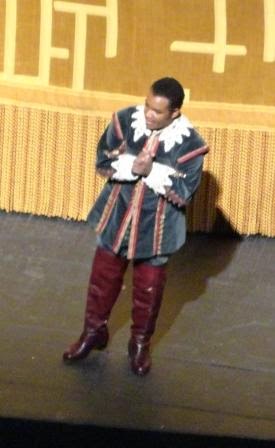
O Javier Camarena, tenor mexicano (o que terá a América Latina para “produzir” todos os grandes tenore di grazia das últimas décadas?), esteve ao nível da Yende no papel de Arturo. Voz de uma beleza invulgar, enchendo sempre o teatro, agudos estratosféricos e sem perderem a mínima qualidade são, entre outras, as características do seu desempenho vocal. A figura não ajuda muito mas logo que começa a cantar, deixamos de o ver. Fabuloso.
Também acho que são os dois melhores cantores de belcanto da actualidade.


O barítono Mariusz Kwiecien nunca falha e, mais uma vez, esteve em grande nível como Riccardo. Sólido na interpretação vocal, voz firme, bem timbrada e sempre afinado.


Também muito bem esteve o baixo barítono Marko Mimica como Giorgio. Tem várias intervenções, foi sempre muito sólido, a voz é forte, agradável e expressiva, apenas não tem graves profundos, como por vezes seriam necessários.


Dos restantes cantores, Gianfranco Montresor como Gualtiero esteve bem, Lidia Vinyes-Curtis aceitável como Enrichetta, e Emmanuel Faraldo mal se ouviu como Bruno.

Mas foi um espectáculo fabuloso, sobretudo devido à Pretty Yende e ao Javier Camarena.


*****


I PURITANI, Liceu, Barcelona, ​​ October 2018

After camo_opera watched the premiere of this performance, as he reported here, I also had the opportunity to see it a few weeks later, after the death of the great Catalan soprano Montserrat Caballé. At the beginning we had a short tribute, where we heard a small excerpt from Casta Diva, sung in the golden period of Caballé.

I will not repeat the comments to Annilese Miskimmon's (adapted by Deborah Cohen) production  written by camo_opera, with which I agree. It is pleasant and one clearly perceives the plot, despite transpositions of three centuries.

I Puritani is another opera typical of belcanto, the last one Bellini composed. To be appreciated in its fullness it requires top singers in the leading roles and that was what we had at the Liceu Barcelona.

Maestro Christopher Franklin was acceptable in the direction of the Liceu's Orchestra.

Pretty Yende, South African soprano, was sublime as Elvira. She is a singer that I like (she was the one who made me travel to Barcelona) and, once again, she was at a superlative level. The voice was clean, always tuned, wonderful timbre, unbelievable top notes, remarkable extension and power, and she never screamed. On stage she was very credible.

Javier Camarena, Mexican born tenor (what does Latin America have to "produce" all the great tenore di grazia of the last decades?), was at the level of Yende in the role of Arturo. The voice was of an unusual beauty, always well heard, stratospheric top notes and without losing the minimum quality were, among others, the characteristics of his vocal performance. The figure did not help much but once he began to sing, we stopped seeing him. Fabulous. I also think they are the two best belcanto singers of the present.

Baritone Mariusz Kwiecien never fails and, once again, was at top level as Riccardo. Solid in vocal interpretation, firm voice, always tuned.

Also very well was bass baritone Marko Mimica as Giorgio. He has several interventions, the voice is strong, very pleasant and expressive, he just has no deep bass, as it would sometimes be necessary.

Of the remaining singers, Gianfranco Montresor as Gualtiero was well, Lidia Vinyes-Curtis was acceptable as Enrichetta, and Emmanuel Faraldo was barely heard himself as Bruno.

But it was a fabulous performance, especially due to Pretty Yende and Javier Camarena.

*****

domingo, 14 de outubro de 2018

I PURITANI, Liceu, Barcelona, Outubro / October 2018


 (review in English below)

Texto de camo_opera

I Puritani (de Vicenzo Bellini) de muito boa qualidade. A sala engalanou-se para a estreia, tendo dado direito a tapete vermelho, cobertura mediática da imprensa, presença pesada da Generalitat e bolo com copo de espumante ao intervalo. Um ambiente de glamour a contrastar com um público com uns tiques dispensáveis que contarei em seguida.

A acção desenvolve-se ora em 1973 no período crítico do conflito das Irlandas, ora 300 anos antes no conflito civil inglês. São as legendas que nos situam nestes períodos. Terminam a dizer que o amor entre os amantes foi separado por três séculos. Tal acontece a partir da referência do libreto em que Arturo diz a Elvira que foram só três meses de ausência ao que esta contesta que foram três séculos de horror. Este pormenor torna-se patente no momento do reencontro dos amantes. Mas para que tal fosse compreendido, Elvira aparece - antes da abertura orquestral - vestida à século XX para, segundos depois, surgir à século XVII. É aqui que, por duas vezes, alguém gritou “mais do mesmo”. Não sem uma veemente resposta berrada “cala-te!!!”, o que gerou um bruah enorme na sala, entre sinais de reprovação ou riso ansioso.

A acção desenrola-se depois entre os dois séculos, mudando o vestuário e os décors. Ominipresente é uma Elvira que quase nunca sai do palco, mas que é um duplo da cantora, como se nos lembrasse desse intervalo enorme entre os dois períodos. Não destoa, não perturba, e faz a acção mover-se de forma fluida e sem pontos incompreensíveis. No fim, ao invés de Arturo ser salvo, é degolado, perante uma já recuperada Elvira ainda desconhecedora da perenidade fatal da sua desgraça e da impossibilidade do seu amor por alguém de outra estirpe política.


Apesar do interesse, a encenação de Annilese Miskimmon reposta por Deborah Cohen foi apupada como nunca ouvi num teatro, numa reacção que - e confesso a minha limitação - não consigo entender. Eu achei a encenação interessante e capaz, embora sem rasgo de genialidade. Mas não creio que seja condição ser genial.

Depois do tal período sem orquestra, mas muito gritado, berrado e interventivo, Christopher Franklin mexeu a batuta e começou a fazer soar a Orquestra do Liceu de forma acertada, dramática e lírica, com um respeito assinalável pelos cantores a quem assinalou sempre as entradas.

O Coro também correspondeu de forma positiva, apresentando um nível qualitativo elevado para a estreia da temporada.

Houve dois cantores transcendentes: Pretty Yende como Elvira. E Javier Camarena como Arturo. Diria que estamos perante os melhores cantores de bel canto da actualidade. Yende teve uma presença jovial e a sua voz leve e jovem a que associa uma técnica soberba e uma emoção intensa foi um deleite para os ouvidos. Nem uma nota menos conseguida: agudos cristalinos, pianissimi perfeitos. O fraseado é muito elegante, o sotaque é bom e a capacidade de dizer as palavras assinalável, ainda para mais numa cantora ainda em ascensão. 


E teve uma excelente química em palco com um Camarena no topo da carreira. Que voz! Que portensosos agudos. Ainda tenho os tímpanos a vibrar. Mas não vive só deles. O fraseado, o lirismo e a emotividade estão todos lá. Fizeram ambos um duo maravilhoso e foram agraciados com palmas e bravos entusiásticos que por pouco não os obrigava a repetir o dueto do último acto. Uma maravilha!


Já os restantes - o contraste era uma inevitabilidade - não foram tão bons, mas nenhum esteve mal. O Giorgio de Marko Mimica foi um pouco irregular na emissão, mas esteve sempre audível. Tem um timbre bonito, não muito escuro ou grave, mas adequado ao papel que desempenhou bem. 


Já o Riccardo foi representado por Andrei Kymach do elenco secundário (alguma indisposição de última hora de Marius Kwiecien). A voz é algo bassa e pouco emotiva, pelo que foi um Riccardo algo duro e menos lírico. A Enrichetta de Lidia Vinyes-Curtis esteve bem no seu papel menor, assim como Gianfranco Montresor como Valton.


Foi, sem dúvida, uma récita memorável por vários condimentos operáticos e extra operáticos, mas que foi condimentado por duas magníficas especiarias vindas de África e da América.


I PURITANI, Liceu, Barcelona, ​​October 2018

Text by camo_opera

I Puritani (by Vicenzo Bellini) of very good quality. The theater was decorated for the premiere, with red carpet, media coverage of the press, heavy presence of the Generalitat and cake with glass of sparkling wine at the interval. An environment of glamor contrasting with an audience with a few expendable tics that I will tell next.

The action took place in 1973 during the critical period of the Irish conflict, and some 300 years before in the English civil conflict. The legends place us in these periods. They end up saying that love between lovers has been separated by three centuries. This happens from the reference in the libretto in which Arturo tells Elvira that it was only three months of absence to which she replies that it was three centuries of horror. This detail becomes evident at the time of lovers' reunion. But for this to be understood, Elvira appears - before the orchestral opening - dressed in the twentieth century and, later, appears dressed in the seventeenth century. It is here that, twice, someone shouted "more of the same". Not without a vehemently shouting reply "shut up!", Which spawned a huge bruuah in the room, amidst signs of disapproval or anxious laughter.

The action then unfolds between the two centuries, changing the clothing and the décors. Always present is an Elvira who almost never leaves the stage, but who is a double of the singer, as if she reminds to us of this enormous interval between the two periods. She does not distort, does not disturb, and causes the action to move smoothly and without incomprehensible points. In the end, instead of being saved, Arturo is beheaded before an already recovered Elvira still unaware of the fatal perennial of his misfortune and the impossibility of his love for someone of another political nature.

Despite the interest, the staging of Annilese Miskimmon revised by Deborah Cohen was picked up like never before in a theater, in a reaction that - and I confess my limitation - I can not understand. I found the staging interesting and capable, though not genius. But I do not think it's a condition to be good.

After that period without an orchestra, but much shouted and intervening, Christopher Franklin stirred the baton and began to sound the Orchestra of the Liceu in a correct, dramatic and lyrical way, with a remarkable respect by the singers to whom he always marked the entrances.

The Choir also responded positively, presenting a high quality level for the season premiere.

There were two transcendent singers: Pretty Yende as Elvira and Javier Camarena as Arturo. I would say that we are facing the best belcanto singers of the day. Yende had a jovial presence and her light, youthful voice to which she associated a superb technique and intense emotion was a delight to the ears. Not a note less perfect: sharp crystals, perfect pianissimi. The phrasing is very elegant, the accent is good and the ability to say the words remarkable, yet for more in a singer still on the rise. And she had great chemistry on stage with a top-of-the-line Camarena. What voice! What sharp top notes. I still have my ears vibrating. But it does not live on their own. Phrasing, lyricism, and emotion are all there. They made both a wonderful duo and were awarded with enthusiastic applause and bravos that almost made them repeat the duet of the last act. Wonderful!

The others - the contrast was an inevitability - were not so good, but none was bad. Marko Mimica's Giorgio was a little irregular, but he was always audible. he has a beautiful tone, not too dark or low, but suited to the role he played well. Riccardo was performed by Andrei Kymach of the secondary cast (some last indisposition of Marius Kwiecien). The voice is a bit opaque and unemotional, reason why was a Riccardo somehow hard and less lyrical. Lydia Vinyes-Curtis's Enrichetta did well in her minor role, as did Gianfranco Montresor as Valton.

It was undoubtedly a memorable performance for various operatic and extra-operative condiments, but was best tempered by two magnificent spices from Africa and America.

sábado, 20 de setembro de 2014

I PURITANI, METropolitan Opera, Nova Iorque, Abril de 2014 / METropolitan Opera, New York, April 2014

(review in English below)

I Puritani é uma ópera de V Bellini com libretto de Carlo Pepoli que esteve em cena na Primavera de 2014 na Metroplolitan Opera de Nova Iorque.


A encenação de Sandro Sequi é clássica e convencional, datada, muito estática e pouco estimulante. Sendo eu um apreciador das encenações clássicas, confesso que achei que esta não beneficiou o espectáculo, apesar de não ter sido minimalista. O guarda-roupa também não ajudou porque foi sempre muito formal. Mas o que mais negativamente me marcou foi a falta de dinâmica da acção. Para além de passagens das tropas pelo palco, quase nada mais aconteceu no que ao movimento cénico respeita.

A Orquestra esteve muito bem, dirigida pelo maestro italiano Michele Mariotti. O coro, como habitualmente, foi uma das mais valias da récita.


Em relação aos solistas, as interpretações foram bastante díspares.

Imediatamente antes do início, fomos informados que Mariusz Kwiecien estava doente mas, ainda assim, cantaria. O papel de Riccardo interpretado pelo barítono polaco foi, para mim, o melhor da noite. Já lá vai o tempo em que ficava apreensivo quando surgiam estes avisos. Já me aconteceu várias vezes mas tenho assistido sempre a interpretações de grande nível, como foi o caso. Esteve bem vocalmente, voz expressiva e sempre sobre a orquestra. Em cena também muito bem (dentro do que a encenação o permite), ajudado pela sua boa figura.


O tenor Lawrence Brownlee fez um Arturo digno. Tem uma voz bonita, embora perca qualidade nas notas mais agudas. No registo mais grave quase não se ouve e não conseguiu transmitir a emoção que a personagem exige.


A decepção foi o soprano russo Olga Peretyatko, apresentada no programa como a grande sensação do espectáculo. Elvira, a personagem, tem várias crises de loucura intercaladas com lucidez, o que a torna, no mínimo, ridícula. Mas presta-se a grandes interpretações belcantistas, o que não foi o caso nesta noite. A senhora até tem uma voz bonita, mas é pequenininha. Sempre que a orquestra soou um pouco mais forte, mal se ouviu. Chegava com aparente facilidade às notas mais agudas, mantendo qualidade, não fora a questão da falta de potência (fatal num teatro da dimensão do Met). Também achei que não transmitiu a graciosidade necessária quando a cena o exige. Contudo, na ária mais conhecida do 2º acto, Qui la voce, esteve muito bem.


O baixo Michele Pertusi foi um Giorgio digno, de voz melodiosa e bem audível, tendo impressionado sobretudo na Cinta di fiori no 2º acto.


Muito bem esteve Elizabeth Bishop como Enrichetta, apesar de o papel ser pequeno. Voz forte, sempre bem colocada e de timbre muito agradável.

Um bom espectáculo mas que ficou muito aquém das minhas expectativas.


***


I Puritani, Metropolitan Opera , New York , April 2014

I Puritani is an opera by V Bellini with libretto by Carlo Pepoli that was on the scene in Spring 2014 at the Metroplolitan Opera in New York.

The staging by Sandro Sequi is classic and conventional, dated, very static and not interesting. I like classical approaches in staging but I admit that this one did not benefit the opea, despite not having been minimal. The dresses did not help because they were always very formal. But what struck me most negatively was the lack of dynamic action. Besides the passage of troops across the stage, almost nothing happened in regards to the scenic movement.

The orchestra was very good, conducted by Italian conductor Michele Mariotti. The chorus, as usual, was one of the major highlights of the performance.

Regarding the soloists, the performances were quite disparate .

Immediately before the start, we were told that Mariusz Kwiecien was ill but still he would sing. The role of Riccardo played by the Polish baritone was, for me, the best of the night. I used to be apprehensive when these warnings came, it happened to me several times, but in almost all of them I have always heard great interpretations, as was the case. Kwiecien was well, vocally expressive voice, and always above the orchestra. Also on stage he was very well (within the limitations imposed by the staging), helped by his good figure .

Tenor Lawrence Brownlee was
​​a decent Arturo. He has a nice voice, though it looses some quality in the higher notes. In the lower register we barely could hear him and he could not always convey the emotion that the character requires.

The disappointment of the night was Russian soprano Olga Peretyatko, presented in the program as the greatest sensation of the opera. Elvira has several bouts of madness interspersed with lucidity (which makes her at ridiculous). But Elvira is prone to excellent belcanto interpretations, which was not the case tonight. The singer has a nice voice, but it's very small. Whenever the orchestra sounded a bit stronger, she could be barely heard. She reached the top notes with apparent ease, keeping vocal quality, but she lost all power (fatal in a theatre with the size of the Met). I also found that she did not transmit the gracefulness necessary when the scene demanded it. However, in the best known aria from Act 2, Qui la voce, she was well.

Bass Michele Pertusi was a sound Giorgio with melodious and very audible voice, having impressed especially in Cinta di fiori in the 2nd act .

Elizabeth Bishop was fine as Enrichetta, despite the role being small. She showed a strong voice, always tuned and with very pleasant timbre.

An acceptable performance that fell short of my expectations.

***