Mostrar mensagens com a etiqueta Klaus Florian Vogt. Mostrar todas as mensagens

sexta-feira, 26 de agosto de 2022

LOHENGRIN, Festival de Bayreuth / Bayreuther Festspiele, Agosto / August 2022

(review in English below)

Este Lohengrin do Festival de Bayreuth, com encenação de Yuval Sharon, é muito bizarro, mas a encenação acaba por ser muito vistosa e agradável. A acção passa-se numa zona de postes eléctricos de alta tensão, todos os intervenientes principais vestem de azul, cor do cenário, o que se traduz num eleito visual muito agradável. A acção é intercalada por projecções de nuvens intensas. Quase todos têm asas de insectos. (Em Bayreuth, a última produção do Lohengrin era dominada por ratos; a actual é por insectos!). É uma comunidade sem líder que anseia por ele. Sempre que se fala no cisne (o irmão da Elsa e potencial líder) aparece a corrente eléctrica nos cabos.


No 3º acto, após o casamento, o quarto dos noivos e os seus trajos são numa cor mais quente, laranja avermelhado (maior segurança no casamento, amor e protecção do Lohengrin), contrastando com o azul de toda a restante cenografia. Mas passada esta cena volta-se ao ambiente azul habitual (excepto a Elsa) e assim tudo se passa até terminar. No final, a Ortrud, com os companheiros do Telramund prenderem todos com uma corda e ela lança fogo sobre os troncos de fogueira, uma vingança face à sabida derrota do duo maléfico da obra. O irmão de Elsa aparece de verde com um pequeno tronco de árvore na mão simbolizando o verde de esperança, de renovação, de renascimento, de uma nova realidade. E talvez por isso, todos tenham de morrer no final. Todos menos Elsa e o irmão, simbolizando essa renovação (e o Bem) e menos Ortrud, ficando a ideia de que o Mal está e estará sempre presente na Vida.


O maestro Christian Thielemann foi excepcional na direcção da Orquestra que esteve ao mais alto nível. O Coro foi magnífico! Mais uma vez, ouviu-se Wagner em todo o seu esplendor.

Também superlativas foras as interpretações vocais. O tenor Klaus Florian Vogt foi um Lohengrin perfeito. Tem um timbre leve inconfundível, de uma beleza e musicalidade ímpares e neste papel é exímio. O In fernem land no 3º acto foi muito bonito e expressivo, apoiado de forma sublime pela orquestra. Acho que quando Wagner escreveu o Lohengrin, teve uma premonição que um dia surgiria um cantor ideal para ele – Klaus Florian Vogt!


A soprano Camilla Nylund foi uma Elsa von Brabant genuína e com boa interpretação vocal, muito emotiva e bem audível sobre a orquestra.


O rei Heinrich foi o baixo Georg Zeppenfeld que, mais uma vez, não deixou os seus créditos por mãos alheias e ofereceu-nos uma interpretação sólida, inteligente, com voz grave potente e bonita. 

O barítono Martin Gantner foi o Friedrich von Telramund. Para mim o menos impressionante dos cantores, apesar de ter tido um bom desempenho. 


Finalmente a Ortrud foi interpretada de forma eficiente e malvada pela mezzo Petra Lang, que tem uma voz imensa. A encenação também a favorece. As suas asas são diferentes das dos restantes, personificando um insecto malévolo. A intervenção vocal final foi arrepiante.


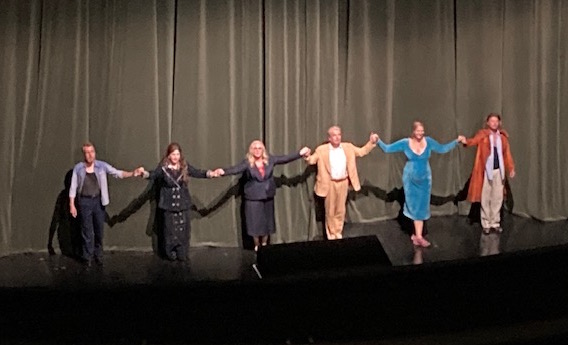
Terminado o espectáculo, o público explodiu em aplausos a todos, que foram obrigados a vir várias vezes ao palco. A maior ovação que ouvi em Bayreuth este ano. 


(Texto escrito com contribuições do wagner_fanatic e do Fanático_Um, que assistiram a récitas em dias diferentes)

*****

LOHENGRIN, Bayreuth Festival, August 2022

This Lohengrin from the Bayreuth Festival, staged by Yuval Sharon, is very bizarre, but the staging turns out to be very showy and pleasant. The action takes place in an area of ​​high voltage electric poles, all the main actors wear blue, the color of the scenery, which translates into a very pleasant visual choice. The action is interspersed with projections of intense clouds. Almost all have insect wings. (In Bayreuth, the last production of Lohengrin was dominated by rats; the current one is by insects!). It's a leaderless community that craves him. Whenever the swan (Elsa's brother and potential leader) is mentioned, the electrical current appears in the cables.

In the 3rd act, after the wedding, the bride and groom's room and their costumes are in a warmer color, reddish orange (greater security in the marriage, love and protection by Lohengrin), contrasting with the blue of the rest of the scenography. But after this scene, all returns to the usual blue environment (except for Elsa) and that's how everything goes until it's over. In the end, Ortrud, with Telramund's companions, bound everyone with a rope and she threw fire on the bonfire logs, a revenge in the face of the known defeat of the evil duo of the opera. Elsa's brother appears in green with a small tree trunk in his hand, symbolizing the green of hope, of renewal, of rebirth, of a new reality. And maybe that's why everyone has to die in the end. All die except Elsa and her brother, symbolizing this renewal (and the Good) and except Ortrud, leaving the idea that the Evil is and will always be present in Life.

Conductor Christian Thielemann was exceptional in the direction of the Orchestra that was at the highest level. The Choir was magnificent! Once again, Wagner was heard in all his splendor.

Also superlative were the vocal interpretations. Tenor Klaus Florian Vogt was a perfect Lohengrin. He has an unmistakable light timbre, of unparalleled beauty and musicality, and in this role he excels. In fernem land in the 3rd act was very beautiful and expressive, supported in a sublime way by the orchestra. I think that when Wagner wrote Lohengrin, he had a premonition that one day an ideal singer would appear for him – Klaus Florian Vogt!

Soprano Camilla Nylund was a genuine Elsa von Brabant with a good vocal interpretation, very emotional and very audible over the orchestra.

King Heinrich was bass Georg Zeppenfeld who, once again, did not leave his credits in the hands of others and offered us a solid, intelligent interpretation, with a powerful and beautiful bass voice.

Baritone Martin Gantner was Friedrich von Telramund. For me the least impressive of the singers, despite having a good performance.

Finally, Ortrud was played efficiently and evilly by mezzo Petra Lang, who has a huge voice. The staging also favors her. Her wings are different from the rest, personifying a malevolent insect. Her final vocal intervention was chilling.

At the end of the performance the audience burst into applause to all, who were forced to come to the stage several times. This was the biggest ovation I've heard in Bayreuth this year.

*****

domingo, 14 de agosto de 2022

A VALQUÍRIA / DIE WALKURE, Bayreuther Festspiele, Agosto / August 2022


                                               (review in English below)


Se achei a encenação do Ouro do Reno difícil de perceber, nem sei o que dizer da Valquíria. Começa na casa (moderna) do Hunding e Sieglinde, que está em avançado estado de gravidez. Aparentemente o pai poderá ser o Hunding (?) mas não é o Siegmund. A tempestade avaria o quadro eléctrico que o Hunding tenta reparar ao longo de quase todo o período em que está acordado. Próximo do fim, o cenário muda e aparecem 2 quartos e 2 crianças que deverão ser o Siegmund e a Sieglinde na infância. No final, a Nothung não é uma espada, é uma pistola (mais uma) que é retirada de uma pirâmide iluminada de branco numa caixa que está presente também na opera anterior.


No 2º acto voltamos à casa dos deuses, onde decorre o velório da Freia (que se terá suicidado). Acentuam-se as relações problemáticas entre membros desta abastada família. Aparecem Siegmund e a Sieglinde e, quando esta está a dormir, Wotan tira-lhe as cuecas e introduz as mãos entre as pernas, dando a entender que será ele o pai da criança em gestação. Siegmund é morto pelo Wotan com um tiro de pistola à queima roupa, mas Hunding sai sem morrer em palco.


O 3º acto começa numa clínica de cirurgia plástica, onde as valquírias, para além dos tratamentos estéticos, bebem champanhe, trocam presentes caros e maltratam as e os empregados. Brünhilde aparece com a Sieglinde já com o filho nascido. Não morreu de parto. Vêm também acompanhadas do Grane que não é um cavalo mas um homem. Tudo se passa nesse cenário até quase o fim, quando Wotan fica sozinho, separado por uma cortina. A Brünhilde sai de cena e não há fogo nem nada de semelhante a isolá-la. Nos momentos finais aparece Fricka com um carrinho de bebidas alcoólicas e partilha uma com o Wotan, um gesto de aparente reconciliação, mas ele não aceita.


Tudo algo confuso, pouco consequente e com poucas ligações ao Ouro do Reno, o que causa ainda mais dificuldade em perceber a abordagem cénica. Wagner deve ter dado mais uma cambalhota no túmulo!

A Orquestra esteve óptima e a direcção do maestro Cornelius Meister foi boa, mas ocasionalmente lenta e sem por sempre em evidência os momentos mais emotivos.


Já em relação aos cantores, imperou a qualidade: O primeiro acto foi o melhor, com 3 cantores de excepção. O tenor Klaus Florian Vogt não tem uma voz heróica de heldentenor como outros mas escureceu a voz e a interpretação foi notável, quer em beleza, quer em emissão e emoção. Foi bem reconhecido pelo público, que o aplaudiu ruidosamente e por muito tempo. O Hunding do baixo Georg Zeppenfeld foi também excepcional. Voz grande, profunda, muito agradável e sempre bem audível acima da orquestra. 

A soprano Lise Davidsen foi colossal! Fez-me lembrar a Nina Stemme quando estava no auge e a ouvi na Brünhilde no Anel de Munique. Uma voz poderosíssima, bem timbrada, e a senhora canta, não grita. Foi, de longe, a mais aplaudida por este público conhecedor. As intervenções nos 2º e 3º actos foram avassaladoras! Que enorme Brünhilde aí virá!!

A mezzo Christa Mayer repetiu uma Fricka de óptima qualidade. O baixo-barítono Tomasz Konieczny foi um Wotan de voz segura e bem timbrada, excelente na emissão. Achei, contudo, pouco autoritário na sua condição de deus (talvez uma exigência desta interpretação cénica). A soprano Iréne Theorin foi uma Brünhilde bem audível, mas a voz está gasta e com um vibrato marcado e irritante. Talvez por isto tenha ouvido alguns boos, no meio dos aplausos.

Finalmente as valquírias foram globalmente muito boas: Kelly God (Gerhilde), Brit-Tone Müllertz (Ortlinde), Stephanie Houtzeel (Waltraute), Christa Mayer (Schwertleite), Daniela Köhler (Helmwige), Nada Dzidziguri (Siegrune), Marie Henriette Reinhold (Grimgerde) e Katie Stevenson (Rossweisse).


Veremos se na continuação do Anel a encenação de Valentin Schwarz se clarifica mais.

****


DIE WALKÜRE, Bayreuther Festspiele, August 2022

If I found the staging of Das Rheingold difficult to understand, I don't even know what to say about Valkyrie. It starts at Hunding and Sieglinde's (modern) house, which is in an advanced stage of pregnancy. Apparently the father could be Hunding (?) but not Siegmund. The storm breaks the electrical panel which Hunding tries to repair for most of his waking hours. Towards the end, the scenario changes and 2 rooms and 2 children appear, who must be Siegmund and Sieglinde in childhood. In the end, Nothung is not a sword, it is a pistol (another one) that is taken from an illuminated white pyramid in a box that was also present in the previous opera.

In the 2nd act we return to the house of the gods, where the wake of Freia (who has committed suicide) takes place. Problematic relationships between members of the wealthy family are accentuated. Siegmund and Sieglinde arrive and, when Sieglinde is sleeping, Wotan takes off her underwear and puts his hand upper between her legs, implying that he is the father of the unborn child. Siegmund is killed by Wotan with a pistol shot, but Hunding leaves without dying on stage.

The 3rd act begins in a plastic surgery clinic, where the Valkyries, in addition to aesthetic treatments, drink champagne, exchange expensive gifts and mistreat employees. Brünhilde appears with Sieglinde with her child already born. She didn't die in childbirth. They are also accompanied by Crane, who is not a horse but a man. Everything happens in this scenario until almost the end, when Wotan is alone, separated by a curtain. Brünhilde leaves the scene and there is no fire or anything similar to isolate her. In the final moments, Fricka appears with a cart of alcoholic drinks and shares one with Wotan, a gesture of apparent reconciliation, but he does not accept it.

All somewhat confusing and with few connections to Das Rheingold, which makes it even more difficult to understand the scenic approach. Wagner must have done another somersault in the grave!

The Orchestra was great and the direction of conductor Cornelius Meister was good, but occasionally slow and without always highlighting the most emotional moments.

As for the singers, top quality prevailed: The first act was the best, with 3 exceptional singers. Tenor Klaus Florian Vogt does not have a heroic heldentenor voice like others but he darkened the voice and the interpretation was remarkable, both in beauty and in emission and emotion. He was well recognized by the public, who applauded him loudly and for a long time. Bass Georg Zeppenfeld's Hunding was also exceptional. Big, deep voice, very pleasant and always well audible above the orchestra. 

Soprano Lise Davidsen was colossal! She reminded me of Nina Stemme when she was in her prime and I heard her as Brünhilde on the Munich Ring. A very powerful voice, excelent timbre, and she sings, not screams. She was by far the most applauded by this knowledgeable audience. The interventions in the 2nd and 3rd acts were overwhelming! What a huge Brünhilde here to come!!

Mezzo Christa Mayer repeated a Fricka of excellent quality. Bass-baritone Tomasz Konieczny was a Wotan with a strong and well-toned voice, excellent in emission. I found, however, little authoritative in his condition of god (perhaps a requirement of this scenic interpretation). Soprano Iréne Theorin was a very audible Brünhilde, but her voice is worn and with a marked and irritating vibrato. Maybe that's why she heard some boos, amidst the applause.

Finally, the Valkyries were overall very good: Kelly God (Gerhilde), Brit-Tone Müllertz (Ortlinde), Stephanie Houtzeel (Waltraute), Christa Mayer (Schwertleite), Daniela Köhler (Helmwige), Nada Dzidziguri (Siegrune), Marie Henriette Reinhold ( Grimgerde) and Katie Stevenson (Rossweisse).

We will see if in the continuation of The Ring, Valentin Schwarz's staging becomes more noticeable.

****

quarta-feira, 14 de agosto de 2019

OS MESTRES CANTORES DE NUREMBERGA / DIE MEISTERSINGER VON NÜRNBERG, Bayreuther Festspiele / Festival de Bayreuth, Agosto / August 2019


Texto de wagner_fanatic

Maestro: Philippe Jordan
Encenação: Barrie Kosky
Hans Sachs: Michael Volle
Veit Pogner: Günther Groissböck
Sixtus Beckmesser: Johannes Martin Kränzle
Walter von Stolzing: Klaus Florian Vogt
David: Daniel Behle
Eva: Camilla Nylung
Magdalene: Wiebke Lehmkuhl
Kunz Vogelgesang: Tansel Akzeybek
Fritz Kothner: Daniel Schmutzhard
Balthasar Zorn: Paul Kaufmann
Ulrich Eisslinger: Christopher Kaplan
Augustin Moser: Stefan Heibach
Hermann Ortel: Raimund Nolte
Hans Schwarz: Andreas Hörl
Hans Foltz: Timo Riihonen


O 1º acto dos Mestres divinal! Papel químico do ano passado em qualidade interpretativa e vocal. Também são os mesmos solistas tirando a Eva pelo que assim seria de esperar. Esta encenação é cheia de pormenores e é óptima para quem diz que não gosta desta ópera de Wagner.

O 3º acto perfeito! É difícil fazer melhor que isto! Perfeição! Já o disse antes e repito: Volle é Sachs, a fluidez interpretativa, a força e expressividade vocal fazendo-o terminar e dando a noção que conseguia fazer tudo novamente logo de seguida é de arrepiar! Kranzle é o Beckmesser, ao mesmo nível, numa interpretação inesquecivelmente cómica! Klaus Florian Vogt nunca o vi sem ser nesta produção a realmente interpretar convincentemente um papel - o homem aqui canta e sabe representar! Nylund sublime, agudos lindos! Groissbock fenomenal! Os mestres todos fantásticos (o que faz de maricas é genial). Behle excelente como David e a voz da Lena também marcante!

Continuo a achar esta encenação genial e deu para compreender ainda mais pormenores depois de a ter visto no ano passado! Bayreuth, neste momento, é um sonho para qualquer wagneriano!


DIE MEISTERSINGER VON NÜRNBERG, Bayreuth Festival, August 2019

Text by wagner_fanatic

Conductor: Philippe Jordan
Direction: Barrie Kosky
Hans Sachs: Michael Volle
Veit Pogner: Günther Groissböck
Sixtus Beckmesser: Johannes Martin Kränzle
Walter von Stolzing: Klaus Florian Vogt
David: Daniel Behle
Eva: Camilla Nylung
Magdalene: Wiebke Lehmkuhl
Kunz Vogelgesang: Tansel Akzeybek
Fritz Kothner: Daniel Schmutzhard
Balthasar Zorn: Paul Kaufmann
Ulrich Eisslinger: Christopher Kaplan
Augustin Moser: Stefan Heibach
Hermann Ortel: Raimund Nolte
Hans Schwarz: Andreas Hörl
Hans Foltz: Timo Riihonen

The 1st Act was divine! Identical to last year's interpretative and vocal quality. It was expected because the soloists are also the same (except Eve). This staging is full of detail and is great for those who say they don't like this Wagner’s opera.

The 3rd act was perfect! It's hard to do better than this! Perfection! I have said it before and I repeat: Volle is Sachs, the interpretive fluidity, the strength and vocal expressiveness making him finish and giving the notion that he could do it all again right away is creepy! Kranzle is Beckmesser, at the same level, in an unforgettable comic interpretation! Klaus Florian Vogt in this production really playing a convincing role - the man here sings and can play! Nylund sublime, beautiful top notes! Phenomenal Groissbock! The Masters are all fantastic (the one who plays the gay is great). Behle excellent as David and Magdalene's voice also striking!

I still find this staging fantastic and I could understand even more details after seeing it last year! Bayreuth, right now, is a dream for any Wagnerian!

sábado, 18 de agosto de 2018

OS MESTRES CANTORES DE NUREMBERGA / DIE MEISTERSINGER VON NÜRNBERG, Bayreuth, Agosto / August de 2018.


(Review in English below)

O wagner_fanatic está, mais uma vez, no Festival de Bayreuth. Aqui serão colocados alguns comentários sobre as 4 óperas que vai ver.


Hoje foi Os Mestres Cantores de Nuremberga (Die Meistersinger von Nürnberg)

Direcção musical – Philippe Jordan
Encenação – Barrie Kosky

Hans Sachs – Michael Volle
Veit Pogner – Günther Groissböck
Sixtus Beckmesser – Johannes Martin Kränzie
Walter von Stolzing – Klaus Florian Vogt
David – Daniel Behle
Eva – Emily Magee
Magdalene – Wiebke Lehmkuhl
Fritz Kothner – Daniel Schmutzhard

A “polícia dos bilhetes”... este ano só se entra (e todas as vezes que quiser entrar) com o bilhete e o BI (e o bilhete tem o nome impresso de quem comprou e de quem o vai utilizar - antes de o imprimir em casa tive de escrever o nome de quem o usa). No ano passado não foram tão rigorosos com a questão do BI...


Estive num lugar perto do palco. 


De deitar abaixo Bayreuth!!! A Casa de Ópera e a cidade toda!!! A acústica à frente ainda é mais brutal! O som parece mesmo que vem das entranhas da terra e as vozes deles perfuram-nos os tímpanos mas como mel. Então a do Klaus Florian Vogt ainda mais!

A encenação é fenomenal, cheia de pormenores cómicos e inventiva até ao momento. Sachs é Wagner, Pogner é Liszt, Eva é Cosima, Beckmesser é Hermann Levi um dos maestros do tempo e que se não me engano, dirigiu a estreia do Parsifal aqui (e que era Judeu, como se vê pelo nome) a abertura é encenada e na sala em Wahnfried aqui em Bayreuth e que se pode visitar, realçando os gostos excêntricos de Wagner, ao receber perfumes, um lenço, sapatos e a passar-se de gosto com tudo!

Mostra um perfume ao Pogner que dá a sua opinião gestualmente, dá ao Beckmesser e este fica estático, não sente nada... uma farpazinha no judeu... Os mestres quando entram saem do piano :) tem lógica porque até à entrada vocal de Sachs, o encenador põe Wagner/Sachs sempre em palco fazendo como que se estivesse a dirigir a sua própria ópera (vê-se Volle a abrir a boca e a repetir as vozes! E que vozes!!!!! Volle é talvez dos melhores Sachs de sempre!!! Groissbock tudo o que já tenho dito dele e ainda mais!!! O David de Daniel Behle é perfeito - o timbre da personagem é este, o aspecto da personagem é este! Casting perfeito em todos!!!

A encenação é muito marcante do anti-semitismo na personificação do Beckmesser como judeu, muito visível no final do 2º acto e na entrada dos mestres (todos são recebidos com em palmas, excepto o Beckmesser).

Esta encenação saiu há dias em DVD, ainda não tinha visto - se não ficarem a amar os Mestres então não sei o que os fará gostar desta ópera! Absolutamente mágica esta noite! Vibrei muito no ano passado, por ser a 1ª vez, mas estes Mestres, a ver em cima do palco e com estes fazedores de sonhos... brutal!


Texto de wagner_fanatic


DIE MEISTERSINGER VON NÜRNBERG, Bayreuth, August 2018.

Wagner_fanatic is once again at the Bayreuth Festival. Here are some comments about the four operas he will see.

Today was Die Meistersinger von Nürnberg.

Musical direction - Philippe Jordan
Production - Barrie Kosky

Hans Sachs - Michael Volle
Veit Pogner - Günther Groissböck
Sixtus Beckmesser - Johannes Martin Kränzie
Walter von Stolzing - Klaus Florian Vogt
David - Daniel Behle
Eva - Emily Magee
Magdalene - Wiebke Lehmkuhl
Fritz Kothner - Daniel Schmutzhard

The "ticket police" ... this year we only enter (and every time we want to enter) with the ticket and the ID (and the ticket has the printed name of who bought it and who will use it - before printing at home I had to write the name of who uses it). Last year they were not so strict about the ID issue ...

I was on a seat near the stage. The performance was to throw down Bayreuth!!! The Opera House and the whole city!!! The acoustics in the front is even more brutal! The sound even seems to come from the bowels of the earth and their voices pierce our eardrums but like honey. That of Klaus Florian Vogt even more!
The staging is phenomenal, full of humorous and inventive details to date. Sachs is Wagner, Pogner is Liszt, Eva is Cosima, Beckmesser is Hermann Levi one of the maestros of the time and if I am not mistaken, directed the premiere of Parsifal here (and he was Jewish, as you see by the name) the opening is staged in the room at Wahnfried here in Bayreuth, which we can visit, highlighting Wagner's eccentric tastes, by receiving perfumes, a handkerchief, shoes, and a taste of everything!

He shows a perfume to the Pogner who gives his opinion gesturally, he gives it to Beckmesser and this one stays static, does not feel anything ... a little barn in the Jew ... The masters when they enter, came from the piano :) it is logical because until the vocal entrance of Sachs, the stage manager puts Wagner / Sachs on stage as if he were directing his own opera (Volle is opening his mouth and repeating the voices!) And what voices! Volle is perhaps the best Sachs ever, Groissbock is fabulous, Daniel Behle's David is perfect - the character's timbre is this, the character's look is this! Perfect casting on everyone!!!

You have to see this production (available just days ago on DVD, yet I had not seen it) - if you do not love Die Meistersinger then I do not know what will make you like this opera ! Absolutely magical tonight! I enjoyed a lot last year, for being the 1st time, but these Masters, to see close to the stage and with these dream singers ... brutal!

Text by Wagner_fanatic