(review in English
below)
Autor: De Moura MC, Lisboa
Era a produção mais esperada do
Festival de 2017, pela estreia de Anna Netrebko
no papel principal e pelo regresso do maestro Riccardo Muti numa opera maior de Verdi. Aida na história de
Salzburg : trinta e sete anos de ausência. Herbert von Karajan dirigira, fulgurante, em Agosto de 1980 com um elenco de renome; Mirella Freni, José Carreras, Piero
Cappuccilli e Ruggero Raimondi. A fasquia era muito elevada.
A encenação minimalista foi da conceituada
fotógrafa e cineasta iraniana Shirin
Neshat, mas sem experiencia da cena lírica. Belas imagens numa organização
de espaço interessante, naïve, sem propor uma leitura profunda da opera. Christian Schmidt concebeu um cenário abstracto : grandioso cubo
branco, num palco giratório, que é visto sobre todos os ângulos e cortado ao
meio. Serve de átrio do palácio do Rei , de templo e de tumulo. Os vídeos são meramente
ilustrativos: plano da água do Nilo,
aparições estáticas de faces de etíopes, grupos de refugiados? Estamos num Egipto
antigo, no reino dos Faraós? Ou intemporal? Não há mensagem política ou de
género, que seria de esperar conhecendo os trabalhos da artista em Nova Iorque,
principalmente os vídeos e os filmes.
Na entrevista publicada no
programa de sala , Neshat escreveu : “ I identify with Aida and her plight as a
woman living in exile and share her suffering and nostalgia for homeland. …
Generally I find that the women in Aida play the most important roles, beyond
their femininity, they represent an idea of individuality “. Esta encenação
austera não tem o impacto que certamente a artista pretendia. “… At the end, the audience will have to keep
in mind that this interpretation of “ Aida “ has to be treated as an experiment
by a visual artist, filmmaker whose language is not opera, but is exploring a
new art form “.
Os figurinos de Tatyana van Walsum são
elegantes e de qualidade. Belo jogo de cores.
Branco e negro no coro; Aida sempre vestida de azul claro. Etíope, escrava dos
Egípcios, passa de um penteado afro sofisticado a uma cabeleira solta, uma
linha branca na face sinal da lealdade á pátria. Para Amnéris, rival de Aida,
as cores fortes , simbólicas: amarelo vivo (real), vermelho (ciúme) , branco
(casamento) e no final de negro (morte de Radamés).
No I Acto, a 2º cena (a cena de
Pthá), cerimónia religiosa em que Radamés vai ser iniciado pelo Sumo Sacerdote
antes da guerra com os Etíopes, teve impacto com as sacerdotisas num bailado
estranho trazendo a sacerdotisa principal uma espada. Nas encenações
tradicionais este ritual é realizado por homens e o coro feminino canta fora de
cena.
Verdi para satisfazer as exigências
da “Grand-Ópera” francesa, concebeu um bailado espetacular e exótico no II Acto.
Nesta encenação existe apenas um bailado
discreto de homens nus com crânios de touro, inquietantes, como que “espíritos”
supernaturais. Não há a famosa Marcha triunfal. O estatismo dos actores foi
acentuado. E roça o incrível numa opera que se associa com a grandiosidade e o
espectacular. A encenação é o elo fraco desta produção, musicalmente
superior.
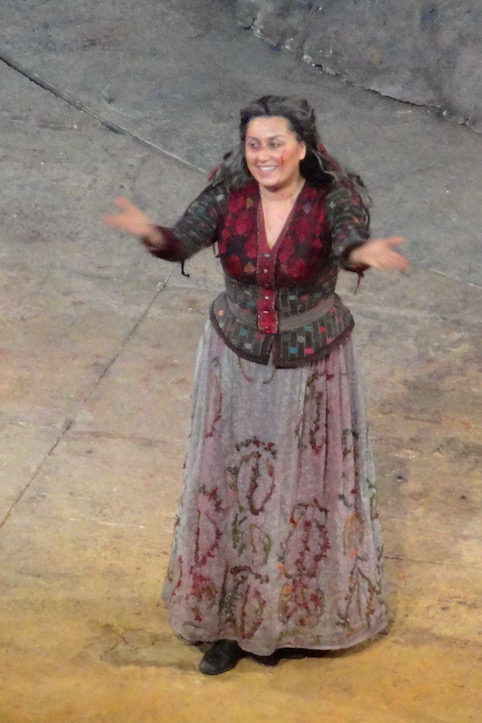
Anna Netrebko foi uma Aida sumptuosa e
refinada. Timbre único, constelação de nuances,
agudos imponentes, magia dos pianíssimos (« O patria mia »). A meia voz belíssima impõe-se nos duetos com Amnéris.
Domina facilmente os coros e a orquestra. Concebe uma Aida apaixonada e
vulnerável, mais do que submissa.
Ekaterina
Semenchuck é talvez a melhor Amneris do momento. A meio soprano russa
revelou tonalidade luxuriante em ambos os extremos do registo vocal. Todo o II
Acto é de alto nível, extraordinária na cena final, quando Radamès é condenado
à morte por alta traição. O tenor lírico
Francesco Meli foi um Radamés exemplar, a famosa e difícil “Celeste Aida”, pouco subtil, decepcionou O barítono Luca Salsi foi Amonastro, rei da Etiópia e pai de Aida, com uma interpretação superior tanto cénica
como vocal. A cena com Netrebko no III Acto,
foi um dos melhores momentos da noite. O baixo Toberto Tagliavini interpretou de forma algo rígida o Rei do
Egipto. Dmitri Belosselski foi um
sumptuoso Ramfis. Em papéis menores, Bror Magnus Todenes foi um claro Mensageiro
e Benedetta Torre uma excelente
sacerdotisa principal. Marcou a bela cena de Ptah, com um colorido “ Possente,
Possente Ftàh “.
Riccardo Mutti, talvez o melhor maestro Verdiano do nosso
tempo, conduziu de forma dinâmica e expressiva a magnifica orquestra de Viena.
Consegue reunir os múltiplos elementos da grande opera e integra-los de forma
superlativa. Conhecedor profundo da partitura realça os detalhes intimistas e
encontra a violência nos momentos de explosão dramática. Muti ao seguir
estritamente os tempos e as marcações de Verdi traz uma perspectiva intimista a
uma opera que geralmente desliza para exagerados “clichés” pseudo-Egípcios.
Destacam-se pela tensão e densidade sombria , os III e IV actos. Muti é o dono
e senhor desta “Aida”. Na fossa os elementos da Filarmónica de Viena impressionam pela beleza sonora e o requinte.
Coros esplendidos, magnificamente orientados pelo maestro Ernst Raffelsberger.
Apesar das reservas sobre a encenação, foi uma Aida memorável e
altamente recomendável. Não marcou este Festival de Salzburg que sob a nova
direcção de Markus Hinterhauser, foi
um dos mais estimulantes do últimos anos. Fez lembrar as primeiras temporadas
de Gerard Mortier nos anos 1990. Netrebko
vai retomar o papel de “Aida” no próximo Festival de Salzburg em 2018,
provavelmente sem Muti, e no MET em 2019 numa nova produção.
AIDA, SALZBURG FESTIVAL, AUGUST
2017
Author: De Moura MC, Lisbon
The most awaited production of the 2017
Festival. The principal reason was the opportunity to hear Anna Netrebko take on the title role for the first time and also by the return of conductor Riccardo Muti in a major Verdi opera. The second “ Aida “
production in Salzburg history: 37 years of absence. Karajan conducted,
superlative, the masterpiece of Verdi in August 1980 with a starry cast: Mirella Freni, José Carreras, Piero Cappuccilli
e Ruggero Raimondi. The expectations were indeed very
high.
The minimalist staging was by the well known Iranian
photograph and filmmaker Shirin Neshat,
but without any lyric experience. Beautiful images, interesting space
organization, naïve, but without a profound lecture of the opera. Christian Schmidt’s abstract set consisted of a
giant white box cut into halves and revolving on a turntable. It served as the
hall in the King´s palace, temple and grave. Simple video projections of Nile
waters, static Ethiopian faces and groups of refugees? Set in
ancient Egypt during the reign of the Pharaohs ? Or timeless? Without any
message, political or of genre, that one would expect from previous works of
the artist, mainly videos and films.
In an interview published in the Programme, Neshat wrote:
“ I identify with
Aida and her plight as a woman living in exile and share her suffering and
nostalgia for homeland. … Generally I find that the women in Aida play the most
important roles, beyond their femininity, they represent an idea of individuality
“. This austere staging had not the significant impact that the artist had in
mind. “… At the end, the audience
will have to keep in mind that this interpretation of “ Aida “ has to be
treated as an experiment by a visual artist, filmmaker whose language is not
opera, but is exploring a new art form “.
The
costumes were by Tatyana
van Walsum, elegant and classy. Nice play of colours. White and black for
the chorus ; Aida had always a light blue dress. An Ethiopian slave she changes
from an elaborate Afro hairpiece to let her hair down, a
white stripe down her face indicating fidelity to the motherland.
For Amneris, the selected colours were strong and symbolic: bright yellow (royal),
red ( jealousy ) blue (revenge ) white (
marriage ) and in the end black ( death of Radames ). First Act, 2nd
scene (the Ptha scene) a religious ceremony where Radames is initiated by the
Chief Priest and blessed on the eve of battle, had scenic impact with a strange
ballet that brings the High Priestess carrying a sword. Normally in the
traditional Aida men perform this ritual and the female chorus always sing from
off stage.
Verdi to oblige with the established rules for
the French Grand-Opera created a spectacular and exotic ballet for the II Act, In
this Aida staging there is a discreet ballet with naked men and bull´s masks, looking
as supernatural spirits.
There is no place for the famous “Triumphal
March “. The static actors are unbelievable in an opera that is associated with
greatness and spectacular moments. Clearly the staging in this Aida production,
otherwise musically superior, is the weak point.
Anna Netrebko was a sumptuous and
refined Aida. Unique timbre, constellation of nuances, sustained high notes, magic pianissimi at the close of “O patria mia” . Her medium voice
beautifully dominates her duets with Amneris. She imposes herself to the chorus
and orchestra. Netrebko creates a passionate Aida vulnerable, not submissive. Ekaterina Semenchuk is most probably the best Amneris of the moment. The Russian
mezzo-soprano sang a vocally hard-edged Amneris, with luxuriant tone
at both extremes of her voice registry. During all the II Act she maintains a
high level rising to anguished intensity in the finale when Radames was
condemned to death for high treason. The lyrical tenor Francesco Meli was an exemplar Radames. The intimidating challenge
of “ Celeste Aida “, less subtle, was deceptive. Baritone Luca Salsi was Amonasro, King of Ethiopia and Aida´s father, a
superior interpretation both vocal and scenic. The duet with Aida in the III
Act was one of the best moments of the night. Bass Roberto Tagliavini sounded a bit wooden as the King. Dmitry
Belosselskiy was a sumptuous Ramfis. In smaller roles, Magnus
Todenes sang a very clear Messenger and Benedetta Torre an excellent High Priestess, the beautiful scene of Ptah, with a colourful
“ Possente, Possente Ftàh “.
Riccardo
Muti, today leading Verdi maestro, showed his dynamic and
expressive conducting with the magnificent Vienna
Philharmonic. He manages to unify the multiple elements of the great
opera and integrates them in a superlative way. He knows in depth the score , enhances the intimate details and finds
violence in the moments of dramatic explosion. By adhering to Verdi’s
explicit tempo and markers, Muti brought an intimate perspective to an opera
that’s usually swamped in overblown, pseudo-Egyptian clichés. The III and IV Act are distinguished by their tension and sombre
density. Muti is the owner and master of this Aida. Superb work from the chorus, thrilling directed
by maestro Ernst Raffelsberger.
Despite reservations about this staging, an
unforgettable and highly recommended Aida. This
Aida was not a milestone of the Salzburg Festival, which under the new
direction of Markus Hinterhaüser was one of the most
stimulants of the last years. It reminded us the first seasons of the Gerard Mortier
era of the 1990s. Anna Netrebko will return in the role in Aida next year at
the 2018 Festival, most probably without Muti and again at the MET 2019 with a
new production.