Imenso
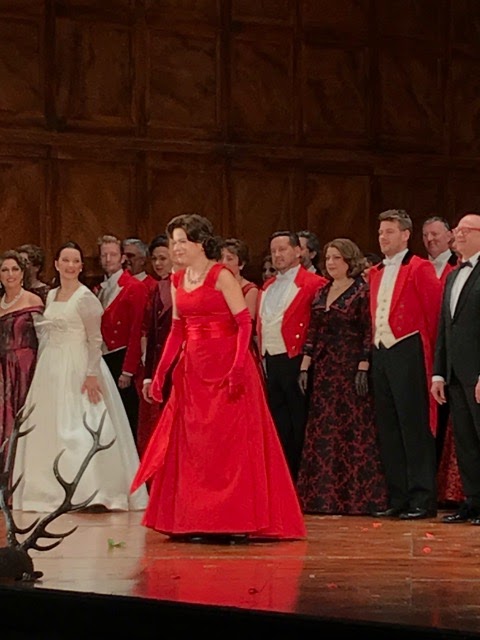
Falstaff!!! Terfel incrível, altamente cómico, em excelente forma vocal!
Restante elenco excelente, numa encenação que não conhecia e que acho fenomenal
(nem parece do Carsen). Explora na perfeição todos os aspectos cénicos
escondidos na música.
Quanto mais vejo
e oiço o Falstaff mais acredito que a obra é genial!
Texto e fotografias
de wagner_fanatic
FALSTAFF,
Royal Opera House, July 2018
Falstaff by G
Verdi. Royal Opera House,
London.
Director - Robert Carsen
Maestro - Nicola Luisotti
Sir John
Falstaff - Bryn Terfel
Alice Ford
- Ana Maria Martinez
Ford - Simon Keelynside
Nanetta - Anna Proharska
Fenton - Frédéric Antoun
Mistress
Quickly - Marie Nicole Lemieux
Meg Page - Marie McLaughlin
Enormous
Falstaff !!! Terfel incredible, highly comic, in excellent vocal form! Other
soloists excellent, in a staging that I did not know and that I think is
phenomenal (does not look like Carsen’s). It explores in perfection all the
scenic aspects hidden in the music.
The more I
see and hear Falstaff, the more I believe the work is genial!
Um fim de semana mozartiano que começou hoje na renovada Staatsoper Unter den Linden. As
cadeiras estão com os estofos tensos (a completa antítese das do TNSC) e
confortáveis, a sala continua imponente e o restante está com bom aspecto.
Continuam é com a obrigatoriedade de deixar os casacos no bengaleiro o que,
para pessoas como nós que vão à vontade, e principalmente nos meses de frio (a
propósito, está um frio que não se pode e eu já não vinha à Europa Central em
Janeiro há 5 anos pelo que o meu corpo já estava desabituado...) sobressai
ainda mais esse à vontade, na sala que considero como a mais desconfortável e
austera de sempre nesta questão de vestes. Contudo, ao meu lado direito e
esquerdo, na 1ª fila da plateia, estavam 2 rapazes da minha idade ou pouco
mais, de calças de ganga e camisola como eu.
Em busca de recordações antigas, o célebre (e repetidamente presente nas
minhas escolhas do passado) Don Giovanni
do Claus Guth valeu e bem ser vivido
novamente. Começou um pouco “empastelado” mas a partir do La ci darem la mano explodiu para uma noite estrelar. A encenação é
talvez a mais inovadora que se fez para o Don Giovanni e o Christopher Maltman, que penso ter sido desde Salzburgo em 2006, o
único Don desta encenação nos sítios onde já esteve, foi genial. O homem vive
cénica e vocalmente este Don na visão de Guth de forma arrepiante, sem falhas,
sem descurar nenhum pormenor, fazendo-nos querer ver e continuar a ver, mais e
mais.
Depois daquela horripilante Desdemona em Londres em Julho, Dorothea Roschmann voltou ao compositor
que a lançou e para o qual a sua voz mais se enquadra, oferecendo uma Donna
Elvira apaixonantemente completa. Maria
Bengtsson, a qual sempre ouvi apenas no papel de Donna Anna, tem a
qualidade ímpar de conseguir cantar o papel sem excessos, sem gritos, na
intensidade perfeita, atingindo com facilidade todas as notas e oferecendo um
lirismo celestial na última ária.
Se ainda melhor se podia pedir, eis que aparece a Anna Prohaska que sempre foi excelente mas que hoje pareceu ainda
melhor. Adoro-a neste papel de Zerlina! Atrevo-me a escolher as suas árias e a
final da Donna Anna como o que gostaria de ouvir de novo (e de novo, e de novo)
se pudesse rebobinar a récita... Mikhail
Petrenko foi uma surpresa para mim. Não me convenceu no início (italiano
que parecia com sotaque serrado russo, actuação cénica pouco cuidada) mas a sua
evolução durante a ópera foi surpreendente, num dos papéis mais difíceis de
interpretar convincentemente na História da Ópera - Leporello. O Don Ottavio do
Paolo Fanale foi inconstante, agudos
em esforço e perdendo qualidade de timbre, embora seja bem apessoado. Masetto
excelente e o Comendador podia ser um bocadinho mais cavernoso mas cumpriu bem.
Texto de wagner_fanatic
DON
GIOVANNI, Staatsoper Unter den Linden, Berlin, January 2018
A Mozartian
weekend that started today in the renewed Staatsoper
Unter den Linden. The chairs are in tense upholstery (the complete
antithesis of the Teatro São Carlos) and comfortable, the room remains stately
and the rest look good. It is still with the obligation to leave the coats in
the cloakroom, which for people like us who go dressed casually, and especially
in the cold months (by the way, it is an unbearable cold and I did not come to
Central Europe in January in the last five years, my body was already unused...)
stands out even more at ease, in the room that I consider to be the most
uncomfortable and austere ever in this matter of code dress. However, on my
right and left side, in the first row of the audience, were two boys of my age
in jeans and a sweater like me.
In search
of ancient memories, the celebrated (and repeatedly present in my choices of
the past) Don Giovanni by Claus Guth was worth be lived again. It
started out a bit "jammed" but from the La ci darem la mano exploded for a starry night. The staging is
perhaps the most innovative for Don Giovanni and Christopher Maltman, who I think has been since Salzburg in 2006,
the only Don of this staging where he has been, was great. He lives scenic and
vocally this Don in Guth's vision in a chilling, flawless way, without
neglecting any detail, making us want to see and continue to see, more and
more.
After that
horrifying Desdemona in London in July, Dorothea
Roschmann returned to the composer who launched her and to which her voice
most fits, offering a passionately complete Donna Elvira. Maria Bengtsson, whom I have always heard in the role of Donna
Anna, has the unique quality of being able to sing the role without excess,
without shouting, in the perfect intensity, easily reaching all the notes and
offering a celestial lyricism in the last aria.
If we could
expect better, Anna Prohaska
appeared, which was always excellent but today seemed even better. I love her
in this role of Zerlina! I dare to choose her arias and the Donna Anna final as
what I would like to hear again (and again, and again) if I could rewind the performance
... Mikhail Petrenko was a surprise
to me. He did not convince me at first (Italian that looked like Russian
accent, little care of scenic acting) but his evolution during the opera was
surprising, in one of the most difficult roles to interpret convincingly in the
History of Opera - Leporello. Paolo
Fanale's Don Ottavio was inconsistent, keen on effort and losing timbre
quality, although he is very personable. Excellent Masetto and the Commander
could be a bit more cavernous but he did well.
O wagner_fanatic assistiu às Bodas de Fígaro no Teatro
Schiller, Berlim. Ópera de WA Mozart,
com libretto de Lorenzo da Ponte,
foi interpretada sob a direcção musical de Christopher Moulds,
numa encenação de Thomas Langhoff. Foram solistas Roman Treke como Counde de Almaviva, Dorothea Röschmann como Coundessa de
Almaviva, Anna Prohaska como Susanna,
Adam Plachetka como Fígaro, Anna Bonitatibus como Cherubino e Katharina Kammerloher como Marcelina.
Umas Bodas de Fígaro espectaculares!!! Conjugação de
excelentes vozes com a direcção de actores mais perfeita e ao meu gosto que já
vi. O que foi mais espectacular foi ter aquilo que eu procuro sempre quando vou
assistir a um espectáculo de ópera e que é encontrar a perfeita sintonia entre
a música e o teatro. Só em algumas vezes senti que assisti a algo praticamente
sem falhas e ao meu gosto neste sentido holístico que é a Ópera.
O modo como as pessoas cantam, a sintonia entre elas e
aquilo que de mágico conseguem transmitir varia e embora eu reconheça qualidade
em muitas coisas que tenho visto, algo só me marca completamente quando
transmite aquilo que foi pensado para aquela ópera. Quando falamos em Mozart,
este não trabalhou para um lado e o da Ponte para outro e depois misturaram
música e texto e as Bodas, o Don Giovanni e o Cosi fan tutte saíram como são. A
música tem ideias que apoiam o texto, o texto tem ideias que acompanham a
música e os cantores e encenadores tem de conhecer bem o que estão a dizer,
conhecer para onde a música os leva, e saber transmitir isso a quem está a ver.
Se isso não acontecer, não temos ópera.
Houve homogeneidade em todos os solistas mas verdadeiramente
excelente foi Adam Plachetka!
The Marriage of Figaro / Le
Nozze Di Figaro, Schiller Theater,
Berlin, April 2014.
Wagner_fanatic attended The Marriage of Figaro at the Schiller Theatre, Berlin. An opera by
WA Mozart with libretto by Lorenzo
da Ponte, was performed under the musical direction of Christopher Moulds. The stage director was Thomas Langhoff.
Soloists were Roman Treke as Count Almaviva,
Dorothea Röschmann as Countess
Almaviva, Anna Prohaska as Susanna, Adam Plachetka as Figaro, Anna Katharina Bonitatibus as Cherubino
and Katharina Kammerloher as Marcelina.
A spectacular Marriage of Figaro! Combination of
excellent voices to perfect actor and singers direction I've ever seen. What
was most amazing was having what I always look for when I watch an opera
performance and that is to find the perfect harmony between music and play.
Only a few times I felt that I saw something almost flawless in my holistic
perception of what is the Opera.
The way people sing, the line between them and what is magic
that they can transmit varies, and although I recognize quality in many things
I have seen before, something only touches me totally when transmitting what
was thought to that opera. When we talk about Mozart, he did not work for one
side, and da Ponte for another, and then they mixed music and text, and Le
Nozze, Don Giovanni, and Cosi fan tutte just came as they are. Music has ideas
that support the text, the text has ideas that accompany the music and the
singers and directors have to know well what they are performing, to know where
the music takes them, and to transmit it to who is watching. If not, we do not
have opera.
There was homogeneity in all singer soloists but truly
excellent was Adam Plachetka!
Sob a direcção do maestro grego Teodor Currentzis, a Orquestra e Coro de câmara do teatro de ópera
e ballet Tchaikovsky de Perm, MusicAeterna,
apresentaram na Fundação Gulbenkian
duas obras, Dixit Dominus HWV232 de Georg Friedrich Händel e Dido e Eneias de Henry Purcell.
O salmo Dixit Dominus
integra partes corais muito expressivas alternadas com árias, emprestando à
obra uma beleza assinalável.
Dido e Eneias é,
para mim, a melhor ópera inglesa, rica em intervenções corais, recitativos e
árias. Aqui interpretada em versão concerto, é uma obra de grande intensidade
emocional que culmina com uma pungente representação da dor e sofrimento na
ária final, o lamento de Dido, When I am
laid in earth. Desta famosa e sublime página, Victoria de los Angeles e
Janet Baker, entre outras, deixaram-nos interpretações insuperáveis.
Teodor Currentzis apresenta-se com uma figura sui generis:
vestido de negro, cabelo cortado e penteado à dread, calças justas e botas. A sua direcção é (excessivamente?)
enérgica e ruidosa, faz muito barulho com os tacões das botas no solo. Mas, com
o desenrolar do concerto, esquece-se esse aspecto desagradável, tal o impacto
que a sua direcção causa. Disse que a sua missão é ser fiel ao que o
compositor escreveu e trazer a vida real à música. Fá-lo de forma impecável e o seu misticismo é impressionante ou, direi melhor, arrepiante.
MusicAeterna,
orquestra e coro por si criados, permitiram que pudéssemos apreciar as
qualidades de excepção do maestro. Se a interpretação musical com instrumentos
da época e músicos excepcionais foi fantástica, o coro foi sublime em harmonia,
expressividade, intensidade dramática e sincronismo. Parecia a uma só voz.
Os solistas não destoaram. O soprano alemão Anna Prohaska esteve muito bem como
rainha Dido e num dos encores.
Tobias Brendt,
barítono alemão, foi o príncipe troiano Eneias e também esteve à altura.
Belinda, irmã de Dido, foi fabulosamente cantada pelo
soprano grego Eleni Stamellou. A feiticeira foi Maria
Forsström, mezzo sueco que não destoou e, nos papéis secundários, estiveram
o soprano grego Eleni Lydia Stamellou
como 1ª bruxa, o mezzo russo Daria
Telyatnikova como 2ª bruxa, o baixo russo Victor Shapovalov como marinheiro e o soprano russo Valeria Safonova como espírito.
Terminado o concerto, o melhor ainda viria nos encores (estou a ser injusto para com o
final da Dido e Eneias): um primeiro que não identifiquei, interpretado apenas
pelo coro, com mão de Peter Sellars, ao que percebi. Foi avassalador, tanto na
interpretação cénica como, sobretudo, na vocal. Inesquecível!
A terminar, um extracto da “The Indian Queen” de Purcell,
também primorosamente interpretada por todos, orquestra, coro e solistas. Já
muitos tinham saído do auditório. Terão perdido o melhor da noite…
O esplendor do barroco na Gulbenkian!
Foi um dos concertos do ano e será difícil assistir a
melhor!
*****
Dixit
Dominus (Handel) , Dido and Aeneas (Purcell) and more, Gulbenkian Foundation,
February 2014
Under the direction of Greek conductor Teodor
Currentzis, the chamber orchestra and choir of Perm theater opera and
ballet Tchaikovsky, MusicAeterna,
presented two pieces at the Gulbenkian Foundation, Dixit Dominus HWV232 by Georg
Friedrich Händel and Dido and AeneasHenry Purcell.
Dixit Dominus integrates very expressive choral sections
alternate with arias,making
the work of
a remarkable beauty. Dido and Aeneas is, for me, the best
English opera, rich in corals, recitatives and arias. Here interpreted in
concert version, it is a work of great emotional intensity that culminates in a
poignant representation of pain and suffering in the final aria, Dido 's lament,
When I am laid in earth .Of this
famous and sublime musical page, Victoria de los Angeles and Janet
Baker, among others, left us unsurpassed interpretations .
Teodor Currentzis apppeared in a sui generis figure: dressed in black, hair cut and style to dread,
tight trouses and boots. His direction was (in excess ?) energetic and noisy,
making a lot of noise with the heels of his boots on the ground. But with the
course of the concert , we forgot this unpleasant noise such the impact that
his direction imposed. He said before that his mission is to be true to what
the composer wrote and bring real life to music.He does so flawlessly and his
mystic is awesome.
MusicAeterna ,orchestra and chorus
created by him, allowed that we could appreciate the exceptional qualities of
the conductor. If the musical performance with old instruments and exceptional
musicians was fantastic, the chorus was in sublime harmony, expressiveness, and
dramatic intensity. They seemed to sing with only one voice .
The
soloists were at high level. German soprano Anna Prohaska was very convincing as Queen Dido. Tobias Brendt, German baritone, was the
Trojan prince Aeneas and also rose to the challenge. Belinda Dido 's sister, was fabulously sung by the
Greek soprano Eleni Stamellou. Secondary roles included the witch that was
Swedish mezzo Maria Forsström, Greek
soprano Eleni Lydia Stamellou was
the 1st witch, Russian mezzo Daria Telyatnikova was 2nd Witch, Russian
bass Victor Shapovalov was a sailor,
and Russian soprano Valeria Safonova
was a spirit.
After the
concert, the best was yet to come in the encores (I'm being unfair to the end
of Dido and Aeneas) : a first (not identified by me), interpreted only by the
choir with Peter Sellars arrangement . It
was overwhelming, both in the scenic interpretation as, specially, vocal
interpretation. Unforgettable!
Finally , an extract from "The Indian Quee " by Purcell, also
beautifully played by everyone, orchestra, choir and soloists . Many mmebers of
the audience had already left the auditorium. They have lost the best of the night
...
The baroque splendor at Gulbenkian!
It was one of the concerts of the year and it will be hard to watch much better!
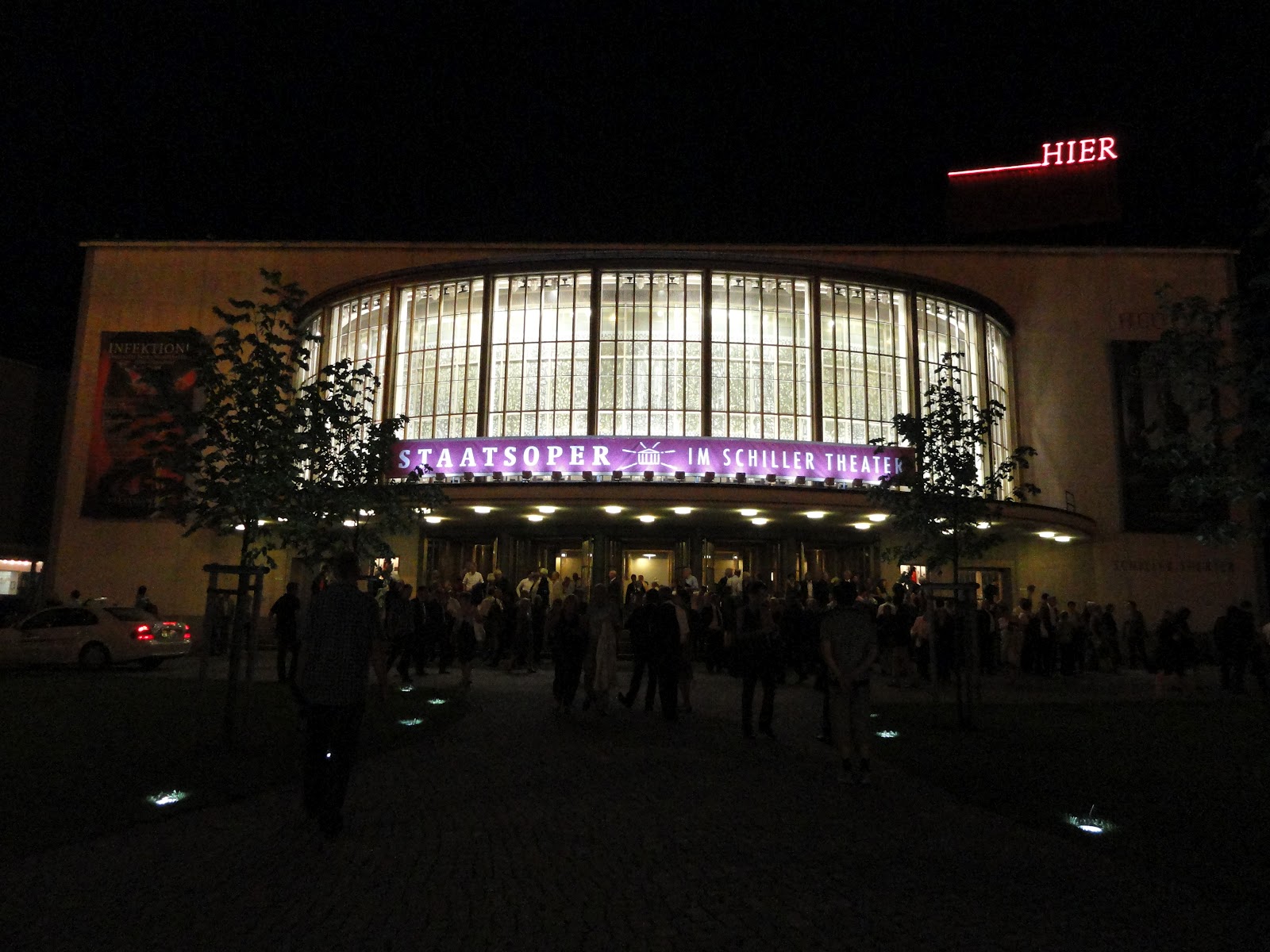
Inicialmente anunciada como a mesma produção da abertura da
Temporada do Scala de Milão, cedo se percebeu que Robert Carsen a adaptara
excessivamente a este Teatro e que não funcionaria no Teatro Schiller em
Berlim. E ainda bem porque a alternativa foi a excelente produção de Claus Guth
de Salzburgo.
A acção do Don Giovanni passa-se aqui numa floresta, com um Don
que acaba por ser ferido com uma arma de fogo na luta com o Comendador e que
vai desfalecendo ao longo da ópera, morrendo em choque hemorrágico no final da
mesma, caíndo numa cova sepulcra cavada pelo fantasma do Comendador. Pelo meio,
um Leporello com aspecto de dependência tóxica, uma paragem de autocarro à
antiga, um automóvel, muitas latas de cerveja, numa encenação que nos envolve
com uma noção de continuidade cénica que é dada pelo esquema rotativo do palco.
É claro que algumas coisas funcionam menos bem e não se enquadram totalmente no
texto mas são poucas e facilmente esquecidas quando tudo o resto é realmente
inovador e concepcionalmente diferente do habitual – a marca de Guth.
Christopher Maltman foi um Don exímio. Vocalmente perfeito
conseguiu também caracterizar, sem excessos, a evolução clínica da personagem até
ao momento final da sua morte. Ficou patente a vasta experiência que tem nesta
encenação. Apenas se esqueceu do início da letra no “Meta di voi qua vadano”.
Erwin Schrott faz um Leporello magnífico. Naturalidade
cómica associada a uma plasticidade vocal impressionante são o que o melhor o
define. Talvez pudesse ter dado um ar de maior pavor na cena do diálogo com a
estátua do Comendador e no “Ah padron ciam tutti morti”, mas a estátua, feita
de ramos finos e árvore, e a própria aparência natural do Comendador também não
transmitiam muito temor...
Dorothea Roschmann foi sublime como Donna Elvira. Eu,
pessoalmente, adoro a voz desta alta especialista mozartiana e derreto-me
facilmente ao seu timbre.
Maria Bengtsson substituiu uma Anna Netrebko cansada e a
desejar mais tempo útil com o filho Thiago. Compreende-se e aceita-se quando
quem a substitui interpreta Donna Anna do modo como Bengtsson a interpretou. A
voz é de uma beleza que se enquadra com a aparência física e a interpretação é
fluente e expressiva, não faltando as nuances melosas exigidas nas suas arias.
Anna Prohaska, na sua aparente fragilidade física, tem vindo
a afirmar-se como uma excelente nova revelação operática. Esteve muito bem como
Zerlina e a sua voz é perfeita para Mozart.
Stefan Kocan foi também excelente como Masseto, com timbre
agradável e muito rigoroso em termos interpretativos.
Guiseppe Filianoti tem tido maus períodos desde que me
cativou na produção de Laurent Pelly do Elixir do Amor, em Londres e Paris. O
seu Duque no Rigoletto do MET da temporada passada foi horrível, com marcadas
falhas nos agudos. Neste Don voltou a ganhar o meu respeito, estando ao nível
do que de ele se espera. Sem falhas, as árias “Dalla sua pace” e “Il mio
tesoro” foram sublimes, de grande beleza.
Alexander Tsymbalyuk tem uma voz profunda e por isso
perfeita para o papel de Comendador mas deixa transparecer um leve vibrato que
me incomoda ligeiramente.
Daniel Barenboim esteve fantástico, esboçando sorrisos à
interpretação de Schrott na ária do catálogo, conduzindo a orquestra com
alegria. O som produzido foi terrífico, transmitindo certamente um deleite
extrassensorial a todos, como a mim me proporcionou. Aponto-lhe só o mesmo que
achei na transmissão televisiva do Don do Scala em Dezembro: o “Non ti fidar o
misera” foi muito lento...
Um pormenor importante, e a primeira vez que vi acontecer,
foi a ópera terminar com a morte de Don Giovanni, sem o componente moralizador
final.
Esta récita é o exemplo clássico de como em Ópera tudo conta
e uma encenação conceptualmente inovadora mas coerente pode, com vozes de
grande nível (não necessariamente estrelas conhecidíssimas como aqui) podem
tornar a Ópera num fascínio mesmo para aqueles que ainda não cederam a esta
paixão.
DON GIOVANNI - Schiller Theater, Berlin - July 6, 2012
Initially billed as the same production that opened the
season at La Scala in Milan, it quickly became apparent that Robert Carsen
excessively adapted ideas to this opera house would not work in the Schiller
Theater in Berlin. And thank goodness because the alternative was the excellent
production from Salzburg by Claus Guth.
The action of Don Giovanni is set in a
forest, with a Don injured with a firearm in the fight with the Commendatore
and will faint along the opera, dying in hemorrhagic shock at the end of it,
falling in a grave dug by the ghost of the Commendatore. In between, a
Leporello with toxic dependency, an old bus stop, a car, many cans of beer, a
scenario that involves us with a sense of continuity which is given by scenic
rotational stage. Of course, some things work less well and do not fit
completely in the text but they are few and easily forgotten when everything
else is really innovative and conceptionally different from the usual - the signature
of Guth.
Christopher Maltman’s Don was superb. Vocally perfect, he
was also capable of showing, without excesses, the clinical evolution of the
character until the final moment of his death. It was shown that he has extensive
experience in this production. Just forgot the beginning of the text in the
"Meta di voi qua vadano."
Erwin Schrott makes a magnificent Leporello.. A natural
comic sense associated with an impressive vocal plasticity are what best
defines him. Maybe he could have given a more deep sense of fear at the scene
of the dialogue with the statue of the Commendatore and in the passage "Ah
padron siam tutti morti”, but the
statue, made of thin branches of tree, and the very natural look of the Commendatore
also did not transmit a lot of fear ...
Dorothea Roschmann was sublime as Donna Elvira. I personally
love the voice of this expert in Mozart and I melt easily to the sound of her
voice.
Maria Bengtsson replaced a tired and want more time with his
son Thiago Anna Netrebko. This is understood and accepted when the substitute
who plays Donna Anna does it like Maria Bengtsson did. The voice is of a beauty
that fits with the physical appearance and the interpretation is fluent and
expressive, without lacking the nuances required in her mellow arias.
Anna Prohaska, in her apparent physical frailty, has been
asserting herself as a great new operatic revelation. She as a very good
Zerlina and her voice is perfect for Mozart.
Stefan Kocan’s Masseto was excellent as well, with a nice
tone and very strict in terms of interpretation.
Guiseppe Filianoti has had bad periods since he captivated
me in Laurent Pelly's production of L’Elisir d’amore in London and Paris. His
Duke in the Rigoletto at the MET last season was horrible, with marked high
notes failure. In this Don he regained my respect, being at the expected level.
Without faults, the arias "Dalla their pace" and "Il mio
tesoro" were sublime, of great beauty.
Alexander Tsymbalyuk has a deep voice and so perfect for the
role of the Commendatore but reveals a slight vibrato that bothers me a bit.
Daniel Barenboim was fantastic, drawing smiles at Schrott in
his the interpretation of the catalog aria, conducting the orchestra with joy.
The sound was terrific, certainly conveying extrasensory feelings to everyone
as it did to me. I point you just the same I did regarding the Scala
production: the "Non ti fidar o misera" was too much slow ...
An important detail, and the first time I saw it happen was that
the opera ends with the death of Don Giovanni, without the final moralizing component.
This performance is the classic example of how everything counts
in Opera and a conceptually innovative production but coherent one may, with
high level voices (not necessarily stars like in here) can make Opera a
fascination even for those who have not yet yielded to this passion .