Mostrar mensagens com a etiqueta English National Opera. Mostrar todas as mensagens

quinta-feira, 4 de julho de 2019

A VIÚVA ALEGRE / THE MERRY WIDOW, English National Opera, Março / March 2019


(text in English below)

A opereta A Viúva Alegre de Franz Lehár esteve em cena na English National Opera numa encenação de Max Webster.


Foi um espectáculo lindo de se ver, uma encenação belíssima, clássica, cheia de cor e movimento. Os momentos cómicos foram constantes e muito bem conseguidos, não estivéssemos em Inglaterra. A música é bem conhecida e transporta-nos para Viena, embora a acção se passe em Paris, na embaixada de Pontevedro, num salão da casa de Hanna Glawari e no clube nocturno Maxim’s.


O espectáculo teve a direcção musical da maestrina Kristiina Poska. O Coro foi excelente e os bailarinos também. De entre os solistas, os principais foram:


O barítono Andrew Shore foi um barão Zirco Zeta com boa presença cénica e desempenho vocal correcto.


A sua jovem mulher Valencienne (soprano Rhian Lois) teve um desempenho muito interessante em palco e cantou muito bem.


O barítono Nathan Gunn (Conde Danilo Danilowitsch) foi o melhor da noite, tem uma óptima figura e presença em palco. A voz é excelente, bem timbrada e sempre claramente audível sobre a orquestra.


A viúva rica Hanna Glawari foi interpretada pela soprano Sarah Tynan, outra cantora de grande qualidade, com voz aguda, afinada e poderosa e, com uma figura de uma elegância invejável, que explorou muito bem no desempenho cénico arrojado.


O tenor Robert Murray foi o Camille de Rosillon, o amante da Vallencienne. De entre um conjunto homogéneo de cantores, foi o que menos impressionou, por vezes deixou-se afogar pela orquestra.


Um espectáculo muito agradável e cómico na English National Opera.


****


THE MERRY WIDOW, English National Opera, March 2019

The operetta The Merry Widow by Franz Lehár was on stage at the English National Opera in a production by Max Webster.

It was a beautiful to see, a beautiful, classic staging, full of color and movement. The comic moments were constant and very good, after all we were in England. The music is well known and transported us to Vienna, although the action takes place in Paris, at the embassy of Pontevedro, a hall of the house of Hanna Glawari and the nightclub Maxim's.

The performance had the musical direction of Kristiina Poska. The Choir was excellent and the dancers too. Among the soloists, the main ones were:

Baritone Andrew Shore was a Baron Zirco Zeta with good scenic presence and correct vocal performance.

His young wife Valencienne (soprano Rhian Lois) performed very well on stage and sang also very well.

Baritone Nathan Gunn (Count Danilo Danilowitsch) was the best of the night, has a great figure and presence on stage. The voice is excellent, well-tuned and always clearly audible over the orchestra.

The rich widow Hanna Glawari was played by soprano Sarah Tynan, another high-quality singer, with a sharp, high, powerful voice and a figure of enviable elegance who performed well in the dashing stage performance.

Tenor Robert Murray was Camille de Rosillon, the lover of the Vallencienne. Among a homogeneous set of singers, he was the least impressive, sometimes drowned by the orchestra.

A very pleasant and humorous performance at the English National Opera.

****

sábado, 22 de junho de 2019

A FLAUTA MÁGICA / THE MAGIC FLUTE, English National Opera, Março / March, 2019


(review in English below)

Na English National Opera vi uma das produções mais imaginativas da ópera A Flauta Mágica de Mozart. A encenação de Simon McBurnay é muito simples, multimédia, eficaz, cheia de momentos inovadores e de bom gosto e, sobretudo, original. É um excelente exemplo que atirar dinheiro para as produções operáticas não é condição obrigatória para fazer bons espectáculos.


A acção passa-se na actualidade. Do lado esquerdo do palco vemos serem desenhadas as figuras que são projectadas, muitas delas muito engraçadas, e do lado direito vemos produzir os efeitos musicais.
Há no centro do palco uma grande plataforma móvel, presa nos cantos por cabos, movimentada por elementos vestidos de negro, que a elevam, baixam ou inclinam, e tudo se passa sobre ou debaixo dela.


Os pássaros são simples folhas de papel movimentadas na mão dos membros de negro, formando um efeito muito simples e eficaz. 


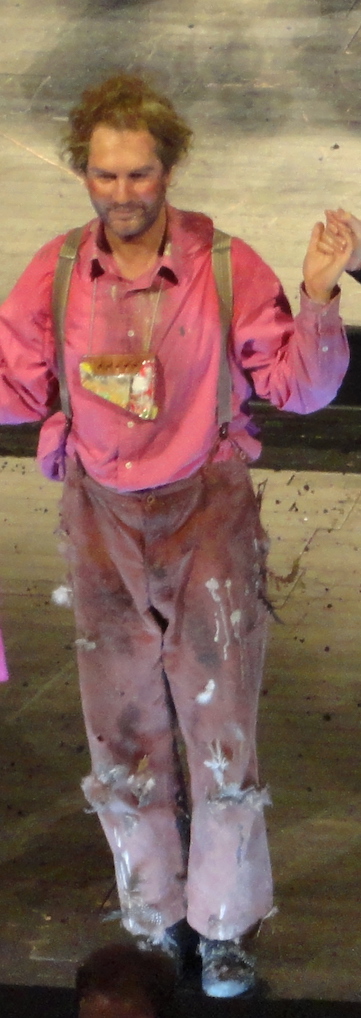
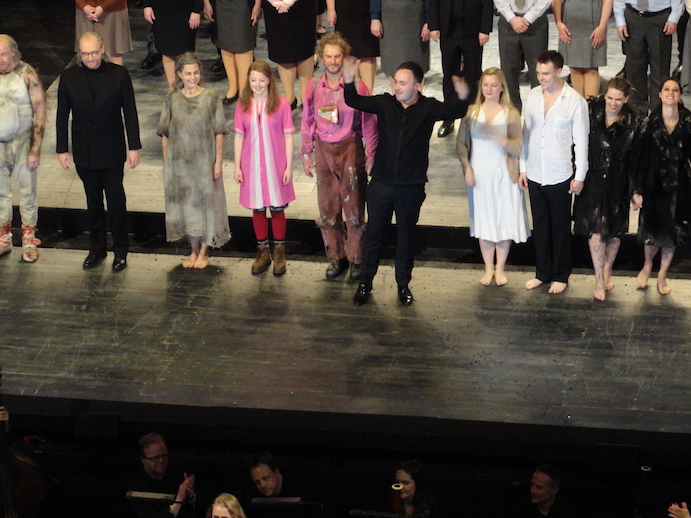
O Papageno é um pintor sempre com um escadote, a Rainha da Noite uma velha de cadeira de rodas, o Sarastro um executivo de fato impecável e os três rapazes são velhos estranhos. O Tamino e a Pamina estão vestidos de branco e descalços na maioria da ópera, sobretudo quando decorrem as provas de submissão.
A orquestra está quase ao nível do palco e participa directamente na acção, com a flautista a subir ao palco e os cantores a atravessarem-na frequentemente.


Dirigiu a orquestra o maestro Ben Gernon. Houve ligeiros desencontros entre os cantores e a música. Nos papéis solistas houve alguma heterogeneidade. Contudo, na sua maioria, foram muito bons.


O jovem tenor Rupert Charlesworth fez um Tamino excelente. Com óptima presença em palco (a encenação assim o exige) cantou de forma segura, sempre afinado e sobre a orquestra. Tem um timbre muito agradável.


A soprano Lucy Crowe foi uma Pamina fabulosa, a melhor cantora da noite. Tem uma voz muito bonita, bem colocada, com agudos fantásticos, e um poderio vocal assinalável.


Outro grande cantor foi o baixo Brindley Sherratt que se impôs como Sarastro, numa interpretação vocal superior.


O Papageno do barítono Thomas Oliemans esteve bem, sem deslumbrar. O papel é um dos mais relevantes na ópera, incluindo a componente cómica, que cumpriu. O canto foi interessante mas sem grandes rasgos de invulgaridade qualitativa.


A soprano Rowan Pierce foi uma Papagena também correcta. O papel é relativamente curto, apesar do belíssimo dueto final com o Papageno.


Nas três damas, Susanna Hurrell, Samantha Price, Katie Stevenson, imperou a qualidade mas merece uma referencia muito elogiosa a mezzo Katie Stevenson que vocalmente foi excelente.


Também os três rapazes, vestidos de forma muito bizarra, cumpriram bem as suas intervenções, Alex McSweeney, Zeb Jenkins e Sasha Rose.


O Monostatos de Daniel Norman foi desinteressante e cantou sem grande vigor. Também a voz não ajudou, não é bonita nem extensa.


A grande decepção foi a soprano Julia Bauer como Rainha da Noite, uma das personagens vocalmente mais marcantes da ópera. Apesar de ter estado bem na coloratura da ária principal, cantou baixo, de forma irregular (parecia que ia quebrar a qualquer instante) e a voz não é nada cativante. Uma pena.


Mas foi um espectáculo muito bom, tanto pela originalidade como pela elevada categoria da grande maioria dos cantores.


****


THE MAGIC FLUTE, English National Opera, March, 2019

At the English National Opera I saw one of the most imaginative productions of Mozart's opera The Magic Flute. The production of Simon McBurnay is very simple, multimedia, effective, full of innovative moments and, above all, original. It's a great example that throwing money on opera productions is not a prerequisite for good performances.
The action is set in the present. On the left side of the stage we see the drawings that are projected, many of them very funny, and on the right side we see the musical effects produced.
There is in the center of the stage a large movable platform, fastened in the corners by cables, moved by elements dressed in black, which raise, lower or incline, and everything happens on or under it.
Birds are simple sheets of paper moved in the hands of supernumeraries in black, forming a very simple and effective effect. Papageno is a painter always with a ladder, the Queen of the Night a wheelchair-bound old woman, Sarastro a flawless executive and the three boys are old strangers. Tamino and Pamina are dressed in white and barefoot in most of the opera, especially when the submission takes place.
The orchestra is almost at the stage level and participates directly in the action, with the flautist taking the stage and the singers crossing it frequently.

Maestro Ben Gernon directed the orchestra. There were slight mismatches between the singers and the music. In the soloist roles there was some heterogeneity. Most, however, were very good.

Young tenor Rupert Charlesworth was an excellent Tamino. With great presence on stage (the staging so requires) he sang firmly, always tuned and over the orchestra. he has a very nice tone.

Soprano Lucy Crowe was a fabulous Pamina, the best singer of the night. She has a very beautiful voice, well tuned, with fantastic top register, and a remarkable vocal power.

Another great singer was bass Brindley Sherratt who sang Sarastro, in a superior vocal interpretation.

The Papageno of baritone Thomas Oliemans was well, without dazzle. The role is one of the most relevant in the opera, including the comic component, in which he was well. The singing was interesting but without great bursts of qualitative surprises.

Soprano Rowan Pierce was also a correct Papagena. The role is relatively short, but includes the beautiful final duet with Papageno.

In the three ladies, Susanna Hurrell, Samantha Price, Katie Stevenson, prevailed the quality but mezzo Katie Stevenson deserves a very complimentary reference due to her vocal excellency.

Also the three boys, dressed in a very bizarre manner, sung well their parts, Alex McSweeney, Zeb Jenkins and Sasha Rose.

Daniel Norman's Monostatos was uninteresting and sang without impressing. Also the voice did not help, it is neither beautiful nor extensive.

The great disappointment was soprano Julia Bauer as Queen of the Night, one of the most vocal impressive characters of the opera. Although she was well in the main aria's coloratura, she sang low, irregularly (it seemed like she was going to break at any moment) and the voice is not very catchy. A disappointment.

But it was a very good performance, both for the originality and for the high category of the great majority of the singers.

****

sexta-feira, 1 de março de 2019

LUCIA DI LAMMERMOOR, English National Opera, Outubro / October 2018


(review in English below)

A Lucia di Lammermoor de Donizetti é uma das óperas que mais gosto dentro do estilo. A produção da English National Opera, no início, com o canto em inglês e a encenação feia e vazia, uma sala velha, apenas com uma parede branca com a tinta a cair e grandes janelas com cortinas degradadas, fiquei mal impressionado. Mas com o avançar do espectáculo, fui sendo conquistado.
A acção passa-se toda neste cenário (final do Sec. XIX ou início do Séc. XX), que vai sofrendo ligeiras modificações, aparecimento de várias cadeiras, mas a principal delas é a da cama da Lucia onde, no 2º acto, ela é amarrada pelo irmão Enrico, sugerindo que é por ele abusada. O último acto passa-se no mesmo cenário, as cadeiras estão maioritariamente ocupadas pelos retratos das famílias rivais (evocando os seus mortos) e de uma das janelas maiores sai a Lucia toda ensanguentada que, enquanto canta a cena da loucura, abre-se a cortina que dá acesso ao quarto onde está o marido Arturo assassinado, com o qual ela interage.
A encenação é a preto e branco, tudo é negro, branco ou em tons de cinzento, guarda roupa incluído, só no final aparece o vermelho do sangue na Lucia depois de matar o marido (que também está todo ensanguentado).


A encenação é opressiva e acaba por resultar bem, vive muito à custa de retratos antigos dos familiares das duas famílias rivais. Mesmo antes do início do espectáculo há retratos empilhados no palco.


Dirigiu a orquestra o maestro Stuart Stratford.


Os cantores foram bons, mas para esta ópera é preciso serem excepcionais. Não conhecia nenhum. A Lucia (Sarah Tynan), com excelente figura e agilidade para a personagem, esteve bem na suavidade vocal e coloratura, mas a voz foi pouco potente e, na cena da loucura, simplificou a coisa.


O Edgardo (Eleazar Rodriguez) também esteve bem, mas o timbre vocal não é bonito para o meu gosto e faltou-lhe paixão na interpretação, cénica e vocal.


Os outros dois solistas foram colossais! Lester Lynch tem um vozeirão quente e fez uma interpretação fabulosa do Enrico, o irmão malvado.


Clive Bayley (Raimondo) foi um capelão (pouco solidário com a Lucia) de voz grave e de uma potência avassaladora, de longe o melhor da noite, embora o Enrico não lhe tenha ficado muito atrás.


Os cantores secundários Michael Calvin (Arturo),


Sarah Pring (Alisa)


 e Elgar Llyr Thomas (Normanno), cumpriram sem destoar.


***


LUCIA DI LAMMERMOOR, English National Opera, October 2018

Lucia di Lammermoor by Donizetti is one of the operas I like the most within its style. The English National Opera production, at the beginning with English singing and the ugly and empty staging, an old room with only a white wall with falling paint and large windows with drained curtains, I was unimpressed. But with the advance of the show, I was being conquered.
The action happens throughout this scenario (final of 19th century or beginning of the 20th century), which undergoes slight modifications, appearance of several chairs, but the main one is Lucia's bed where, in the 2nd act, she is tied by her brother Enrico, suggesting that he abuses her. The last act happens in the same scenario, the chairs are mostly occupied by the portraits of the rival families (evoking their dead) and from one of the larger windows appears Lucia all bloody. While singing the madness scene, the curtain opens and gives access to the room where her husband Arturo is murdered, with whom she interacts.
The staging is black and white, everything is black, white or gray, dresses included, only at the end appears the red blood in Lucia after killing her husband (who is also all bloody).
The staging is oppressive and turns out to be fine, lives long at the expense of old portraits of the two rival families. Even before the performance starts, there are portraits stacked on stage.

Maestro Stuart Stratford directed the orchestra. The singers were good, but for this opera they have to be exceptional. I did not know any of them. Lucia (Sarah Tynan), with excellent figure and agility for the character, was well on vocal smoothness and coloratura, but the voice was not very powerful and, in the scene of madness, she simplified it.

Edgardo (Eleazar Rodriguez) was also well, but the vocal timbre is not beautiful for me and he lacked passion in the interpretation, scenic and vocal.

The other two soloists were colossal! Lester Lynch has a big warm voice and made a fabulous interpretation of Enrico, the evil brother.

Clive Bayley (Raimondo) was a chaplain with a bass voice of overwhelming power, by far the best singer of the night, although Enrico was not far behind.

Supporting singers Michael Calvin (Arturo), Sarah Pring (Alisa), and Elgar Llyr Thomas (Normanno) performed at good level.

***