(text in English below)
Texto de
wagner_fanatic
Encenação – Tobias Kratzer
Maestro – Valerie Gergiev
Landgraf Hermann
– Stephen Milling
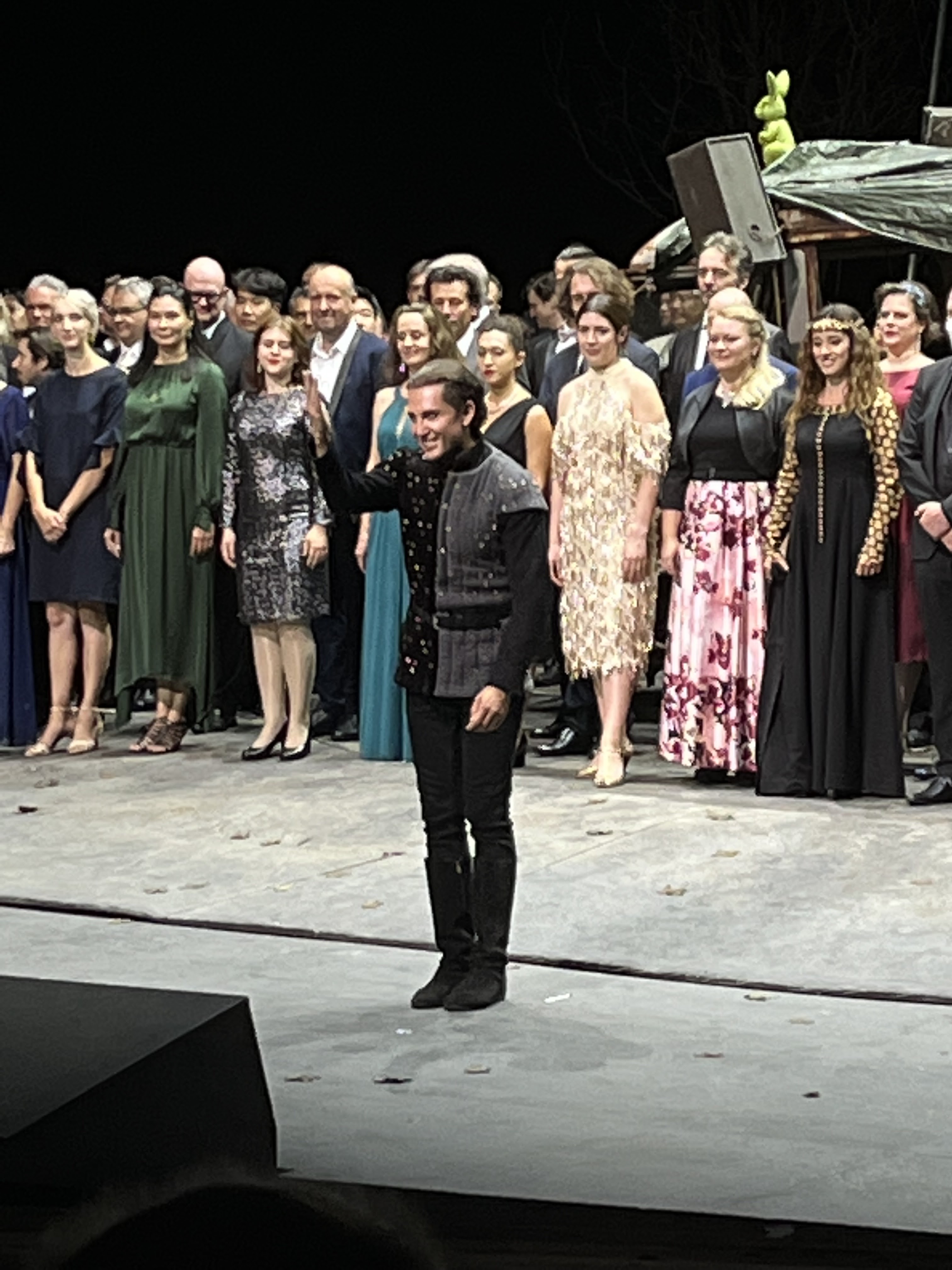
Tannhäuser –
Stephen Gould
Wolfram von
Eschenbach – Markus Eiche
Walter von der
Vogelweide – Daniel Behle
Biterolf – Kay
Stiefermann
Heinrich der
Schreiber – Jorge Rodríguez-Norton
Reinmar von
Zweter – Wilhelm Schwinghammer
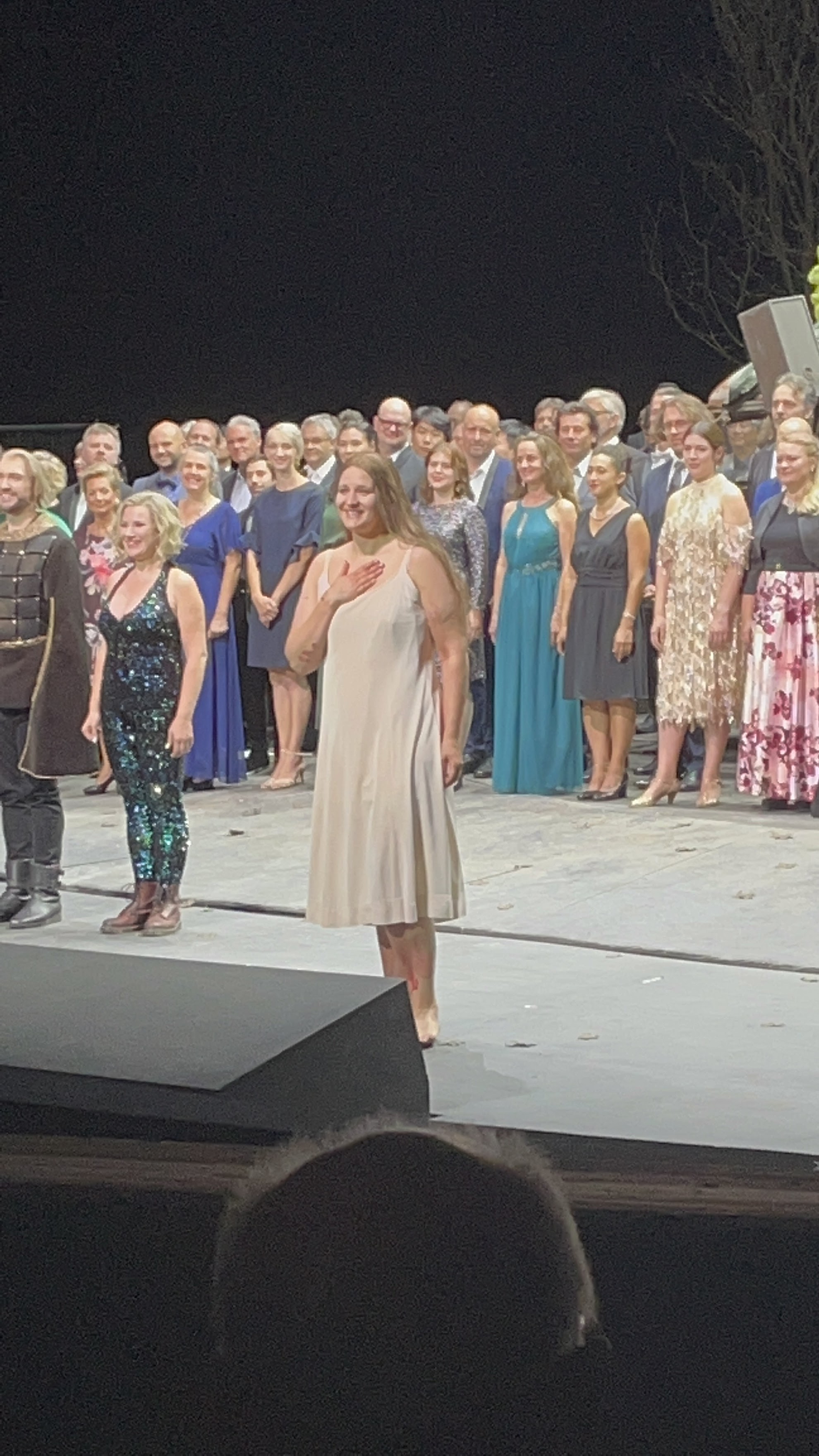
Elisabeth, nichte
des Landgrafen – Lise Davidsen
Venus – Elena
Zhidkova
Ein Junger Hirt –
Katharina Konradi
Le Gateau
Chocolat – Le Gateau Chocolat
Oskar – Manni
Laudenbach
Orquestra e Coro
do Festival de Bayreuth
Atrevo-me a dizer, desde já, visto apenas o 1º acto, que é uma encenação
GENIAL! Mas tenho de ver para onde isto vai para dizer a minha visão final. Este
é decididamente um Tannhauser para se rever ao contrário do Lohengrin cuja
encenação é uma autêntica porcaria.
Cantores sublimes. O Stephen Gould
enchia um estádio só com a voz.
Elena Zhidkova brilhante, sendo o conjunto
completo para as personagens maléficas wagnerianas.
Markus Eiche nunca tinha ouvido mas é brutal
e ainda se vai ouvir muito mais dele no 2º e principalmente 3º acto pelo que se
mantiver vai ser memorável.
O Stephen Milling está com
alguns problemas nos agudos.
A Lise Davidsen tem um vozeirão
como eu acho que nunca ouvi em ninguém ao vivo! Isso é bom e é mau! A voz tem
timbre bonito, ela é bonita, mas tem de continuar a aprender a domar a voz. Já
o faz mas não na virtual perfeição. Tem que aprender a controlar a potência da
voz para que não a distorça de um modo que parece grito mas não o é... é a
potência descomunal dela.


O video que se vê durante a abertura inicia-se com uma imagem do castelo de
Wartburg onde originalmente se passa a obra. A vista de helicóptero
ultrapassa-o sobre a floresta que, com intervalos curtos sem projeção da
floresta, procura dar a ideia de distância grande. O Venusberg, pela lenda,
estaria na zona do Castelo de Wartburg. Mas aqui o Venusberg é uma carrinha
Citroen onde viaja Vénus, Tannhäuser, um anão e uma drag queen. Tannhäuser
vestido de palhaço, juntamente com os outros, e na sua publicidade do grito de
revolta de Wagner contra os desígnios culturais (música e ópera) da altura “frei im Wollen, frei im Thun, frei im
Geniessen”, simbolizam por um lado formas de arte diferentes, escolhas
sexuais e aspectos físicos diferentes, no fundo, talvez o diferente mas que
tendemos a olhar como aberrante.
Esta diferença entre o amor carnal e o mais espiritual está na base da
temática desta ópera e também na altura a que se remonta, talvez também visto o
carnal como aberrante. São várias as cenas de beijo entre Vénus e Tannhäuser
enquanto esta guia a carrinha. Precisam de comida e gasóleo e então, como foras
da lei, o anão e o drag roubam gasóleo de parque de estacionamento enquanto
Vénus e Tannhäuser compram menus num drive thru do Burger King. Um vigilante
apanha-os a roubar o gasóleo mas eles conseguem entrar na carrinha. O cartão de
crédito que é dado para pagar é falso e tem na parte de trás o lema
revolucionário de wagner. Quando tentam fugir o vigilante está no caminho deles
e Venus atropela-o, deixando-o morto, ensanguentado no chão. Esta situação impressiona
Tannhäuser.
O ambiente antes de folia dentro da carrinha torna-se pesado para os 3
homens mas mais para Tannhäuser que, pensativo durante vários momentos,
adivinhando-se uma turbulência de emoções internas que chegam a esboço de
choro, são encostados a uma imagem de cópia da face da Vénus do Nascimento de
Vénus de Botticelli. Param num local para comer os hambúrgueres, com uma casa
com anões cá fora, a drag entra e vem de lá vestida de branca de neve (do
melhor, por causa de ser na floresta e a casa ter anões :):):) e toda a cena de
rejeição de Vénus por parte de Tannhäuser é feita neste ambiente, com a última
parte, em andamento e, na invocação de Maria, Tannhäuser atira-se da carrinha
em andamento (videos de estrada e carros atrás) com a ideia de Vénus e os
outros seguirem em frente na carrinha e ele prostrado na berma da estrada.


O local tem a clássica cruz de Cristo ao fundo e é na floresta :) Surge o
pastor que aqui é um (uma) jovem em bicicleta e acaba por o espaço, sugerindo
andamento na floresta, dar aos jardins do Festival de Bayreuth. Os peregrinos
são as pessoas que vem ver a ópera e que passam em direção à casa de ópera. Até
o sinal de proibição de carros que encontramos na altura do festival na base da
colina e que impede de os carros passarem lá está (e que será derrubado por
Vénus no final do acto com a carrinha, sugerindo que a intenção dela é seguir
Tannhäuser).
Os cavaleiros aprecem e não são mais do que os cantores da própria ópera
Tannhäuser que está em cena. Tannhäuser regressa a ser o que era, um cantor
lírico, ao voltar com eles para o Festival. Antes disto, Elisabete aparece na
altura em que Wolfram pergunta a Tannhäuser se ele não volta nem mesmo pela
Elisabete. Ela olha e observa-o e à visão de um palhaço e, por ele a ter deixado,
dá-lhe um valente estalo e desaparece de cena. No fundo, os cantores Tannhäuser
e Elisabete estão enamorados enquanto pessoas mas também o estão ao nível que
se conhece na própria ópera que estão a encenar e a participar no Festival.
Isto compreende-se melhor no 2º acto com palco em baixo e projeções em cima
em directo de bastidores. Na cena entre Elisabete e Tannhäuser o video é
projectado essencialmente sobre Wolfram que vê na interação de ambos uma perda
de fé de ficar com Elisabete - ou seja o real entre as emoções dos cantores e
relações entre eles é o mesmo enquanto cantores da ópera - amor entre Elisabete
cantora lírica e Tannhäuser cantor lírico e amor entre Elisabete personagem da
ópera e Tannhäuser personagem da ópera, com o triângulo amoroso, nos 2 níveis,
completado pelo Wolfram cantor lírico e Wolfram personagem.
Durante o interlúdio musical que corresponde à entrada dos convidados na
sala, vemos o video de Vénus e companhia a tentarem entrar no edifício do
Festival ao que só conseguem pela varanda com uso de escada. Vénus imobiliza
uma das cantoras do coro e veste-se como ela entrando em cena. O anão e o drag
também passam ao fundo do cenário. São diversas as situações cómicas nestes
momento, em especial pela Vénus que só vendo. Aqui admito que estas situações
cómicas podem causar alguma distração mas... ficam mesmo bem :) Enquanto
Wolfram canta a sua ideia de amor, a Vénus goza e o video foca a cara de
Tannhäuser nos bastidores que ouve atento e discorda facialmente logo mesmo
antes de entrar em palco.
Quando em palco reconhece Vénus começa a passagem do seu canto que fala de
Venusberg e então aparecem dos bastidores o anão e o drag, Tannhäuser beija
Vénus sob o olhar penoso de Elisabete (mais uma vez aqui a emoção é maior, como
que a dobrar para quem vê porque sabemos que é uma traição na ópera e na vida.
Um dos funcionários da ópera vê o que se passa e liga à Katharina Wagner :) que
aparece no video a ligar para a polícia :) A policia aparece fora do Festival e
entra para tentar resolver as coisas mas quem põe água na fervura é Heinrich.
Aqui a realidade mistura-se com a ópera. Tannhäuser sai para “Roma” mas é a ser
preso pela polícia. Ficam Vénus, o anão e o drag em palco após todos saírem,
com o drag, como se fosse preciso, a tapar a harpa em palco com uma bandeira
dos LGBT.
O 3º acto é novamente na “vida real”. A carrinha aparece no meio da
floresta, por baixo do placard que depois se vem a ver ter a publicidade do
Gateau chocolat ;). O anão a ver que acabou o papel higiénico e tirar um bocado
dos posters para ter papel para se limpar foi hilariante, ao deslocar-se para
detrás da carrinha :) Elisabete aparece e fica contente por ver que Tannhäuser
ainda não voltou (porque se estivesse na carrinha estava já perdido para Vénus)
e partilha aquele momento de refeição com o anão e que achei tocante. E tocante
porque é um realçar de que mesmo com as diferenças, mesmo com as rivalidades de
amor (ou de outras coisas) ainda podemos ser verdadeiramente humanos e
partilhar.


Wolfram entra com a sua “ária” e os peregrinos são agora pessoas pobres que
ao regressarem apanham restos de coisas que estão no chão e que no fundo são
lixo. Talvez não funcione bem porque os primeiros peregrinos eram as pessoas
que iam assistir à opera mas aqui não faziam sentido se aparecessem. Se
pensarmos que isto acaba por ser uma visão também das diferenças extremas
sociais tem sentido: no 1º acto os peregrinos são pessoas de algumas posses e
que vão à ópera, mas os peregrinos do 3º acto são modestos e que se agarram até
a lixo porque isso já é alguma coisa...
Elisabete fica devastada por Tannhäuser não voltar com os peregrinos. Wolfram
encontra a roupa de palhaço na carrinha e veste-a com o sentido de se sentir
como sendo o Tannhäuser e dizer a Elisabete que ele não está mas eu estou aqui,
e acontecer o que muitas vezes acontece na vida real e que é mulheres
devastadas no amor, no seu luto, entregam-se a outros num rescaldo de relação,
sem haver necessariamente algum
sentimento, e muitos desses homens a quem se entregam são amigos que até
nutrem um sentimento amoroso por essa mulher. É isto que acontece ali até
porque é Elisabete que chama Wolfram para dentro da carrinha e não uma
violação.
Wolfram volta, conta o seu falhanço, tenta de vez afastar-se da sua vida sem
Vénus e simbolicamente queima a partitura de Wagner da Edition Peters que vemos
com ele também no 1º acto - simbólico porque era cantor lírico, e essa era a
vida sem Vénus. O final é potente. Elisabete não morre de desgosto da forma
meio inverosímil que encontramos na ópera original. Ela aqui mata-se cortando
os pulsos (as cicatrizes de tentativas prévias já tinham sido mostradas no 2º
acto a Wolfram e Tannhäuser e agora foi de vez) e aparece toda ensanguentada na
carrinha com o anão a consolar o cadáver com festas. Tannhäuser e Wolfram tiram
o corpo e este é colocado sobre o colo de Tannhäuser que acaba por lamentar
tudo enquanto, ao mesmo tempo, na projeção video vemos como as coisas podiam
ter corrido bem, com Tannhäuser a conduzir a carrinha com Elisabete ao lado com
a cabeça encostada ao seu ombro, em direção à felicidade de um por do sol.
Esta encenação é moderna, actual, mistura sentimentos e ideias
transformando a ópera original em algo diferente, novelesco, mas com uma
coerência invejável, pincelada de momentos de humor mas com outros
emocionalmente tocantes. E isto não é Eurotrash. É Eurogenius por um encenador
alemão que nasceu num dos maiores anos do século XX – 1980.
A cereja em cima do bolo é vermos que homens que traem as suas perfeitas
Elisabetes, muitas vezes não são mais nada do que uns... palhaços. Talvez por
isso o encenador caracterizou o Tannhäuser do Venusberg como um... palhaço.
TANNHÄUSER,
Bayreuther Festspiele, Bayreuth Festival, August / August 2019
Text by Wagner_fanatic
Direction -
Tobias Kratzer
Conductor -
Valerie Gergiev
Landgraf
Hermann - Stephen Milling
Tannhäuser
- Stephen Gould
Wolfram von
Eschenbach - Markus Eiche
Walter von
der Vogelweide - Daniel Behle
Biterolf -
Kay Stiefermann
Heinrich
der Schreiber - Jorge Rodríguez-Norton
Reinvon von
Zweter - Wilhelm Schwinghammer
Elisabeth,
nichte des Landgrafen - Lise Davidsen
Venus -
Elena Zhidkova
Ein Junger
Hirt - Katharina Konradi
Le Gateau
Chocolat - Le Gateau Chocolat
Oskar -
Manni Laudenbach
Bayreuth
Festival Orchestra and Choir
I dare say,
only after seeing the first act, that this a GENIAL production! But I have to
see where this is going to express my final vision. This is decidedly a Tannhäuser
to revise unlike the Lohengrin whose production is a real crap.
Sublime
singers. Stephen Gould filled a
stadium with his voice.
Shiny Elena Zhidkova, being the complete set
for the Wagnerian evil characters.
Markus Eiche that I had never heard but is brutal and we
will still hear a lot more from him in the 2nd and especially 3rd act so
keeping up will be memorable.
Stephen Milling has some problems with top notes.
Lise Davidsen has a big voice like I don't think I've ever
heard anyone live! This is good and bad! The voice has beautiful timbre, she is
beautiful, but she has to continue to learn to tame the voice. She already does
but not in virtual perfection. She has to learn to control the power of the
voice so that she does not distort it in a way that sounds like a scream but it
is not ... it is her sheer power.
The video we
see during the opening begins with an image of the Wartburg castle where the
work originally took place. The helicopter view overtakes us over the forest
which, at short intervals without projection of the forest, seeks to give the
idea of great distance. Venusberg, by legend, would be in the Wartburg Castle
area. But here the Venusberg is a Citroen van were travel Venus, Tannhäuser, a
dwarf and a drag queen. Tannhäuser dressed as a clown, along with the others,
and in his publicity of Wagner's cry of revolt against the cultural designs
(music and opera) of the time “frei im
Wollen, frei im Thun, frei im Geniessen” symbolize forms of different art,
sexual choices and different physical aspects, perhaps different but which we tend
to look at as aberrant.
This
difference between carnal and most spiritual love is at the base of the theme
of this opera and also at the time it goes back, perhaps also seen carnal as aberrant.
There are several kissing scenes between Venus and Tannhäuser as she drives the
van. They need food and diesel and then, as outlaws, the dwarf and drag steal
diesel while Venus and Tannhäuser buy menus at a Burger King drive thru. A
watchman catches them stealing the diesel but they get into the van. The credit
card that is given to pay is fake and has the revolutionary Wagner motto on the
back. When they try to escape the watchman is in their path and Venus runs over
him, leaving him dead, bloody on the ground. This situation impresses
Tannhäuser.
The
pre-revelry ambience inside the van becomes heavy for the three men but more
for Tannhäuser who, thoughtful for several moments, guessing a turmoil of inner
emotions that come to the outline of crying, are leaning against a copy image
of the face of the Venus of the Birth of Venus of Botticelli. They stop at a
hamburger place, with a dwarf house out there, the drag comes in and comes out
dressed in snow white (best, because it's in the woods and the house has
dwarves :) :) :) and the whole scene of Tannhäuser's rejection of Venus is done
in this environment, with the last part in progress and, at Mary's summoning,
Tannhäuser throws himself from the moving van (road videos and cars behind)
with the idea of Venus and the others move on in the van and he prostrate
himself on the side of the road.
The place
has the classic cross of Christ in the background and it is in the forest :)
The sheppard is here a young girl on a bicycle and ends up in the space,
suggesting progress in the forest towards the gardens of the Bayreuth Festival.
Pilgrims are the people who come to see the opera and who pass towards the
opera house. Even the car-ban sign that we found at the height of the festival
at the base of the hill that prevents cars from passing is there (and that Venus
will be knocked over at the end of the van act, suggesting that she intends to
follow Tannhäuser) .
The knights
enjoy and are no more than the singers of the very opera Tannhäuser that is on
the scene. Tannhäuser returns to what he was, a lyric singer, when he returned
with them to the Festival. Prior to this, Elisabeth appears at the time Wolfram
asks Tannhäuser if he does not return even for Elisabeth. She looks and watches
him and the sight of a clown and, because he has left her, gives him a brave
crack and disappears from the scene. Basically, the singers Tannhäuser and
Elisabeth are in love as people but they are also at the same level known in
the opera they are performing and participating in the Festival.
This is
best understood in the 2nd act with stage below and overhead projections
backstage. In the scene between Elisabeth and Tannhäuser the video is projected
essentially on Wolfram who sees in their interaction a loss of faith to be with
Elisabeth - that is, the real between the singers emotions and relationships
between them is the same as opera singers - love between Elisabeth lyric singer
and Tannhäuser lyric singer and love between Elisabeth opera character and
Tannhäuser opera character, with the love triangle, on 2 levels, completed by
the lyric singer Wolfram and Wolfram character.
During the
musical interlude that corresponds to the entrance of the guests in the room,
we see the video of Venus and company trying to enter the Festival building to
which they can only reach the balcony with the use of stairs. Venus immobilizes
one of the choir singers and dresses as she enters the scene. The dwarf and the
drag also pass the background. The comic situations are diverse at this moment,
especially by Venus. Here I admit that these comical situations can cause some
distraction but ... they are really fine :) While Wolfram sings his idea of
love, Venus enjoys and the video focuses on Tannhäuser's face behind the
scenes who listens attentively and disagrees with facials just before to get on
stage.
When on
stage recognizing Venus begins the passage of his song that speaks of Venusberg
and then the dwarf and drag appear from behind the scenes, Tannhäuser kisses
Venus under Elisabeth's pained gaze (once again the emotion is greater, as if
to double to who sees it because we know it's a betrayal in opera and in life.
One of the opera staff sees what's going on and calls Katharina Wagner :) who
appears in the video calling the police :) The police appear outside the
Festival and enter to try to sort things out but Heinrich calms it. Here
reality mixes with opera. Tannhäuser leaves for "Rome" but is being
arrested by the police. Venus, the dwarf and the drag are on stage after they
all leave, with the drag, as if necessary, covering the harp on stage with a
LGBT flag.
Act 3 is
again in “real life”. The van appears in the middle of the forest, underneath
the placard that later comes to have the advertising of Gateau chocolat;). The
dwarf watching the toilet paper run out and taking out a part of the posters to
get paper to clean was hilarious as he moved behind the van :) Elisabeth
appears and is glad to see that Tannhäuser is not back yet (because if he was
in the van was already lost to Venus) and shares that moment of meal with the
dwarf which I found touching. It's touching because it's a point that even with
differences, even with rivalries of love (or other things) we can still be
truly human and share.
Wolfram
comes in with his "aria" and the pilgrims are now poor people who, on
their return, pick up scraps of things that are on the floor that are trash.
Maybe it doesn't work well because the first pilgrims were the people who were
going to watch the opera but here it made no sense if they showed up. If we
think that this turns out to be a vision of the extreme social differences as
well, it makes sense: in the first act the pilgrims are people of some
possessions who go to the opera, but the pilgrims of the third act are modest
and cling to the trash because that It's already something...
Elizabeth
is devastated that Tannhäuser does not return with the pilgrims. Wolfram finds
the clown suit in the van and dresses it with the sense of feeling like Tannhäuser
and telling Elisabeth that he is not but I am here, and what happens often in
real life happens that devastated women in love, in their mourning, they give
themselves to others in the aftermath of relationship, without necessarily
having any feeling, and many of these men to whom they give themselves are
friends who even have a loving feeling for these women. This is what happens
there because Elisabeth is calling Wolfram into the van and it is not a
violation.
Wolfram
returns, tells of his failure, tries to get away from his life without Venus,
and symbolically burns the Wagner’s score Edition Peters we see with him also
in the first act - symbolic because he was a lyric singer, and that was life
without Venus. The ending is potent. Elisabeth does not die of sorrow in the
half-hearted way we found in the original opera. She here kills herself by
slashing her wrists (the scars from previous attempts had already been shown in
the second act to Wolfram and Tannhäuser and now gone for good) and appears all
bloody in the van with the dwarf comforting the party corpse. Tannhäuser and
Wolfram take off the body and it is placed on Tannhäuser's lap which ends up
regretting everything while, at the same time, in the video projection we see
how things could have gone well, with Tannhäuser driving the van with Elisabeth
beside him. Head against his shoulder, towards the happiness of a sunset.
This
staging is modern, mixing feelings and ideas transforming the original opera
into something different, novel, but with an enviable consistency, brushstroke
moments of humor but with others emotionally touching. And this is not
Eurotrash. It is Eurogenius by a German director who was born in one of the
greatest years of the twentieth century - 1980.
The icing
on the cake is that men who betray their perfect Elizabethans are often nothing
more than clowns. Perhaps that's why the director characterized Venusberg's
Tannhäuser as a ... clown.