(review in english below)
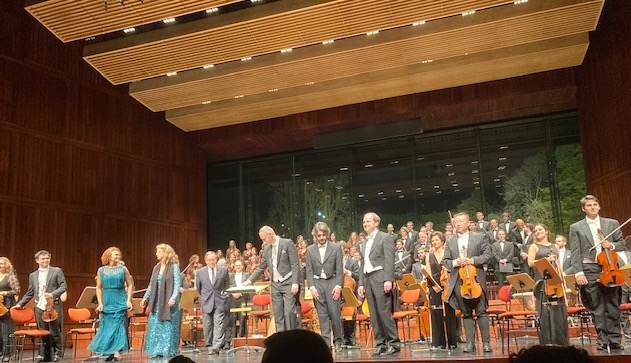
Sob a direcção do maestro grego Teodor Currentzis, a Orquestra e Coro de câmara do teatro de ópera
e ballet Tchaikovsky de Perm, MusicAeterna,
apresentaram na Fundação Gulbenkian
duas obras, Dixit Dominus HWV232 de Georg Friedrich Händel e Dido e Eneias de Henry Purcell.
O salmo Dixit Dominus
integra partes corais muito expressivas alternadas com árias, emprestando à
obra uma beleza assinalável.
Dido e Eneias é,
para mim, a melhor ópera inglesa, rica em intervenções corais, recitativos e
árias. Aqui interpretada em versão concerto, é uma obra de grande intensidade
emocional que culmina com uma pungente representação da dor e sofrimento na
ária final, o lamento de Dido, When I am
laid in earth. Desta famosa e sublime página, Victoria de los Angeles e
Janet Baker, entre outras, deixaram-nos interpretações insuperáveis.
Teodor Currentzis apresenta-se com uma figura sui generis:
vestido de negro, cabelo cortado e penteado à dread, calças justas e botas. A sua direcção é (excessivamente?)
enérgica e ruidosa, faz muito barulho com os tacões das botas no solo. Mas, com
o desenrolar do concerto, esquece-se esse aspecto desagradável, tal o impacto
que a sua direcção causa. Disse que a sua missão é ser fiel ao que o
compositor escreveu e trazer a vida real à música. Fá-lo de forma impecável e o seu misticismo é impressionante ou, direi melhor, arrepiante.
MusicAeterna,
orquestra e coro por si criados, permitiram que pudéssemos apreciar as
qualidades de excepção do maestro. Se a interpretação musical com instrumentos
da época e músicos excepcionais foi fantástica, o coro foi sublime em harmonia,
expressividade, intensidade dramática e sincronismo. Parecia a uma só voz.
Os solistas não destoaram. O soprano alemão Anna Prohaska esteve muito bem como
rainha Dido e num dos encores.
Tobias Brendt,
barítono alemão, foi o príncipe troiano Eneias e também esteve à altura.
Belinda, irmã de Dido, foi fabulosamente cantada pelo
soprano grego Eleni Stamellou. A feiticeira foi Maria
Forsström, mezzo sueco que não destoou e, nos papéis secundários, estiveram
o soprano grego Eleni Lydia Stamellou
como 1ª bruxa, o mezzo russo Daria
Telyatnikova como 2ª bruxa, o baixo russo Victor Shapovalov como marinheiro e o soprano russo Valeria Safonova como espírito.
Terminado o concerto, o melhor ainda viria nos encores (estou a ser injusto para com o
final da Dido e Eneias): um primeiro que não identifiquei, interpretado apenas
pelo coro, com mão de Peter Sellars, ao que percebi. Foi avassalador, tanto na
interpretação cénica como, sobretudo, na vocal. Inesquecível!
A terminar, um extracto da “The Indian Queen” de Purcell,
também primorosamente interpretada por todos, orquestra, coro e solistas. Já
muitos tinham saído do auditório. Terão perdido o melhor da noite…
O esplendor do barroco na Gulbenkian!
Foi um dos concertos do ano e será difícil assistir a
melhor!
*****
Dixit
Dominus (Handel) , Dido and Aeneas (Purcell) and more, Gulbenkian Foundation,
February 2014
Under the direction of Greek conductor Teodor
Currentzis, the chamber orchestra and choir of Perm theater opera and
ballet Tchaikovsky, MusicAeterna,
presented two pieces at the Gulbenkian Foundation, Dixit Dominus HWV232 by Georg
Friedrich Händel and Dido and Aeneas
Henry Purcell.
Dixit Dominus integrates very expressive choral sections
alternate with arias,making
the work of
a remarkable beauty.
Dido and Aeneas is, for me, the best
English opera, rich in corals, recitatives and arias. Here interpreted in
concert version, it is a work of great emotional intensity that culminates in a
poignant representation of pain and suffering in the final aria, Dido 's lament,
When I am laid in earth .Of this
famous and sublime musical page, Victoria de los Angeles and Janet
Baker, among others, left us unsurpassed interpretations .
Teodor Currentzis apppeared in a sui generis figure: dressed in black, hair cut and style to dread,
tight trouses and boots. His direction was (in excess ?) energetic and noisy,
making a lot of noise with the heels of his boots on the ground. But with the
course of the concert , we forgot this unpleasant noise such the impact that
his direction imposed. He said before that his mission is to be true to what
the composer wrote and bring real life to music.He does so flawlessly and his
mystic is awesome.
MusicAeterna ,orchestra and chorus
created by him, allowed that we could appreciate the exceptional qualities of
the conductor. If the musical performance with old instruments and exceptional
musicians was fantastic, the chorus was in sublime harmony, expressiveness, and
dramatic intensity. They seemed to sing with only one voice .
The
soloists were at high level. German soprano Anna Prohaska was very convincing as Queen Dido. Tobias Brendt, German baritone, was the
Trojan prince Aeneas and also rose to the challenge. Belinda Dido 's sister, was fabulously sung by the
Greek soprano Eleni Stamellou. Secondary roles included the witch that was
Swedish mezzo Maria Forsström, Greek
soprano Eleni Lydia Stamellou was
the 1st witch, Russian mezzo Daria Telyatnikova was 2nd Witch, Russian
bass Victor Shapovalov was a sailor,
and Russian soprano Valeria Safonova
was a spirit.
After the
concert, the best was yet to come in the encores (I'm being unfair to the end
of Dido and Aeneas) : a first (not identified by me), interpreted only by the
choir with Peter Sellars arrangement . It
was overwhelming, both in the scenic interpretation as, specially, vocal
interpretation. Unforgettable!
Finally , an extract from "The Indian Quee " by Purcell, also
beautifully played by everyone, orchestra, choir and soloists . Many mmebers of
the audience had already left the auditorium. They have lost the best of the night
...
The baroque splendor at Gulbenkian!
It was one of the concerts of the year and it will be hard to watch much better!
*****