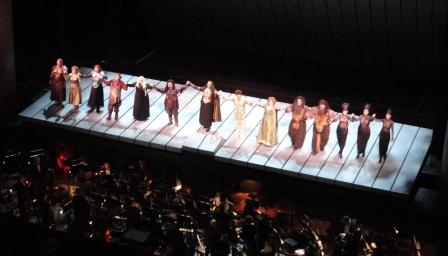
No segundo acto o dragão é o objecto menos conseguido, parece
uma bóia de criança. Mas tudo o resto é de belo efeito, nomeadamente as várias
intervenções da ave que Siegfried ouve.
O terceiro acto também começa com imagens de forte impacto
visual e quer o diálogo de Wotan com Erda, quer com Siegfried são muito bem
conseguidos. Já a cena final do despertar de Brünhilde é muito estática, apesar
de eficaz.

O tenor norte americano Robert
Brubaker foi um Mime excepcional. Tem um timbre peculiar que se adapta
perfeitamente à personagem. Nunca cantando em forte, foi sempre claramente audível pois a técnica de projecção
vocal é exímia. Cenicamente foi irrepreensível. Um dos melhores da noite.

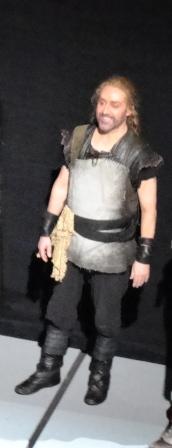
Siegfried foi interpretado pelo tenor sueco Lars Cleveman. Este deve ser um dos
papéis wagnerianos em que mais difícil é, na actualidade, encontrar cantores à
altura da elevada exigência interpretativa. Cleveman fez o que pôde mas não é o
Siegfried ideal. Tem uma figura frágil e a voz, embora agradável, por vezes
fica abafada pela orquestra. Ainda assim aguentou-se, sem quebrar, até ao
final.
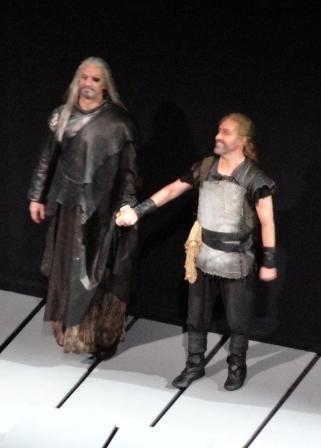
O Wanderer do baixo barítono norte americano Greer Grimsey foi muito bom, na
continuação da excelente interpretação que o cantor já tinha tido como Wotan na
Valquíria. Voz também de timbre peculiar mas bem domada pelo cantor e sempre
audível e afinada. A interpretação cénica foi irrepreensível.

O baixo-barítono norte americano Richard Paul Fink confirmou que está aquém dos restantes solistas
na interpretação que fez de Alberich. Foi o menos impressionante dos cantores
da noite. Frequentemente não se ouvia e a voz não tem qualquer qualidade
atractiva.
Excepcional foi o baixo alemão Hans-Peter König que, nesta ópera, foi Fafner. É um cantor de elite
que está no auge das suas fabulosas potencialidades. A voz é de uma beleza
invulgar e de uma potência avassaladora.

O soprano americano Lisette
Oropesa foi um pássaro da floresta muito competente, de voz cristalina e
muito agradável.

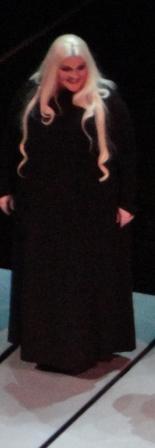
Repetiu uma boa actuação como Erda o mezzo americano Meredith Arwady. É detentora de uma voz
potente e com um registo grave impressionante.




****
SIEGFRIED,
Metropolitan Opera, New York
The Ring’s opera where nature is always present benefits a lot from the scenic approach of Lepage. The first act has a remarkable visual effect with Mime's hut on one side of the stage and on the other, the forest with a stream where the water runs across the stage and where the leaves flutter in the wind.
In the second act the dragon is ridiculous but everything else is of fine effect, namely the various parts when Siegfried hears the bird.
The third act also begins with images of strong visual impact and both the dialogue between Erda and Wotan, and between Siegfried and Wotan wants are very good. The final scene of the awakening of Brunhilde is very static, although effective.
The Ring’s opera where nature is always present benefits a lot from the scenic approach of Lepage. The first act has a remarkable visual effect with Mime's hut on one side of the stage and on the other, the forest with a stream where the water runs across the stage and where the leaves flutter in the wind.
In the second act the dragon is ridiculous but everything else is of fine effect, namely the various parts when Siegfried hears the bird.
The third act also begins with images of strong visual impact and both the dialogue between Erda and Wotan, and between Siegfried and Wotan wants are very good. The final scene of the awakening of Brunhilde is very static, although effective.
North
American tenor Robert Brubaker was an
exceptional Mime. He has a peculiar tone that fits the character. Never singing
in forte, he was always clearly
audible as the technique of vocal projection excels. Artistically he was
blameless. One of the best of the night.
Siegfried was played by Swedish tenor Lars Cleveman. This must be one of the most difficult Wagnerian roles and, today, to find singers up to the high standards of interpretation is very difficult. Cleveman did his best but he is not the ideal Siegfried. He has a fragile figure and the voice, though pleasant, sometimes gets drowned out by the orchestra. Still, he held up without breaking until the end.
Siegfried was played by Swedish tenor Lars Cleveman. This must be one of the most difficult Wagnerian roles and, today, to find singers up to the high standards of interpretation is very difficult. Cleveman did his best but he is not the ideal Siegfried. He has a fragile figure and the voice, though pleasant, sometimes gets drowned out by the orchestra. Still, he held up without breaking until the end.
The
Wanderer by North American bass baritone Greer
Grimsey was very good, in the continuation of the excellent interpretation
that the singer had had as Wotan in Valkyrie. His voice has a peculiar timbre
but well controlled by the singer and always audible and tuned. The artistic
performance was very good.
North
American bass-baritone Richard Paul Fink
confirmed that he lags behind other soloists in his interpretation of Alberich.
He was the least impressive of the singers of the night. Often he was not heard
and the voice does not have any attractive quality.
Exceptional was the German bass-baritone Hans-Peter König that in this opera was Fafner. He is an elite singer at the height of his fabulous potential. The voice is of an unusual beauty and an overwhelming power.
Exceptional was the German bass-baritone Hans-Peter König that in this opera was Fafner. He is an elite singer at the height of his fabulous potential. The voice is of an unusual beauty and an overwhelming power.
American
soprano Lisette Oropesa was a very
competent bird of the forest, with a crystal
clear and very nice voice.
American mezzo Meredith Arwady repeated her good performance as Erda. She has a powerful voice and impressive low record.
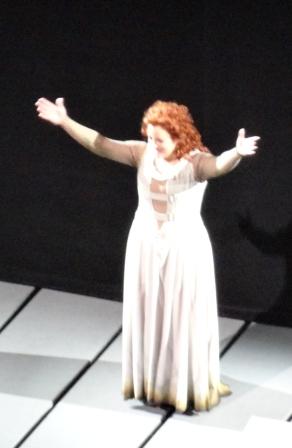
Finally, North American soprano Deborah Voight was Brunhilde again. Although, in this opera, she sings only in the end, I thought she revealed some vocal fatigue and was occasionally harsh, especially in the high notes, which did not sound pleasant.
****
American mezzo Meredith Arwady repeated her good performance as Erda. She has a powerful voice and impressive low record.
Finally, North American soprano Deborah Voight was Brunhilde again. Although, in this opera, she sings only in the end, I thought she revealed some vocal fatigue and was occasionally harsh, especially in the high notes, which did not sound pleasant.
****