Mostrar mensagens com a etiqueta Stefan Vinke. Mostrar todas as mensagens

quinta-feira, 23 de janeiro de 2020

GÖTTERDÄMMERUNG / O CREPÚSCULO DOS DEUSES, Royal Opera House, Novembro / November 2018


 (review in English below)

A última ópera do Anel de Londres foi talvez a melhor. A encenação manteve a linha desinteressante. As Nornas no início vão manipulando as cordas vermelhas do destino já vistas anteriormente, numa abordagem muito convencional.


A sala dos Gibichung está enquadrada por paredes que imitam o Tarnhelm, mas nada mais há digno de nota. Aparecem umas estátuas douradas dos deuses evocados, Freia, Fricka, Froh e Donner.
Na cena de caça, é morto um antílope que é posteriormente desmembrado e distribuído por vários figurantes, mas o animal continua intacto quando sai de cena. O Siegfried, depois de morto pelo Hagen, fica caído no palco, sozinho, e durante a marcha fúnebre nada acontece, para além de o palco recuar um pouco. Depois é totalmente embrulhado em panos brancos e assim permanece num barco.
No final os 3 quadrados que aparecem na base do cenário (onde anteriormente era o Reno) incendeiam-se e as estátuas dos deuses já referidas são içadas por cordas e neles introduzidas. A Brünhilde atira-se às chamas e a ópera termina com ela a ser içada numa estrutura metálica, depois de tudo ser consumido pelo fogo.


A Orquestra esteve quase sempre muito bem, mas achei que a marcha fúnebre, talvez o momento mais belo e solene da ópera, esteve aquém do desejável. Houve algumas entradas tardias dos metais e o andamento imposto pelo Antonio Pappano não foi o melhor. E foi uma pena.


Já o Coro esteve ao mais alto nível. Quanto aos solistas, houve de tudo, desde o aceitável ao transcendental.

As 3 Nornas foram muito uniformes e vocalmente irrepreensíveis (Primeira Norna, Claudia Huckle; Segunda Norna, Irmgard Vilsmaier; Terceira Norna, Lise Davidsen).


Também as 3 Filhas do Reno estiveram muito bem, Lauren Fagan (Woglinde),
Christina Bock (Wellgunde) e Angela Simkin (Flossilde). 


O Siegfried do Stefan Vinke teve boa presença cénica mas foi irregular na linha de canto, alternando períodos em que quase se não ouvia com outros em que cantava muito alto. O 3º acto foi a sua melhor prestação em todo o Anel.


Johannes Martin Kränzle manteve uma óptima actuação como Alberich, embora o papel seja pequeno nesta ópera, mas ainda assim foi suficiente para o encenar de forma ridícula, num barco e com máscara de oxigénio.


Karen Cargill foi uma excelente Waltraute de voz grave e poderosa, e timbre bonito e cativante.


O Gunter do Markus Butter esteve muito aquém do desejável num elenco destes. O desempenho cénico até foi bom, mas o cantor tem uma voz pequena, mal projectada e foi frequentemente afogado pela orquestra.


Também a Emily Magee (Sieglinde na Valquíria) voltou a decepcionar como Gutrune. Muito exuberante em palco mas a voz ouviu-se mal e foi algo monocórdica em toda a actuação.


Fantástico foi o baixo Stephen Milling como Hagen. Voz muito bonita, forte, sempre audível sobre a orquestra e uma presença cénica irrepreensível no papel cínico e malévolo da ópera. O melhor de entre os homens.


Finalmente a Brünhilde da Nina Stemme. Foi excelente nos dois primeiros actos, o diálogo com a Waltraute foi marcante, mas no final da ópera foi arrasadora! Os últimos 20 minutos foram os melhores de todo o Anel. A Stemme esteve ao nível da sua compatriota Birgit Nilsson e cantou com uma intensidade dramática comovente, como raramente se tem oportunidade de ver e ouvir. Não tenho palavras para descrever com fidelidade aqueles momentos transcendentais a que assistimos.


A Royal Opera só vendeu bilhetes para o Anel inteiro. No final, o público, maioritariamente conhecedor (um anel completo não é nem para curiosos, nem para amadores, nem para principiantes) brindou a Nina Stemme, e apenas ela, com uma explosão de aplausos que a casa quase veio abaixo. E esta expressão aqui aplica-se literalmente porque a pateada, gigantesca e demorada, é rara e apenas surge quando a coisa é excepcional, ao contrário do que se passa em Portugal (onde é sinal de desagrado). Estive no balcão e o chão literalmente tremeu durante uns largos minutos. Grande Stemme!!


****


GÖTTERDÄMMERUNG / THE TWILIGHT OF THE GODS, Royal Opera House, November 2018

The last opera of the Ring of London was perhaps the best. The production kept uninteresting. The Norns at the beginning manipulate the red strings of fate previously seen in a very conventional approach.
The room of the Gibichungs is framed by walls that imitate the Tarnhelm, but nothing else is worth noting. Some golden statues of the evoked gods Freia, Fricka, Froh and Donner appear.
In the hunting scene, an antelope is killed and is later dismembered and distributed by several people, but the animal remains intact when it is removed from the scene. Siegfried, after being killed by Hagen, lies on the stage alone, and during the funeral march nothing happens, in addition to the stage retreating a little. Then he is totally wrapped in white cloths and so stays in a boat.
At the end the three squares that appear at the base of the scene (where previously it was the Rhine) are set fire and the statues of the already mentioned gods are lifted by ropes and introduced in them. Brünhilde throws herself into the flames, and the opera ends with her being hoisted into a metal frame, after everything is consumed by fire.

The Orchestra was almost always very well, but I thought that the funeral march, perhaps the most beautiful and solemn moment of the opera, was far from desirable. There were some late innings of the metals and the tempo imposed by Antonio Pappano was not the best. And it was a pity.

In contrary, the Choir was at the highest level. As for the soloists, there was everything from the acceptable to the transcendental.

The 3 Norns were very uniform and vocally irreproachable (First Norn, Claudia Huckle, Second Norn, Irmgard Vilsmaier, Third Norn, Lise Davidsen).

Also the 3 Daughters of the Rhine were very good, Lauren Fagan (Woglinde),
Christina Bock (Wellgunde) and Angela Simkin (Flossilde).

Stefan Vinke's Siegfried had a good stage presence but was irregular on the singing line, alternating periods when he almost was not listened to others in which he sang very loudly. The 3rd act was his best performance throughout the Ring.

Johannes Martin Kränzle maintained a great performance as Alberich, although the role is small in this opera, but was still enough to stage him ridiculously, in a boat and with an oxygen mask.

Karen Cargill was an excellent Waltraute with a powerful low voice, and a beautiful and captivating timbre.

Markus Butter's Gunter was far from desirable in a cast such as these. The scenic performance was even good, but the singer had a small voice, poorly projected and was often drowned by the orchestra.

Also Emily Magee (Sieglinde in Valkyrie) again disappointed as Gutrune. Very exuberant on stage but the voice was badly heard and was something monoric throughout the performance.

Fantastic was bass Stephen Milling as Hagen. Very beautiful voice, strong, always audible over the orchestra and an irreprehensible stage presence in the cynical and malicious role of the opera. The best singer among men.

Finally Nina Stemme’s Brünhilde. She was excellent in the first two acts, the dialogue with Waltraute was remarkable, but at the end of the opera she was devastating! The last 20 minutes were the best of the entire Ring. Stemme was at the level of her compatriot Birgit Nilsson and sang with dramatic intensity, as we rarely get a chance to see and hear. I have no words to faithfully describe those transcendental moments we have witnessed.

The Royal Opera only sold tickets for the entire Ring. In the end, the mostly knowledgeable audience (a complete ring is neither for the curious, nor for amateurs, nor for beginners) offered Nina Stemme, and only her, with an explosion of applause that the house almost came down. And this expression here applies literally because the gigantic and long foot kick is rare and only comes when the thing is exceptional, unlike what happens in Portugal (where it is a sign of displeasure). I was on the balcony and the floor literally shook for long minutes. Great Stemme!!

****

domingo, 19 de janeiro de 2020

SIEGFRIED, Royal Opera House, Outubro / October 2018


(review in English below)

A encenação de Keith Warner continua a ser pobre e sem interesse. No 1º acto está um avião caído no Nibelheim mas, apesar da profundidade do local, está quase inteiro, só a hélice está separada. É nesse cenário que se passa toda a acção, nomeadamente o forjar das espadas.


No 2º acto o palco tem um enorme buraco a meio, a entrada da gruta do Fafner que, contudo, aparece fora dela, incluindo quando assume a forma de dragão. O pássaro é inicialmente um boneco mas, quando o Siegfried o percebe, passa a ser a cantora (Heather EngeBretson) que desce suspensa por umas cordas.


No 3º acto há uma placa giratória que ocupa todo o palco na horizontal, onde está o Wotan. Esta passa a vertical, como aconteceu na Valquíria e é à roda dela que se desenvolve as acção, acabando a Brünhilde e o Siegfried a lançarem-se sobre um colchão velho, que tinha servido para recolher os heróis mortos na ópera anterior, uma opção cénica que resulta ridícula.


Esta foi a menos interessante das 3 óperas do Anel até agora. O maestro Antonio Pappano foi, mais uma vez, brilhante, mas a Orquestra voltou a não estar perfeita, com algumas falhas nos metais.


O Stefan Vinke (Siegfried) começou menos bem, a voz não é atraente nem bonita e a emissão algo irregular. Mas foi em crescendo e no 3º acto até se aguentou muito bem ao contrário do que pensei.


O melhor da noite foi o Gerhard Siegel como Mime, fantástico quer na prestação vocal como cénica. Foi o anão malandro e oportunista perfeito.


O John Lundgren (Viajante, Wotan) repetiu uma grande interpretação, como tinha feito na ópera anterior.


O Alberich de Johannes Martin Kränzle também voltou a oferecer-nos uma representação de elevado nível, como tinha acontecido no Ouro do Reno.


Brindley Sherratt (Fafner) e Wiebke Lehmkuhl (Erda), estiveram ao mais alto nível nos seus papéis pequenos.


A Brünhilde da Nina Stemme foi marcante, mas a cantora emitiu algumas notas mais gritadas que cantadas.


***


SIEGFRIED, Royal Opera House, October 2018

The production of Keith Warner remains uninteresting. In the 1st act is a plane crashed in the Nibelheim but, despite the depth of the place, is almost whole, only the propeller is separated. It is in this scenario that all the action happens, namely the forging of swords.
In the second act the stage has a huge hole in the middle, the entrance of the cave of Fafner. However, he appears outside of it, including when he takes the form of a dragon. The bird is initially a toy but, when Siegfried understands it, it is the singer (Heather EngeBretson) who descends suspended by some ropes.
In the 3rd act there is a large horizontal revolving wall, Wotan walking on it. The wall passes to vertical, as it happened in Valkyrie and it is with it that the action unfolds, finishing Brünhilde and Siegfried to throw themselves on an old mattress, that had served to collect the heroes dead in the previous opera.
This was the least interesting of the three operas of the Ring until now.

Maestro Antonio Pappano was, once again, brilliant, but the Orchestra was not perfect, with some failures in the metals.

Stefan Vinke (Siegfried) started less well, his voice is neither attractive nor beautiful and the emission irregular. But he was growing and in the 3rd act he was very well, contrary to what I expected.

The best of the night was Gerhard Siegel as Mime, fantastic either on vocal performance and on stage. He was the trickster and perfect opportunist dwarf.

John Lundgren (Wanderer, Wotan) repeated a great interpretation, as he had made in the previous opera.

Johannes Martin Kränzle’s Alberich also offered us again a performance of high level, as had happened in the Das Rheingold.

Brindley Sherratt (Fafner) and Wiebke Lehmkuhl (Erda), were at the top level in their small roles.

Nina Stemme's Brünhilde was remarkable, but the singer issued some more shouted notes than sung.

***

sexta-feira, 9 de março de 2018

PARSIFAL, Zurique, Março 2018 / Zurich, March 2018


(text in English below)

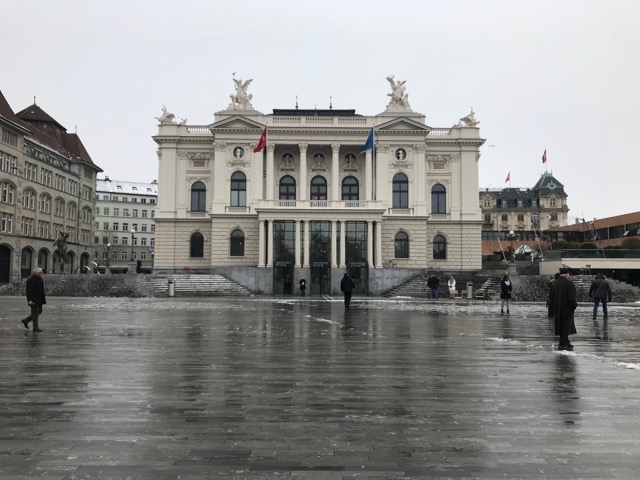
Cinco anos depois da última visita, Zurique está igual :) Duas lojas mudaram, as obras em frente à Ópera estão terminadas.

Mas vamos mas é ao que interessa: primeiro de 4 ou 5 Parsifais da minha temporada.
Vim atrás da encenação do Guth (esta foi a 6ª vez que vi esta produção ao vivo)... o elenco inicial era imprevisível, destacando-se claramente como estrela (isolada...) a Nina Stemme. Há umas semanas o Amfortas e o Parsifal do elenco inicial foram substituidos por Lauri Vasar e Stefan Vinke.


Estava ciente de que não ia encontrar a espectacularidade do mesmo Parsifal a 6 de Abril de 2016 em Madrid e cheguei a pensar que me tinha entusiasmado demasiado com base só na encenação quando decidi vir... E o que é certo é que, no final do primeiro acto achei que este ia ser o primeiro “barrete” da temporada. As coisas melhoraram um bocadinho no 2o e 3o acto mas não o suficiente para considerar uma noite de “papo cheio”.

Pormenorizando...

A Orquestra deu umas 6 fífias, 4 delas nos metais que aqui se notam muito mais e se sobrepõem em sonoridade ao restante conjunto. A Simone Young teve uma direcção irregular. Teve algumas passagens de maior coerência dramática mas, no geral, muito apressada, entradas precipitadas, e deixando a sensação de ensaio pouco cuidado. Não conseguiu criar o ambiente “Montsalvatiano”, claramente. O mesmo se notou em algumas passagens cénicas - alguns dos pormenores da encenação encontram na música a indicação para serem feitos (e Wagner deve os ter escrito) - por exemplo, a música prepara e indica em que altura o Parsifal deve tirar a máscara/capacete no 3º acto e revelar-se a Gurnemanz e Kundry - aqui não foi no local indicado (em Madrid foi na altura certa). Estes pormenores não são secundários e elevam o drama. Não sei como é que alguns cantores não o fazem correctamente...


A Nina Stemme esteve excelente. Só lhe aponto um aspecto negativo - antes dos agudos parece fazer uma pequena pausa entre o abrir a boca e o sair som.


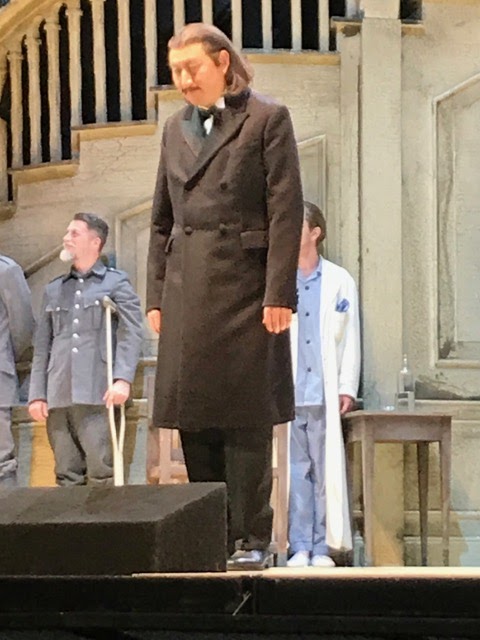
Vão-se rir mas, para mim, o mais perfeito cantor da noite foi... o Klingsor. Um chinês, Wenwei Zhang. Grande voz, timbre muito bonito, muito expressivo... é só mesmo aquele impacto de ver um oriental neste papel...


O Vinke também me surpreendeu pela positiva, principalmente no dueto com a Kundry, após o beijo. Muito seguro, expressivo em consonância com o drama, e não cantando como se fosse o Siegfried (como o vi a cantar o Parsifal na Deutsche Oper). Contudo acho que frequentemente tem oscilações de timbre e amplitude de som (e às vezes afinação) que fariam pensar em técnica vocal menos cuidada mas deve ser só característica da voz porque senão, a cantar tantos Siegfried, já se tinha rebentado todo Villazon-like.


O Amfortas de Lauri Vasar (no final do mês oiço-o também em Berlim, igualmente com a Stemme) é correcto (mantenho o meu comentário habitual sobre os Amfortas... ainda não foi desta). Voz boa, timbre bonito, expressivo qb mas não tem agudos... felizmente são poucos na personagem mas esticou-se todo para a frente e para cima quando teve de os fazer e mesmo assim soaram forçados e baixos...


O Gurnemanz de Christoff Fischesser foi muito bom. Parece é ter pouca presença e carisma para o papel em palco. Alto, magro e pareceu pouco confiante e tímido. Talvez tenha sido das primeiras vezes a cantar o papel (?!). Não fez esquecer outros grandes nomes que já ouvi na personagem.


O Titurel (Pavel Daniluk) foi uma miséria. Falhou a entrada num dos momentos mais importantes do papel e que é o dizer: Enthullet den Gral! E o coro de fora de palco antes também foi abafado pela Orquestra.


Para colmatar tudo, descobri mais uma variante daquilo a que eu chamo (não sei se mais alguém usa este termo com este sentido) “ratos de teatro de ópera” - variante “rinítico suspirante”. É aquele espectador que não limpa as fossas nasais antes, apita do nariz ou emite a turbulência da passagem do ar, mas que faz frequentes inspirações profundas e expirações prolongadas, o que aumenta o tempo a que alguém que está ao lado tem de ouvir barulho e ficar desconcentrado. Este barulho, juntamente com o som de alguém a comer com a boca aberta, dá-me cabo da paciência e juízo!


Regresso amanhã mas não, espero, sem antes me “vingar” numa salsicha com rösti e molho de cebola e talvez uma bola de gelado de café Movenpick. A salada grega do Coop e a bola de pão com crosta já foram agora ao jantar. A tradição, enquanto der, tem de se manter :)


Texto de wagner_fanatic


PARSIFAL, Zurich, March 2018

Five years after the last visit, Zurich remains identical :) Two shops have changed, the works in front of the Opera are finished everything else remains identical and attractive.

But let's go to what matters: this was the first of 4 or 5 Parsifals of my season.
I came here because of Guth’s production of (this was the 6th time I saw this production live) ... the initial cast was unpredictable, with Nina Stemme clearly standing out as the star. A few weeks ago the initial singers for the roles of Amfortas and Parsifal were replaced by Lauri Vasar and Stefan Vinke.

I was aware that I was not going to find the same spectacular Parsifal as on April 6, 2016 in Madrid and I even thought I was too excited about the staging when I decided to come ... And what is certain is that, at the end of the first act I thought this was going to be the first "disappointment" of the season. Things improved a little bit in the 2nd and 3rd acts but not enough to consider a "full achieved" night.

Detailing ...

The Orchestra made 6 mistakes, 4 of them in the metals that here are noticed much more and they overlap in sonority the rest of the instruments. Simone Young had an erratic direction. There were a few passages of greater dramatic coherence but, overall, very rushed, rushed entries, and leaving the essay feeling uncared for. She could not create the "Montsalvatian" environment, clearly. The same is noted in some scenic passages - some of the details of the staging find in the music the indication to be made (and Wagner must have written them) - for example, the music prepares and indicates in what height Parsifal should take off the mask / helmet in the 3rd act and reveal himself to Gurnemanz and Kundry - here that was not in the correct time (in Madrid was at the right time). These details are not secondary and raise the drama. I do not understand why some singers do not do it properly ...

Nina Stemme was excellent. I'm only pointing out a negative issue - before the top notes, she seems to pause between the opening of the mouth and the emission of the sound.

You are going to laugh, but to me the most perfect singer of the night was ...  Klingsor, a Chinese, Wenwei Zhang. Great voice, very beautiful timbre, very expressive ... it's just that impact of seeing an Oriental in this role ...

Vinke also positively surprised me, especially in the duet with Kundry after the kiss. Very confident, expressive in consonance with the drama, and not singing as if he were Siegfried (as I saw him sing the Parsifal at the Deutsche Oper). However, I think that there are often oscillations of timbre and amplitude of sound (and sometimes tuning) that would make one think of less well-liked vocal technique, but it should be only a characteristic of the voice because otherwise, to sing so many Siegfrieds, he had already been broken Villazon-like.

Amfortas by Lauri Vasar (at the end of the month I will hear him also in Berlin, also with Stemme) was correct (I keep my usual comment about the Amfortas ... it has not yet been this one). Strong voice, beautiful timbre, expressive but without top notes ... fortunately few are needed in this role but he stretched all the way up and up when he had to sing them and even so sounded forced and low ...

Christoff Fischesser's Gurnemanz was very good. He seems to have little presence and charisma for the role on stage. Tall, thin, and he looked unconfident and shy. Maybe it was the first few time to sing the role (?!). It did not made me forget other big names I've heard in the role.

Titurel (Pavel Daniluk) was a misery. He failed the entry into one of the most important moments of the role when he should say: Enthullet den Gral! And the off-stage choir was also muffled by the Orchestra.

To fill it all, I discovered another variant of what I am calling (I do not know if anyone else uses this term in this sense) "opera rats" - variant "sighing rhinitic." It is that viewer who does not cleanse the nasal passages before, whistles the nose or emits the turbulence of the passage of the air, but who does frequent deep breaths and prolonged expirations, which increases the time that someone next to him has to hear noise and be unfocused. This noise, along with the sound of someone eating with open mouth, put me out of my mind in the theater!

I'll be back tomorrow but, I hope, not before I first getting "avenged" on a sausage with rösti and onion sauce and maybe a ball of Movenpick coffee ice cream. Coop ‘s Greek salad and the crusty bread ball have just been our dinner. Tradition, while possible, must be kept :)

Text by Wagner_fanatic.