terça-feira, 18 de outubro de 2022

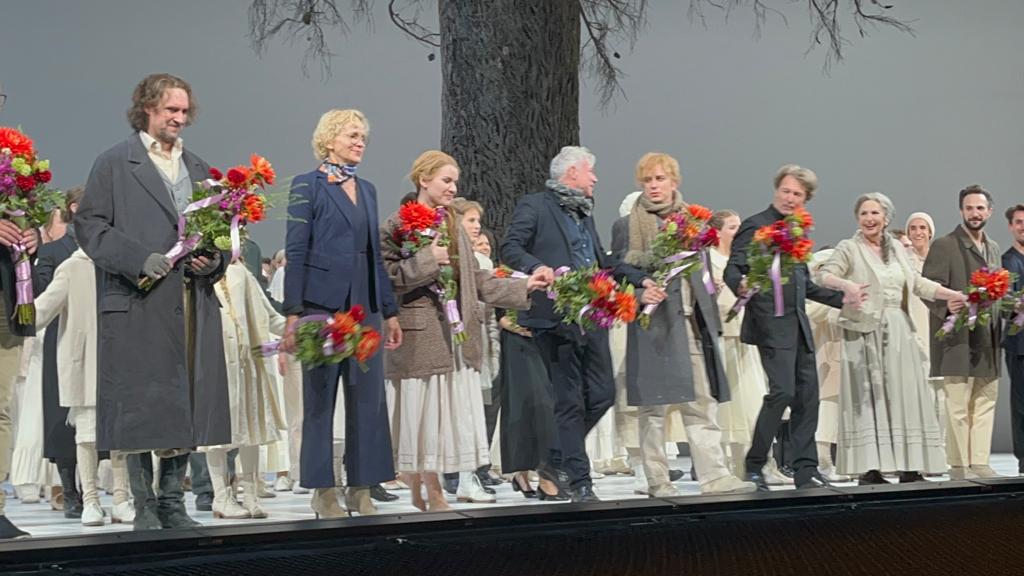
Die Walküre - Staatsoper Berlin - 3.10.2022

(Text in English below)


Como seria de esperar, a interpretação de Tcherniakov de Die Walküre esteve qualitativamente em linha com Das Rheingold. 


A ópera inicia-se com um pano em baixo sem qualquer projeção ou ação, perdendo-se a hipótese de representar a tempestade que Wagner tão bem recriou musicalmente. De repente, ao fim de uns 2 minutos, projetam imagens televisivas que diziam “Kriminal Report” com flashes de cenas criminais de rua e, posteriormente, com de video-vigilância. Nelas aparecem aquele que vem a ser Siegmund, aqui levado por dois polícias já na prisão. Tem uma madeixa branca no cabelo, o que é um sinal de que é filho de Wotan, pois este também tem uma madeixa branca no cabelo grisalho. Subido o pano, ainda há tempo para aparecer Wotan no seu escritório.


De seguida, o cenário roda 180º e passa a ser um loft/T1 básico onde encontramos Sieglinde sozinha. Chegado Siegmund, esta não mostra grande admiração e este parece estranho e desconfiado. Aparecido Hunding — aqui um polícia bem fardado com ares de chefe — o clima adensa-se: Sieglinde senta-se no seu colo para o apaziguar, enquanto este lhe abre o decote e expõe o sutiã (bem apropriado à presença do convidado…), a que se seguem diversas ameaças com pistola e loiças deitadas ao chão. Quando Hunding raivoso pede a bebida para dormir, Sieglinde acorre a prepará-la, ficando indecisa quanto às quantidades a deitar do pó soporífero, o que gerou alguns risinhos no público (o que idealmente seria incongruente com todo o ambiente esperado…). Hunding despe-se, ficando de camisola e calções, e deita-se, sendo seguido por Sieglinde. Antes algemara Siegmund, assim tendo mais um motivo para cantar os seus infortúnios. Quando soa o tema da espada, as luzes tornam-se mais brilhantes e parece haver algo espetado na parede (mas esse algo não está iluminado). Esse algo vem mesmo a ser a toda-poderosa espada Nothung. Sieglinde e Siegmund, entretanto reunidos pela paixão e pelo incesto, mas muito apressados, enfiam as roupas dela num saco e fogem, terminando o primeiro ato.


O segundo ato começa com uma recordação dessa fuga para que, no mesmo loft, logo apareçam Brunnhilde e Wotan, visivelmente cúmplices e satisfeitos, o que mereceu um festivo brinde com champanhe. Advertido da chegada de carroça (não há meios de transporte nesta encenação, devo dizer) de Fricka, o cenário mantém-se. Sai Brunnhilde e entra Fricka. Tão só! Entre o loft e o escritório (cujo vidro opaco escondia, afinal, o loft), uma Fricka histriónica convence Wotan de que os tratados são para cumprir e que a sua honra merece a morte de Siegmund. Ao mesmo tempo, voam dossiers da mesa para o chão, o que permite criar espaço para os contratos que a Fricka faz Wotan assinar. Regojizante, lança ares de desafio a Brunnhilde que entretanto voltara. Fricka sai, deixando-os a sós novamente. Wotan, preocupado e triste, conta as suas agruras a Brunnhilde sentado à porta do loft. Quando é posta em causa a sua autoridade, lá voam umas cadeiras, como não podia deixar de ser, não fosse Tcherniakov apreciador de atos clásticos. Entretanto, voltamos a Sieglinde e Siegmund: estamos novamente com as jaulas com coelhos de Das Rheingold, recordam-se? Sieglinde está sempre aflita e sem forças e acabam por ir parar ao cenários das cabines onde Alberich cacetou Mime. Brunnhilde surge para explicar o destino a Siegmund. Já sabemos que quem acaba convencida é Brunnhilde, que decide contrariar as ordens de Wotan. Fora do cenário, sem que se vejam (às escondidas?) dá-se o confronto de Hunding com Siegmund, confronto interferido por Wotan. Brunnhilde foge com Sieglinde e o loft dá lugar à caixa vazia do teatro. No vazio escuro, estão os três homens vivos e sem vislumbre de ferimento nem da longa lança dos tratados de Wotan (que essa é só do libreto e referida no canto). Wotan manda Hunding sair e este obedece, sem ripostar. E tudo termina com Siegmund a ser levado por uns polícias do corpo de intervenção. Daqueles da pesada que dão cacetadas e tudo. Finda o segundo ato.


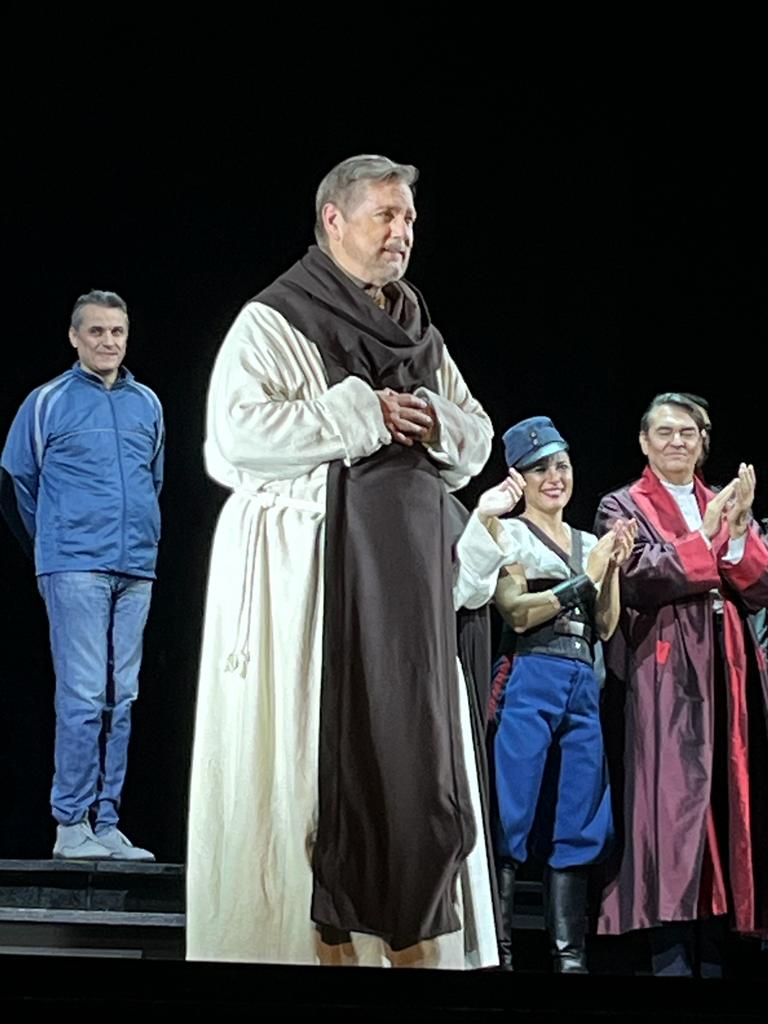
A cavalgada das Valquírias é o icónico início do terceiro ato. Aqui não há cavalos (claro!), mas o conhecido anfiteatro. Chegam lá quatro Valquírias e projeta-se numa tela a mensagem «Antes da entrega do relatório sobre violência». As Valquírias lá vão chegando todas enquanto se cumprimentam com um jovial ‘dá cá mais cinco!’… Só Brunnhilde não é recebida assim. Não merece, como sabemos. Traz uma debilitada Siegelinde que constantemente se atira para o chão, só recuperando quando lhe é anunciado o herói que traz no ventre. Quando Brunnhilde a leva embora, volta Wotan com Sieglinde pela mão, ficando esta arrumada a um canto, não participando em nada, nem sendo investida pela ira de ninguém. Entretanto, Brunnhilde senta-se numa das últimas cadeiras do anfiteatro, bem à vista de todos, enquanto Wotan, muito insatisfeito (sim, houve cadeiras e até um isqueiro a ri pelos ares!), insta as Valquírias a denunciar o seu paradeiro… Quando Brunnhilde desce até Wotan saem as Valquírias, encarregando-se Gerhilde de levar consigo Sieglinde (que não mais aparece, vá lá!).


Aqui começa o dueto de Wotan e Brunnhilde. Wotan nervoso, acende cigarros e dá mesmo umas passas. Vão formando um círculo de cadeiras enquanto se revê o castigo a dar a Brunnhilde. Wotan já está mais suavizado e até colinho acaba por dar. Estão ambos muito tristes o tempo todo, mas algo estáticos. Brunnhilde sobe a uma das cadeiras do círculo e Wotan chama Loge. Brunnhilde, muito infantil e perante a desfeita de Loge que não aparece, sai do círculo, pega num marcador laranja e — imagine-se! — desenha umas chamas nas costas das cadeiras para divertimento próprio e do seu pai babado. Com o fogo não se brinca, costuma dizer-se… No fim, Brunnhilde pega numa mochila e sai do anfiteatro, dando a mão ao pai que nele permanece. O enlace das mãos perde-se com o afastamento da secção Anfiteatro que recua no palco. E a música vai-se desenrolando até ao finda enquanto pai e filha se afastam, olhando-se lugubremente. Brunnhilde, aqui nada adormecida, está preparada para uma viagem. E assim termina Die Walküre. 


Não me parece que precisem de comentários sobre a encenação, dado que a descrição é exaustiva…


Relativamente aos cantores, uma vez mais, não veiculam a emoção esperada porque, no meu ver, Tcherniakov não permite. 


Individualizando. Robert Watson foi um Siegmund sem presença vocal e com vários problemas na emissão que foi irregular, sobretudo no registo médio, o que fez com que o público o brindasse muitos boos. Foi de tal modo exagerado que deu pena ver o semblante triste e carregado com que ficou e a necessidade de muitos “cheer up” dos colegas. Não se faz!


Vida Mikneviciutè foi uma Sieglinde vocalmente espetacular. Voz enorme, brilhante, sempre sobre a orquestra e com um timbre muito bonito. Para mim, o destaque da tarde/noite. E um evidente contraste com Watson.


Hunding foi interpretado por Mika Kares que já tinha sido um excelente Falsot e que aqui, uma vez mais, não defraudou o exigente público de Berlim.


A Fricka de Claudia Manke esteve hoje vocalmente melhor do que em Das Rheingold, muito embora não seja uma mezzo deslumbrante, nem uma Fricka memorável.


De todas as Valquírias, claro destaque para Clara Nadeshdin que fez uma Gerhilde fantástica: que voz imensa!


Termino com o duo Wotan/Brunnhilde. Michael Volle foi, novamente, um Wotan vocalmente em grande forma e cenicamente limitado, o que o impede de ser um Wotan que me vá recordar. Já Anja Kampe foi uma Brunnhilde competente, mas creio que, tendo estado sempre em bom plano, está a aquecer para as duas récitas finais.


A Staatskapelle Berlin sob direção de Christian Thielemann foi novamente fantástica e quase irrepreensível. Estão a ser, claramente, as grandes estrelas desta produção. Vai para eles o meu Bravo! Que assim continuem! 


_________________

Die Walküre


As one would expect, Tcherniakov's interpretation of Die Walküre was qualitatively in line with Das Rheingold. 


The opera begins with a curtain below without any projection or action, missing the chance to depict the storm that Wagner recreated so well musically. Suddenly, after about two minutes, television images are projected saying "Kriminal Report" with flashes of criminal street scenes and, later, with video surveillance. In them appears the one who turns out to be Siegmund, here taken by two policemen already in prison. He has a white streak in his hair, which is a sign that he is Wotan's son, for Wotan also has a white streak in his grey hair. Once the curtain rises, there is still time for Wotan to appear in his office.


Next, the scene turns 180º and becomes a basic loft/T1 where we find Sieglinde alone. When Siegmund arrives, she doesn't show much admiration and he seems strange and suspicious. When Hunding appears - here a well-uniformed policeman who looks like a boss - the atmosphere thickens: Sieglinde sits on his lap to appease him, while he opens her cleavage and exposes her bra (very appropriate to the presence of the guest...), which is followed by several threats with a pistol and crockery thrown on the floor. When Hunding angrily asks for the drink to sleep, Sieglinde wakes up to prepare it, being indecisive about the quantities to pour the sleeping powder, which generates a few giggles in the audience (which ideally would be incongruous with the whole expected atmosphere...). Hunding undresses, wearing a shirt and shorts, and lies down, followed by Sieglinde. Earlier he had handcuffed Siegmund, thus having one more reason to sing of his misfortunes. When the sword theme sounds, the lights become brighter and there seems to be something sticking out of the wall (but that something is not illuminated). That something turns out to be the all-powerful sword Nothung. Sieglinde and Siegmund, meanwhile brought together by passion and incest, but too hastily, stuff her clothes into a sack and flee, ending the first act.


The second act begins with a recollection of this escape so that, in the same loft, Brunnhilde and Wotan soon appear, visibly complicit and satisfied, which merited a festive champagne toast. Warned of Fricka's arrival by wagon (there are no means of transport in this staging, I must say), the scene is maintained. Out comes Brunnhilde and in comes Fricka. So alone! Between the loft and the office (whose opaque glass hid the loft, after all), a histrionic Fricka convinces Wotan that treaties are to be kept and that his honour deserves Siegmund's death. At the same time, dossiers fly off the table onto the floor, making room for the contracts Fricka makes Wotan sign. Gloating, he throws looks of defiance at Brunnhilde who had meanwhile returned. Fricka leaves, leaving them alone again. Wotan, worried and sad, tells Brunnhilde about his woes sitting outside the loft. When his authority is questioned, a few chairs fly out of the door, as one might expect, since Cherniakov is a lover of clastic acts. Meanwhile, we return to Sieglinde and Siegmund: we're back with the rabbit cages of Das Rheingold, remember? Sieglinde is always distressed and powerless and they end up in the cabin scenarios where Alberich has cackled Mime. Brunnhilde appears to explain her fate to Siegmund. We already know that the one who ends up convinced is Brunnhilde, who decides to go against Wotan's orders. Outside the scene, without being seen (on the sly?), Hunding and Siegmund confront each other, a confrontation interfered by Wotan. Brunnhilde flees with Sieglinde and the loft gives way to the empty theatre box. In the dark void are the three men alive and without a glimpse of injury or the long spear of Wotan's treatises (that one is only from the libretto and mentioned in the corner). Wotan orders Hunding to leave and he obeys, without fighting back. And it all ends with Siegmund being taken away by some policemen from the riot squad. Those heavy-handed ones who beat him up and everything. The second act is over.


The Ride of the Valkyries is the iconic start of the third act. Here there are no horses (of course!), but the well-known amphitheatre. Four Valkyries arrive there and the message "Before the report on violence" is projected on a screen. The Valkyries all arrive there while greeting each other with a jovial 'high-five'... Only Brunnhilde is not received like that. She doesn't deserve it, as we know. She brings a weakened Siegelinde who constantly throws herself to the ground, only recovering when the hero she carries in her womb is announced. When Brunnhilde takes her away, Wotan returns with Sieglinde by the hand, leaving her tidily in a corner, taking no part in anything, nor being invested by anyone's wrath. Meanwhile, Brunnhilde sits down on one of the last chairs in the amphitheatre, in full view of everyone, while Wotan, very dissatisfied (yes, there were chairs and even a lighter laughing in the air!), urges the Valkyries to report her whereabouts... When Brunnhilde goes down to Wotan the Valkyries come out, with Gerhilde taking Sieglinde with her (who no longer appears, come on!).


Here begins Wotan and Brunnhilde's duet. Wotan nervously lights cigarettes and even takes a few puffs. They form a circle of chairs as they review the punishment to be given to Brunnhilde. Wotan is more relaxed and even gives her a cuddle. They are both very sad all the time, but somewhat static. Brunnhilde climbs onto one of the chairs in the circle and Wotan calls Loge. Brunnhilde, very childish and at Loge's snub, who doesn't show up, leaves the circle, takes an orange marker and - imagine that! - draws some flames on the backs of the chairs for her own amusement and that of her drooling father. At the end, Brunnhilde takes a rucksack and leaves the amphitheatre, holding hands with her father who remains in the theatre. The linking of hands is lost as the amphitheatre section retreats on stage. And the music winds to a halt as father and daughter walk away, looking at each other lugubriously. Brunnhilde, here not at all asleep, is prepared for a journey. And so Die Walküre ends. 


I don't think you need any comments on the staging, since the description is exhaustive...


As regards the singers, once again they do not convey the expected emotion because, in my view, Cherniakov does not allow it. 


Individualising. Robert Watson was a Siegmund without vocal presence and with several problems in the emission that was irregular, especially in the middle register, which caused the audience to toast him many boos. It was so over the top that it was a shame to see the sad, heavy countenance he was left with and the need for lots of "cheer up" from his colleagues. It can't be done!


Vida Mikneviciutè was a vocally spectacular Sieglinde. Huge, brilliant voice, always over the orchestra and with a very beautiful timbre. For me, the highlight of the afternoon/evening. And an obvious contrast to Watson.


Hunding was played by Mika Kares who had already been an excellent Falsot and who here, once again, did not disappoint the demanding Berlin audience.


Claudia Manke's Fricka was vocally better today than in Das Rheingold, though not a stunning mezzo, nor a memorable Fricka.


Of all the Valkyries, of course the highlight is Clara Nadeshdin who made a fantastic Gerhilde: what a huge voice!


I finish with the Wotan/Brunnhilde duo. Michael Volle was, again, a Wotan vocally in great shape and scenically limited, which prevents him from being a Wotan that I will remember. Anja Kampe, meanwhile, was a competent Brunnhilde, but I think, having been consistently on top form, is warming up for the final two recitatives.


The Staatskapelle Berlin under Christian Thielemann was again fantastic and almost faultless. They are clearly being the big stars of this production. Bravo to them! May they keep it up! 

domingo, 16 de outubro de 2022

Das Rheingold — Staatsoper Berlin — 2.10.2022

Text in English below)


A tetralogia de Berlim com encenação de Dmitri Tcherniakov começa, como já se poderia antever, atendendo a experiências passadas negativas (Parsifal, por exemplo), da pior maneira no que à encenação de Das Rheingold respeita.


A abertura tem como cenário um anfiteatro com muitas cadeiras. No meio, está uma tela onde se projetam imagens de um corte axial de uma ressonância magnética craniana. Depois, essas imagens passam a ser uma mancha que, não o sendo, vai mudando ao estilo de uma uma angiografia cerebral.


Acabada a abertura, o cenário desce e passamos para uma espécie de sala de diálise, toda ela de vidro, onde está Alberich vendado, preso a um cadeirão (com o que parecem cintos de automóvel), com um soro azul a correr numa veia puncionada e ligado a uma máquina enorme — eventualmente de diálise e de eletroencefalograma (tudo muito exagerado). Tem ainda um “capacete” de eletroencefalograma colocado na cabeça. As filhas do Reno, vestidas à moda dos anos 60/70 onde parece decorrer a ação, são umas enfermeiras de caderno na mão. Respondem aos galanteios de um Alberich que esbraceja às cegas enquanto as procura. Quando percebe que está a ser gozado e desiste, destrói a sala de um jeito patético, partindo máquinas e cadeirões, e arrancando uns tantos cabos que fazem as vezes do ouro. Tudo isto para espanto delas e dos figurantes presentes, que parecem fazer as vezes dos administradores da clínica. 


Voltamos depois a subir e os cenários vão mudando na horizontal, como se fossem salas de um palácio que são contíguas umas às outras (as portas entre elas disso dão ideia). Inicialmente, voltamos ao anfiteatro, onde se apresentam Fricka e Wotan que dialogam sobre o pagamento da construção do Wahalla. Tudo num diálogo sentado e com pouca interação. A esse cenário acorre, de seguida, uma Fricka aflita, de vestido para o dia-a-dia e, em sequência, os gigantes Fafner e Falsot que aqui são apenas dois homens simples: um obeso Lammermoor encarado vestido de casaco de pele comprido, outro alto, nada sisudo, de calças verdes e blazer piroso a condizer… 


Para negociar, nada como uma mudança para uma sala mais pequena com várias cadeiras e muitos copos de água e jarros. Loge [que bebeu alguma água, não fosse o fogo queimá-lo], de fato mostarda e calças à boca de sino, chega mais tarde, como é suposto. Mas é aqui que começa a «versão comédia» de Das Rheingold. Loge, muito exagerado e expressivo, denotando traços histriónicos, goza, sem piedade e com sobranceria, com os gigantes, o que fica patente quer na expressão corporal quer até na vocal.


Combinado o pagamento, os gigantes, que se faziam acompanhar de uns indivíduos que impunham respeito, levam Freia, enquanto Wotan e Loge saem num elevador que os conduz a patamares inferiores: quem sabe se o esperado submundo de Nibelheim?


Nesse caminho, passam, primeiramente, por um laboratório cheio de jaulas preenchidas por coelhos vivos, mas silenciosos. Continuando a descida, chegam a um laboratório apelidado de «Laboratório para estudo do comportamento humano» com várias cabines de vidro onde homens com farda numerada trabalham e Mime se compraz queixando-se. Ouro nem vê-lo! Cabos também não… Chegado Alberich que importuna todos os presentes e começa numa sessão de cacetadas em Mime, vão-se abrindo portas e fechando, enquanto mudam de cabine em cabine. A dada altura, Mime exibe o tronco nu, sem propósito evidente. Talvez para se libertar do calor de tanta pancada. Entretanto, Wotan e Loge assistem, divertidos, do lado de fora. Quando Alberich se apercebe da sua presença e a pedido destes, usa o Tarnhelm - aqui representado por um capacete esquisito ao estilo de um de eletroencefalograma -, estende os braços e diz transformar-se numa serpente para gáudio dos demais que gritam divertidos, fazendo-se horrorizados. Segue-se a transformação em objeto pequeno que, uma vez mais, não acontece. Aqui, a mando de Wotan que os chamou num telefone de parede junto ao elevador, chegam dois enfermeiros psiquiátricos (daqueles que só se vêem nos filmes) que têm por missão conter Alberich fisicamente pelas mãos levá-lo - no elevador, para que não faltem detalhes - para uma outra sala da casa de Wotan, essa, como já é sabido, situada num piso superior.


Na sala do palácio, Alberich continua a ser vítima dos inoportunos comentários de Wotan e Loge. Depois, a custo, Wotan lá lhe arranca o anel do dedo e Alberich vai-se embora, apertando a mão aos enfermeiros-carcereiros (ridículo a ponto de se ouvirem alguns risos na plateia…) que assistiam à porta e amaldiçoando quem venha a ter o ambicionado anel do poder. 


O ouro — que eventualmente tinha sido reunido enquanto Alberich, na cena anterior, falava com o anel — é entregue aos gigantes. Mas de ouro só mesmo o anel que brilha no dedo de Wotan. O demais será entregue de acordo com o que Loge vai rabiscando num pretenso contrato. Freia, presente na sala com o mesmo vestido já anteriormente descrito, é medida, mas nunca tapada ou coberta por ouro, por muito que os gigantes se tenham esforçado por vê-la menos do que na realidade a viam… Wotan lá acaba por ceder e entregar o anel, mas apenas depois de Erda ter surgido, de fato azul e sem qualquer misticismo ou aura, vinda do nada. Aparentemente, apesar do despropósito, ninguém pareceu ficar surpreendido com a aparição.


De seguida, todos os deuses passam para uma espécie de entrada onde, com letras grandes, está gravada a sigla E.S.C.H.E. (se não fosse uma sigla, significaria freixo) nas paredes. No meio, está uma árvore. Talvez os entendidos possam esclarecer-me se era um freixo, o que é provável.


Nessa cena, uns figurantes sentam-se nos bancos embutidos nas paredes juntamente com os deuses. Aqui, Donner usa e abusa de pequenos efeitos de fumo e de fogo — bem ruidosos - que saem dos seus punhos, de um caderno, de uma espada e de uma martelada. Depois Froh, com uma grande flor na mão que, num jeito tosco, se desfaz em panos de muitas cores, tenta a referência à ponte de arco-íris que dá acesso a Wahalla, mas esqueceu-se de trazer panos que representassem todo o espectro cromático. O que foi pena, porque tinha melhorado imenso o efeito… No fim, ainda lança rede mal enjeitada sem razão que se vislumbre, a não ser dar nota de que estávamos todos um pouco confusos com a trama de Tcherniakov. No fim, sem entusiasmo, lá vão todos por uma porta (nada arqueada, por sinal, mas quadrada) para aquilo que será (podemos supor) o novo palácio chamado Walhala.


O cenário sobe uma vez mais, mostrando uma estrutura de janelas brancas opacas que, a meio da subida, volta a descer para a entrada anterior. Aí Wotan ouve, para sua irritação, as filhas do Reno a pedir o ouro de volta, sempre na presença de um Loge desejoso de sair de cena, o que acontece porque cai o pano.


Em suma, mesmo desconhecendo a história, nada do que foi visto parece fazer sentido. É, pois, uma ode ao disparate!


Evidentemente, esta encenação não facilita a apreciação dos cantores, desde logo porque, ao contrário de um ambiente escuro e pesado, assim como de um desenrolar  dramático da acção, vemos uma sequência inverosímil de cenas com um tom de paródia inesperado. Ainda assim, pode afirmar-se que os cantores foram globalmente equilibrados, ainda que sem deslumbrar.


O Wotan de Michael Volle tem potencial, dado que vocalmente esteve bem. A Fricka de Claudia Mahnke esteve bem, mas sem grande potência vocal. A Freia de Anett Fritsch foi das melhores da noite: emotiva e com uma voz com colocação impecável. O Donner de Lauri Vasar e o Froh de Siyabonga Maqungo estiveram bem, sem nada de negativo ou especialmente positivo a apontar. O Loge de Rolando Villazón, muito histérico e vocal e cenicamente expressivo, com os tons de comédia que lhe pediram, esteve bem, mas começou com a voz esforçada e, também atendendo ao que lhe pediram, levou ainda alguns boos bem audíveis. O Alberich de Martin Kranzle também esteve bem, mas sem grande potência vocal ou tom maléfico, porque fizeram dele mais tonto do que é (por isso levou uns boos também). O Mime de Stephan Rugamer esteve bem, sem encantar. Falsot esteve em muito bom plano, o que se agradece a Mika Kares. Já o Fafner de Peter Rose foi só pesado e lento, parecendo fazer um frete (talvez gigante). A Erda de Anna Kissjudit mostrou ter uma voz enorme, pelo que se pode esperar bastante. As filhas do Reno (Evelin Novak, Natalia Skrycka e Anna Lapkoskaja) estiveram em bom nível, sem destaque especial a dar a alguma delas.


Por fim, a Staatskapelle Berlin sob direção de Christian Thielmemann que substituiu Daniel Baremboim (que está com uma vasculite) foi quem nos permitiu ter o deleite que se espera quando se vai ver uma produção do Anel de Nibelungo. Grande interpretação! Amanhã espera-se muito da música de Dia Walkure. 


Em suma, temos em cena um Anel para ver de olhos fechados. Os cantores ainda estão a arrancar e a orquestra — essa sim! — já vai lançada.


______________


The Berlin tetralogy with Dmitri Tcherniakov's direction starts, as one might expect in view of past negative experiences (Parsifal, for example), in the worst way as far as the staging of Das Rheingold is concerned.


The opening scene is an amphitheatre with lots of chairs. In the middle is a screen on which images of an axial section of a cranial MRI scan are projected. Afterwards, these images become a stain that, if it is not a stain, changes in the style of a cerebral angiography.


After the opening, the scene descends and we pass to a kind of dialysis room, all made of glass, where Alberich is blindfolded, tied to a chair (with what look like car belts), with a blue serum running in a punctured vein and connected to a huge machine - possibly dialysis and electroencephalogram (all very exaggerated). He also has an electroencephalogram "helmet" put on his head. Reno's daughters, dressed in the 60s/70s fashion in which the action seems to take place, are some nurses with notebook in hand. They respond to the gallantries of an Alberich who squints blindly as he looks for them. When he realises he is being teased and gives up, he destroys the room in a pathetic way, breaking machines and armchairs and tearing out a few cables that are used for gold. All this to their astonishment and that of the extras present, who seem to be acting as the administrators of the clinic. 


We then go back up and the scenes change horizontally, as if they were rooms in a palace that are adjacent to one another (the doors between them give you an idea of this). Initially, we return to the amphitheatre, where Fricka and Wotan are presented and discuss the payment for the construction of the Wahalla. All in a seated dialogue with little interaction. Next, a distressed Fricka in an everyday dress arrives and, in sequence, the giants Fafner and Falsot, who here are just two simple men: one a staring, obese Lammermoor in a long fur coat, the other tall, not at all sombre, in green trousers and a matching tacky blazer... 


To negotiate, nothing like a move to a smaller room with several chairs and lots of water glasses and jugs. Loge [who drank some water, were it not for the fire burning him], in a mustard suit and bell-bottoms, arrives later, as he is supposed to. But this is where the "comedy version" of Das Rheingold begins. Loge, very exaggerated and expressive, showing histrionic traits, mocks the giants mercilessly and with hubris, which is evident both in his body and even in his voice.


Once the payment has been agreed upon, the giants, who were accompanied by some respectful individuals, take Freia away, while Wotan and Loge leave in a lift which takes them to lower levels: who knows if the expected underworld of Nibelheim?


On this path, they first pass through a laboratory full of cages filled with live but silent rabbits. Continuing their descent, they reach a laboratory dubbed "Laboratory for the study of human behaviour" with several glass booths where men in numbered uniforms work and Mime is pleased to complain. Gold doesn't even see it! When Alberich arrives, he pesters everyone present and begins a session of hitting Mime, doors are opened and closed while they move from cabin to cabin. At a certain point, Mime displays her naked torso, with no obvious purpose. Perhaps to free herself from the heat of so much beating. Meanwhile, Wotan and Loge watch, amused, from outside. When Alberich becomes aware of their presence and at their request, he wears the Tarnhelm - here represented by a weird electroencephalogram-style helmet -, extends his arms and says he transforms into a snake to the delight of the others, who shout in amusement, making themselves look horrified. This is followed by the transformation into a small object which, once again, does not happen. Here, at the behest of Wotan who has called them on a wall telephone next to the lift, two psychiatric nurses arrive (the kind you only see in films) whose mission is to physically restrain Alberich by the hands and take him - in the lift, so as not to miss details - to another room in Wotan's house, this one, as is already known, situated on an upper floor.


In the palace room, Alberich continues to be the victim of Wotan and Loge's inappropriate comments. Then, with difficulty, Wotan rips the ring off his finger and Alberich leaves, shaking hands with the nurse-caretakers (ridiculously enough, some laughter can be heard in the audience...) who were watching from the doorway and cursing whoever will have the coveted ring of power. 


The gold - which had eventually been gathered while Alberich, in the previous scene, was talking to the ring - is handed over to the giants. But of gold only the ring that shines on Wotan's finger. The rest will be handed over according to what Loge scribbles on a so-called contract. Freia, present in the room wearing the same dress described above, is measured, but never covered or covered by gold, however much the giants tried to see her less than they actually saw her... Wotan eventually gives in and gives the ring, but only after Erda appears, in a blue suit and without any mysticism or aura, from nowhere. Apparently, despite the pointlessness, no one seemed surprised by the appearance.


Next, all the gods pass into a sort of entrance where, in large letters, the acronym E.S.C.H.E. (if it were not an acronym, it would mean ash tree) is engraved on the walls. In the middle is a tree. Perhaps the experts can clarify for me whether it was an ash tree, which is likely.


In that scene, some extras sit on benches embedded in the walls along with the gods. Here Donner uses and abuses small smoke and fire effects - quite noisy - coming out of his fists, a notebook, a sword and a hammer. Then Froh, with a big flower in his hand that, in a clumsy way, shreds into cloths of many colours, tries the reference to the rainbow bridge that gives access to Wahalla, but forgot to bring cloths that represent the whole chromatic spectrum. Which was a pity, because it would have improved the effect immensely... At the end, he still throws out a badly thrown net for no reason that can be seen, except to note that we were all a little confused by Tcherniakov's plot. In the end, unenthusiastically, there they all go through a door (not arched at all, by the way, but square) to what will be (we can assume) the new palace called Walhala.


The scene rises once more, showing a structure of opaque white windows which, halfway up, descends back to the previous entrance. There Wotan hears, to his irritation, the daughters of the Rhine asking for their gold back, always in the presence of a Loge eager to leave the scene, which happens because the curtain falls.


In short, even unaware of the story, nothing seen seems to make sense. It is, therefore, an ode to nonsense!


Evidently, this staging does not make the singers any easier to appreciate, since, in contrast to a dark and heavy atmosphere, as well as a dramatic unfolding of the action, we see an improbable sequence of scenes with an unexpected tone of parody. Still, it can be said that the singers were balanced overall, albeit without dazzling.


Michael Volle's Wotan has potential, given that vocally he did well. Claudia Mahnke's Fricka was fine, but without much vocal power. Anett Fritsch's Freia was one of the best of the night: emotional and with a voice of impeccable placement. Lauri Vasar's Donner and Siyabonga Maqungo's Froh were fine, with nothing negative or especially positive to point out. The Loge by Rolando Villazón, very hysterical and vocally and scenically expressive, with the comedy tones that were asked of him, was fine, but started with a strained voice and, also given what was asked of him, he still had some audible boos. Martin Kranzle's Alberich was also good, but without much vocal power or evil tone, because they made him sound more silly than he is (so he got some boos too). Stephan Rugamer's Mime was okay, without charm. Falsot was in very good form, for which Mika Kares is to be thanked. Peter Rose's Fafner, on the other hand, was just heavy and slow, seeming to freight (maybe giant). Anna Kissjudit's Erda proved to have a huge voice, so one can expect quite a lot. Reno's daughters (Evelin Novak, Natalia Skrycka and Anna Lapkoskaja) were on a good level, with no special highlight to give to any of them.


Finally, the Staatskapelle Berlin under the direction of Christian Thielmemann who replaced Daniel Baremboim (who has vasculitis) was the one who allowed us to have the delight one expects when going to see a production of the Nibelungen Ring. Great interpretation! Tomorrow much is expected of Dia Walkure's music. 


All in all, we have on stage a Ring to watch with our eyes closed. The singers are still getting started and the orchestra - yes, the orchestra! - is already launched.

sexta-feira, 14 de outubro de 2022

LA FORZA DEL DESTINO, Teatro Regio di Parma, October / Outubro 2022

(review in English below)

A minha participação no Festival acabou da melhor maneira. Esta Forza del Destino foi incrível em todos os aspectos. A encenação é do mais tradicional que possa imaginar e, na sua simplicidade, foi grandiosa porque com cantores-atores deste calibre, mesmo que não existisse, em nada reduzia a experiência. Se a pudesse resumir, fá-lo-ia como uma sequência de recortes dos locais onde cada cena, cada acto, se desenrola, sobre um fundo temporal (crepúsculo, noite, luar…). O que mais gostei foi a cena do Mosteiro onde, com a simplicidade que referi, sobre um fundo de noite com lua cheia, o mosteiro é como que em formato um recorte de cartolina, inclinado para a direita, com um adro com uma cruz que se inclina para o outro lado - penso que a ideia da inclinação do mosteiro para o direita e da cruz para a esquerda, nos traz a ideia, mesmo antes da cena acabar, que Leonora vai ali conseguir apoio/proteção porque parece que se abraçam.

A direção de Roberto Abbado foi intensa e precisa, com a orquestra a responder muito bem, muito coesa e oferecendo toda a beleza de linhas melódicas líricas que esta ópera tem. O Coro, não do Regio de Parma mas o do Comunale de Bologna (algo que levou a grandes críticas na estreia…) esteve impecável, quer nas passagens mais dramáticas quer nas mais cómico-populares.

Com um elenco de grandes nomes verdianos, a expectativa de uma grande noite era imensa. E assim foi. Gregory Kunde, nos seus 68 anos, foi impressionante. Todos, mas totalmente todos, os seus passos, expressões, movimentos foram perfeitamente tradutores do correcto sentimento da personagem em cada momento. Realmente viveu o papel com uma mestria rara de se ver em palco. A voz continua em grande forma e, mais do que isso, consegue uma variedade de “cores” que não são habituais de se ouvir. A célebre ária de Don Alvaro no início do 3º acto foi perfeita, com os agudos fortes, estáveis e com timbre polido, entrecruzados com um registo médio quente, por vezes algo metalizado, e onde a dinâmica eximiamente ajustada ao sentimento, fazia parecer que ouvíamos vários tipos de vozes a sair do mesmo cantor ao mesmo tempo. 

Os duetos com o Don Carlo de Amartuvshin Enkhbat foram simplesmente geniais a todos os níveis. A voz do mongol é impressionante e ele usa-a bem do ponto de vista dramático, quase sempre expressando correctamente o sentimento do texto. Contudo, em grande parte das vezes não se tem uma clara noção da expressão facial, o que é pena porque isso elevaria ainda mais as qualidades deste barítono. 

Liudmyla Monastyrska esteve muito bem, embora com um vibrato que, se fosse menos marcado, tornaria o canto mais bonito. 

Roberto de Candia fez um Melitone equilibrado, sem exageros desnecessários no sentido cómico a que a personagem se predispõe. 

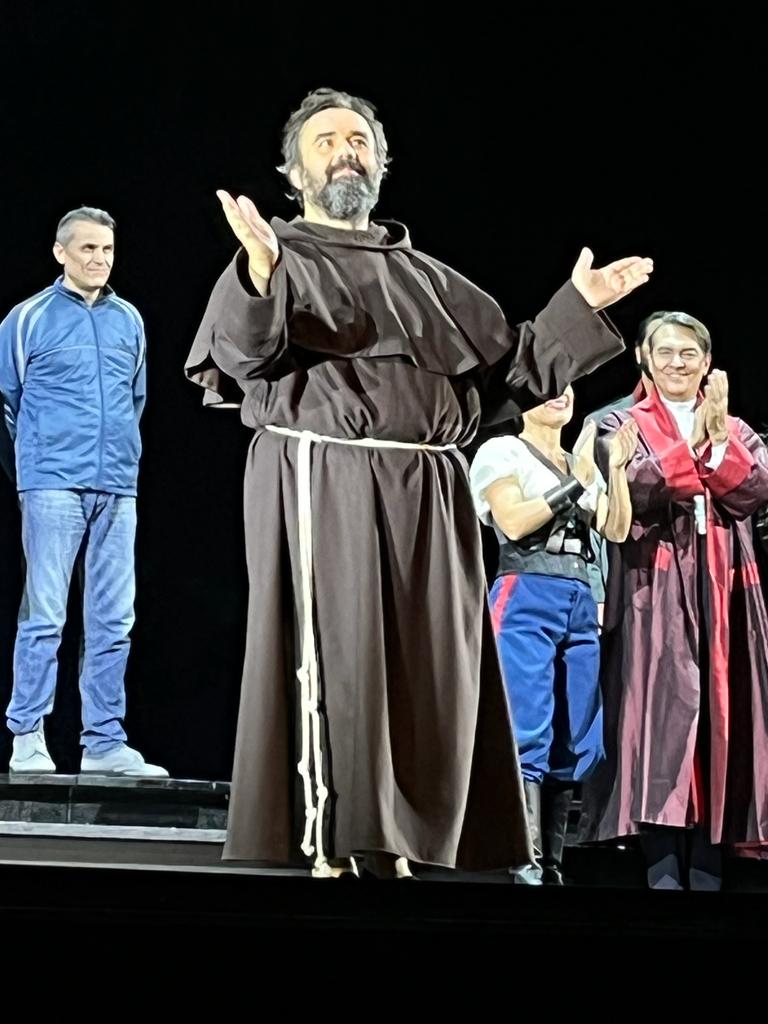
Agora as duas grandiosas surpresas para mim foram a Preziosilla de Annalisa Stroppa 

e o Padre guardiano de Marko Mimica. 

A italiana, de excelente figura, jovem, tem uma voz fenomenal, uma destreza em palco e uma identificação apaixonante pelo papel. Mas o baixo Marko Mimica, de 35 anos, não lhe fica atrás e, confesso, que foi o maior factor surpresa desta récita para mim. Vemos entrar um jovem, bem apessoado, em traje de monge, num papel que parece para alguém com mais idade, mas esta sensação de inconsistência desaparece quando ouvimos a voz. É brutal! 

Um espectáculo fantástico.


(Texto de Wagner_fanatic)


LA FORZA DEL DESTINO, Teatro Regio di Parma, October 2022

My participation in the Festival ended in the best way. This Forza del Destino was amazing in every way. The staging is as traditional as you can imagine and, in its simplicity, it was great because with singer-actors of this caliber, even if it didn't exist, it in no way reduced the experience. If I could summarize it, I would do it as a sequence of clippings of the places where each scene, each act, takes place against a temporal background (twilight, night, moonlight…). What I liked the most was the scene of the Monastery where, with the simplicity I mentioned, against a background of night with a full moon, the monastery is like a cardboard cutout, inclined to the right, with a churchyard with a cross that leans to the other side - I think the idea of ​​the monastery leaning to the right and the cross to the left, brings us the idea, even before the scene ends, that Leonora goes there to get support/protection because it seems that they embrace.

Roberto Abbado's direction was intense and precise, with the orchestra responding very well, very cohesive and offering all the beauty of lyrical melodic lines that this opera has. The choir, not from the Regio de Parma but from the Comunale de Bologna (something that led to great criticism at the premiere...) was impeccable, both in the most dramatic passages and in the most comic-popular ones.

With a cast of great Verdean names, the expectation of a great night was immense. And so it was. Gregory Kunde, in his 68 years old, was impressive. All, but totally all, his steps, expressions, movements were perfectly translators of the correct feeling of the character in each moment. He really lived the role with a mastery rare to see on stage. His voice is still in great shape and, more than that, it achieves a variety of “colors” that are not usual to hear. Don Alvaro's famous aria at the beginning of the 3rd act was perfect, with strong, stable highs with a polished timbre, crisscrossed with a warm midrange, sometimes something metallic, and where the dynamics expertly adjusted to the feeling, made it seem like we were listening different types of voices coming out of the same singer at the same time.

The duets with Don Carlo by Amartuvshin Enkhbat were simply genius on every level. The Mongolian's voice is impressive and he uses it well from a dramatic point of view, almost always correctly expressing the sentiment of the text. However, most of the time we don't have a clear notion of the facial expression, which is a pity because that would elevate the qualities of this baritone even more.

Liudmyla Monastyrska was very good, although with a vibrato that, if it were less marked, would make the singing more beautiful.

Roberto de Candia made a balanced Maeitone, without unnecessary exaggerations in the comic sense to which the character is predisposed.

Now the two big surprises for me were Annalisa Stroppa's Preziosilla and Father Guardiano by Marko Mimica. The Italian, with an excellent figure, young, has a phenomenal voice, a dexterity on stage and a passionate identification with the role. But the bass Marko Mimica, 35 years old, is not far behind her and, I confess, was the biggest surprise factor of this performance for me. We see a handsome young man in monk's garb enter a role that looks like an older person, but this sense of inconsistency disappears when we hear the voice. It's brutal!

A fantastic performance.

(Text by Wagner_fanatic)

quarta-feira, 12 de outubro de 2022

KÖNIGSKINDER, De Nationale Opera, Amsterdam, October / Outubro 2022

(Review in English below)

Dois pontos essenciais em relação à récita de hoje:

1) Como é que é possível que esta ópera não esteja mais frequentemente em cena nos palcos dos grandes teatros de ópera?!?!? Porquê?!?!?

2) A Ópera de Amsterdão conseguiu instalar uma Königskinder, de E. Humperdinck de uma qualidade que, a meu ver, devia ficar imortalizada em vídeo porque seria de referência para esta obra. Não me vou perder no resumo da história porque poderá ser lido na wikipedia ou site similar.

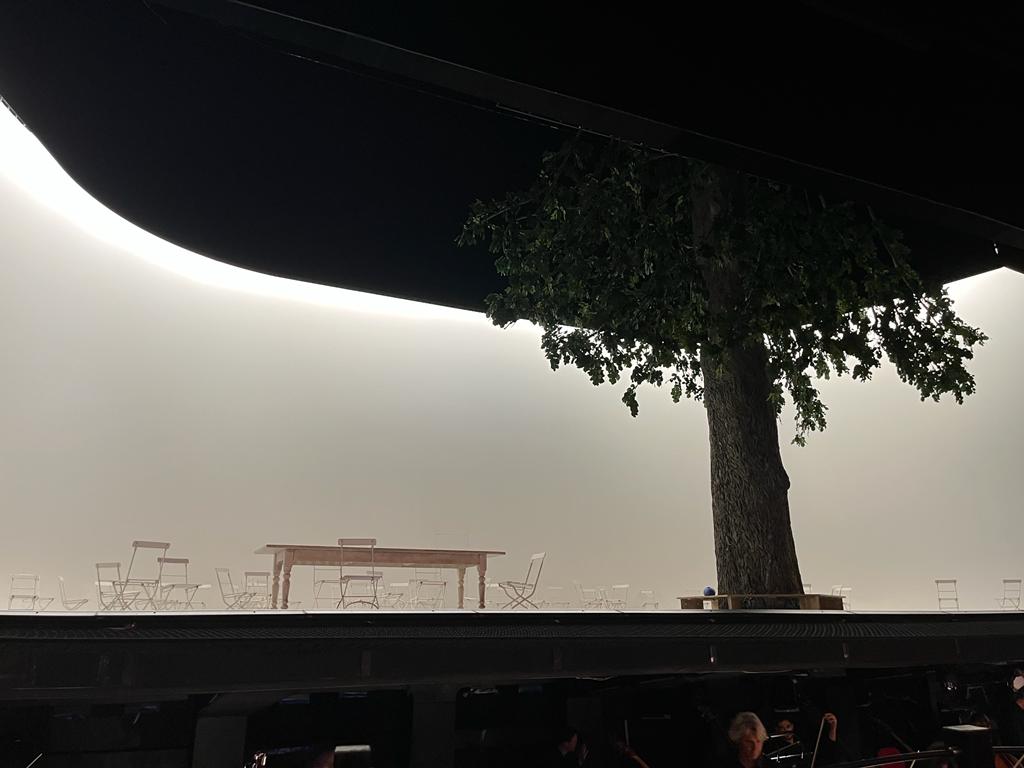
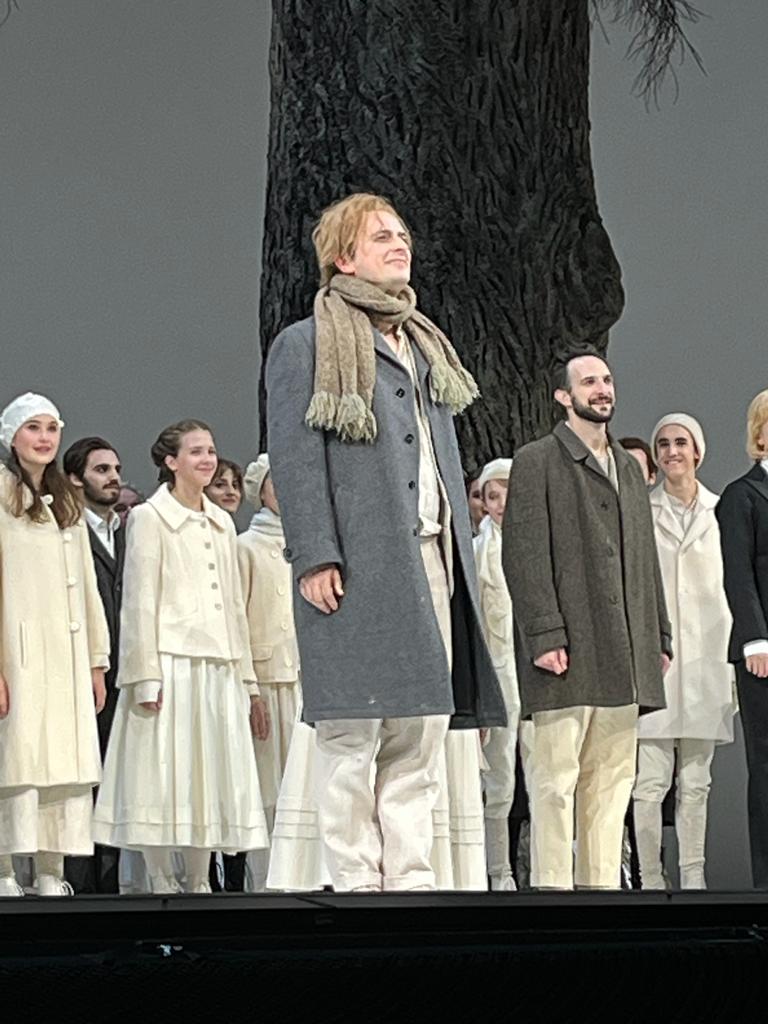
A encenação de Christof Loy é de uma simplicidade e de uma fidelidade ao texto incríveis. Sob fundo branco que permanece na quase totalidade da ópera, excepto no dueto final entre as personagens principais, onde se eleva para deixar visualizar um nevão ligeiro (3º acto é no Inverno), a casa da bruxa (intacta no 1º acto, vandalizada/velha no 3º) e uma árvore (florida no 1º acto, seca no 3º), com uns gansos de madeira puxados a cordel, uma coroa de flores e uma de jóias, é o que chega para contar uma história. Sob este palco um grupo de cantores/actores, dançarinos e coro de crianças (dentro de palco e no fosso) de uma qualidade interpretativa vocal e cénica exímia e homogénea, ao mais ínfimo detalhe e com um guarda roupa de bom gosto onde predomina o branco/creme. 


A música de Humperdinck é linda, cheia de leitmotiv (ou não fosse ele um grande admirador de Wagner) e potente do ponto de vista dramático, principalmente nos 1º e 3º actos. Loy aproveita-se bem disso e no início do 3º acto, durante a entrada orquestral lindíssima, projecta em filme tudo aquilo que se passou na história mas que não tem acção cénica de palco na versão original - o encarceramento do violinista por ser culpado de ter perguntado à bruxa quem seria o novo rei, o julgamento deste e da bruxa, a que desta resulta a sua morte na fogueira, excelentemente caracterizada, sob olhar dos populares que são todos os que entram no 2º acto da ópera; em ambos os julgamentos os réus (violinista e bruxa) olham para um padre para apoio e que se limita a baixar os olhos e contrair os masséteres; e a libertação do violinista após a morte da bruxa não sem antes ser enchido de pancada pela guarda e sair a coxear em direcção ao ambiente que será o do 3º acto (vive na casa vandalizada da bruxa). Em palco, uma violinista vestida de fato preto, completou o elenco, fazendo os diversos solos de violino que a obra apresenta e com um lirismo marcante.

Marc Albrecht dirigiu de uma forma emotiva e precisa uma orquestra portentosa. O facto de o fosso não ter muro a separar da plateia, permite que o som se alastre de forma ainda mais exuberante pela sala o que, num momento ou outro, reduziu um pouco as vozes em palco mas sem comprometer o aproveitamento global.


Nos cantores, pouco há a dizer a não ser que todos foram brutalmente espectaculares, aliás como já referi. Daniel Behle, meu bem conhecido do mundo wagneriano de Bayreuth, é perfeito para este papel, na sua capacidade de lirismo vocal. Olga Kulchynska tem uma voz lindíssima, bem colocada, emotiva. O seu rezar aos falecidos pais para que estes lhe tirem o feitiço da bruxa, no final do 1º acto, numa das passagens mais bonitas desta ópera, foi idílico, ajudada por Loy na beleza ao deixar cair pétalas/confetti sobre si (originalmente seria uma estrela). Conhecedor das várias (poucas) gravações que há desta ópera, o que hoje aqui ouvi foi melhor do que até agora há registado. Doris Soffel teve uma presença de palco fortíssima, actriz sólida, vocalmente ainda forte apesar dos seus já 74 anos. E Josef Wagner… que grande barítono, que voz apaixonante, que grande actor. A voz é perfeita para um Wolfram, um Amfortas, um Sachs e até mesmo um Wotan. Percebo porque tem cantado muito o Mandrika da Arabella - a voz é perfeita para o papel, tal como a de Franz Grundheber na célebre gravação de Jeffrey Tate, a minha favorita. Todos os outros ao mais alto nível mas destaco o coro de crianças e uma delas (que penso ser a filha do fazedor de vassouras): Isabel Houtmortels. Voz tão bonita, cristalina, de arrepiar!!!


Foi muito bom voltar a esta casa, 9 anos depois e para um tesouro operático que espero que muitos dos teatros de ópera saibam vir a reencontrar.


(Texto de Eagner_fanatic)


KÖNIGSKINDER, De Nationale Opera, Amsterdam, October 2022

Two essential points regarding today's performance:

1) How is it possible that this opera is not more frequently on the stage of the great opera theaters?!?!? Why?!?!?

2) The Amsterdam Opera managed to set a Königskinder of a quality that, in my opinion, should be immortalized on video because it would be a reference for this work. I won't get lost in the summary of the story because it can be read on wikipedia or similar site.

Christof Loy's staging is incredibly simple and faithful to the text. Against a white background that remains in almost the entirety of the opera, except for the final duet between the main characters, where it rises to reveal a light snowfall (3rd act is in winter), the witch's house (intact in the 1st act, vandalized/old in the 3rd) and a tree (flowering in the 1st act, dry in the 3rd), with some wooden geese pulled on string, a wreath of flowers and a wreath of jewels, is what is enough to tell a story. Under this stage, a group of singers/actors, dancers and children's choir (onstage and in the pit) of an excellent and homogeneous vocal and scenic interpretive quality, down to the smallest detail and with a tasteful wardrobe where white predominates. /cream.

Humperdinck's music is beautiful, full of leitmotifs (or were he not a great admirer of Wagner) and powerful from a dramatic point of view, especially in the 1st and 3rd acts. Loy makes good use of this and at the beginning of the 3rd act, during the beautiful orchestral entrance, he projects on film everything that happened in the story but which does not have scenic stage action in the original version - the violinist's imprisonment for being guilty of having asked the witch who would be the new king, the judgment of him and the witch, which resulted in his death at the stake, excellently characterized, under the gaze of the popular people who are all who enter the 2nd act of the opera; in both trials the defendants (fiddler and witch) look to a priest for support, who simply lowers his eyes and contracts his masseters; and the release of the violinist after the witch's death, not before being beaten by the guard and limping towards the environment that will be that of the 3rd act (he lives in the witch's vandalized house). On stage, a violinist dressed in a black suit, completed the cast, performing the various violin solos that the work presents and with a striking lyricism.

Marc Albrecht directed a portentous orchestra in an emotional and precise way. The fact that the pit does not have a wall separating the audience, allows the sound to spread even more exuberantly through the room, which, at one time or another, reduced the voices on stage a little but without compromising the overall use.

As for the singers, there is little to say other than that they were all brutally spectacular, as I mentioned before. Daniel Behle, my acquaintance from the Wagnerian world of Bayreuth, is perfect for this role, in his capacity for vocal lyricism. Olga Kulchynska has a beautiful, well-heard, emotional voice. Her praying to her deceased parents to remove the witch's spell, at the end of the 1st act, in one of the most beautiful passages of this opera, was idyllic, helped by Loy in her beauty by dropping petals/confetti on her (originally it would be a star). Knowing the various (few) recordings of this opera, what I heard here today was better than what has been recorded so far. Doris Soffel had a very strong stage presence, a solid actress, vocally still strong despite her 74 years. And Josef Wagner… what a great baritone, what a passionate voice, what a great actor. The voice is perfect for a Wolfram, an Amfortas, a Sachs and even a Wotan. I can see why he's been singing Arabella's Mandrika a lot—his voice is perfect for the role, as is Franz Grundheber's on Jeffrey Tate's famous recording, my favorite. All the others are at the highest level, but I highlight the children's choir and one of them (who I think is the daughter of the broom maker): Isabel Houtmortels. Voice so beautiful, crystal clear, chilling!!!

It was great to return to this opera house, 9 years later, and to an operatic treasure that I hope many of the opera theaters will know how to find again.


(Text by Wagner_fanatic)