segunda-feira, 11 de abril de 2022

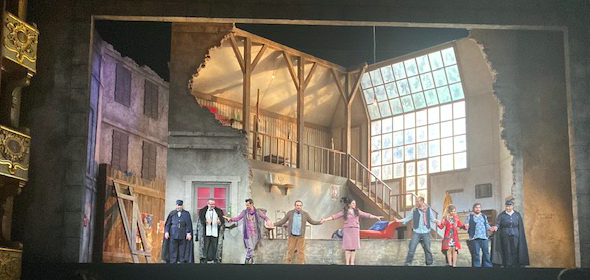
O LAGO DOS CISNES / Swan Lake – Royal Opera House, Londres

Um clássico bem dançado é sempre um espectáculo muito agradável.


O Lago Dos Cisnes, de Tchaikovsky é talvez o bailado mais conhecido e merece a fama. A música é muito bonita e a apresentação do Royal Ballet de Londres é a melhor que já vi. Os cenários são belíssimos e o espectáculo em si é fantástico. Os solistas, muitos em alternativa, são sempre excelentes, mas toda a companhia é magnífica.


É um espectáculo de referencia para rever sempre que possível ou, para quem nunca viu ao vivo um bailado clássico, não há melhor para começar.

*****

Swan Lake – The Royal Ballet, London

A well-danced classic is always a very pleasant show. Tchaikovsky's Swan Lake is perhaps the best known ballet and deserves its fame. The music is beautiful and the performance by the Royal Ballet is the best I have ever seen. The scenery is beautiful and the show itself is fantastic. The soloists, many alternatively, are always excellent, but the whole company is magnificent.

It is a reference show to review whenever possible or, for those who have never seen a classical ballet live, there is no better place to start.

*****

segunda-feira, 21 de março de 2022

COSÌ FAN TUTTE – Fundação Calouste Gulbenkian, Março 2022

(review in English below)

A Fundação Calouste Gulbenkian ofereceu-nos a magnífica ópera Così fan tutte de Mozart numa versão semi-encenada, muito bem conseguida, de Marcos Fink, que permitiu a compreensão fácil do enredo.

Se há óperas que se prestam a encenações fáceis, esta é uma delas. O libreto de Lorenzo da Ponte (simplificando) retrata duas irmãs (Fiordiligi e Dorabella) muito apaixonadas pelos seus noivos militares (Ferrando e Guglielmo), jurando-lhes fidelidade eterna. Don Alfonso, um filósofo, aposta com eles que as suas noivas se deixarão seduzir por outros homens assim que eles se afastem, facto liminarmente rejeitado por ambos. Combinados com Don Alfonso, fingem partir para a guerra e aparecem disfarçados de albaneses. As duas irmãs acabam por se deixar seduzir, cada uma pelo noivo da outra, em menos de um dia. Há ainda participações importantes de uma criada experimentada na vida (Despina), incluindo no papel de médico e no de notário.


A direcção musical competente foi de Nuno Coelho e a Orquestra Gulbenkian teve mais uma interpretação de qualidade. 


Também o Coro Gulbenkian foi muito bom. Os cantores solistas eram todos jovens, com boa figura, e cantaram e representaram de forma irrepreensível. Estava garantido o sucesso do espectáculo.


A soprano moldava Valentina Nafornita foi uma Fiordiligi  arrebatadora. Tem uma voz fabulosa, com enorme extensão e grande versatilidade. O papel é muito exigente e interpretou-o na perfeição. 


A mezzo francesa Natalie Pérez também foi excepcional como Dorabella. Voz magnífica, muito bonita, sempre afinada. Interpretação superlativa. 

O tenor turco Ilker Arcayürek foi muito bom. O timbre estranha-se um pouco no início mas, com o decorrer do espectáculo, faz um Ferrando de grande qualidade.

O barítono alemão Samuel Hasselhorn foi um Guglielmo perfeito, tanto na interpretação cénica como vocal.

A Despina foi interpretada pela sul-coreana Sunhae Im. Muito expressiva e engraçada em palco, o papel presta-se a isso. A voz de soprano lírica ligeira é menos poderosa mas nem por isso menos expressiva e eficaz.


Finalmente o Don Alfonso foi magnificamente interpretado pelo baixo argentino Marcos Fink que mantém uma voz respeitável e de timbre muito agradável.


Termino fazendo referencia à excelente (!) introdução à ópera feita por Jorge Rodrigues uma hora antes do início, noutro auditório da Gulbenkian (Que saudades do Ritornelio). 

*****


COSÌ FAN TUTTE – Fundação Calouste Gulbenkian, March 2022

The Calouste Gulbenkian Foundation offered us the magnificent opera Così fan tutte by Mozart in a semi-staged version, very good and effective by Marcos Fink, which allowed for an easy understanding of the plot.

If there are operas that lend themselves to easy staging, this is one of them. Lorenzo da Ponte's libretto (simplifying) portrays two sisters (Fiordiligi and Dorabella) very much in love with their military fiancés (Ferrando and Guglielmo), swearing eternal fidelity to them. Don Alfonso, a philosopher, bets with them that their brides will allow themselves to be seduced by other men as soon as they leave, a fact that both of them reject outright. Combined with Don Alfonso, they pretend to go to war and appear disguised as Albanians. The two sisters end up being seduced, each by the other's fiancé, in less than a day. There are also important participations of a maid experienced in life (Despina), including in the role of doctor and notary.

The competent musical direction was by Nuno Coelho and the Gulbenkian Orchestra had another quality interpretation. The Gulbenkian Choir was also very good. The singers were all young, good looking, and they sang and performed flawlessly. The show's success was guaranteed.

Moldovan soprano Valentina Nafornita was a breathtaking Fiordiligi. She has a fabulous voice, with enormous range and great versatility. The role is very demanding and she played and sung it perfectly.

French mezzo Natalie Pérez was also exceptional as Dorabella. Magnificent voice, very beautiful, always in tune. Superlative interpretation.

Turkish tenor Ilker Arcayürek was very good. The timbre is a little strange at the beginning but, as the performance progresses, he is a Ferrando of great quality.

German baritone Samuel Hasselhorn was a perfect Guglielmo, both in scenic and vocal interpretation.

Despina was played by South Korean Sunhae Im. Very expressive and funny on stage, the role lends itself to that. The light lyrical soprano voice is less powerful but no less expressive and effective.

Finally, Don Alfonso was fantastically interpreted by the Argentine bass Marcos Fink, who maintains a respectable voice with a very pleasant timbre.

I end by referring to the excellent (!) introduction to the opera by Jorge Rodrigues an hour before the start, in another Gulbenkian auditorium.

*****

sexta-feira, 18 de março de 2022

LA BOHÈME – Teatro Nacional de São Carlos


(review in English below)

Foi com satisfação que finalmente voltei a ver uma ópera devidamente encenada no Teatro de São Carlos, a popular La Bohème de G. Puccini. 

E começo pela encenação, de Emilio Sagi, que gostei muito. Foi uma abordagem clássica sem grandes inovações (para além de ter sido aproximada da actualidade), muito vistosa e bem conseguida. Esteve ao nível das boas encenações de qualquer grande teatro de ópera internacional.  Como quase sempre, há pormenores discutíveis mas na globalidade gostei muito, não foi uma encenação minimalista ou pindérica, como tantas vezes vemos entre nós.

No extremo oposto esteve a direcção musical de Domenico Longo. Foi muito má, a orquestra tocou quase sempre "à bruta", abafando frequentemente os cantores. A grande beleza de várias das magníficas partes musicais mais líricas não pode ser realçada. Lamentável.

Os dois protagonistas, o tenor Gianluca Terranova (Rodolfo) e a soprano Natalia Tanasii (Mimi) também estiveram muito aquém do desejável. Terranova tem um timbre feio e revelou grande dificuldade no registo mais agudo, que cantou em falsete e soava mais gritado que cantado. A voz de Tanasii era bem audível mas foi sempre dura e sem qualquer lirismo. E a interacção dos dois amantes não funcionou de todo, não houve a mínima expressão de cumplicidade amorosa.


Christian Luján
(Marcello) esteve muito bem. Tem uma voz grande, bem colocada, e boa presença em palco. A Museta de Bárbara Barradas foi exuberante, como acontece frequentemente com esta personagem. Foi notável em palco e também cantou bem, em forte, mas penso que propositadamente.

Os restantes cantores tiveram participações mais apagadas, Diogo Oliveira (Schaunard), João Merino (Benoit/Alcindoro), Miguel Reis (Parpignol) e André Henriques (Colline), o último com um tipo de voz pouco adequada à personagem. O programa diz que é um baixo, mas não tem graves.


**


LA BOHÈME – Teatro Nacional de São Carlos, Lisbon

It was with satisfaction that I finally returned to see an opera properly staged at the Teatro de São Carlos, the popular La Bohème by G. Puccini.

And I start with the staging, by Emilio Sagi, which I really liked. It was a classic approach without major innovations (in addition to turning the action close to the present), very showy and well done. It was at the level of the good stagings of any major international opera house. As almost always, there are debatable details but overall I really liked it, it wasn't a minimalist or kitsch staging, as we so often see between us.

At the opposite end was the musical direction of Domenico Longo. It was very bad, the orchestra almost always played "gross", often drowning out the singers. The great beauty of several of the more lyrical musical parts could not be appreciated. Regrettable.

The two soloists, tenor Gianluca Terranova (Rodolfo) and soprano Natalia Tanasii (Mimi) were also far from acceptable. Terranova has an ugly timbre and showed great difficulty in the higher register, which sang in falsetto and sounded more shouted than sung. Tanasii's voice was quite audible but it was always harsh and without any lyricism. And the interaction of the two lovers did not work at all, there was not the slightest expression of loving complicity.

Christian Luján (Marcello) did very well. He has a big nice voice, and good stage presence. Bárbara Barradas' Museta was exuberant, as is often the case with this character. She was remarkable on stage and also sang well, loudly, but I think on purpose.

The other singers had lesser participation, Diogo Oliveira (Schaunard), João Merino (Benoit/Alcindoro), Miguel Reis (Parpignol) and André Henriques (Colline), the last one with a type of voice that was not suitable for the character. The program says he's a bass, but the lower register was nonexistent.

**

domingo, 13 de março de 2022

RIGOLETTO, Royal Opera House, Março 2022


(text in English below)

Como tem sido hábito nas grandes casas de espectáculos, no início interpretou-se o hino da Ucrânia, em solidariedade com o genocídio que o País está a sofrer.

Começou depois o Rigoletto de G. Verdi. A encenação de Oliver Mears começa com uma figuração inspirada no “Martírio de São Mateus” de Caravaggio, um belo efeito visual, mas depois torna-se estática, algo minimalista e muito pouco inovadora.

O Rigoletto do barítono Luca Salsi foi extraordinário. É um verdadeiro barítono verdiano, espécie quase extinta nos dias que correm. Esteve muito bem em palco, a voz é magnífica, ampla, potente e muito expressiva.

Também ao mais alto nível esteve a soprano Rosa Feola. Sempre afinada, timbre bonito, voz cheia e grande expressividade em palco.

Já o tenor Francesco Demuro foi decepcionante. A voz é pequena, tem um timbre excessivamente agudo de que não gosto e canta quase sempre em esforço.

Notáveis foram também o baixo Evgeny Stavinsky como Sparafucile e a mezzo Aigul Akhmetshina como Maddalena. Os cantores secundários não destuaram, Phillip Rhodes (Monterone), Kseniia Nikolaieva (Giovanna) e German Alcantara  (Marullo).


Apesar do tenor, um espectáculo de grande qualidade.

****


RIGOLETTO Royal Opera House, March 2022

As has been the custom in the great concert halls, at the beginning the anthem of Ukraine was played, in solidarity with the genocide that the country is suffering.

Then began Rigoletto by G. Verdi. Oliver Mears' staging begins with a figuration inspired by Caravaggio's “Martyrdom of St. Matthew”, a beautiful visual effect, but the staging was static, somewhat minimalist and not very innovative.

Baritone Luca Salsi's Rigoletto was extraordinary. He is a good verdian baritone, a species almost extinct these days. He was very well on stage, his voice is magnificent, wide, powerful and very expressive.

Also at the highest level was soprano Rosa Feola. She was always in tune, beautiful timbre, full voice and great expressiveness on stage.

Tenor Francesco Demuro was disappointing. The voice is small, has an excessively high timbre, which I don't like, and sings more in effort than in softness.

Also notable were bass Evgeny Stavinsky as Sparafucile and mezzo Aigul Akhmetshina as Maddalena. The support singers did not destroy,
Phillip Rhodes (Monterone), Kseniia Nikolaieva (Giovanna) and German Alcantara (Marullo).
 
Despite the tenor, it was a performance of great quality.

****


sábado, 15 de janeiro de 2022

Karita Mattila, Wesendonck Lieder e Sinfonia Nº1 de Mahler, Fundação Gulbenkian, Janeiro de 2022


(text in English below)

O ciclo de 5 canções Wesendonck Lieder, de Richard Wagner, abriu o concerto da Orquestra Gulbenkian, sob a direcção do maestro Hannu Lintu. A solista foi a grande soprano finlandesa Karita Mattila. A voz é cheia e mantém um timbre inconfundível. A cantora ofereceu-nos uma interpretação de grande nível emotivo e sempre afinada. No final recebeu um justo e prolongado aplauso de pé.


Na segunda parte do concerto ouviu-se a notável Sinfonia Nº1 de G Mahler. Gostei muito da interpretação da Orquestra. Começou da melhor forma este “segundo ciclo” de concertos da Orquestra Gulbenkian


****

Karita Mattila, Wesendonck Lieder and Sinfonia Nº1 by Mahler, Gulbenkian Foundation, January 2022

The 5-song cycle Wesendonck Lieder, by Richard Wagner, opened the Gulbenkian Orchestra concert, conducted by Hannu Lintu. The soloist was the great Finnish soprano Karita Mattila. Her voice is full and maintains an unmistakable timbre. The singer offered us an interpretation of a high emotional level and always in tune. In the end she received a fair and prolonged standing ovation.

In the second part of the concert, the remarkable Symphony Nº1 by G Mahler was heard. I really enjoyed the orchestra's performance. This “second cycle” of concerts by the Gulbenkian Orchestra started in the best way

****

domingo, 12 de dezembro de 2021

LA CLEMENZA DI TITO, Teatro Nacional de São Carlos, Lisboa, Dezembro de 2021


(text in English below)

A última ópera composta por WA Mozart, La clemenza di Tito, foi cantada em versão concerto no Teatro Nacional de São Carlos. Tocou a Orquestra Sinfónica Portuguesa e cantaram o Coro do teatro e solistas, sob a direcção do maestro Antonio Pirolli.


Infelizmente persistem vários aspectos negativos. Para além da apresentação em versão concerto, sempre uma amputação da ópera, continua a colocação da orquestra no palco elevado (e não no fosso a ela destinado), e o coro nos patamares que foram construídos no fundo do palco. Ambas as situações prejudicam a qualidade do espectáculo, mas insiste-se nesta opção.


Os cantores solistas tiveram interpretações qualitativamente distintas. O tenor Pablo Bemsch foi um Tito amorfo. A voz é decente mas o cantor não tirou os olhos da partitura e foi pouco expressivo na interpretação.


A soprano Susana Gaspar foi uma Vitellia para esquecer. No registo mais grave teve grandes dificuldades mas o problema principal foi nos agudos que surgiram quase sempre gritados e estridentes.


O Sesto foi cantado pela mezzo Ruxandra Donose, a melhor da noite. Ofereceu-nos uma interpretação sólida, emotiva e de qualidade.


A soprano Cecília Rodrigues foi uma Servilia correcta. 


Outra boa interpretação foi a da mezzo Miriam Albano como Annio, sempre afinada, e voz bem timbrada. 


O barítono José Corvelo interpretou o Publio sem empolgar.


**


LA CLEMENZA DI TITO, Teatro Nacional de São Carlos, Lisbon, December 2021

The last opera composed by WA Mozart, La clemenza di Tito, was sung in a concert version at the Teatro Nacional de São Carlos. Portuguese Symphonic Orchestra played and sang the Theater Choir and soloists, under the direction of conductor Antonio Pirolli.

Unfortunately, several negative aspects remain. In addition to the concert version presentation, always an amputation of the opera, the orchestra continues to be placed on the raised stage (and not in the ditch intended for it), and the choir on the levels that were built at the back of the stage. Both situations affect the quality of the performance, but this option is insisted on.

The soloist singers had qualitatively different interpretations. Tenor Pablo Bemsch was an amorphous Tito. The voice is decent but the singer did not take his eyes off the score and was not very expressive in the interpretation.

Soprano Susana Gaspar was a Vitellia to forget. In the lower register she had great difficulties but the main problem was in the top notes that were almost always screamed and shrill.

Sesto was sung by mezzo Ruxandra Donose, the best of the night. She offered us a solid, emotional and quality interpretation.

Soprano Cecília Rodrigues was a correct Servilia.

Another good interpretation was that of mezzo Miriam Albano as Annio, always in tune, with a well-pitched voice.

Baritone José Corvelo performed the Publio without an exciting interpretation.

**


domingo, 5 de dezembro de 2021

20ª Gala de Ópera da Universidade de Lisboa, Dezembro 2021


A 20ª Gala de Ópera da Universidade de Lisboa decorreu na Aula Magna no dia 4 de Dezembro. 


Actuaram a Orquestra Sinfónica Juvenil, o Coro de Câmara da Universidade de Lisboa, o Coro de Câmara do IGL, o Vocal Da Capo e o Incognitus Ensemble. A direcção musical foi de Christopher Bochmann.

O programa foi totalmente dedicado a G. Verdi, com excertos das óperas Nabucco, I Lombardi, Rigoletto, Il Trovatore, La Traviata e Don Carlo. Foram escolhidos trechos muito populares para agradar a toda a assistência, mesmo a que pouco conhece ópera, e assim aconteceu. 


Os cantores solistas foram Alexandra Bernardo (soprano), 


Larissa Savechenko (contralto), 


Alberto Sousa (tenor) e 


Armando Possante (barítono).


Continuamos a atravessar um período pandémico terrível a nível global. No que à ópera respeita, há já grande e diversificada oferta na generalidade dos países europeus. No entanto, considero que ainda é arriscado viajar, não tanto por medo de contrair a COVID-19, mas mais por podermos ser subitamente apanhados numa quarentena de semanas ou num súbito encerramento de fronteiras.

Em Portugal, ao contrário do que acontece na maioria dos países europeus, a ópera é quase inexistente e qualquer espectáculo sério que apareça é muito bem-vindo. Foi o caso da 20ª Gala de Ópera e, por isso, não vou ser crítico com os intervenientes no espectáculo.


Direi apenas que a qualidade das interpretações foi muito diversa, mas gostaria de salientar a que foi, para mim, a grande surpresa da noite – a soprano Alexandra Bernardo. Tem um vozeirão impressionante, uma amplitude vocal invejável e um timbre bonito. Há anos que não ouvia um cantor português com tanto potencial. A voz precisa de ser “trabalhada” porque estamos perante um diamante que está ainda por lapidar. Uma cantora a seguir!


***