Mostrar mensagens com a etiqueta Peter Rose. Mostrar todas as mensagens

quinta-feira, 20 de outubro de 2022

Siegfried — Staatsoper Berlin - 6.10.2022

Text in English below)

Na récita de hoje, voltamos, como era de prever, ao «Forschungszentrum», isto é, ao centro de investigação.


O primeiro ato começa, como Tcherniakov nos tem vindo a habituar, com 2 a 3 minutos de nada. Apenas uma tela vazia. Quando sobe o pano, voltamos ao início de Die Walküre: o escritório de Wotan com uma janela opaca. Por detrás, depois de rodado o palco a 180º, o mesmo loft. Desta vez, com uma secretária ao meio onde está Mime sentado. À esquerda, o quarto de Siegfried, todo em peças de lego grandes, revelando a criança que ali habita.


Mime, muito mais velho, fala dos seus problemas e desejos. Entretanto, em vez da bigorna, toca em vários tachos. O problema é que todos tinham sonoridades diferentes. Além disso, Rugamer (o Mime da tarde/noite) falhou os tempos, problema para o qual contribuiu a ausência de baquetas (acho que eram uns garfos ou colheres) e a não colagem dos tachos à bancada… Bigornas à parte, vemos, entretanto, chegar Siegfried, aqui disfarçado de urso pardo e com uma máscara de Wotan, o que não deixou — pelo menos não o transmitiu — Mime particularmente assustado. Siegfried, em fato de treino azul depois de despida a fantasia, fuma vários cigarros e mostra-se zangado com as interpelações de Mime. Acaba por sair novamente, dando lugar a Wotan, francamente envelhecido também, de boina, sem lança e sem capa, mas com os dois olhos (nunca perdeu nenhum…). O diálogo decorre sem nada de especial a assinalar, com exceção do tom jocoso com que Wotan aborda Mime. Sai Wotan e reentra Siegfried. Decidido a forjar a Nothung, Siegfried pega em vários brinquedos que coloca na secretária central. Os dois bocados da Nothung (sim, eram dois bocados) não ficam na mesa, mas não interessa… Siegfried incendeia um peluche e outros brinquedos que representam o forno para a forja — aqui há fogo, ao contrário do que sucedeu no final de Die Walküre… A água onde a Nothung teoricamente é arrefecida, é aqui representada por um extintor químico e um lençol anti-fogo (convenhamos que eram mais prático e representam um avanço científico evidente na extinção destes materiais pirotécnicos). A Nothung — que acaba por nunca aparecer durante todo o processo — não é, pois, martelada. O que é martelado é tudo o que existe no loft: pratos, brinquedos, a secretária. Tudo é destruído, claro! Não há Nothung. Não há jogo de luzes. É tudo nada. Apenas destruição. No fim do ato, ia Siegfried atirar ainda uma cadeira ao óculo do loft, aparece Wotan do outro lado com um ar reprovador, o que permitiu poupar o vidro.


O segundo ato é uma sequência de experiências. O palco é rotativo e passamos pelas diferentes salas já conhecidas intervaladas por espaços em bruto por onde se passa de sala para sala. Começamos com ecrãs com a mensagem «As experiências começam dentro de 30 minutos». Alberich, de andarilho e de mala na mão, encontra, não por acaso, Wotan, dando-se início à sua «discussão». Wotan, sempre num tom jocoso, dá-lhe uma ajuda com diversos avisos e com a tentativa de engodo ao dragão. O palco, até aí sempre em rotação e com as personagens de sala em sala, pára. Wotan chama o dragão, mas este, sem que nunca apareça, não vai na cantiga de Alberich. A cena tornou-se cómica, não invocando qualquer sentimento de medo. Wotan sai, mas aparece Mime para se confrontar com Alberich.


Quando isto acaba, começa uma série de 6 experiências até ao fim do ato, todas elas nomeadas em alemão (confesso que não decorrei as mensagens, dado que não sei alemão e não foram traduzidas). A primeira seria «Relaxamento», ou algo parecido. Estamos numa sala com um cadeirão ao centro. Siegfried começa a sua meditação sobre as suas origens, a sua aparência e a possibilidade de compreender os pássaros. No meio das experiências, surge uma investigadora com um pássaro mecânico cujas asas se movimentam quando ativadas por um aparelho. Siegfried tenta falar com o pássaro e brinca com ele de forma muito infantil, mas divertida. A investigadora mostra cartazes com instrumentos que Siegfried seleciona. A flauta não resulta, depois parece resultar a corneta que «ativa» a investigadora porque é ela que canta e passa a fazer de pássaro (o que era mecânico desapareceu sem deixar rasto…). Conduzido ao dragão, aparece um Fafner vestido de colete de forças, com açaimo e correntes, trazido por dois enfermeiros, daqueles da pesada, como já fiz referência. Parece um prisioneiro de uma prisão de alta segurança. Aqui, em contraste com outras visões tcherniakovianas, não há brinquedos ou fantasias de dragão. Estamos na quinta experiência (o écran dizia algo como «agressão e reação»). Depois de uns encontrões e de se rebolarem no chão, Siegfried, que antes tentara sufocar Fafner com a corrente, acaba por matá-lo com a Nothung. Acontece que a Nothung é só o punho da espada e não a unificação dos dois bocados em que estava partida. Acontece também que o coração do pretenso dragão se encontra, ao contrário do que Mime garantira, no flanco de Fafner. Mas o homicídio não deixa de consumar-se, que era o que importava afinal. De seguida, com a mesma indiferença e o Tarnhelm no bolso, Mime, que esteve sempre acompanhado do termo que levava a bebida assassina que oferece ao herói, é degolado com o dito punho da Nothung, enquanto, entre as salas, Alberich observa, satisfeito. Lá volta a investigadora a fazer as vezes de pássaro e Siegfried, com entusiasmo, vai em busca de Brunnhilde.


No terceiro ato, voltamos aos cenários a mudar na horizontal como em Das Rheingold. Começamos numa sala que foi transformada no refeitório dos investigadores. Wotan, francamente insatisfeito, põe tudo no olho da rua. Quem acorre à cena é Erda com o fato azul de Das Rheingold. Apesar de ser recebida com a aura de prémio Nobel e de lhe ser servido chá enquanto canta sentada, rapidamente Wotan se torna agressivo: vai de empurrões, a puxões, passando pelas mãos no pescoço, até que a expulsa da sala, isto enquanto vai bebendo algum álcool, o que terá ajudado a este comportamento… Nada místico, nem tampouco consonante com a cortesia com que se devem tratar cientistas… Expulsa Erda, chega Siegfried, sempre muito fanfarão. O diálogo entre ele e Wotan decorre com sobranceria. No final, inesperadamente, dado que até aqui não havia memória visual de qualquer lança, Wotan retira uma lança — muito banal, em abono da verdade — do armário das bebidas do seu escritório. Siegfried, tendo a saída dessa sala bloqueada e sem que a Nothung se faça ver, parte a porta (tinha de ser!) e sai. Nesse instante, Wotan, ele próprio, parte a laça ao meio e Siegfried segue a sua aventura.


Voltamos à sala onde tudo começou. Agora só tem uma marquesa e uma inscrição que creio que dizia «Laboratório de linguagem». Wotan leva Brunnhilde até lá, estando os dois muito cúmplices. Brunnhilde desenha, como o marcador de Die Walküre, umas chamas nos vidros e exibe um cavalo de peluche que faz de Grane. Tudo naquele jeito infantil a que Brunnhilde nos habituou e Siegfried imitou. Wotan cobre-a com um lençol daqueles que vemos nas cenas de catástrofe que ajudam a aquecer os feridos. 


Sai Wotan e entra Siegfried sem dificuldade nenhuma, porque o fogo aqui é a brincar. Não usa a Nothung para tirar a armadura ou o escudo de Brunnhilde, porque estes não existem (Brunnhilde acaba por desenhá-los mais tarde, quando a eles se refere). Mas senta-se aos pés da marquesa e puxa, muito divertido, o referido lençol. Ao ver que é uma mulher, invoca a mãe num jeito histérico com os braços estendidos no ar enquanto abana as mãos num jeito de «oh! Meu Deus!» que despertou umas risotas no público. Depois de acordar Brunnhilde com o menos infantil beijo nos lábios, esta canta sentada na marquesa, estando os dois satisfeitos. A satisfação de Brunnhilde cessa quando é tocada ao de leve: aqui sai do cubo de vidro e os dois acabam por mudar para aquela espécie de entrada/pátio interior com o freixo no meio, cenário já descrito em Das Rheingold, não sem antes receber uns valentes apalpões. O dueto ocorre de seguida com cada um no seu lado, aqui com muito decoro. No fim, com Wotan a assistir, tocam-se novamente ao de leve e saem aos pulinhos, terminando a ópera Siegfried. 


Talvez por ser um centro de investigação, logo muito científico, Tcherniakov continua a privar-nos de qualquer misticismo, transcendência ou simbolismo. Tudo é terreno, básico, agressivo e, constrastemente, infantil e cómico.


Para contrariar, os cantores estiveram em melhor plano, ainda que, no meu ver, limitados pelo encenador.


Stephan Rugamer fez um Mime em excelente forma vocal, cheio de tiques e maneirismos, como é suposto a esta personagem, transmitindo a sua maldade e ganância. Johannes Martin Kranzle faz o mesmo com a personagem Alberich, apresentando-se vocal e cenicamente em boa forma, até melhor do que em Das Rheingold. A Erda de Anna Kissjudit, aqui reduzida a uma mortal, ficou banalizada cenicamente, mesmo muito diminuída, o que se refletiu na performance vocal que, sendo adequada e sem falhas, também não deslumbrou nem pela potência, nem pela emoção. O Fafner de Peter Rose, também limitado pelo colete de forças, esteve novamente algo monótono vocalmente. Victoria Randem foi Der Waldvogel: tem um timbre muito bonito e cristalino e cantou a suas passagens de forma harmoniosa e luminosa, ainda que com um alemão sofrível. Wotan, que tem aqui a sua última aparição no Anel, foi, mais uma vez, excelentemente interpretado pela lindíssima voz de Michael Volle: sempre com uma emissão impecável, um timbre adequadíssimo ao papel e com uns agudos fáceis sobre a orquestra. Nunca falha em papéis de vilão. A Brunnhilde de Anna Kampe, ainda que tenha entrado com alguma dificuldade nalgumas passagens que não saíam tão facilmente e com uns agudos mais estridentes, melhorou sobretudo depois de se bem acordada com a palpação vigorosa de Siegfried. Aí a voz soltou-se e teve uma excelente interpretação, não fosse ela uma soprano wagneriana muito experiente. A última palavra para o homem da noite: Andreas Schager. Foi um Siegfried extraordinário porque é o protótipo do heldentenor: voz enorme, agudos facílimos (o último tão fácil quanto o primeiro) e uma forte presença física. Não creio que haja melhor nos dias de hoje. 


A Staatskapelle Berlin sob direção de Christian Thielemann voltou novamente a ser a estrela mais cintilante nesta produção. A leitura de Thielemann é muito cuidada, cheia de nuances subtis, muito cristalina, auxiliado por músicos de primeira nos sopros, e com um respeito imenso pelos cantores. Será aquilo de que verdadeiramente me irei recordar deste Anel.


Só falta o Crepúsculo dos Deuses: não o vamos ver porque Tcherniakov já os matou, mas esperamos ouvi-los!


————————

Siefried


In today's récit, we return, as expected, to the "Forschungszentrum", i.e. the research centre.


The first act begins, as Tcherniakov has been accustoming us to, with 2-3 minutes of nothing. Just an empty screen. When the curtain rises, we return to the beginning of Die Walküre: Wotan's office with an opaque window. Behind it, after the stage has been turned 180º, the same loft. This time, with a desk in the middle where Mime is sitting. To the left, Siegfried's room, all in large lego pieces, revealing the child who lives there.


Mime, much older, talks about his problems and desires. Meanwhile, instead of the anvil, he touches several pots. The problem is that they all had different sounds. Moreover, Rugamer (the Mime of the afternoon/evening) missed the tempos, a problem to which contributed the absence of drumsticks (I think they were some forks or spoons) and the non-gluing of the pots to the bench... Anvils aside, we see, meanwhile, Siegfried arriving, here disguised as a grizzly bear and wearing a Wotan mask, which did not - at least did not convey it - make Mime particularly frightened. Siegfried, in a blue tracksuit after taking off his costume, smokes several cigarettes and shows anger at Mime's interpellations. Eventually he leaves again, giving way to Wotan, frankly aged too, wearing a beret, no spear and no cape, but with both eyes (he never lost any...). The dialogue takes place without anything special to point out, except for the jocular tone with which Wotan approaches Mime. Wotan leaves and Siegfried reenters. Determined to forge the Nothung, Siegfried takes several toys, which he places on the central desk. The two pieces of Nothung (yes, they were two pieces) don't stay on the table, but it doesn't matter... Siegfried sets fire to a teddy bear and other toys which represent the oven for the forge - here there is fire, unlike what happened at the end of Die Walküre... The water where Nothung is theoretically cooled is represented here by a chemical extinguisher and an anti-fire sheet (let's agree that they were more practical and represent an evident scientific advance in the extinction of these pyrotechnic materials). Nothung - who ultimately never appears during the entire process - is therefore not hammered. What is hammered is everything in the loft: dishes, toys, the desk. Everything is destroyed, of course! There is no Nothung. There is no play of light. It's all nothing. Just destruction. At the end of the act, was Siegfried going to throw yet a chair at the loft's peephole, Wotan appears on the other side with a disapproving look, which allowed the glass to be saved.


The second act is a sequence of experiments. The stage is rotating and we pass through the different rooms already known to us interspersed by raw spaces through which we pass from room to room. We start with screens with the message "Experiments begin in 30 minutes". Alberich, walking around with suitcase in hand, meets, not by chance, Wotan, and their "discussion" begins. Wotan, always in a jocular tone, helps him with various warnings and the attempt to bait the dragon. The stage, until then always in rotation and with the characters moving from room to room, stops. Wotan calls the dragon, but the dragon, never appearing, does not go along with Alberich's song. The scene has become comical, invoking no sense of fear. Wotan leaves, but Mime appears to confront Alberich.


When this is over, a series of 6 experiences begins until the end of the act, all named in German (I confess I didn't memorise the messages, given that I don't know German and they weren't translated). The first would be "Relaxation", or something like that. We are in a room with an armchair in the centre. Siegfried begins his meditation on his origins, his appearance and the possibility of understanding birds. In the middle of his experiments, a researcher appears with a mechanical bird whose wings move when activated by a device. Siegfried tries to talk to the bird and plays with it in a very childish but amusing way. The researcher shows posters with instruments that Siegfried selects. The flute doesn't work, then the horn seems to work and "activates" the researcher because it is she who sings and starts playing the bird (the mechanical one disappeared without a trace...). Led to the dragon, a Fafner appears dressed in a straitjacket, with muzzle and chains, brought by two nurses, those heavy duty ones, as I have already mentioned. He looks like a prisoner in a high-security prison. Here, in contrast to other Cherniakovian visions, there are no toys or dragon costumes. We are in the fifth experience (the screen said something like "aggression and reaction"). After a few bumps and rolling around on the floor, Siegfried, who had earlier tried to choke Fafner with the chain, ends up killing him with the Nothung. It turns out that the Nothung is just the hilt of the sword and not the unification of the two pieces it was broken into. It also turns out that the heart of the would-be dragon is, contrary to what Mime had assured, in Fafner's flank. But the murder does not fail, which was what mattered after all. Then, with the same indifference and the Tarnhelm in his pocket, Mime, who was always accompanied by the term that carried the murderous drink he offered the hero, is beheaded with the said Nothung's fist, while, between the rooms, Alberich watches, satisfied. There the investigator returns to do the bird's turn, and Siegfried, with enthusiasm, goes in search of Brunnhilde.


In the third act, we return to the scenes changing horizontally as in Das Rheingold. We start in a room that has been transformed into the investigators' mess hall. Wotan, frankly dissatisfied, throws everything out. Erda, wearing the blue suit from Das Rheingold, arrives on the scene. Although she is received with the aura of a Nobel prize-winner and served tea while she sings in her seat, Wotan quickly becomes aggressive: he starts pushing and shoving her, then pulling her, then putting his hands on her neck, until he throws her out of the room, all the while drinking some alcohol, which may have helped this behaviour... Nothing mystical, nor in accordance with the courtesy with which scientists should be treated... When Erda is thrown out, Siegfried arrives, always a big fan. The dialogue between him and Wotan takes place with sobriety. At the end, unexpectedly, since up to this point there was no visual memory of any spear, Wotan takes a spear - very trivial, in truth - from the drinks cabinet in his office. Siegfried, having the exit of that room blocked and without Nothung being visible, breaks the door (he had to!) and leaves. At that moment, Wotan, himself, breaks the lasso in half and Siegfried continues his adventure.


We return to the room where it all began. It now has only a marquise and an inscription that I believe said "Language Laboratory". Wotan leads Brunnhilde there, the two of them being very complicit. Brunnhilde draws, like the bookmark of Die Walküre, some flames on the glass and shows a stuffed horse that plays Grane. All in that childlike manner to which Brunnhilde has accustomed us and Siegfried has imitated. Wotan covers her with a sheet of those we see at disaster scenes that help warm the wounded. 


Wotan leaves and Siegfried enters without any difficulty, because the fire here is a joke. He doesn't use Nothung to take off Brunnhilde's armour or shield, because these don't exist (Brunnhilde ends up drawing them later when referring to them). But he sits down at the marquise's feet and pulls, very amused, the aforementioned sheet. Seeing that it is a woman, she invokes her mother in a hysterical manner with her arms stretched in the air while waving her hands in an "oh! My God!" manner that elicited some giggles from the audience. After waking Brunnhilde with the least childish kiss on the lips, Brunnhilde sings while sitting on the table, the two of them being satisfied. Brunnhilde's satisfaction ceases when she is touched lightly: here she comes out of the glass cube and the two end up moving to that sort of inner entrance/patio with the ash tree in the middle, a scene already described in Das Rheingold, not without first getting a good feel for it. The duet occurs next with each one on his side, here with a lot of decorum. At the end, with Wotan watching, they touch each other lightly again and leave, jumping up and down, ending the Siegfried opera. 


Perhaps because it is a research centre, and therefore very scientific, Cherniakov continues to deprive us of any mysticism, transcendence or symbolism. Everything is earthy, basic, aggressive and, embarrassingly, childish and comic.


To counteract this, the singers were on better plan, albeit, in my view, limited by the director.


Stephan Rugamer made a Mime in excellent vocal form, full of tics and mannerisms, as is supposed to this character, conveying his malice and greed. Johannes Martin Kranzle does the same with the character Alberich, performing vocally and scenically in good form, even better than in Das Rheingold. Anna Kissjudit's Erda, here reduced to a mortal, was trivialised scenically, even greatly diminished, and this was reflected in the vocal performance which, while adequate and faultless, also did not dazzle either for power or emotion. Peter Rose's Fafner, also constrained by the straitjacket, was again somewhat dull vocally. Victoria Randem was Der Waldvogel: she has a very beautiful, crystal clear timbre and sang her passages harmoniously and luminously, albeit with a sufferable German. Wotan, who has his final appearance in The Ring here, was once again excellently played by the gorgeous voice of Michael Volle: always with impeccable emission, a timbre well suited to the role and with some easy highs over the orchestra. He never fails in villainous roles. Anna Kampe's Brunnhilde, although she entered with some difficulty in some passages that did not come out so easily and with a more strident treble, improved especially after she was woken up with Siegfried's vigorous palpation. There the voice loosened up and she had an excellent interpretation, were she not a very experienced Wagnerian soprano. The last word to the man of the evening: Andreas Schager. He was an extraordinary Siegfried because he is the prototype of the heldentenor: huge voice, easy treble (the last as easy as the first) and a strong physical presence. I don't think there is a better one today. 


The Staatskapelle Berlin under the direction of Christian Thielemann was again the shining star in this production. Thielemann's reading is very careful, full of subtle nuances, very crystalline, assisted by first-rate musicians on woodwinds, and with immense respect for the singers. It will be what I will truly remember of this Ring.


The only thing missing is Twilight of the Gods: we won't see it because Cherniakov has already killed them, but we hope to hear it!

domingo, 16 de outubro de 2022

Das Rheingold — Staatsoper Berlin — 2.10.2022

Text in English below)


A tetralogia de Berlim com encenação de Dmitri Tcherniakov começa, como já se poderia antever, atendendo a experiências passadas negativas (Parsifal, por exemplo), da pior maneira no que à encenação de Das Rheingold respeita.


A abertura tem como cenário um anfiteatro com muitas cadeiras. No meio, está uma tela onde se projetam imagens de um corte axial de uma ressonância magnética craniana. Depois, essas imagens passam a ser uma mancha que, não o sendo, vai mudando ao estilo de uma uma angiografia cerebral.


Acabada a abertura, o cenário desce e passamos para uma espécie de sala de diálise, toda ela de vidro, onde está Alberich vendado, preso a um cadeirão (com o que parecem cintos de automóvel), com um soro azul a correr numa veia puncionada e ligado a uma máquina enorme — eventualmente de diálise e de eletroencefalograma (tudo muito exagerado). Tem ainda um “capacete” de eletroencefalograma colocado na cabeça. As filhas do Reno, vestidas à moda dos anos 60/70 onde parece decorrer a ação, são umas enfermeiras de caderno na mão. Respondem aos galanteios de um Alberich que esbraceja às cegas enquanto as procura. Quando percebe que está a ser gozado e desiste, destrói a sala de um jeito patético, partindo máquinas e cadeirões, e arrancando uns tantos cabos que fazem as vezes do ouro. Tudo isto para espanto delas e dos figurantes presentes, que parecem fazer as vezes dos administradores da clínica. 


Voltamos depois a subir e os cenários vão mudando na horizontal, como se fossem salas de um palácio que são contíguas umas às outras (as portas entre elas disso dão ideia). Inicialmente, voltamos ao anfiteatro, onde se apresentam Fricka e Wotan que dialogam sobre o pagamento da construção do Wahalla. Tudo num diálogo sentado e com pouca interação. A esse cenário acorre, de seguida, uma Fricka aflita, de vestido para o dia-a-dia e, em sequência, os gigantes Fafner e Falsot que aqui são apenas dois homens simples: um obeso Lammermoor encarado vestido de casaco de pele comprido, outro alto, nada sisudo, de calças verdes e blazer piroso a condizer… 


Para negociar, nada como uma mudança para uma sala mais pequena com várias cadeiras e muitos copos de água e jarros. Loge [que bebeu alguma água, não fosse o fogo queimá-lo], de fato mostarda e calças à boca de sino, chega mais tarde, como é suposto. Mas é aqui que começa a «versão comédia» de Das Rheingold. Loge, muito exagerado e expressivo, denotando traços histriónicos, goza, sem piedade e com sobranceria, com os gigantes, o que fica patente quer na expressão corporal quer até na vocal.


Combinado o pagamento, os gigantes, que se faziam acompanhar de uns indivíduos que impunham respeito, levam Freia, enquanto Wotan e Loge saem num elevador que os conduz a patamares inferiores: quem sabe se o esperado submundo de Nibelheim?


Nesse caminho, passam, primeiramente, por um laboratório cheio de jaulas preenchidas por coelhos vivos, mas silenciosos. Continuando a descida, chegam a um laboratório apelidado de «Laboratório para estudo do comportamento humano» com várias cabines de vidro onde homens com farda numerada trabalham e Mime se compraz queixando-se. Ouro nem vê-lo! Cabos também não… Chegado Alberich que importuna todos os presentes e começa numa sessão de cacetadas em Mime, vão-se abrindo portas e fechando, enquanto mudam de cabine em cabine. A dada altura, Mime exibe o tronco nu, sem propósito evidente. Talvez para se libertar do calor de tanta pancada. Entretanto, Wotan e Loge assistem, divertidos, do lado de fora. Quando Alberich se apercebe da sua presença e a pedido destes, usa o Tarnhelm - aqui representado por um capacete esquisito ao estilo de um de eletroencefalograma -, estende os braços e diz transformar-se numa serpente para gáudio dos demais que gritam divertidos, fazendo-se horrorizados. Segue-se a transformação em objeto pequeno que, uma vez mais, não acontece. Aqui, a mando de Wotan que os chamou num telefone de parede junto ao elevador, chegam dois enfermeiros psiquiátricos (daqueles que só se vêem nos filmes) que têm por missão conter Alberich fisicamente pelas mãos levá-lo - no elevador, para que não faltem detalhes - para uma outra sala da casa de Wotan, essa, como já é sabido, situada num piso superior.


Na sala do palácio, Alberich continua a ser vítima dos inoportunos comentários de Wotan e Loge. Depois, a custo, Wotan lá lhe arranca o anel do dedo e Alberich vai-se embora, apertando a mão aos enfermeiros-carcereiros (ridículo a ponto de se ouvirem alguns risos na plateia…) que assistiam à porta e amaldiçoando quem venha a ter o ambicionado anel do poder. 


O ouro — que eventualmente tinha sido reunido enquanto Alberich, na cena anterior, falava com o anel — é entregue aos gigantes. Mas de ouro só mesmo o anel que brilha no dedo de Wotan. O demais será entregue de acordo com o que Loge vai rabiscando num pretenso contrato. Freia, presente na sala com o mesmo vestido já anteriormente descrito, é medida, mas nunca tapada ou coberta por ouro, por muito que os gigantes se tenham esforçado por vê-la menos do que na realidade a viam… Wotan lá acaba por ceder e entregar o anel, mas apenas depois de Erda ter surgido, de fato azul e sem qualquer misticismo ou aura, vinda do nada. Aparentemente, apesar do despropósito, ninguém pareceu ficar surpreendido com a aparição.


De seguida, todos os deuses passam para uma espécie de entrada onde, com letras grandes, está gravada a sigla E.S.C.H.E. (se não fosse uma sigla, significaria freixo) nas paredes. No meio, está uma árvore. Talvez os entendidos possam esclarecer-me se era um freixo, o que é provável.


Nessa cena, uns figurantes sentam-se nos bancos embutidos nas paredes juntamente com os deuses. Aqui, Donner usa e abusa de pequenos efeitos de fumo e de fogo — bem ruidosos - que saem dos seus punhos, de um caderno, de uma espada e de uma martelada. Depois Froh, com uma grande flor na mão que, num jeito tosco, se desfaz em panos de muitas cores, tenta a referência à ponte de arco-íris que dá acesso a Wahalla, mas esqueceu-se de trazer panos que representassem todo o espectro cromático. O que foi pena, porque tinha melhorado imenso o efeito… No fim, ainda lança rede mal enjeitada sem razão que se vislumbre, a não ser dar nota de que estávamos todos um pouco confusos com a trama de Tcherniakov. No fim, sem entusiasmo, lá vão todos por uma porta (nada arqueada, por sinal, mas quadrada) para aquilo que será (podemos supor) o novo palácio chamado Walhala.


O cenário sobe uma vez mais, mostrando uma estrutura de janelas brancas opacas que, a meio da subida, volta a descer para a entrada anterior. Aí Wotan ouve, para sua irritação, as filhas do Reno a pedir o ouro de volta, sempre na presença de um Loge desejoso de sair de cena, o que acontece porque cai o pano.


Em suma, mesmo desconhecendo a história, nada do que foi visto parece fazer sentido. É, pois, uma ode ao disparate!


Evidentemente, esta encenação não facilita a apreciação dos cantores, desde logo porque, ao contrário de um ambiente escuro e pesado, assim como de um desenrolar  dramático da acção, vemos uma sequência inverosímil de cenas com um tom de paródia inesperado. Ainda assim, pode afirmar-se que os cantores foram globalmente equilibrados, ainda que sem deslumbrar.


O Wotan de Michael Volle tem potencial, dado que vocalmente esteve bem. A Fricka de Claudia Mahnke esteve bem, mas sem grande potência vocal. A Freia de Anett Fritsch foi das melhores da noite: emotiva e com uma voz com colocação impecável. O Donner de Lauri Vasar e o Froh de Siyabonga Maqungo estiveram bem, sem nada de negativo ou especialmente positivo a apontar. O Loge de Rolando Villazón, muito histérico e vocal e cenicamente expressivo, com os tons de comédia que lhe pediram, esteve bem, mas começou com a voz esforçada e, também atendendo ao que lhe pediram, levou ainda alguns boos bem audíveis. O Alberich de Martin Kranzle também esteve bem, mas sem grande potência vocal ou tom maléfico, porque fizeram dele mais tonto do que é (por isso levou uns boos também). O Mime de Stephan Rugamer esteve bem, sem encantar. Falsot esteve em muito bom plano, o que se agradece a Mika Kares. Já o Fafner de Peter Rose foi só pesado e lento, parecendo fazer um frete (talvez gigante). A Erda de Anna Kissjudit mostrou ter uma voz enorme, pelo que se pode esperar bastante. As filhas do Reno (Evelin Novak, Natalia Skrycka e Anna Lapkoskaja) estiveram em bom nível, sem destaque especial a dar a alguma delas.


Por fim, a Staatskapelle Berlin sob direção de Christian Thielmemann que substituiu Daniel Baremboim (que está com uma vasculite) foi quem nos permitiu ter o deleite que se espera quando se vai ver uma produção do Anel de Nibelungo. Grande interpretação! Amanhã espera-se muito da música de Dia Walkure. 


Em suma, temos em cena um Anel para ver de olhos fechados. Os cantores ainda estão a arrancar e a orquestra — essa sim! — já vai lançada.


______________


The Berlin tetralogy with Dmitri Tcherniakov's direction starts, as one might expect in view of past negative experiences (Parsifal, for example), in the worst way as far as the staging of Das Rheingold is concerned.


The opening scene is an amphitheatre with lots of chairs. In the middle is a screen on which images of an axial section of a cranial MRI scan are projected. Afterwards, these images become a stain that, if it is not a stain, changes in the style of a cerebral angiography.


After the opening, the scene descends and we pass to a kind of dialysis room, all made of glass, where Alberich is blindfolded, tied to a chair (with what look like car belts), with a blue serum running in a punctured vein and connected to a huge machine - possibly dialysis and electroencephalogram (all very exaggerated). He also has an electroencephalogram "helmet" put on his head. Reno's daughters, dressed in the 60s/70s fashion in which the action seems to take place, are some nurses with notebook in hand. They respond to the gallantries of an Alberich who squints blindly as he looks for them. When he realises he is being teased and gives up, he destroys the room in a pathetic way, breaking machines and armchairs and tearing out a few cables that are used for gold. All this to their astonishment and that of the extras present, who seem to be acting as the administrators of the clinic. 


We then go back up and the scenes change horizontally, as if they were rooms in a palace that are adjacent to one another (the doors between them give you an idea of this). Initially, we return to the amphitheatre, where Fricka and Wotan are presented and discuss the payment for the construction of the Wahalla. All in a seated dialogue with little interaction. Next, a distressed Fricka in an everyday dress arrives and, in sequence, the giants Fafner and Falsot, who here are just two simple men: one a staring, obese Lammermoor in a long fur coat, the other tall, not at all sombre, in green trousers and a matching tacky blazer... 


To negotiate, nothing like a move to a smaller room with several chairs and lots of water glasses and jugs. Loge [who drank some water, were it not for the fire burning him], in a mustard suit and bell-bottoms, arrives later, as he is supposed to. But this is where the "comedy version" of Das Rheingold begins. Loge, very exaggerated and expressive, showing histrionic traits, mocks the giants mercilessly and with hubris, which is evident both in his body and even in his voice.


Once the payment has been agreed upon, the giants, who were accompanied by some respectful individuals, take Freia away, while Wotan and Loge leave in a lift which takes them to lower levels: who knows if the expected underworld of Nibelheim?


On this path, they first pass through a laboratory full of cages filled with live but silent rabbits. Continuing their descent, they reach a laboratory dubbed "Laboratory for the study of human behaviour" with several glass booths where men in numbered uniforms work and Mime is pleased to complain. Gold doesn't even see it! When Alberich arrives, he pesters everyone present and begins a session of hitting Mime, doors are opened and closed while they move from cabin to cabin. At a certain point, Mime displays her naked torso, with no obvious purpose. Perhaps to free herself from the heat of so much beating. Meanwhile, Wotan and Loge watch, amused, from outside. When Alberich becomes aware of their presence and at their request, he wears the Tarnhelm - here represented by a weird electroencephalogram-style helmet -, extends his arms and says he transforms into a snake to the delight of the others, who shout in amusement, making themselves look horrified. This is followed by the transformation into a small object which, once again, does not happen. Here, at the behest of Wotan who has called them on a wall telephone next to the lift, two psychiatric nurses arrive (the kind you only see in films) whose mission is to physically restrain Alberich by the hands and take him - in the lift, so as not to miss details - to another room in Wotan's house, this one, as is already known, situated on an upper floor.


In the palace room, Alberich continues to be the victim of Wotan and Loge's inappropriate comments. Then, with difficulty, Wotan rips the ring off his finger and Alberich leaves, shaking hands with the nurse-caretakers (ridiculously enough, some laughter can be heard in the audience...) who were watching from the doorway and cursing whoever will have the coveted ring of power. 


The gold - which had eventually been gathered while Alberich, in the previous scene, was talking to the ring - is handed over to the giants. But of gold only the ring that shines on Wotan's finger. The rest will be handed over according to what Loge scribbles on a so-called contract. Freia, present in the room wearing the same dress described above, is measured, but never covered or covered by gold, however much the giants tried to see her less than they actually saw her... Wotan eventually gives in and gives the ring, but only after Erda appears, in a blue suit and without any mysticism or aura, from nowhere. Apparently, despite the pointlessness, no one seemed surprised by the appearance.


Next, all the gods pass into a sort of entrance where, in large letters, the acronym E.S.C.H.E. (if it were not an acronym, it would mean ash tree) is engraved on the walls. In the middle is a tree. Perhaps the experts can clarify for me whether it was an ash tree, which is likely.


In that scene, some extras sit on benches embedded in the walls along with the gods. Here Donner uses and abuses small smoke and fire effects - quite noisy - coming out of his fists, a notebook, a sword and a hammer. Then Froh, with a big flower in his hand that, in a clumsy way, shreds into cloths of many colours, tries the reference to the rainbow bridge that gives access to Wahalla, but forgot to bring cloths that represent the whole chromatic spectrum. Which was a pity, because it would have improved the effect immensely... At the end, he still throws out a badly thrown net for no reason that can be seen, except to note that we were all a little confused by Tcherniakov's plot. In the end, unenthusiastically, there they all go through a door (not arched at all, by the way, but square) to what will be (we can assume) the new palace called Walhala.


The scene rises once more, showing a structure of opaque white windows which, halfway up, descends back to the previous entrance. There Wotan hears, to his irritation, the daughters of the Rhine asking for their gold back, always in the presence of a Loge eager to leave the scene, which happens because the curtain falls.


In short, even unaware of the story, nothing seen seems to make sense. It is, therefore, an ode to nonsense!


Evidently, this staging does not make the singers any easier to appreciate, since, in contrast to a dark and heavy atmosphere, as well as a dramatic unfolding of the action, we see an improbable sequence of scenes with an unexpected tone of parody. Still, it can be said that the singers were balanced overall, albeit without dazzling.


Michael Volle's Wotan has potential, given that vocally he did well. Claudia Mahnke's Fricka was fine, but without much vocal power. Anett Fritsch's Freia was one of the best of the night: emotional and with a voice of impeccable placement. Lauri Vasar's Donner and Siyabonga Maqungo's Froh were fine, with nothing negative or especially positive to point out. The Loge by Rolando Villazón, very hysterical and vocally and scenically expressive, with the comedy tones that were asked of him, was fine, but started with a strained voice and, also given what was asked of him, he still had some audible boos. Martin Kranzle's Alberich was also good, but without much vocal power or evil tone, because they made him sound more silly than he is (so he got some boos too). Stephan Rugamer's Mime was okay, without charm. Falsot was in very good form, for which Mika Kares is to be thanked. Peter Rose's Fafner, on the other hand, was just heavy and slow, seeming to freight (maybe giant). Anna Kissjudit's Erda proved to have a huge voice, so one can expect quite a lot. Reno's daughters (Evelin Novak, Natalia Skrycka and Anna Lapkoskaja) were on a good level, with no special highlight to give to any of them.


Finally, the Staatskapelle Berlin under the direction of Christian Thielmemann who replaced Daniel Baremboim (who has vasculitis) was the one who allowed us to have the delight one expects when going to see a production of the Nibelungen Ring. Great interpretation! Tomorrow much is expected of Dia Walkure's music. 


All in all, we have on stage a Ring to watch with our eyes closed. The singers are still getting started and the orchestra - yes, the orchestra! - is already launched.

segunda-feira, 27 de janeiro de 2020

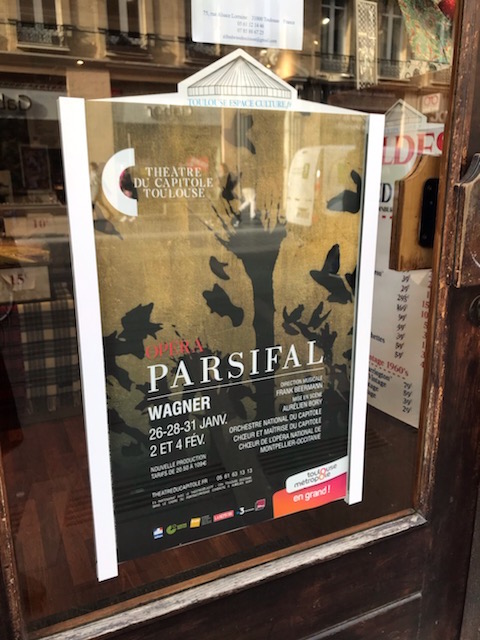
PARSIFAL, Theatre du Capitole, Toulouse, Janeiro / January 2020


Texto de wagner_fanatic

(review in English below)

Um Parsifal impressionante em Toulouse! 

A encenação de Aurélien Bory começa na abertura com um fundo em pano cinzento claro onde se projectam por trás, várias lâmpadas compridas florescentes / led tipo sabre da Guerra das Estrelas, que começam todas em fila indiana na horizontal e vão formando símbolos e letras ao longo da abertura (significado específico, se tinham, não captei) e terminando na mesma posição como começaram. No centro do palco uma estrutura rectangular tipo rede, 7 por 9 quadrados, com ramos de folhas entrelaçados e que tenta representar a floresta de Monsalvat.
Gurnemanz, os cavaleiros mais novos, Kundry vão-se elevando pelos quadrados e há um jogo de projecção de sombras numa tela posterior branca, côncava. A simulação da chegada de Kundry é com uma luz que se vai mexendo nesta estrutura e projectando o reflexo da folhagem na tela dando a noção da visão que Kundry teria ao se deslocar entre os ramos da Floresta. O bálsamo é uma bola com luz.
Quando chega Amfortas é transportado nos braços de vários homens com máscaras cirúrgicas dando aqui a noção indirecta de cuidadores médicos ao homem com a ferida. Nesta fase, a estrutura retangular já se elevou para trás e deixa Gurnemanz sentado e Amfortas com o seu monólogo nos braços dos homens. Com a saída de Amfortas, volta a baixar a estrutura retangular sobre as cabeças de Gurnemanz e cavaleiros mais novos, cada um ficando como que preso num destes quadrados que a formam.
A narração do Graal tem projecções posteriores na tela, da lança que é a tal luz que refiro na descrição da entrada. Quando há referências a Titurel este aparece vestido de branco e caminha ao longo da tela com um ramo de folhagem na mão, sobre um fundo de sombras da folhagem da floresta. Pouco antes do final da narração de Gurnemanz, Parsifal surge vestido de branco e traz numa mão um pequeno cisne e uma luz na outra e é ele próprio projecta a imagem do cisne na tela de fundo branco onde estão já as sombras dos ramos da floresta.
Quando a música sugere a morte do cisne, Parsifal faz cair o reflexo do cisne no chão e é agarrado e colocado no meio da estrutura rectangular. A projecção da sua sombra é agora o que se vê na tela, sombra enorme mas definida e que demonstra a sua importância nesta fase e, ao mesmo tempo, coloca-o como réu.
A acção desenvolve-se e a estrutura rectangular é retirada para cima não sem antes vários homens vestidos de negro, cada um deles, ficar com um ramo de folhagem em cada mão, deixando a estrutura completamente despida. Estes homens dividem-se em 3 grupos e cada grupo envolve Gurnemanz, Parsifal e Kundry, simulando-os envoltos no mistério da floresta de Monsalvat e estes a afastarem os ramos quando falam ou quando se movem, conseguindo-se assim manter de forma simples mas eficaz e não sem sentido, a noção do local original onde se encontram.
Quando Parsifal se sente a desmaiar ao saber que a sua Mãe morreu, a água que Kundry leva é feita pela projecção de luz de uma lanterna sobre as suas mãos e depois “derramada” sobre a cabeça de Parsifal.
Na cena da transformação, a estrutura rectangular fica vertical e na parte de trás do palco, simbolizando o castelo. Amfortas faz monólogo no mesmo tipo de apoio que já referi. O Graal surge como imagens de reflexo de luz na tela posterior após desaparecimento da estrutura rectangular por cima do palco.


O início do 2º acto volta a ver as projecções das lâmpadas compridas mas desta vez na vertical e central do palco. Ao subir a tela vemos um Klingsor vestido de branco, com capa, sentado com a lança na vertical à frente e agarrando-a com as 2 mãos. Só que a mão direita não é do Klingsor mas sim de um duplo deste que está por traz dele, vestido igual. No fundo, no que se desenvolve este duplo é na própria “mão direita” de Klingsor, dado que é ele que vagueia pelo palco, ficando Klingsor estático no centro, e enfeitiça Kundry e “activa” as mulheres flor agarrando-as, elevando-as pela cintura e abanando-as.
As mulheres flor tem vestidos corridos e véus que mais as fazem parecer cadáveres do que flores. Todo o dueto de Parsifal e Kundry é à frente de um paralelepípedo com as dimensões similares à grelha rectangular do 1º acto, ou seja, o símbolo do reverso do mundo do Graal que é o mundo criado por Klingsor. Este paralelepípedo vê impresso por detrás imagens de corpos desnudos de homens e mulheres, enquadrando assim o já sabido mundo carnal de Klingsor.
No 3º acto, não há lâmpadas como no início dos outros actos, mas sim várias sobras de homens com armadura e com lança, vagueando de um lado para o outro, em simbolização do à deriva de Parsifal até voltar a Monsalvat. Gurnemanz, que tal como os cavaleiros, está careca no 1º acto, aparece agora com cabelo, sendo o mesmo válido para os cavaleiros e Amfortas quando mais tarde aparecem. Parsifal, por sua vez, com cabelo no 1º acto e agora careca. O encenador, no meu entendimento, coloca aqui a noção de imortalidade dada pelo Graal, com o crescimento do cabelo a simbolizar o envelhecimento dos cavaleiros e de Amfortas por este não celebrar o ritual, ao passo que Parsifal, iluminado pela lança como extensão sagrada do Graal, atinge essa imortalidade.
Monsalvat é agora um ambiente de palco escuro, ficando novamente com uma estrutura geométrica quadrangular, feita por fios verticais com lampadas que se acendem e apagam em padrões ao longo do acto. A simbolização da água que lava os pés e a cabeça de Parsifal é feita novamente por uma luz de lanterna. Durante a final intervenção vocal de Parsifal, em vez do original toque da lança para curar a ferida de Amfortas (que aqui nunca se define, nunca se vê), este vai como que injectando em Amfortas várias lâmpadas compridas (= várias lanças) até Amfortas se tornar novamente são e caminhar pelo seu pé para fora de palco.
A lança extingue-se assim em Amfortas, Parsifal agarra do chão último um ramo da floresta original, que oferece a Amfortas mas este recusa, saindo de palco. Parece-me que assim se simboliza que agora é a ele que cabe renovar esta Monsalvat, “reflorestar” como estaria no passado (1º acto) mas que será muito mais forte. E sabemos que será mais forte porque desce uma estrutura em grelha do cimo do palco até à base, com alicerces muito mais espessos que a grelha do 1o acto, caindo sobre um Gurnemanz e uma Kundry que com lanternas acesas reforçam a ideia que se sente ao longo de toda a encenação - a luz como símbolo do Poder do Bem (o bálsamo que Kundry traz das Arábias é uma bola luminosa, a água que conforta o desfalecido Parsifal é a luz duma lanterna, a água que o lava antes do baptismo e a água que o baptiza é a luz de uma lanterna, a lança é uma lâmpada, o Graal é um reflexo de luz...) e que é com essa luz, esse poder, que se renovará Monsalvat e o Graal.

Chuva de “boos fáceis” para o encenador no final, altamente injusta, de uma plateia claramente inculta nesta obra, para uma encenação sem controvérsia, com sentido e, sendo diferente, mantendo-se mesmo assim fiel à original de Wagner.


A par com a encenação, o que mais me impressionou foi a Orquestra, dirigida por Frank Beermann. Esta produziu uma sonoridade e dramatismo do mais alto nível, conseguindo algo muitas vezes ausente e que é a clara definição de cada naipe e linha melódica (algumas por vezes abafadas em muitas produções), sem contudo se perder a noção do conjunto. Precisão e lirismo irrepreensíveis.

A expressividade facial e corporal quer de Peter Rose quer de Nikolai Schukoff foram impressionantes, com o baixo a produzir uma representação sólida de Gurnemanz, apesar de alguma bem disfarçada (com clarear de voz e alguns rebuçados mascados) menor saúde vocal muito possivelmente fruto da época invernal, e Schukoff a oferecer um Parsifal expressivo, bem transformado ao longo da récita e com um brilho e resistência vocal de excepção. Foi excelente a sua prestação corporal durante a narração de Kundry sobre a sua Mãe.
Não obstante, não posso deixar de achar que no dueto com Kundry no 2º acto faltou algo... não sei se foi a sua projecção forte, sem harmónicos mais graves, ou alguma linearidade de expressão vocal em algumas passagens mas faltou algo que me agarrasse à cadeira.


Sophie Koch começou sem deslumbrar muito no 1º acto e início do 2º mas abriu vocalmente para uma potente interpretação no dueto com Parsifal, embora com um ar matrona. Conseguiu-se notar algum nervosismo de 1ª vez no papel e por isso aqui estou a dar-lhe esse desconto mas acredito que possa triunfar neste papel com a experiência, tal como tem feito em muitos outros.


O lirismo de Matthias Goerne na sua 1ª intervenção foi sublime, progredindo para uma excelente oferta de contrastes expressivos no monólogo do 1º acto mas aqui pecando pelo facto de os harmónicos da voz serem muito baixos e por vezes como que metralhando o som vocal. No monólogo final voltou a oferecer contrastes vocais correctos para o texto mas um dos problemas é a tessitura da voz, que pelas suas características harmónicas graves, empobrecem e dificultam os agudos.


O Klingsor (Pierre-Yves Pruvot) posicionalmente muito estático, cumpriu com um timbre vocal muito bom.


O Titurel (Julien Veronèse)... perfeito!


Coros excelentes, embora tivesse gostado de ouvir uma maior distância dos coros fora de palco do 1º acto mas talvez não seja fisicamente possível de fazer neste teatro.


PARSIFAL, Theater du Capitol, Toulouse, January 2020

Text by Wagner_fanatic

An impressive Parsifal in Toulouse!

Aurélien Bory's direction begins at the opening with a background in light gray cloth where projecting from behind, several long blossoming lamps / led lights similar to Star Wars, which all start in single file horizontally and form symbols along opening (specific meaning, if they had, I didn't capture) and ending in the same position as they started. In the center of the stage a rectangular structure, 7 by 9 squares, with intertwined leaves and branches that tries to represent the Monsalvat forest.
Gurnemanz, the younger knights, Kundry rise up through the squares and there is a game of casting shadows on a white, concave rear screen. The simulation of Kundry's arrival is with a light that moves in this structure and projects the reflection of the foliage on the screen, giving the notion of the vision that Kundry would have when moving between the branches of the Forest. The balm is a ball with light.
When Amfortas arrives, he is transported in the arms of several men with surgical masks, giving here the indirect notion of medical caregivers to the man with the wound. At this stage, the rectangular structure has already risen behind and leaves Gurnemanz sitting and Amfortas with his monologue in the arms of men. With the departure of Amfortas, he lowered the rectangular structure over the heads of Gurnemanz and younger knights, each one as if trapped in one of these squares that form it.
The narration of the Grail has posterior projections on the screen, of the spear that is the light that I refer to in the description of the entrance. When there are references to Titurel, he appears dressed in white and walks along the screen with a branch of foliage in his hand, against a background of shadows from the forest's foliage. Shortly before the end of Gurnemanz's narration, Parsifal appears dressed in white and carries a small swan and a light in the other and is himself projecting the image of the swan on the white background canvas where the shadows of the branches of the forest are already.
When the music suggests the death of the swan, Parsifal causes the reflection of the swan to fall to the ground and is grabbed and placed in the middle of the rectangular structure. The projection of his shadow is now what is seen on the screen, a huge but defined shadow that demonstrates its importance at this stage and, at the same time, puts him as a defendant.
The action develops and the rectangular structure is lifted upwards without first having several men dressed in black, each of them, with a branch of foliage in each hand, leaving the structure completely naked. These men are divided into 3 groups and each group involves Gurnemanz, Parsifal and Kundry, simulating them wrapped in the mystery of the Monsalvat forest and these moving away from the branches when they speak or when they move, thus being able to keep it simple but effective and not meaningless, the notion of the original place where they are.
When Parsifal feels faint when he learns that his Mother has died, the water that Kundry takes is made by the projection of light from a lantern over his hands and then “poured” over Parsifal's head.
In the transformation scene, the rectangular structure is vertical and at the back of the stage, symbolizing the castle. Amfortas makes a monologue in the same type of support that I have already mentioned. The Grail appears as images of light reflection on the back screen after the rectangular structure above the stage disappears.
The beginning of the 2nd act sees the projections of the long lamps again but this time in the vertical and central stage. When we go up the screen we see a Klingsor dressed in white, with a cape, sitting with the spear vertically in front and grabbing it with both hands. Only the right hand is not from Klingsor, but from a double of the one behind him, dressed the same. Basically, as this double develops, it is in Klingsor's own “right hand”, since it is he who wanders around the stage, with Klingsor static in the center, and bewitches Kundry and “active” the flower women by grabbing them, raising them by the waist and fanning them.
Flower women have flowing dresses and veils that make them look more like corpses than flowers. The entire duet of Parsifal and Kundry is in front of a parallelepiped with dimensions similar to the rectangular grid of the 1st act, that is, the symbol of the reverse of the Grail world, which is the world created by Klingsor. This parallelepiped sees printed behind images of naked bodies of men and women, thus framing Klingsor's already known carnal world.
In the 3rd act, there are no lamps as at the beginning of the other acts, but several leftover men with armor and spear, wandering from side to side, symbolizing the drifting of Parsifal until returning to Monsalvat. Gurnemanz, who like the knights, is bald in the first act, now appears with hair, the same being valid for the knights and Amfortas when they later appear. Parsifal, in turn, with hair in the first act is now bald. The director, in my understanding, puts here the notion of immortality given by the Grail, with the growth of the hair symbolizing the aging of the knights and Amfortas for not celebrating the ritual, whereas Parsifal, illuminated by the spear as a sacred extension of the Grail, reaches that immortality.
Monsalvat is now a dark stage environment, again having a quadrangular geometric structure, made by vertical wires with lamps that turn on and off in patterns throughout the act. The symbolization of the water that washes Parsifal's feet and head is done again by a flashlight. During the final vocal intervention by Parsifal, instead of the original touch of the spear to heal Amfortas' wound (which is never defined here, you never see it), he goes as if injecting several long lamps (= several spears) into Amfortas to Amfortas become healthy again and walk your foot off the stage.
The spear is thus extinguished in Amfortas, Parsifal grabs a branch of the original forest, which he offers to Amfortas but he refuses, leaving the stage. It seems to me that it is symbolized that now it is up to him to renew this Monsalvat, to “reforest” as it would have been in the past (1st act) but that it will be much stronger. And we know it will be stronger because it descends a grid structure from the top of the stage to the base, with foundations much thicker than the grid of the 1st act, falling on a Gurnemanz and a Kundry that with lit lanterns reinforce the idea that one feels when throughout the performance - the light as a symbol of the Power of Good (the balm that Kundry brings from Arabia is a luminous ball, the water that comforts the faint Parsifal is the light of a lantern, the water that washes it before the baptism and the water that baptizes him is the light of a lantern, the spear is a lamp, the Grail is a reflection of light ...) and it is with this light, this power, that Monsalvat and the Grail will be renewed.

A lot of “easy boos” for the director in the end, highly unfair, from a clearly uncultured audience in this opera, to a staging without controversy, with meaning and, being different, while remaining faithful to Wagner's original.

Along with the staging, what impressed me most was the Orchestra, conducted by Frank Beermann. They produced a sound and drama of the highest level, achieving something often missing and that is the clear definition of each suit and melodic line (sometimes muffled in many productions), without however losing track of the ensemble. Flawless accuracy and lyricism.

The facial and body expressiveness of both Peter Rose and Nikolai Schukoff were impressive, with the bass producing a solid representation of Gurnemanz, although some well disguised (with lightening of the voice and some chewy candies) lower vocal health quite possibly a result of the season winter, and Schukoff to offer an expressive Parsifal, well transformed throughout the performance and with exceptional shine and vocal resistance. His bodily performance was excellent during Kundry's narration about his mother.
Nevertheless, I cannot help thinking that in the duet with Kundry in the 2nd act something was missing ... I don't know if it was his strong projection, without more low harmonics, or some linear expression in some passages but something that grabbed me was missing the chair.

Sophie Koch started without dazzling much in the 1st act and beginning of the 2nd but opened up vocally for a powerful interpretation in the duet with Parsifal, although with a matronly air. It was possible to notice some nervousness from the first time on the role and that is why here I am giving her this discount but I believe she can triumph in this role with experience, as she has done in many others.

The lyricism of Matthias Goerne in his 1st intervention was sublime, progressing to an excellent offer of expressive contrasts in the monologue of the 1st act, but here sinning because the harmonics of the voice are very low and sometimes as if subtracting the vocal sound. In the final monologue he again offered correct vocal contrasts for the text, but one of the problems is the weaving of the voice, which, due to its low harmonic characteristics, impoverishes and makes the top notes difficult.

Klingsor (Pierre-Yves Pruvot) positionally very static, fulfilled with a very good vocal timbre.

Titurel (Julien Veronèse) ... perfect!

Excellent choirs, although I would have liked to hear a greater distance from the choirs offstage of the 1st act but it may not be physically possible to do in this theater.