Mostrar mensagens com a etiqueta Vittorio Grigolo. Mostrar todas as mensagens

sábado, 19 de outubro de 2019

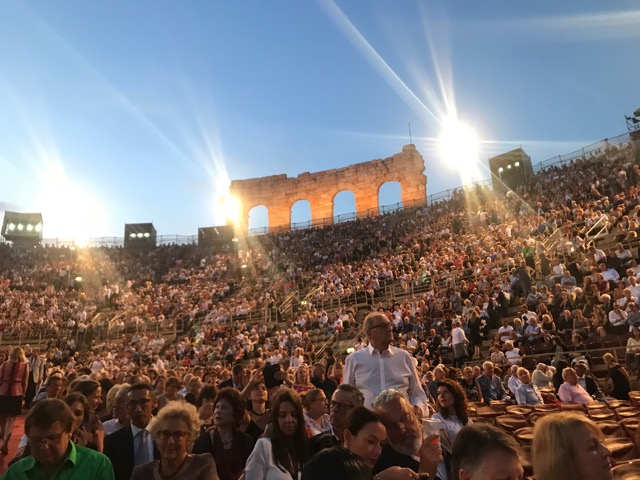
LA TRAVIATA, Arena di Verona, Agosto / August 2019


(text in English below)

Texto de wagner_fanatic

Leo Nucci volta a trazer-me à Arena de Verona. No ano passado, com o seu Barbeiro de Sevilha, a noite foi especial, não só pela mais que provável derradeira vez de o ouvir neste papel, mas também porque era a minha estreia na Arena.


Este ano, foi diferente e acho que até mais especial. No ano da morte de Franco Zeffirelli, a sua última encenação, esta La Traviata, era motivo que chegasse para a honra de a ela assistir ao vivo. Mas a isto juntava-se Leo Nucci, superlativamente acompanhado por Lisette Oropesa e Vittorio Grigolo.


Leo Nucci continua a ser um fenómeno de longevidade, uma lenda viva, um Senhor da Ópera italiana. A voz precisa de uns minutos para abrir mas é só isso. Depois, mantém-se igual no tempo, agora, principalmente quando o ambiente lhe é propício (e o da Arena assim o é), a elevar-se ainda mais, a modular as frases numa interpretação que já confunde a personagem com o homem e cantor.  Um dueto de Senhor com Violetta, um Di Provenza lírico e sentido, e um final de segundo acto marcante!




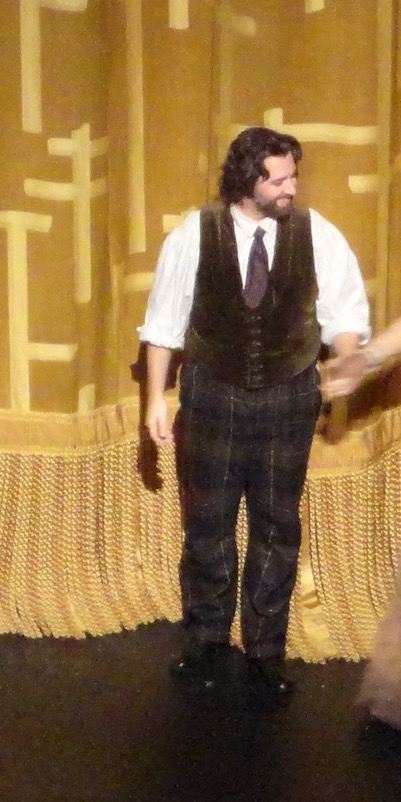
De Vittorio Grigolo já todos conhecemos o seu histerionismo quer físico quer vocal... embora por vezes a exceder-se e a roçar um pouco o ridículo interpretativo, o que é certo é que, tirando estes poucos momentos, não deve haver cantor que consiga exprimir-se de forma tão apaixonante. E é pena que tão poucos o consigam a este nível. O início do segundo acto foi um desses momentos em que Grigolo, ao cantar/interpretar, quase que parece estar a ter uma relação de índole sexual com a partitura. O Ogni suo aver tal femmina foi brutal, contrastando emotivamente com o arrependimento que se segue. Um dos maiores momentos da noite, claramente!


Lisette Oropesa é um fenómeno! A voz é linda, boa projeção, agudos impecáveis e uma evolução interpretativa da Violetta de qualidade muito rara!


Daniel Oren é um maestro incrível! As caras que faz como que demenciado ou em estado pós-AVC, os gestos emotivos que vão muito além da mera agitação de batuta, os grunhidos de paixão, o falar com a orquestra no meio da ópera (gritou bem alto stacatto para as cordas porque não estavam a fazer devidamente) e o agradecer com a imagem de marca dos braços este estendidos são um espetáculo fora da ópera mas... dentro dela.


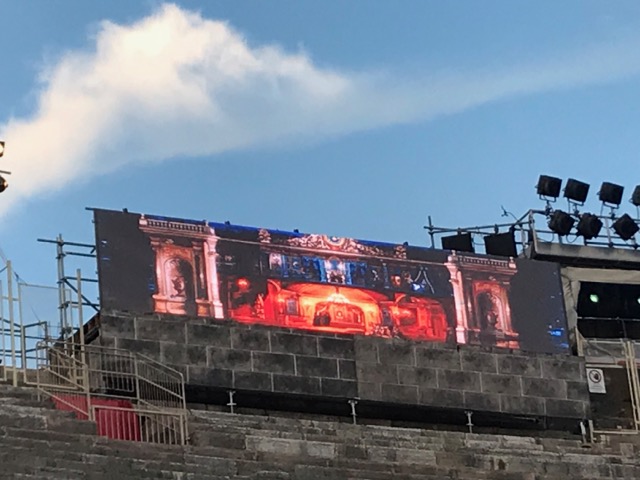
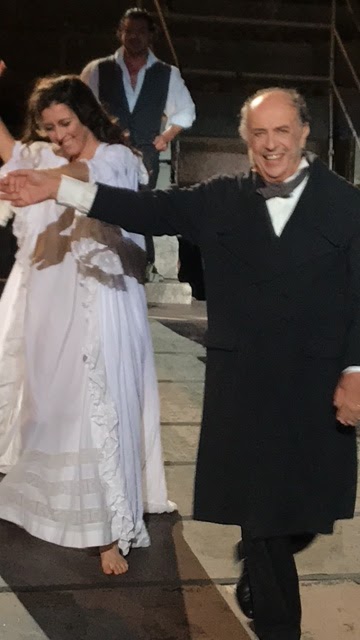
Zeffirelli foi recordado no final com foto nos écrans das legendas, seguido de repetição do Libiamo ne’lieti calici em ambiente de festa e Oren a dirigir do palco e a interagir com os cantores. No final, o agradecer especial junto das bancadas, com um efusivo Grigolo a puxar por todos e um muito bem merecido apoio motivacional de Nucci a Oropesa. São assim os grandes artistas. A Arena é um espaço diferente, mágico, e sempre que nela se entra, na sua magnitude e imponência, faz-nos sentir aconchegados, por incrível que possa parecer. É o aconchego da ópera, o calor de quem a preenche e o espírito da sua história.


LA TRAVIATA, Arena of Verona, August 2019

Text by Wagner_fanatic.

Leo Nucci brings me back to the Arena di Verona. Last year with his Barber of Seville, the evening was special, not only for the most likely last time to hear him in this role, but also because it was my Arena debut.

This year was different and I think even more special. In the year of Franco Zeffirelli's death, his last performance, this La Traviata, was reason enough for the honor of watching it live. But to this was added Leo Nucci, superlatively accompanied by Lisette Oropesa and Vittorio Grigolo.

Leo Nucci remains a phenomenon of longevity, a living legend, an Italian Opera Lord. The voice needs a few minutes to open but that's all. Then he stays the same in time now, especially when the atmosphere is right for him (and the Arena's is), to rise even higher, to modulate the phrases into an interpretation that confuses the character with the man and singer. A duet with Violetta, a lyrical and meaningful Di Provenza, and a remarkable second act ending!

From Vittorio Grigolo we all know his hysterionism, both physical and vocal... although sometimes he goes overboard and touches a little the ridiculous interpretation, which is certain that, apart from these few moments, there should be no singer who can express himself so passionately. And it is a pity that so few get it on this level. The beginning of the second act was one of those moments when Grigolo singing / performing, almost seemed to be having a sexual relationship with the score. The Ogni suo aver tal femmina was brutal, contrasting emotionally with the ensuing regret. One of the biggest moments of the night, clearly!

Lisette Oropesa is a phenomenon! The voice is beautiful, good projection, impeccable top notes and a very rare quality interpretative evolution of Violetta!

Daniel Oren is an amazing conductor! The faces he makes as if demented or post-stroke, the emotional gestures that go far beyond mere baton shaking, the passionate grunts, the talking to the orchestra in the middle of the opera (shouted loudly stacatto to the strings because they weren't doing it properly) and thanking him with the brand image of his outstretched arms is a sight outside the opera but ... inside it.

Zeffirelli was remembered at the end with a photo on the screen of the subtitles, followed by a repeat of Libiamo ne'lieti calici in a party atmosphere and Oren directing the stage and interacting with the singers. In the end, special thanks to the stands, with an effusive Grigolo pulling everyone and a well-deserved motivational support from Nucci to Oropesa. These are the great artists. The Arena is a different, magical space, and whenever you enter it, in its magnitude and grandeur, it makes us feel cozy, incredible as it may seem. It is the warmth of the opera, the warmth of its filler and the spirit of its history.

sexta-feira, 31 de maio de 2019

RIGOLETTO, METropolitan Opera, Fevereiro / February, 2019


(review in English below)

O Rigoletto de Verdi foi mais uma vez reposto na Metropolitan Opera de Nova Iorque na encenação vistosa e diferente de Michael Mayer, já comentada várias vezes neste blogue.


A acção, trazida para os anos 60 da década passada em Las Vegas, é passada em casinos e outras casas de diversão. O Duque é dono e entertainer de um casino, Rigoletto um comediante. O Monterone é um árabe que, ao ser preso, lança a maldição. A casa onde mantém a filha Gilda é num 5º andar, acessível por um elevador na parte lateral do palco. O rapto da Gilda é feito pelos empregados do Duque, depois de subornarem a empregada Giovanna. No final a casa do Sparafucile, assassino profissional, é um clube de striptease. Gilda após ser ferida mortalmente, é colocada no porta bagagens de um carro da época.


Uma nota breve sobre os artistas principais desta reposição:

O maestro Nicola Luisotti foi convencional e proporcionou-nos uma boa récita.


O barítono italiano Roberto Frontali foi um Rigoletto aceitável, sem grande brilho nem marcada emotividade. A voz é agradável. Atravessamos um período de grande escassez de bons barítonos verdianos.


Gilda foi interpretada pela soprano norte-americana Nadine Sierra. Tem uma voz aparentemente pequena mas vai a todas as notas com qualidade e afinação. O timbre é agradável. A interpretação foi contida.


O tenor italiano Vittorio Grigolo interpretou o  Duque de Mantua no seu estilo exuberante. Vocalmente esteve bem, ouviu-se sempre acima da orquestra e foi muito ágil em palco.


A mezzo romena Ramona Zaharia foi uma Maddalena que cumpriu sem deslumbrar.


Fantástico foi o baixo eslovaco Stefan Kocán como Sparafucille, papel que canta frequentemente. O registo mais grave é impressionante. Foi um dos melhores da noite.


Uma nota final para o baixo canadiano Robert Pomakov (Monterone) e para a mezzo norte-americana Jeniffer Roderer (Giovanna) que cumpriram bem as suas curtas intervenções.


***


RIGOLETTO, METropolitan Opera, February, 2019

Verdi's Rigoletto was once again put up at the Metropolitan Opera in New York in the showy and unconventional Michael Mayer’s direction, already commented several times on this blog.

The action, brought to the 60's of the last decade in Las Vegas, is spent in casinos and other similar houses. The Duke owns and is entertainer of a casino, Rigoletto a comedian. Monterone is an Arab who, when arrested, casts the curse. The house where her daughter Gilda is kept is on the 5th floor, accessible by an elevator on the side of the stage. The abduction of Gilda is done by the Duke's employees, after bribing the maid Giovanna. In the end Sparafucile's house, a professional killer, is a strip club. Gilda, after being mortally wounded, is placed in the luggage compartment of a car of the time.

A brief note on the main artists of this reposition: Maestro Nicola Luisotti was conventional and gave us a good orchestral performance.

Italian baritone Roberto Frontali was an acceptable Rigoletto, without great brilliance or marked emotion. The voice is pleasant. We have gone through a period of great shortage of good Verdian baritones.

Gilda was performed by American soprano Nadine Sierra. She has a seemingly small voice but reaches all top notes with quality and tuning. The timbre is pleasant. The interpretation was contained.

Italian tenor Vittorio Grigolo interpreted the Duke of Mantua in his exuberant style. Vocally he was well, always heard above the orchestra and was very agile on stage.

Romanian mezzo Ramona Zaharia was a Maddalena who was just ok.

Slovakian bass Stefan Kocán was fabulous as Sparafucille, a role he often sings. His lower record is impressive. he was one of the best of the night.

A final note for Canadian bass Robert Pomakov (Monterone) and American mezzo Jeniffer Roderer (Giovanna) who sung well their short interventions.

***

segunda-feira, 17 de dezembro de 2018

LA BOHÈME, METropolitan Opera, Outubro / October 2018


(review in English below)

A produção de La Bohème de Puccini na Metropolitan Opera é ainda a de Franco Zeffirelli. É muito bonita, tem um 2º acto monumental bem ao gosto americano e vê-se sempre com muito agrado. Já foi várias vezes comentada neste blogue.


O maestro foi um estreante norte americano, James Gaffigan, que cumpriu com muita qualidade. Orquestra excelente, coro impecável e solistas sempre audíveis.


No papel principal outra estreante, a soprano australiana Nicole Car que fez uma Mimì de grande qualidade. A cantora tem uma boa figura para a personagem. A voz é bonita, cristalina, bem audível (embora no início se tenha poupado um pouco) e, nos actos finais, foi excelente.


O tenor Vitorio Grigolo foi um Rodolfo ágil, apaixonado, apreensivo e, no final, desesperado. Tem uma forma de cantar muito peculiar e eficaz, a voz está cada vez maior e o timbre é muito agradável.


Musetta foi interpretada pela soprano Angel Blue que foi vocalmente correcta e cenicamente eficaz.


Outra estreia foi o barítono Etienne Dupuis que fez um Marcello muito humano e vocalmente marcante. Tem uma voz limpa, bonita e afinada.


Também estiveram bem Davide Luciano como Schaunard, Matthew Rose como Colline (a ária Vecchia zimarra senti foi excelente) e Donald Maxwell como Benoit / Alcindoro.


****


LA BOHÈME, METropolitan Opera, October 2018

The production of Puccini’s La Bohème at the Metropolitan Opera is still that of Franco Zeffirelli. It is very beautiful, has a monumental 2nd act well to the American likes and is always seen with great pleasure. It has been commented on this blog several times.

The conductor was an American newcomer, James Gaffigan, who directed with great quality. Excellent orchestra, impeccable choir and always audible soloists.

In the main role another debutant, Australian soprano Nicole Car that was a Mimì of great quality. The singer has a good figure for the character. The voice is beautiful and crystal clear (although at first she was spared a little). In the final acts, she was excellent.

Tenor Vitorio Grigolo was an agile Rodolfo, passionate, apprehensive and, in the end, desperate. He has a very peculiar and effective way of singing, the voice is increasing in size and the timbre is very pleasant.

Musetta was performed by soprano Angel Blue who was vocally correct and effective on stage.

Another debut was baritone Etienne Dupuis who made a very credible Marcello with great vocal quality. He has a beautiful tuned voice.

Also well were Davide Luciano as Schaunard, Matthew Rose as Colline (the aria Vecchia zimarra senti was excellent) and Donald Maxwell as Benoit / Alcindoro.

****