Mostrar mensagens com a etiqueta Aida. Mostrar todas as mensagens

segunda-feira, 16 de janeiro de 2023

AIDA, METropolitan OPERA, Dezembro / December 2022

(Review in English below)

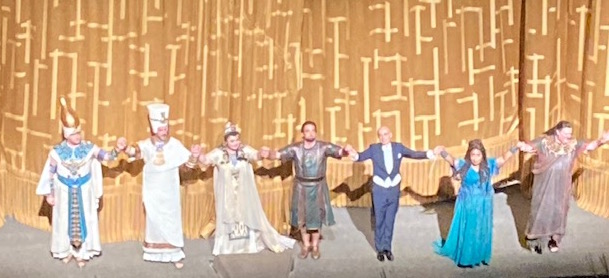
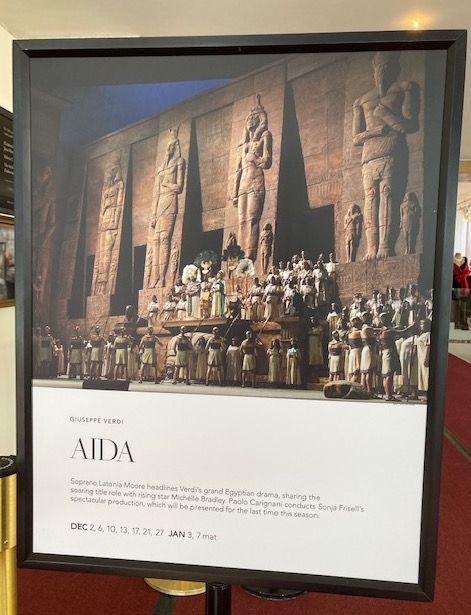
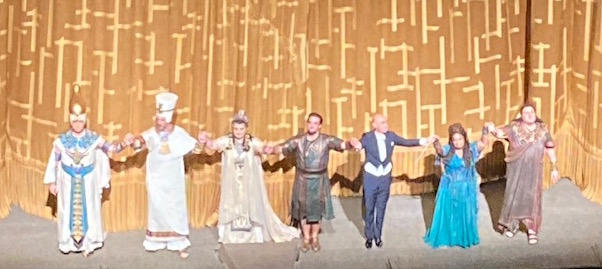
É a última vez que a monumental encenação clássica da Aida, de Sonja Frisell, estará em cena na Metropolitan Opera. É uma produção grandiosa, que ilustra como nenhuma outra o significado de “grande ópera” que, embora datada, tem cenários sumptuosos, muitos elevadores, centenas de elementos em palco incluindo cavalos que, nesta noite, um deles quase destruiu uma parte do cenário mas conseguiu, a custo, ser controlado. É um contraste absoluto com a encenação deplorável que vi há poucos meses em Londres.


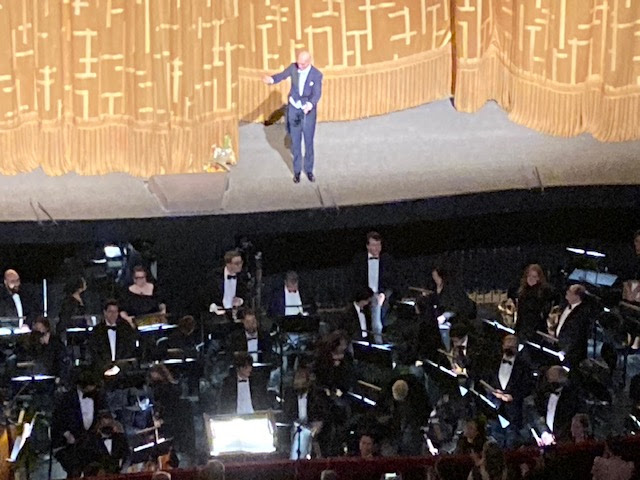
O maestro foi Paolo Carignani e a Orquestra e o Coro tiveram interpretações excelentes. A ópera presta-se a isso.

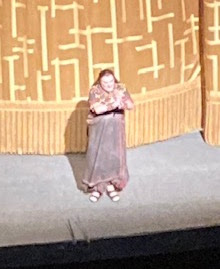
De entre os solistas, algumas diferenças qualitativas. Começando pelos melhores, brilhou a mezzo Olesya Petrova que foi uma Amneris de excelência. Voz poderosa, registo grave impressionante e sempre afinada.

Também o Radamés de Brian Jadge esteve ao mais alto nível, tanto na interpretação vocal como cénica. Muito bom.


Os baixos Alexandros Stavrakakis (Rei) e, sobretudo, Christian Van Horn (Ramfis) também marcaram muito positivamente as suas interpretações vocais.  


O barítono George Granitze fez um Amonastro algo estático mas muito bem no canto, sempre correcto e bem audível.

A grande decepção foi a Aida de Latonia Moore. Em cena foi muito estática e no canto esteve muito abaixo do desejável. Cantou alto, foi bem audível, mas a Aida é muito mais que potência vocal. Falhou várias notas, foi pouco expressiva e a aria principal do 3º acto foi um desastre, sobretudo no (ausente) registo agudo! Como cantora “da casa” foi muito aplaudida, mas esperava-se muito melhor!


Com outra Aida teria sido um espctáculo próximo da perfeição.


****

AIDA, MEtropolitan OPERA, December 2022

It is the last time that Sonja Frisell's monumental classic production of Aida will be staged at the Metropolitan Opera. It is a grandiose production, illustrating like no other the meaning of “grand opera” which, although dated, has sumptuous sets, many elevators, hundreds of elements on stage including horses. Tonight one of them almost destroyed part of the set but managed, with difficulty, to be controlled. It is an absolute contrast to the deplorable staging I saw in London a few months ago.

The maestro was Paolo Carignani and the Orchestra and Chorus had excellent performances. Opera lends itself to this.

Among the soloists, some qualitative differences. Starting with the best, mezzo Olesya Petrova was an Amneris of excellence. Powerful voice, impressive bass register and always in tune.

Brian Jadge's Radamés was also at the highest level, both in vocal and scenic interpretation. Very good.

Bass Alexandros Stavrakakis (King) and, above all, Christian Van Horn (Ramfis) also marked their vocal interpretations very positively.

The baritone George Granitze made an Amonastro somewhat static but very good in the singing, always correct and very audible.

The big disappointment was Latonia Moore's Aida. On stage she was very static and in the singing she was far below desirable. She sang loudly, it was very audible, but Aida is much more than vocal power. She missed several notes, was not very expressive and the main aria of the 3rd act was a disaster, especially in the (absent) high register! As a “house” singer, she was highly applauded, but much better should be expected!

With a different Aida it would have been a performance close to perfection.


****

quinta-feira, 29 de setembro de 2022

AIDA, Royal Opera House, Londres, Setembro / September 2022


(review in English below)

A nova produção da Royal Opera House da Aida de Verdi foi entregue a Robert Karsen. Não há qualquer semelhança com o enquadramento original. O Egipto e a Etiópia foram esquecidos e tudo se passa num bunker militar cinzento de um País sob uma ditadura militar. Embora a produção tenha sido concebida antes da pandemia e da guerra na Ucrânia, ganha alguma actualidade pois poderia passar-se na Coreia do Norte ou mesmo na Rússia. Toda a espectacularidade habitual da ópera não existe.

As cenas passam-se todas nesse cenário muito cinzento, onde apenas há as cores azul e vermelha (com a estrela comunista) de bandeiras do País imaginado. Os protagonistas são militares de variadas patentes e o coro são soldados. Numa das grandes cenas de bailado este é substituído por um conjunto de empregadas domésticas a pôr uma enorme mesa, sob supervisão militar e a outra é dançada pelos soldados que exibem as suas capacidades militares. 


A marcha triunfal do 2º acto começa com uma série de caixões cobertos pela bandeira, o 3º acto passa-se à volta do que seria um túmulo de um soldado desconhecido e a cena final num depósito de mísseis.

A direcção musical de Antonio Pappano foi excelente e a orquestra esteve ao mais alto nível. 

O Coro foi talvez o melhor de todo o espectáculo e, no primeiro acto, os elementos cantando em pianíssimo, armados de metralhadoras e sentados como se numa igreja estivessem, foi sublime!

A soprano Elena Stikhina foi uma Aida notável, voz bonita, emotiva, bem audível e excelente presença em palco.


Agnieszka Rehlis foi uma Amneris algo contida, o seu mezzo não tem o poderio habitual nas interpretações desta personagem, mas cantou em crescendo e no final esteve bastante bem, apesar de a encenação não ajudar.

O tenor Francesco Meli foi um Radames fantástico. Sempre afinado, embora cantando aparentemente no limite em algumas vezes, nunca desafinou e transmitiu todas as emoções que se esperam do personagem. 


O Amonastro do barítono Ludovic Tézier não me surpreendeu porque sempre que ouvi este cantou, fiquei muito bem impressionado. Foi marcante, sobretudo no diálogo com a Aida no 3º acto.


Fabuloso foi o baixo Solomon Howard, talvez o melhor solista da noite, com uma interpretação magistral do Sumo Sacerdote Ramfis. 


In Sung Sim foi um Rei do Egipto desinteressante, mas o papel é muito pequeno.


(equipa de produção)

Um espectáculo musicalmente superior numa encenação cinzenta e algo monótona.


****


AIDA, Royal Opera House, London, September 2022

The new Royal Opera House production of Verdi's Aida was handed over to Robert Karsen. There is no resemblance to the original opera. Egypt and Ethiopia have been forgotten and everything takes place in a gray military bunker in a country under a military dictatorship. Although the production was conceived before the pandemic and the war in Ukraine, it gains relevance as it could take place in North Korea or even Russia. All the usual spectacularity of opera does not exist.

The scenes all take place in this very gray setting, where there are only the blue and red colors (with the communist star) of flags of the imaginary country. The soloists are soldiers of different ranks and the choir are soldiers. In one of the great ballet scenes, this is replaced by a group of maids setting a huge table, under military supervision, and the other is danced by soldiers displaying their military skills. The 2nd act's triumphal march begins with a series of flag-draped coffins, the 3rd act takes place around what would have been a tomb of an unknown soldier and the final scene in a missile depot.

Antonio Pappano's musical direction was excellent and the orchestra was at the highest level. The Choir was perhaps the best of the whole show and, in the first act, the elements singing in pianissimi, armed with machine guns and seated as if they were in a church, was sublime!

Soprano Elena Stikhina was a remarkable Aida, with a beautiful, emotional, well-audible voice and excellent stage presence.

Agnieszka Rehlis was a somewhat restrained Amneris, her mezzo doesn't have the usual power in the interpretations of this character, but she sang in crescendo and in the end she was quite good, although the staging didn't help.

Tenor Francesco Meli was a fantastic Radames. Always in tune, although singing seemingly on edge at times, he never went out of tune and conveyed all the emotions one would expect from the character.

Baritone Ludovic Tézier's Amonastro did not surprise me because whenever I heard him sing, I was very impressed. He was remarkable, especially in the dialogue with Aida in the 3rd act.

Fabulous was the bass Solomon Howard, perhaps the best soloist of the night, with a masterful interpretation by High Priest Ramfis.

In Sung Sim was an uninteresting King of Egypt, but the role is very small.

A musically superior show in a gray and somewhat monotonous staging.

****

quinta-feira, 11 de outubro de 2018

AIDA, METropolitan Opera, Outubro / October 2018


 (review in English below)

A Aida de Verdi tem na encenação da Metropolitan Opera, da autoria de Sonja Frisell, adaptada por Stephen Pickover, um dos espectáculos mais imponentes que se pode ver em ópera nos dias de hoje. A acção passa-se no Egipto dos faraós e a riqueza e diversidade da encenação são impressionantes. Para quem nunca viu ópera, este será um excelente espectáculo para começar. Os motivos egípcios da época estão sempre presentes nos cenários grandiosos, nos intervenientes e nos adereços, culminando no final do 2º acto com cavalos e mais de cem pessoas em palco. Só não se percebe por que razão as estátuas apresentam tantos sinais de desgaste, dada a época em que a ópera ocorre.


O maestro Nicola Luisotti teve uma boa direcção da Orquestra e Coro da Metropolitan Opera e respeitou os cantores, que se ouviram sempre.


A Aida de Anna Netrebko foi colossal! Já não tenho palavras para elogiar esta cantora de excepção. Tudo nela é perfeito, a representação cénica, a voz de timbre maravilhoso, actualmente muito mais encorpada, mantendo agudos fabulosos e transmitindo aquela sensação deliciosa que, por mais alto que cante, nunca grita. Sim, no reportório não wagneriano há a Netrebko e as outras sopranos.


Outra intérprete fabulosa foi a mezzo Anita Rachvelishvili como Amneris. Que voz! Uma extensão invejável, afinada em todos os registos, com graves de fazer tremer o chão. No último acto, onde a sua participação é mais relevante, foi de cortar a respiração.


O Amonastro do barítono Quinn Kelsey também esteve ao melhor nível, é um cantor que nunca desilude, com voz potente, bem colocada e de timbre muito agradável.


Os dois baixos tiveram interpretações excelentes, Dmitry Belosselskiy como Ramfis e Ryan Speedo Green como rei. Apesar de terem papéis mais curtos, na qualidade estiveram ao nível dos solistas principais.


Deixo para o fim o tenor Aleksandrs Antonenko que interpretou o Radames. Não foi mau, foi péssimo! É um cantor que tem um timbre excessivamente nasalado de que nunca gostei e sempre tive dificuldade em compreender por que razão é convidado para as grandes catedrais da ópera. Nesta récita nada se aproveitou. Esteve muito mal, com vibrato excessivo, um timbre feio e foi quase sempre estridente porque gritou em vez de cantar. Cenicamente um mono sem emoções. E teve a ousadia de se fazer aos aplausos (comportamento já menos vezes visto na actualidade) no final da ária de abertura Celeste Aida. Nos duetos com a Netrebko ou com a Rachvelishvili o contraste foi chocante.


Termino referindo que a perfeição em ópera existe, mas é muito rara. Nesta récita estariam reunidas todas as condições para que ela acontecesse, não fosse a presença do Antonenko! 


****


AIDA, METropolitan Opera, October 2018

Verdi's Aida in the staging of the Metropolitan Opera, by Sonja Frisell, adapted by Stephen Pickover, is one of the most impressive shows that can be seen in opera nowadays. The action takes place in Egypt of the pharaohs and the richness and diversity of the staging is impressive. For those who have never seen opera, this will be a great opera to start with. The Egyptian motifs of the time are always present in the grandiose settings, the actors and the props, culminating at the end of the 2nd act with horses and more than one hundred people on stage. I only do not understand why the statues present so many signs of wear, given the time when the opera takes place.

Maestro Nicola Luisotti had a good direction of the Orchestra and Choir of the Metropolitan Opera and respected the singers, who could be always heard.

Anna Netrebko's Aida was colossal! I no longer have words to praise this exceptional singer. Everything is perfect, the scenic representation, the wonderful timbre of the voice, now much more full-bodied, maintaining fabulous pop notes and conveying that delicious sensation that, no matter how loud you sing, never screams. Yes, in the non Wagnerian repertoire there is Netrebko and the other sopranos.

Another fabulous interpreter was mezzo Anita Rachvelishvili as Amneris. What a voice! An enviable extension, tuned in all registers, with a low register to make the floor shake. In the last act, where her participation is most relevant, she was breathtaking.

Baritone Quinn Kelsey as Amonastro was also at the top level, a singer who never disappoints, with a powerful voice, well tuned and with a very pleasant tone.

The two basses had excellent performances, Dmitry Belosselskiy as Ramfis and Ryan Speedo Green as king. Although they had shorter roles, in quality they were at the level of the main soloists.

I leave to the end tenor Aleksandrs Antonenko who played Radames. He was not bad, he sucked! He is a singer who has an excessively nasal timbre that I have never liked and I have always found it difficult to understand why he is invited to the great opera cathedrals. In this performance nothing was taken advantage of. He was very bad, with excessive vibrato, an ugly timbre and was almost always strident because he shouted instead of singing. On stage, like a statue without emotions. And he had the audacity to ask for the applause (a behavior already less seen today) at the end of the opening aria Celeste Aida. In the duets with Netrebko or with Rachvelishvili the contrast was shocking.

I will conclude by saying that perfection in opera exists, but it is very rare. This performance would meet all the conditions for it to happen, but Antonenko's presence did not permit it! But it still deserves the highest rating for the two female interpretations of another world, for the excellent performances of the baritone and the basses, the orchestra and choir, and the staging.

****