Mostrar mensagens com a etiqueta Ólafur Sigurdarson. Mostrar todas as mensagens

sábado, 3 de setembro de 2022

TANNHÄUSER, Festival de Bayreuth / Bayreuth Festspiele, Agosto / August 2022

(Review in English below)

Tannhäuser espectacular!! É uma das maiores encenações Wagnerianas de sempre, por Tobias Kratzer! A maneira como a partir do meio a ação que no fundo é como se fosse a ópera a decorrer, se quebra e começa a entrar a realidade paralela criada pelo encenador e se misturam, é de uma genialidade que não é deste mundo! A maneira como o Tannhäuser cede à sua paixão carnal venusiana passando para fora do rectângulo luminoso que é o palco da ópera e depois aí vai vivendo a sua angustia em palco entre ambas as realidades (paixão carnal mas também o seu amor profundo a Elisabeth) voltando depois por fim a entrar de novo no rectângulo luminoso, deixando para trás Vénus, é forte, muito forte, como momento de teatro.

No vídeo original de 2019 a parte inicial tem muito tempo de vistas da carrinha da Vénus a andar em estrada com arvoredo à volta. Hoje cortaram algum desse tempo e introduziram uma piada genial: vê-se a carrinha chegar ao Festival de Salzburgo, com imagem a partir de dentro e depois vista por fora. No tablier sempre houve uma mão com o 3º dedo estendido ligada por mola de modo a que sempre que a carrinha se move, a mão move-se e dá a sensação que está sempre a fazer o sinal do dedo para todo o lado. Aqui vê-se a chegar ao Festival de Salzburgo (não sendo necessariamente um verdadeiro concorrente ou rival do Festival de Bayreuth, é-o um bocadinho porque são talvez os 2 festivais líricos de verão mais famosos) com o dedo a balouçar a mandar o Festival de Salzburgo para … :) O anão sai da carrinha, olha para um mapa dando-lhe umas voltas nas mãos e depois lê-se nos lábios a dizer Scheisse e volta a entrar com a Vénus para a carrinha e partem dali. Muito bom :) Contudo, no seguimento do vídeo, não tem assim tanto sentido porque a Vénus só vai para a zona do Festival de Bayreuth.

No segundo acto, quando o anão e o Gateau estão dentro dos bastidores do festival, passam pelo corredor que tem as fotos dos maestros que já dirigiram em Bayreuth. No original de 2019 o Gateau fazia olhinhos à foto do Thielemann, desta vez o anão cola um coração com as cores da Ucrânia na foto da Oksana Lyniv. Os peregrinos do 3º acto podem ser presos que saíram da prisão para dar uniformidade à encenação. Todos acabam por levar artigos do ferro velho onde está estacionada a carrinha da Vénus. Acho que isso simboliza uma nova vida, a vida depois do encarceramento, tal como uma segunda vida que alguns materiais de ferro velho têm por si.

A Orquestra, dirigida por Alex Kober foi fenomenal, acho que ouvi linhas melódicas a que ainda não tinha dado atenção, e a harpa em palco divinal.


O Stephen Gould está vocal e cenicamente bombástico!!! No 3º acto só não foi espectacular porque a interacção entre Tannhäuser e o Wolfram (e depois também a narração de Roma), apesar de ambos terem estado vocalmente de topo, foram dramaticamente menos convincentes, embora aqui, o Gould tenha levado a melhor. Fez alguma saídas de elevadíssima qualidade mas pecou noutras onde podia ter dado mais naturalidade e veracidade emotiva.


A Ekaterina Gubanova (Venus) está brutal, irrepreensível em toda a sua participação. 


O lirismo e clareza de voz do Markus Eiche (Wolfram) foram divinais. Esteve também bastante bem nos monólogos no 3º acto.


O solo (curto mas uma das passagens mais líricas e bonitas desta ópera) do Attilio Glaser que faz de Walther von der Wogelweide foi de uma beleza ímpar. 

Lise Davidsen (Elisabeth) fenomenal, a controlar a potência dos agudos excelentemente e com os pianos e transições lindas. Toda a cena desde a altura em que a Elisabete diz para todos deixarem o Tannhäuser em paz porque não são eles que o vão julgar foi de uma perfeição, dramatismo e lirismo de perfurar a alma! O Gould parecia que esta era a última vez que cantava isto. Os seu pedidos de salvação foram de uma potência e de um sentido dramático como nunca o ouvi fazer.
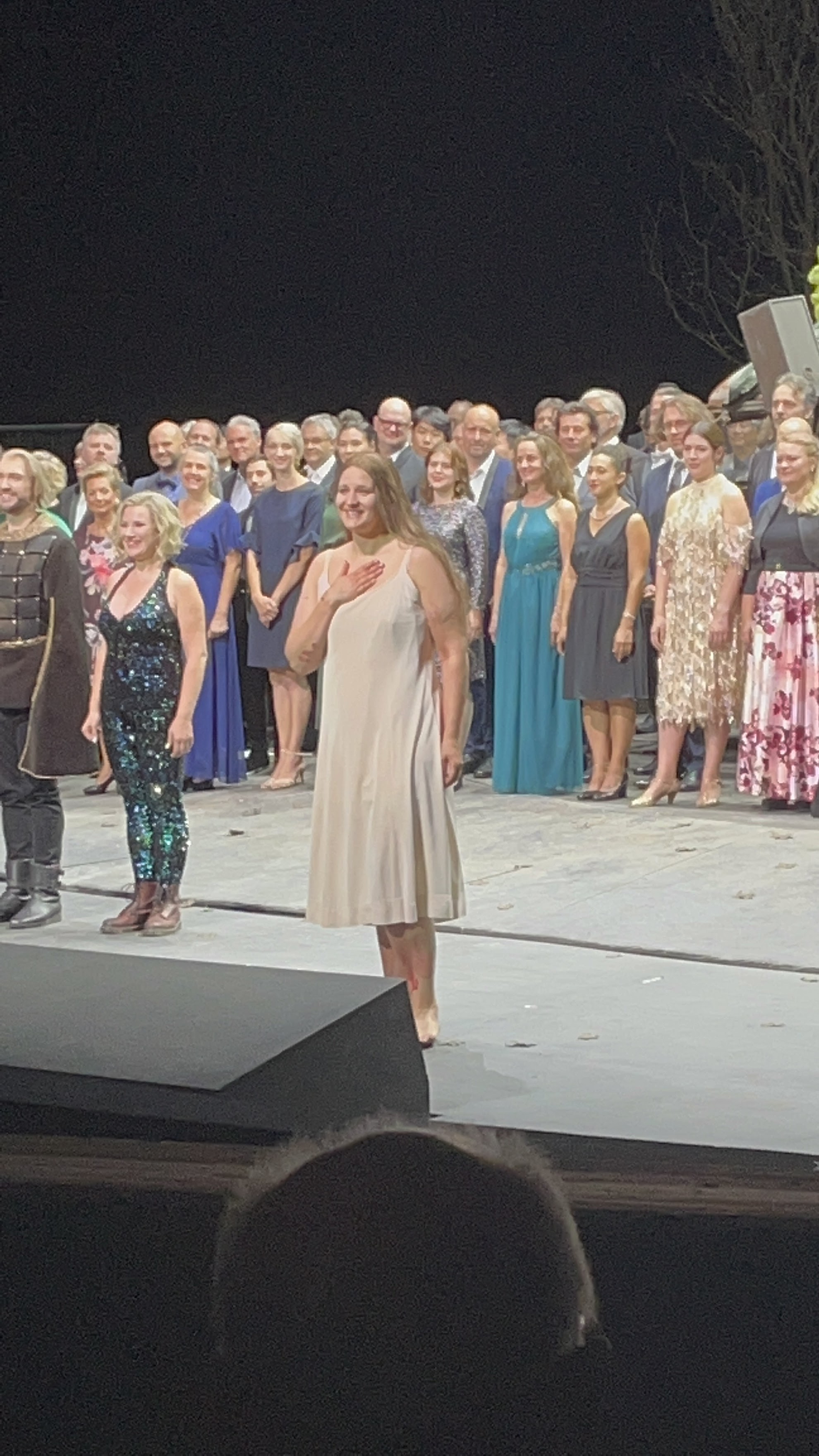
A completar o elenco de solistas de topo estiveram Ólafur Sigurdarson (Biterolf), 

Jorge Rodríguez-Norton (Heinrich)
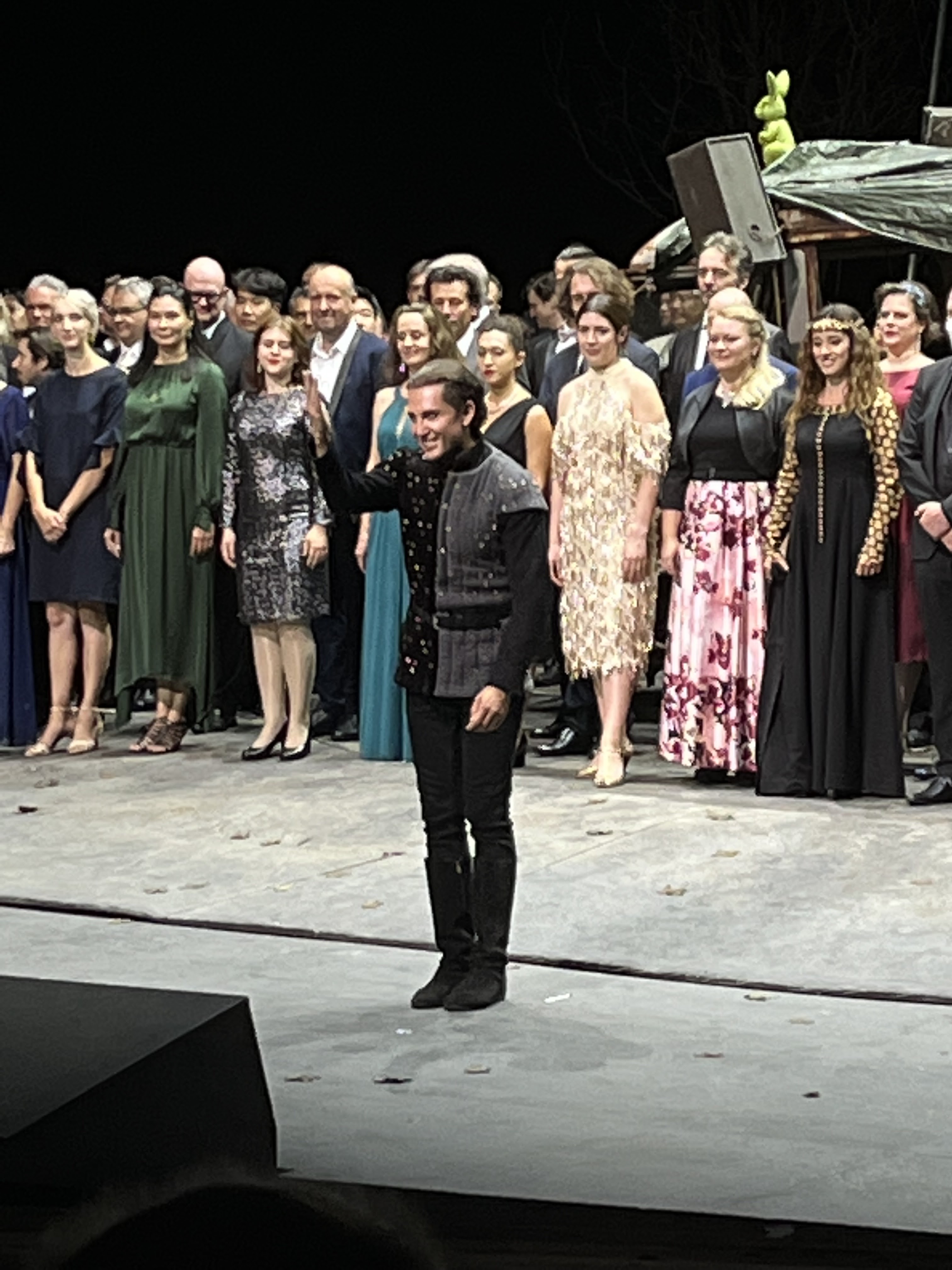
 e Jens-Erik Azabo (Reinmar).

E os figurantes Tuuli Takala, Le Gateau Chocolat e Manni Laudenbach.


(Texto e fotos de Wagner_fanatic)


TANNHÄUSER, Bayreuth Festival, August 2022

Spectacular Tannhäuser!! It's one of the greatest Wagnerian stagings ever, by Tobias Kratzer! The way in which, from the middle, the action which in the background is like the opera in progress, breaks down and the parallel reality created by the director begins to enter and mix, is of a genius that is not of this world! The way Tannhäuser gives in to his Venusian carnal passion passing out of the luminous rectangle that is the opera stage and then lives his anguish on stage between both realities (carnal passion but also his deep love for Elisabete) returning then finally entering the luminous rectangle again, leaving Venus behind, is strong, very strong, as for a theater moment.

In the original 2019 video, the initial part has a long time of views of the Venus van driving on a road with trees around it. Today they cut some of that time and introduced a brilliant joke: we can see the van arrive at the Salzburg Festival, with an image from the inside and then seen from the outside of the van. On the dashboard there has always been a hand with the 3rd finger extended, connected by a spring so that whenever the van moves, the hand moves and gives the sensation that it is always making the finger sign everywhere. Here we can see the arrival at the Salzburg Festival (not necessarily being a true competitor or rival of the Bayreuth Festival, it is a little bit because they are perhaps the 2 most famous lyrical summer festivals) with the finger waving to send the Salzburg Festival to … :) The dwarf gets out of the van, looks at a map giving it a few turns in his hands and then we read his lips saying Scheisse and gets back in with Venus to the van and they leave. Very good :) However, following the video, it doesn't make much sense because Venus only goes to the Bayreuth Festival area.

In the second act, when the dwarf and Gateau are backstage at the festival, they pass through the corridor that has photos of the conductors who have directed in Bayreuth. In the 2019 original, Gateau was making eyes at Thielemann's photo, this time the dwarf sticks a heart with the colors of Ukraine to Oksana Lyniv's photo. The pilgrims of the 3rd act can be prisoners who left the prison to give uniformity to the staging. Everyone ends up taking items from the junkyard where the Venus van is parked. I think it symbolizes a new life, life after incarceration, like a second life that some scrap metal has for itself.

The Orchestra, conducted by Alex Kober, was phenomenal, I think I heard melodic lines that I hadn't paid attention to, and the harp on a divine stage.

Stephen Gould was vocally and scenically bombastic!!! The 3rd act wasn't spectacular because the interaction between Tannhäuser and Wolfram (and then also Roma's narration), despite both being vocally top notch, was dramatically less convincing, although here, Gould prevailed. He made some very high quality outings but he sinned in others where he could have given more naturalness and emotional veracity.

Ekaterina Gubanova (Venus) was brutal, irreproachable in all its participation.

 The lyricism and clarity of voice of Markus Eiche (Wolfram) was divine. He was also pretty good in his 3rd act monologues.

The solo (short but one of the most lyrical and beautiful passages of this opera) by Attilio Glaser that plays Walther von der Wogelweide was of unparalleled beauty.

Lise Davidsen (Elisabeth) was phenomenal, controlling the top notes power excellently and with the beautiful pianos and transitions. The whole scene from the time when Elisabeth tells everyone to leave Tannhäuser alone because they are not the ones who will judge him was soul-piercing perfection, drama and lyricism! Gould looked like this was the last time he was singing this. His pleas for salvation had a power and a dramatic sense that I have never heard him make.

Rounding out the cast of top soloists were Ólafur Sigurdarson (Biterolf), Jorge Rodriguez-Norton (Heinrich) and Jens-Erik Azabo (Reinmar). And the extras Tuuli Takala, Le Gateau Chocolat and Manni Laudenbach.

(Text and photos by Wagner_fanatic)

segunda-feira, 22 de agosto de 2022

TRISTÃO E ISOLDA / TRISTAN UND ISOLDE, Festival de Bayreuth / Bayreuther Festspiele, Agosto / August 2022

(review in English below)


Uma produção do Tristão e Isolda de Roland Schwab simples mas muito agradável de ver. No centro do palco há uma estrutura iluminada, semelhante a um lago, que inicialmente parece estar cheia de água. (Num comentário anterior, na ópera A Valquíria, um leitor, de forma muito feliz e adequada, chamou-lhe um poço no fundo do qual se vive um turbilhão de sentimentos e emoções. Recomendo vivamente a leitura de todo o comentário). Os cantores andam à sua volta. Mas com o decorrer da acção, as personagens caminham sobre a sua superfície que vai sofrendo mudanças radicais, passando a cor vermelha, estrelas, remoinhos de fumo e muitos outros efeitos de luz muito diversificados, sempre reactivos ao que é cantado. 

Num patamar superior há uma abertura oval, que permite ver o céu, de dia com nuvens e à noite estrelado. Na periferia dessa abertura há um muro e umas pedras. No 2º acto ficam cobertas de vegetação e no 3º esta, em dois locais, chega à superfície do piso inferior, um excelente indicador do tempo. 

No 3º acto, o corne inglês é tocado em palco nesse nível superior, o que é outra mais valia considerável.


Tudo se passa neste cenário mas a acção é compreensível e os efeitos luminosos têm um resultado fantástico. 

No início aparece o casal ainda como crianças, no 2ºo acto como jovens adultos e no final como idosos, outro belo efeito teatral.


A direcção musical de Markus Poscher foi excelente e a orquestra esteve ao mais elevado nível. Ouviu-se Wagner!


O canto foi excepcional. O tenor Stephen Gould fez um excelente Tristão, de voz sempre bem audível, bem timbrada, sem qualquer falha até final. 


A Isolda da soprano Catherine Foster foi fantástica, oferecendo-nos uma interpretação forte, muito emotiva e bem audível. Os 2º e 3º actos foram perfeitos. Que emoção! 


Também ao mais alto nível esteve o baixo Georg Zeppenfeld que fez um rei Marke notável. A voz é bonita, enorme e muito agradável. 


A mezzo Ekaterina Gubanova foi uma Bargäne irrepreensível, brilhou na presença cénica e a voz é fantástica, sempre perfeitamente afinada e audível em todos os registos. E frequentemente cantou na estrutura superior do palco, bem distante da zona mais central.


O tenor Markus Eiche com voz mais escura que o habitual, fez um óptimo Kurwenal.  


O barítono Ólafur Sigurdarson não destoou como Melot, apesar de a sua intervenção ser curta.


Foi um Tristão e Isolda de topo!

*****


 TRISTAN AND ISOLDE, Bayreuth Festival, August 2022

The production of Roland Schwab's Tristan and Isolde is simple but very pleasant to watch. In the center of the stage there is an illuminated structure (similar to a lake) that initially appears to be filled with water. Singers walk around it But as the action progresses, the characters walk on its surface, which undergoes radical changes, changing to red, stars, swirls of smoke and many other very diverse light effects, always reactive to what is sung und interpreted.

On an upper level there is an oval opening, which allows to see the sky, with clouds during the day and starry at night. In the contours of this level there is a wall and some stones. In the 2nd act they are covered with green vegetation and in the 3rd, in two places, the vegetation reaches the surface of the lower floor, an excellent indicator of the elapsed time. In the 3rd act, the English horn is played on stage at this higher level, which is another considerable asset. Everything takes place in this setting but the action is understandable and the lighting effects are great.

At the beginning the couple appears as children, in the 2nd act as young adults and at the end as elderly people, another beautiful theatrical effect.

The musical direction of Markus Poscher was excellent and the orchestra was at the highest level. Wagner has been heard!

The singing was exceptional. Tenor Stephen Gould made an excellent Tristan, with a voice that was always very audible, beautiful timbre, without any flaws until the end. Soprano Catherine Foster's Isolde was fantastic, offering a strong, very emotional and very audible interpretation. The 2nd and 3rd acts were perfect. How exciting! Also at the highest level was bass Georg Zeppenfeld who was a remarkable King Marke. The voice is beautiful, big and very pleasant. Mezzo Ekaterina Gubanova was an irreproachable Bargäne, she impressed in the scenic presence and her voice is fantastic, always perfectly in tune and audible in all registers. And she often sang in the upper structure of the stage, well away from the most central zone.

Tenor Markus Eiche with a darker voice than usual, was an excellent Kurwenal. Baritone Ólafur Sigurdarson was a good Melot, despite the fact that his intervention was short.

It was a top Tristan and Isolde!

*****

quinta-feira, 18 de agosto de 2022

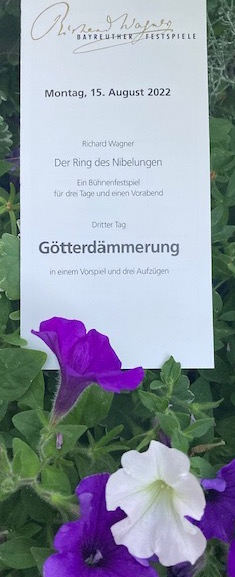
GÖTTERDÄMMERUNG / O CREPÚSCULO DOS DEUSES / THE TWILIGHT OF THE GODS, Festival de Bayreuth / Bayreuther Festspiele, Agosto / August 2022

(review in English below)

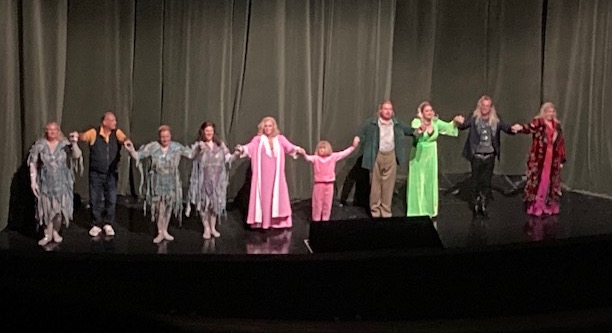
O Crepúsculo dos Deuses começa no quarto de Siegfried e Brünhilde que têm um filho. As 3 Norns aparecem vestidas como seres fantasmagóricos, elementos de um sonho da criança, outra novidade desta encenação. Na sala abastada dos Gibichung, encimada por uma fotografia de caça "pesada" (à zebra) do Hagen, Gunter e Gutrune, Hagen põe em prática o seu plano de casar Brünhilde com Gunter e Gutrune com o Siegfried. O Gunter tem escrito na camisola “Who the fuck is Grane?”, mesmo antes de conhecer a Brünhilde e o seu companheiro humano (Grane seria originalmente o cavalo). A frase diz muito da abordagem do encenador. Para conseguir os seus intentos, a poção mágica preparada não é bebida pelo Siegfried, mas antes derramada sobre a cabeça do Grane. Novamente nos aposentos do casal, o diálogo entre a Waltraute e a irmã Brünhilde não conduz a nada de concreto e Gunter maltrata a criança e amarra-a à cadeira. Um desenho da máscara alada encarnada volta a aparecer.


No 2º acto Hagen luta com o pai Alberich num recinto de boxe. Ao convocar os vassalos para receberem os novos casais, aparecem os membros do coro vestidos de negro e com as máscaras aladas encarnadas em bastões, num dos momentos de maior impacto visual de todo o Anel. 


O 3º acto passa-se numa piscina vazia, mas onde Siegfried e o filho pescam à linha. Hagen continua a comportar-se como amigo do Siegfried, mas mata-o com uma punhalada nas costas. Ele fica caído no local até a ópera terminar. A marcha fúnebre, magnificamente interpretada pela orquestra, não é marcha nem é acompanhada de qualquer acção no palco. Pelo menos podemos concentrar-nos totalmente num dos momentos mais belos e marcantes da música de todo o Anel. 

O Gunter deixa um saco de plástico na piscina e desaparece. A criança acaba também por morrer com uma das máscaras encarnadas na mão. A morte da Brünhilde acontece com ela deitada ao lado do Siegfried, depois de se ter regado, inconsequentemente, com gasolina, e de ter ido buscar ao saco deixado por Gunter a cabeça do Grane, e com ela estabelecer contacto íntimo (por momentos pensei estar a ver a cena final da Salome de Strauss, mas não, foi mesmo o fim do Crepúsculo dos Deuses!). Não houve qualquer fogo nem destruição visível do Valhalla. A ópera termina como começou, com o filme dos dois gémeos in utero, desta vez abraçados um ao outro.


A Orquestra foi excelente e o maestro Cornelius Meister fez um bom trabalho, embora com algumas inconsistências. Houve no público quem não tenha gostado, dado que foi bastante vaiado.


O tenor Stephen Gould foi um bom Siegfried, voz poderosa, afinada, sempre sobre a orquestra. O barítono Albert Dolmen tem um papel muito importante como Hagen e foi um dos melhores da noite. Para além da excelente interpretação vocal, representou como um ser pérfido, como lhe competia. No final não morre, apenas sai de cena. O seu pai Alberich foi novamente bem cantado pelo barítono Ólafur Sigurdarson. Michael Kupfer-Radecky foi outro barítono excelente como Gunter, interpretando uma personagem tonta e desequilibrada. 

A Brünhilde voltou a ser a soprano Iréne Teorin que, cantando alto, manteve os problemas da ópera anterior, vibrato excessivo e estridência no registo mais agudo. Excelente foi a soprano Elisabeth Teige como Gutrune (já tivera uma interpretação notável como Freia), de voz clara, versátil, bonita e sempre audível sobre a orquestra. A mezzo Christa Mayer voltou a impressionar pela qualidade interpretativa, desta vez como Waltraute. As 3 Norns foram fantásticas (Okka von der Dammerau, Stéphanie Müther e Kelly God) e as 3 Filhas do Reno não lhes ficaram atrás (Lea-ann Dunbar, Stephanie Houtzeel, Katie Stevenson).

Um naipe de cantores de topo para encerrar um Anel memorável!


No final houve grandes protestos, alternados com aplausos, inicialmente penso que dirigidos à encenação. Os cantores foram muito ovacionados, com excepção de Iréne Teorin que, no meio dos aplausos, também ouviu muitos boos. O maestro foi também contestado, os protestos competiram com os aplausos. O responsável pela produção, Valentin Schwarz, não teve a coragem de aparecer, antecipando a vaia monumental que ouviria, como aconteceu na semana anterior na estreia, dizem que a maior alguma vez ouvida em Bayreuth.

Não tenho nada contra as encenações modernas, desde que se percebam e façam sentido. Não foi para mim o caso deste inesquecível Anel que está muito distante do que Wagner escreveu. Mas mais tarde voltarei ao assunto.

****

GÖTTERDÄMMERUNG / THE TWILIGHT OF THE GODS, Bayreuther Festspiele, August 2022

The Twilight of the Gods begins in the bedroom of Siegfried and Brünhilde who have a child. The 3 Norns appear dressed as phantoms, elements of the child's dream, another novelty of this staging. In the Gibichungs' rich living room, topped by a zebra-hunting photograph of Hagen, Gunter and Gutrune, Hagen puts into practice his plan to marry Brünilde to Gunter and Gutrune to Siegfried. Gunter has written “Who the fuck is Crane?” on his shirt, even before he met Brünhilde and her human companion (Grane is originally a horse). The phrase says a lot about the scenic approach. To achieve his aims, the magic potion is not drunk by Siegfried, but poured over Grane's head. Back at the couple's house, the dialogue between Waltraute and her sister Brünhilde leads nowhere and Gunter mistreats the child and ties her to the chair. A drawing of the red winged mask reappears.

In the 2nd act Hagen fights with his father Alberich in a boxing arena. When summoning the vassals to receive the new couples, the members of the choir appear dressed in black and with red winged masks, in one of the moments of greatest visual impact in the entire Ring.

The 3rd act takes place in an empty swimming pool, but where Siegfried and his son are fishing by line. Hagen kills Siegfried with a stab in the back. He lies there dead until the opera is over. The funeral march, magnificently performed by the orchestra, is not a march, unaccompanied by any action on stage. At least we can fully focus on one of the most beautiful and memorable moments of music in the entire Ring. Gunter leaves a plastic bag in the pool and disappears. The child also ends up dying with one of the winged red masks in his hand. Brünhilde's death happens with her lying next to Siegfried, after having showered herself with gasoline, inconsequentially, and having gone to get Grane's head from the bag and making intimate contact with it (for a moment I thought I was watching the final scene of Salome by Strauss, but no, that was the end of Twilight of the Gods!). There was no fire or destruction of Valhalla. The opera ends as it began, with the film of the two twins in utero, this time embracing each other.

The Orchestra was excellent and the conductor Cornelius Meistner did a good job, although with some irregularities, that some members of the public did not appreciate at all.

Tenor Stephen Gould was a good Siegfried, powerful voice, in tune, always over the orchestra. Baritone Albert Dolmen plays a very important role as Hagen and was one of the best of the night. In addition to the excellent vocal interpretation, he played the role as a perfidious being, as he was supposed to. In the end he doesn't die, he just leaves the scene. His father Alberich was again well sung by the baritone Olafur Sigurdarson. Michael Kupfer-Radecky, another excellent baritone as Gunter, despite playing a dizzy and unbalanced character.

Brünhilde was again soprano Iréne Teorin who, singing loudly, kept the problems of the previous opera, excessive vibrato and some stridency in the upper register. Elisabeth Teige was an excellent soprano (she had already had a remarkable performance as Freia), with a clear, versatile, beautiful voice that was always audible over the orchestra. Mezzo Christa Mayer impressed again for her interpretive quality, this time as Waltraute. The 3 Norns were fantastic (Okka von der Dammerau, Stéphanie Müther and Kelly God) and the 3 Daughters of the Rhine were not far behind them (Lea-ann Dunbar, Stephanie Houtzeel, Katie Stevenson).

A group of top singers to end a memorable Ring!

In the end there were big protests, alternating with applause, initially I think aimed at the staging. The singers received a great ovation, with the exception of Iréne Teorin who, in the midst of the applause, also heard a lot of boos. The conductor was also contested, the protests competed with the applause. Production manager Valentin Schwarz didn't have the courage to show up, anticipating the monumental booing he would hear, as happened last week at the premiere, said to be the biggest ever heard in Bayreuth.

I have nothing against modern staging, as long as they are perceived and make sense. This was not the case for me in this unforgettable Ring that is much far away from what Wagner wrote. But I will come back to the subject later on.

****