Mostrar mensagens com a etiqueta Robert Brubaker. Mostrar todas as mensagens

domingo, 15 de setembro de 2013

SIEGFRIED, METropolitan OPERA, Nova Iorque, Maio de 2013


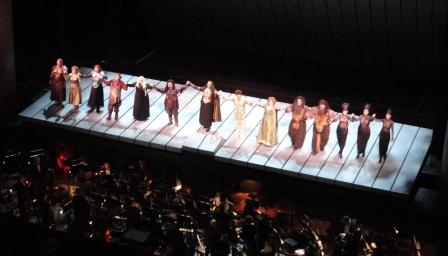
 A ópera do Anel em que a natureza está sempre presente beneficia muito da abordagem cénica de Lepage. O primeiro acto tem um efeito visual marcante, com a cabana de Mime de um lado do palco e, do outro, a floresta com um riacho em que a água corre pelo palco e onde as folhas das árvores esvoaçam ao sabor do vento.
No segundo acto o dragão é o objecto menos conseguido, parece uma bóia de criança. Mas tudo o resto é de belo efeito, nomeadamente as várias intervenções da ave que Siegfried ouve.
O terceiro acto também começa com imagens de forte impacto visual e quer o diálogo de Wotan com Erda, quer com Siegfried são muito bem conseguidos. Já a cena final do despertar de Brünhilde é muito estática, apesar de eficaz.


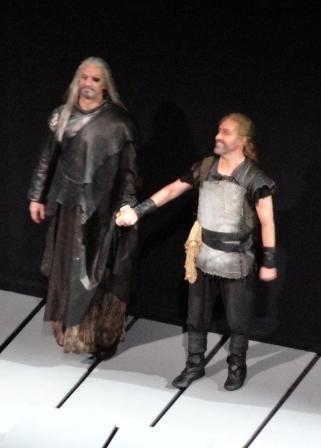
O tenor norte americano Robert Brubaker foi um Mime excepcional. Tem um timbre peculiar que se adapta perfeitamente à personagem. Nunca cantando em forte, foi sempre claramente audível pois a técnica de projecção vocal é exímia. Cenicamente foi irrepreensível. Um dos melhores da noite.


Siegfried foi interpretado pelo tenor sueco Lars Cleveman. Este deve ser um dos papéis wagnerianos em que mais difícil é, na actualidade, encontrar cantores à altura da elevada exigência interpretativa. Cleveman fez o que pôde mas não é o Siegfried ideal. Tem uma figura frágil e a voz, embora agradável, por vezes fica abafada pela orquestra. Ainda assim aguentou-se, sem quebrar, até ao final.
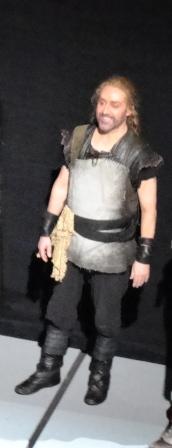

O Wanderer do baixo barítono norte americano Greer Grimsey foi muito bom, na continuação da excelente interpretação que o cantor já tinha tido como Wotan na Valquíria. Voz também de timbre peculiar mas bem domada pelo cantor e sempre audível e afinada. A interpretação cénica foi irrepreensível.


O baixo-barítono norte americano Richard Paul Fink confirmou que está aquém dos restantes solistas na interpretação que fez de Alberich. Foi o menos impressionante dos cantores da noite. Frequentemente não se ouvia e a voz não tem qualquer qualidade atractiva.

Excepcional foi o baixo alemão Hans-Peter König que, nesta ópera, foi Fafner. É um cantor de elite que está no auge das suas fabulosas potencialidades. A voz é de uma beleza invulgar e de uma potência avassaladora.


O soprano americano Lisette Oropesa foi um pássaro da floresta muito competente, de voz cristalina e muito agradável.


Repetiu uma boa actuação como Erda o mezzo americano Meredith Arwady. É detentora de uma voz potente e com um registo grave impressionante.


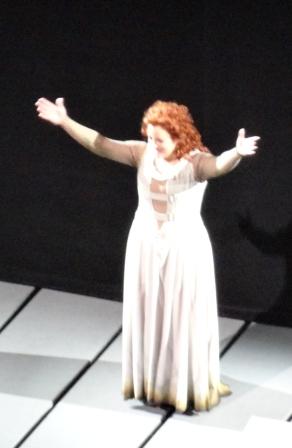
 Finalmente o soprano norte americano Deborah Voight voltou a interpretar a Brünhilde. Apesar de, nesta ópera, só cantar no final, achei que transpareceu algum cansaço vocal e foi ocasionalmente agreste, sobretudo nas notas mais agudas, que não soaram agradáveis.


****


SIEGFRIED, Metropolitan Opera, New York, May 2013

The Ring’s opera where nature is always present benefits a lot from the scenic approach of Lepage.
The first act has a remarkable visual effect with Mime's hut on one side of the stage and on the other, the forest with a stream where the water runs across the stage and where the leaves flutter in the wind.
In the second act the dragon is ridiculous but everything else is of fine effect, namely the various parts when Siegfried hears the bird.
The third act also begins with images of strong visual impact and both the dialogue between Erda and Wotan, and between Siegfried and Wotan wants are very good. The final scene of the awakening of Brunhilde is very static, although effective.

North American tenor Robert Brubaker was an exceptional Mime. He has a peculiar tone that fits the character. Never singing in forte, he was always clearly audible as the technique of vocal projection excels. Artistically he was blameless. One of the best of the night.

Siegfried was played by Swedish tenor Lars Cleveman. This must be one of the most difficult Wagnerian roles and, today, to find singers up to the high standards of interpretation is very difficult. Cleveman did his best but he is not the ideal Siegfried. He has a fragile figure and the voice, though pleasant, sometimes gets drowned out by the orchestra. Still, he held up without breaking until the end.

The Wanderer by North American bass baritone Greer Grimsey was very good, in the continuation of the excellent interpretation that the singer had had as Wotan in Valkyrie. His voice has a peculiar timbre but well controlled by the singer and always audible and tuned. The artistic performance was very good.

North American bass-baritone Richard Paul Fink confirmed that he lags behind other soloists in his interpretation of Alberich. He was the least impressive of the singers of the night. Often he was not heard and the voice does not have any attractive quality.

Exceptional was the German bass-baritone Hans-Peter König that in this opera was Fafner. He is an elite singer at the height of his fabulous potential. The voice is of an unusual beauty and an overwhelming power.


American soprano Lisette Oropesa was a very competent bird of the forest, with  a crystal clear and very nice voice.

American mezzo Meredith Arwady repeated her good performance as Erda. She has a powerful voice and impressive low record.

Finally, North American soprano Deborah Voight was Brunhilde again. Although, in this opera, she sings only in the end, I thought she revealed some vocal fatigue and was occasionally harsh, especially in the high notes, which did not sound pleasant.

****

terça-feira, 3 de setembro de 2013

O OURO DO RENO / DAS RHEINGOLD, METropolitan OPERA, Maio de 2013


 O Ouro do Reno é o prólogo em quatro cenas do Anel do Nibelungo de R. Wagner.

Na encenação de Robert Lepage os aspectos de efeito mais espectacular nesta primeira ópera são, logo na primeira cena, as filhas do Reno suspensas, a nadar e, quando assentam no fundo do rio e sempre que se movem, provocam a queda de grande quantidade de pequenas pedras. A terceira cena é também muito bem conseguida, não só a descida ao Nibelheim como a actuação de Mime e dos Nibelungos a fundirem o ouro. A transformação de Alberich numa gigantesca serpente e, depois, num sapo, são vistosas. Finalmente, depois da tempestade, a subida dos deuses ao Walhalla que aparece como um arco-íris que vai passando no fundo do palco tem grande impacto visual.


 Os solistas foram, na maioria, de grande qualidade.

O melhor da noite foi o tenor eslovaco Stefan Margita que interpretou o semideus do fogo Loge. Tem uma voz sempre audível e afinada, muito melodiosa e agradável. Aparecia envolvido em luzes que simulavam o fogo e teve um excelente desempenho cénico. Já quando o vi no Anel de Munique, no mesmo papel, foi igualmente notável. Na actualidade não deve haver melhor Loge.


 Fricka foi interpretada pelo mezzo americano Elizabeth Bishop, em substituição de Stephanie Blythe. Esteve à altura do papel e ofereceu-nos uma bela interpretação. Foi vocalmente forte e cenicamente convincente. A voz é bonita, penetrante e sempre bem colocada.


 O baixo-barítono americano Richard Paul Fink foi o elo fraco da noite. Interpretou Alberich de forma deficiente. Ouviu-se mal, a voz é pequena e feia. Não é um cantor com qualidade que justifique a sua actuação num papel solista no Met.


 Wotan foi interpretado pelo baixo-barítono americano Greer Grimsley. Esteve bem, a voz é muito respeitável, ouviu-se sempre sobre a orquestra e foi credível em cena.


 Também de qualidade assinalável foi a interpretação de Freia pelo soprano americano Wendy Bryn Harmer que, no registo mais agudo, foi segura e não gritou.


 Os dois gigantes, Fasolt e Fafner, foram interpretados pelos baixos alemães Franz-Josef Selig e Hans-Peter König e foram dois dos melhores cantores da noite. Vozes potentes, registos graves imponentes e boa presença em palco.


 Se o Froh de Richard Cox foi muito fraco, merecem nota positiva o mezzo americano Meredith Arwady que foi uma Erda poderosa,


 o tenor americano Robert Brubaker que deixou uma óptima impressão como Mime


  e o barítono americano Dwayne Croft como Donner.


 Foram também impecáveis as três filhas do Reno Dísella Làrusdóttir (Woglinde), Jennifer Johnson Cano (Wellgunde) e  Renee Tatum (Flossilde).


Começou bem o Anel de Nova Iorque.

**** 


DAS RHEINGOLD, Metropolitan Opera, May 2013

Das Rheingold is the prologue in four scenes from the Ring of the Nibelung by R. Wagner.

In Robert Lepage´s staging the most spectacular aspects of this first opera are in the very first scene, the daughters of the Rhine suspended, swimming, and when they settle on the river bottom and whenever they move, they cause the fall of large amounts of small stones. The third scene is also very well done, not only the descent to Nibelheim as well as Mime and the Nibelungs merging of the gold. Alberich's transformation into a giant snake and then into a frog are showy. Finally, after the storm, the rising of the gods to Walhalla that appears as a rainbow on the back of the stage has great visual impact.

The soloists were mostly very good.

The best of the night was Slovakian tenor Stefan Margita who played the semi god of fire, Loge. His very melodious and pleasant voice was always audible and tuned, He appeared wrapped in lights that simulated fire and performed excellently. When I saw him in the Munich´s Ring in the same role, he was equally remarkable. At present there should be no better Loge.

Fricka was interpreted by American mezzo Elizabeth Bishop, replacing Stephanie Blythe. She was OK in the role and offered us a beautiful interpretation. She was strong vocally and artistically  compelling. The voice is beautiful, deep and always well projected.

American bass-baritone Richard Paul Fink was the weak link in the night. He interpreted Alberich in a deficient way. We could not hear him well, the voice is small and not nice. He is not a top quality singer to justify a solo role at the Met.

Wotan was interpreted by American bass-baritone Greer Grimsley. He was good, the voice is very respectable, ever heard above the orchestra and he was credible onstage.

Also remarkable was the quality of interpretation of Freia by American soprano Wendy Bryn Harmer that in the top notes, was secure and did not shout.

The two giants, Fasolt and Fafner, were interpreted by German basses Franz-Josef Selig and Hans-Peter König and they were two of the best singers of the night. Powerful voices, imposing bass notes and good stage presence.

If Richard Cox´s Froh was very weak, deserve positive remarks the American mezzo Meredith Arwady that was a powerful Erda, the American tenor Robert Brubaker who left an excellent impression as Mime and American baritone Dwayne Croft as Donner. The three daughters of the Rhine were also very good, Dísella Lárusdóttir (Woglinde), Jennifer Johnson Cano (Wellgunde) and Renée Tatum (Flossilde).

The Met’s Ring had a good start.


****

segunda-feira, 25 de março de 2013

Francesca da Rimini de Riccardo Zandonai — MetLive in HD, FCG, 23.03.2013


(Review in English below)

Riccardo Zandonai escreveu a ópera em quatro actos Francesca da Rimini em 1914 e apresentou-a, pela primeira vez, no Teatro Régio de Turim. O libreto de Tito Ricordi baseou-se na peça de Gabriele D’Annunzio que, por sua vez, se inspirou e adaptou livremente o episódio de Francesca da Rimini do Inferno de Dante.

A história básica não vai além de um banal e desinteressante quarteto amoroso — três irmãos apaixonados pela mesma mulher. Gianciotto, homem rude e deformado, casa-se com a bela Francesca que lhe fora prometida. Todavia, Francesca apaixona-se por Paolo (irmão de Gianciotto), um homem galante; Malatestino, o zarolho irmão mais novo de Paolo e Gianciotto, invejoso por não receber o amor da cunhada, lança-se em acusações contra o irmão Paolo. Nisto, Paolo e Francesca são apanhados em delito adúltero por Gianciotto que, cego de ciúme e afogado em desonra, comete um há muito esperado duplo homicídio passional... e Francesca morre nos braços de um igualmente defunto Paolo. Poderão ler uma sinopse aqui.
Poderei afirmar, com segurança, que o libreto é o elemento mais fraco da ópera. Não só não tem muito interesse poético, como é pouco verosímil e as suas cenas têm uma cadência pouco sequencial ou ligada. Em suma, de uma pobreza inesperada.


A encenação de Piero Faggioni foi a que o MET apresentou em 1986. Elegante, de excelente efeito visual e acompanhada de um guarda-roupa de nível, põe em evidência as diversas cenas da ópera de modo muito adequado e clássico.


A música de Zandonai é de qualidade, mas não é sumptuosa ou de um lirismo brilhante. Parece que fica aquém da grandeza melódica que, no imediato, sugere. A direcção de Marco Armiliato foi de muito bom nível, conduzindo a habitualmente excelente Orquestra do MET.

O soprano Eva Maria Westbroek foi a jovem Francesca. Tem uma voz com um timbre não especialmente belo, mas deu-nos uma boa interpretação. Apesar disso, lamenta-se uma dicção fraca do italiano, bem como um ou outro agudo mais rude.


O tenor Marcello Giordani foi Paolo. No papel de homem galante, apresentou-se com uma voz um pouco enfraquecida e num estilo demasiado piegas. Ainda assim, esteve bem num papel que, nas suas palavras, cantou “por ser fácil”. Assim se compreende a vasta lista que detém no MET… Adaptando a frase de Leporello em Don Giovanni: Madamina, il catalogo è questo delle opera qui cantò la voce mia...


O barítono Mark Delevan foi Gianciotto. O papel não é muito exigente vocalmente e esteve bem. Cenicamente foi-lhe pedido que fosse rude com toda a gente e amável com Francesca, o que não parece combinar bem com a deformidade física e carácter de homem guerreiro que ostenta.

O tenor Robert Brubaker foi Malatestino. Apresentou-se em bom nível, transmitindo, vocal e cenicamente, a ideia de um homem desagradavelmente mesquinho.


O quarteto de companheiras de Francesca (os sopranos Dísella Làrusdóttir e Caitlin Lynch; os mezzo-sopranos Patricia Risley e Renée Tatum) apresentaram-se em bom nível com destaque para os sopranos. Também o mezzo-soprano Ginger Costa-Jackson (Smaragdi, criada de Francesca) de muito agradável figura esteve em bom plano no seu modesto papel. Os restantes elementos têm participações residuais e estiveram bem.

Assim, podemos dizer que se assistiu a uma ópera com interpretações vocais de nível homogéneo e sem grandes destaques. A ópera de Zandonai (que é para muitos desconhecida) não é particularmente interessante em nenhum aspecto, pelo que não me posso dizer encantado.

.......
(Review in English)

Riccardo Zandonai wrote the opera in four acts Francesca da Rimini in 1914 and presented it for the first time at the Teatro Regio in Turin. The libretto by Tito Ricordi was based on the play by Gabriele D'Annunzio who, in turn, was inspired and adapted freely Francesca da Rimini episode of Dante's Inferno.

Basically, the plot is not going beyond a banal and uninteresting loving quartet - three brothers in love with the same woman. Gianciotto, rude and deformed man, marries the beautiful Francesca promised to him. However, Francesca falls in love for Paolo (brother of Gianciotto), a gallant man; Malatestino, the one-eyed younger brother of Paolo and Gianciotto, envious for not receive the love of his sister-in-law, launches him into charges against his brother Paolo. Herein, Gianciotto catches Paolo and Francesca in adulterous crime, and jealousy blind and drowned in disgrace, makes a long-awaited passionate double homicide... Francesca dies in the arms of an equally deceased Paolo... You can read a synopsis here.
I can say with certainty that the libretto is the weakest element of the opera. Not only has not much poetic interest, as their scenes have a little cadence or are sequential or linked. In short, it was of an unexpected poverty.

The staging of Piero Faggioni was presented to the MET in 1986. Elegant, with excellent visual effect and accompanied by a high level wardrobe, it highlights the various scenes of the opera in a very appropriate and classic way.

Zandonai’s music has indeed quality, but is not sumptuous or of a brilliant lyricism. It seems that falls short, despite the greatness of some melodic themes immediately suggests. The direction of Marco Armiliato was of very good level, leading the usually excellent MET Orchestra.

The soprano Eva Maria Westbroek was the young Francesca. She has a voice with a timbre not particularly beautiful, but gave us a good interpretation. Nevertheless, I lament a weak Italian diction, as well as some ruder acute.

The tenor Marcello Giordani was Paolo. In the role of a gallant man, presented with a weakened voice and in a style too slobbery. Still, he was good in a role that, in his words, sang "because it is easy." Once you understand the vast list that he holds at MET… Adapting a phrase from Leporello in Don Giovanni: Madamina, il catalogo è questo delle opera qui cantò la voce mia...

The baritone Mark Delevan was Gianciotto. The role is not very demanding vocally and he did well. Scenically was asked to be rude to everyone and kind with Francesca, which does not seem to match well with his physical deformity and character of a warrior man.

The tenor Robert Brubaker was Malatestino. He performed at a good level, transmitting, vocal and scenically, the idea of an unpleasant stingy man.

The quartet mates Francesca (the sopranos Dísella Larusdottir and Caitlin Lynch, the mezzo-sopranos Renée Tatum and Patricia Risley) were at a good level with emphasis on the sopranos. Also the beautiful mezzo-soprano Ginger Costa-Jackson (Smaragdi, created by Francesca) was in good plan in her modest role. The remaining elements have been well on their residual roles.

So I can say that there has been an opera with homogeneous vocal interpretations with no major highlights. Zandonai's opera (which is unknown to much) is not particularly interesting in any aspect, so I cannot say I was enchanted.

quinta-feira, 24 de fevereiro de 2011

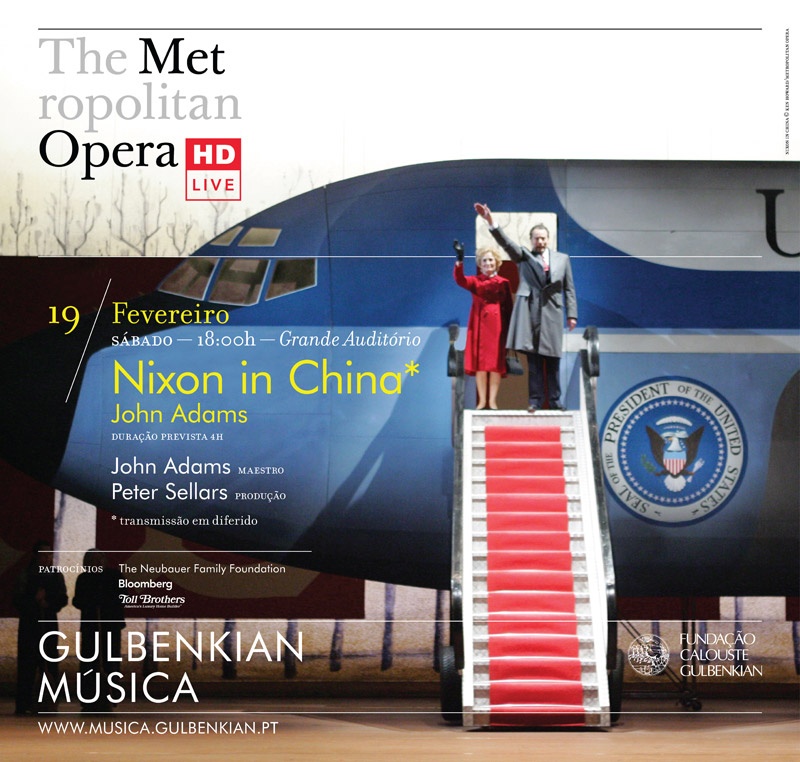
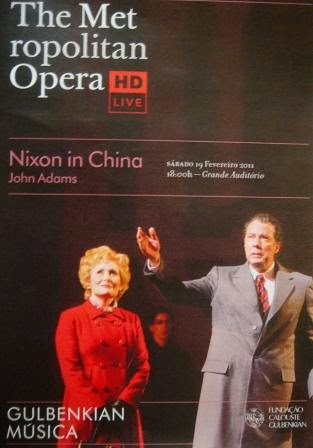
NIXON IN CHINA – Met Live em HD, Fundação Gulbenkian, Fevereiro de 2011


(Review in English below)

Nixon in China é uma ópera de John Adams, com libreto de Alice Goodman, sobre a visita do Presidente Richard Nixon, sua mulher Pat Nixon e Henry Kissinger à China comunista em 1972, depois de várias décadas de isolamento ao ocidente.

A encenação do Peter Sellars é despojada, de bom gosto e eficaz. Os diferentes cenários mudam harmoniosamente e tudo o que se passa no palco é explícito.

A direcção da orquestra, que teve uma excelente prestação, foi do próprio John Adams que recebeu um enorme aplauso. Li no passado algumas críticas muito negativas à qualidade musical da ópera. Não concordo. A música é muito agradável ao ouvido, com partes bastante interessantes, mesmo não tendo a grandiosidade e complexidade instrumental de outros compositores do Sec. XX que, para mim, nem sempre são de fácil audição. O coro também esteve muito bem.

(Fotografia de  Sara Krulwich do New York Times)


Os solistas eram todos bons e reinou o equilíbrio interpretativo.

O barítono James Maddalena foi Richard Nixon, o elo mais fraco que, apesar de globalmente aceitável, teve falhas vocais, sobretudo nas primeiras intervenções. A voz revela sinais evidentes de desgaste. Cenicamente credível, sem deslumbrar.

Pat Nixon foi interpretada pelo soprano Janis Kelly. A voz foi regular ao longo da récita e, na sua grande ária do 2º acto, sempre segura nos agudos, esteve muito bem no canto e na interpretação cénica. Uma boa surpresa para quem nunca a tinha ouvido, como foi o meu caso.

Richard Paul Fink, baixo-barítono, foi um Henry Kissinger que não esmoreceu, apesar de o seu papel não se prestar a grandes voos e de ser ridicularizado na ópera.

Mao Tse-tung foi interpretado pelo tenor Robert Brubaker que nos deu uma boa personagem com voz forte, heróica e bem timbrada. A representação foi credível para a personagem.

Também o barítono Russell Braun foi um excelente Chou En-lai. A voz é poderosa, afinada e com nuances muito interessantes que enriqueceram a interpretação. Um dos melhores da tarde.

Finalmente, a melhor em cena foi o soprano Kathleen Kim que encarnou Chian Ch’ing, mulher de Mao. Cenicamente excelente, ofereceu-nos um belo soprano lírico de coloratura que trouxe grande brilho ao espectáculo.

(Fotografia de Sara Krulwich do New York Times)


O Met ao seu nível, mesmo numa ópera de menor impacto, mas que originou um espectáculo agradável


***


NIXON IN CHINA - Met Live in HD, the Gulbenkian Foundation, February 2011

Nixon in China is an opera by John Adams, with libretto by Alice Goodman, on the visit by President Richard Nixon, his wife Pat Nixon and Henry Kissinger to communist China in 1972, after several decades of isolation.

The staging by Peter Sellars was simple, pleasant and effective. The different scenarios change smoothly and everything that happens on stage was explicit.

John Adams directed the orchestra, which had an excellent performance, and received a loud applause. I read some very negative reviews of the opera, due to its musical poor quality. I disagree. The music is very pleasant, despite not having the impact and complexity of other instrumental composers of the XX century who, for me, are not always easy to listen to. The choir was also very good.

The soloists were all good and interpretive balance was the rule.

Baritone James Maddalena was Richard Nixon who, despite a good presence, had vocal fragilities, especially in the early interventions. The voice reflects his extensive previous work. He was artistically credible, but without dazzle.

Pat Nixon was interpreted by soprano Janis Kelly. The voice was steady throughout the performance, with good top notes, and, in her aria in Act 2, she was excellent both vocally and artistically. She was a nice surprise for those who had never heard her, as was my case.

Richard Paul Fink, bass-baritone, was Henry Kissinger. His intervention is not a major one and he is ridiculed at the opera.

Mao Tse-tung was played by tenor Robert Brubaker who had an excellent performance, strong heroic voice and he was credible artistically.

Also, the baritone Russell Braun was an excellent Chou En-lai. His voice is powerful, in tune and showed very interesting nuances that have enriched the interpretation. He was one of the best.

Finally, the best performer was soprano Kathleen Kim who played Chiang Ch'ing, the wife of Mao. Artistically excellent, she gave us a beautiful lyric coloratura soprano.

The Met as usual, even with an opera with less impact, but which originated a nice performance.


***