Mostrar mensagens com a etiqueta I Capuleti e i Montecchi. Mostrar todas as mensagens

quinta-feira, 19 de abril de 2018

I CAPULETI E I MONTECCHI, Teatro de São Carlos, Lisboa, Abril 2018


(review in English below)

O famoso amor trágico de Romeu e Julieta é retratado nesta opera de belcanto, I Capuleti e i Montecchi, com música do jovem Vicenzo Bellini e libretto de Felice Romani inspirado numa história da Renascença. É uma obra de profundo lirismo e grande intensidade dramática, marcada pela história de um amor trágico e atravessada pela tristeza e pela morte. Um deleite para os apreciadores do belcanto, é uma ópera repleta de árias e duetos dos dois amantes, de uma beleza melódica assinalável.


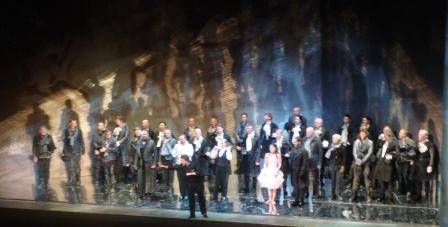
A encenação de Arnaud Bernard (cenografia de Alessandro Camera e figurinos de Carla Ricotti), originalmente concebida para o Teatro La Fenice e para a Arena de Verona é sóbria, clássica e vistosa. Num museu / galeria de arte, as personagens dos quadros ganham vida. É uma abordagem frequente dos encenadores, que nada tem de original, mas visualmente é agradável e serve os propósitos da ópera. Foi bem melhor do que a muito badalada encenação que vi em Munique, como relatei aqui.


Logo no início da ópera, os Capuleti ganham vida a partir de um quadro guardado numa arrecadação do museu. O pessoal do museu muda alguns dos quadros de local, faz arranjos e limpezas, mas mantém-se a estratégia do encenador. A cena da morte de Romeu e Julieta decorre numa mesa, mas funciona e o quadro final da ópera é de uma beleza plástica assinalável.


Se a encenação foi um dos pontos fortes do espectáculo, houve um pouco de tudo, desde o muito mau ao muito bom.


A Orquestra Sinfónica Portuguesa, dirigida por Giampaolo Bisanti, não esteve bem, com excepção do belíssimo desempenho de Carmen Cardeal na harpa. O coro do Teatro Nacional de São Carlos esteve muito mal, com desencontros e desafinações constantes, fatais numa obra de belcanto.


Nos solistas principais, a mezzo Alessandra Volpe fez um Romeu vocalmente bom, o timbre é interessante e a cantora fez-se ouvir sempre sobre a orquestra. A Julieta da soprano Mihaela Marcu também foi decente, embora a cantora tivesse alguma tendência para a estridência e lhe faltasse a doçura que o papel exige.


O Tebaldo do tenor Davide Giusti foi muito mau, quase sempre desafinado, voz feia e sem cor. Um dos piores tenores que se ouviu recentemente em São Carlos.

Os melhores da noite foram os barítonos Luís Rodrigues como Capellio e Christian Luján como Lorenzo, que se destacou tanto na interpretação vocal como cénica.


***


I CAPULETI E I MONTECCHI, Teatro de São Carlos, Lisbon, April 2018

The famous tragic love of Romeo and Juliet is portrayed in this belcanto opera, I Capuleti e i Montecchi, with music by the young Vicenzo Bellini and libretto by Felice Romani inspired by a Renaissance story. It is a work of profound lyricism and great dramatic intensity, marked by the history of a tragic love and crossed by sadness and death. A delight for lovers of belcanto, it is an opera full of arias and duets of the two lovers, with remarkable melodic beauty.

The staging of Arnaud Bernard (set design by Alessandro Camera and costumes by Carla Ricotti) originally conceived for the La Fenice Theater and for the Verona Arena is sober, classic and pleasant. In a museum / art gallery, the characters in the pictures come to life. It is a frequent approach of the directors, which has nothing original, but is visually pleasant and serves the purposes of opera. It was much better than the much-hyped staging I saw in Munich, as I have reported here.

At the beginning of the opera, the Capuleti come to life from a painting in a museum collection. The museum staff changes some of the paintings, makes arrangements and cleanups, but the director's strategy remains. The final scene of the death of Romeo and Juliet takes place at a table in the museum, but it works and the final picture of the opera is of remarkable plastic beauty.

If the staging was one of the performance's strengths, there was a bit of everything from the very bad to the very good.

The Portuguese Symphony Orchestra, directed by Giampaolo Bisanti, was not well, except for the beautiful performance of Carmen Cardinal in the harp. The Chorus of the National Theater of São Carlos was very bad, with dissonances and constant mistakes, fatal in a belcanto opera.

Considering the main soloists, mezzo Alessandra Volpe was a vocally good Romeo, the timbre is interesting and the singer always made herself heard over the orchestra. Juliet of soprano Mihaela Marcu was also decent, although the singer had a tendency to stridency and lacked the sweetness that the role demands.

Tenor Davide Giusti was very bad as Tebaldo, almost always out of tune, with an ugly, colorless voice. One of the worst tenors recently heard in São Carlos Theater.

The best of the night were baritones Luís Rodrigues as Capellio and Christian Luján as Lorenzo, who excelled in both vocal and scenic performance.

***

domingo, 14 de setembro de 2014

I CAPULETI E I MONTECCHI, Bayerische Staatsoper, Munique, Junho de 2014 / Munich, June 2014


(review in english below)


Da autoria de João Baptista, um comentador habitual do blogue, recebemos este excelente texto que agora publicamos. Em nome dos "Fanáticos da Ópera" expresso um "muito obrigado" pela valiosa contribuição.

Esta co-produção entre a Bayerische Staatsoper e a San Francisco Opera, da responsabilidade de Vincent Boussard, foi já objecto de crítica neste blog em Junho de 2011, tendo por referência uma récita de Abril do mesmo ano, na Bayerische Staatsoper, em Munique.

Tive a oportunidade de assistir a uma récita desta produção no passado mês de Junho de 2014, também na Bayerische Staatsoper, e gostaria de transmitir as minhas impressões, procurando não repetir o que o autor do blog já escreveu, de total propriedade, a propósito da mesma.


A ópera.
A ópera I Capuleti e i Montecchi foi composta em pouco mais de um mês para o “La Fenice”, dada a exiguidade do prazo dado a Bellini. Inicialmente, o “La Fenice” tinha encomendado uma nova ópera a Giovanni Pacini; todavia, como este estava ainda a terminar uma encomenda para Turim, o intendente do teatro celebrou um contrato provisório com Bellini, para o caso de Pacini falhar, o que veio a suceder.
Pressionado pelo tempo, Bellini acabou por recorrer a muito material já composto para as suas óperas “Zaira” (e também a “Adelson e Salvini”, a sua primeira ópera, de onde provém a melodia usada na cavatina de Giulietta), a qual merecera fraco acolhimento do público aquando da estreia e que acabou por cair no esquecimento. De modo injusto, diria eu, pois a música é, na sua maioria, de grande inspiração melódica e propiciadora de alguns momentos dramáticos bastante bem conseguidos.

O enredo da ópera roda em torno da conhecida história de “Romeu e Julieta”, embora o libreto tome por base não a tragédia de Shakespeare (que não era sequer conhecida de Bellini e do libretista, Felice Romani), mas sim outras fontes italianas e francesas, o que explica alguns desvios à trama mais conhecida. Aliás, o libretto fornecido a Bellini por Romani é uma revisão daquele que o mesmo libretista havia escrito, 5 anos antes, para a ópera “Giulietta e Romeo”, de Nicola Vaccai.
Por outro lado, Bellini também acabou por ir introduzindo algumas modificações na partitura, por forma a adaptá-la a outros palcos e/ou cantores.

Aliás, a partir de 1832, por influência da grande Maria Malibran, que considerava o final composto por pouco adequado à exibição dos seus dotes vocais, passou a ser frequente a substituição da cena final da ópera de Bellini pela da ópera de Vaccai, a qual contempla uma cena e ária para Giulietta, já depois da morte de Romeo. Como curiosidade, na gravação dirigida por Roberto Abbado, com Kasarova, Mei e Vargas (RCA 1997) pode ouvir-se todo o final do 2º acto da ópera de Vaccai, bem como uma versão alternativa da cavatina de Romeo do 1º acto, com ornamentação vocal de Rossini.


A encenação

Revertendo agora à récita a que assisti, diria que a encenação é, como referiu o Fanatico_Um, algo bizarra e, na maioria das vezes, difícil de compreender. O encenador faz de Gulietta uma espécie de noiva alienada, sempre vestida de branco e descalça, como se estivesse num mundo à parte. Exemplo disso parece-me ser a 2ª cena do 1º acto, passada no seu quarto, onde apenas existe um lavatório. Giulietta empoleira-se no mesmo, tentando alcançar uma imagem de dois amantes suspensa do tecto, que talvez simbolize uma união dos amantes inalcançável. Também na cena final da ópera, antes de acordar do sono induzido e perante a presença de Romeo, Giulietta fica numa espécie de transe, como que paralisada e indiferente à presença do seu amado.
Os elementos femininos do coro, para além dos vestidos vistosos (concebidos por Christian Lacroix), surgem quase sempre com flores na boca, como se fossem meros elementos decorativos num mundo dominado por homens, que com aquelas contrastam pela seriedade e sisudez das suas indumentárias, compostas de fraques e cartolas.

Seja como for, embora algo estranha e nem sempre compreensível (pelo menos para mim), a encenação não atraiçoa o espírito da ópera e o seu fulcro dramático, que é, na minha opinião, o conflito de Giulietta entre o amor a Romeo e os deveres para com a família (5ª cena do 1º acto), nem é contraditória com o que a música e o texto vão revelando em cada momento.

A cenografia é algo monótona, sempre em tons de cinzento, embora coerente com a concepção da produção, pois permitia contrastar a alvura do vestido de Giulietta e o colorido dos elementos femininos. O jogo de luzes foi bastante eficaz.

 Os cantores

Quando adquiri os bilhetes, a minha grande expectativa era ouvir a mezzo Elina Garanca no papel de Romeo. Todavia, tais expectativas acabaram por sair goradas, pois a grande cantora letã havia sido mãe há pouco tempo e foi substituída por Silvia Tro Santafé, mezzo espanhola que eu não conhecia.

Não obstante esta decepção por não ouvir Garanca, musicalmente Santafé esteve sempre muito bem. O seu timbre não é tão quente e aveludado como o de Garanca ou tão andrógino como o de Kasarova, mas mais feminino e juvenil. Trata-se de uma mezzo-soproano lírica com uma voz bonita e clara, agudos fáceis e graves não muito encorpados e um vibrato rápido. Compôs uma personagem dramaticamente credível, saindo-se bastante bem nas passagens mais graves, onde a voz desceu sem dificuldades.


O papel de Giulietta ficou a cargo da soprano russa Ekaterina Siurina, que esteve sempre bastante bem: voz cheia, bem colocada, com agudos sempre seguros e bem timbrados. Se a ideia da encenação era mostrar uma Giulietta algo alienada e ensimesmada, penso que Siurina correspondeu integralmente à concepção.


Excelente foi a prestação do tenor Matthew Polenzani, no papel de Tebaldo. Desde logo, pela excelente colocação de voz e pela elegância do canto. O timbre pareceu-me menos nasalado do que em algumas transmissões do Met mais recentes, designadamente no “L’Elisir d’Amore” de 2012. Boa presença em palco.

Goran Juric foi um Capellio algo deficiente. Voz muito velada, sem profundidade e pouco audível, acabou por compor um patriarca dos Capuletos muito pouco credível.
O barítono Andrea Borghini cumpriu com mérito o papel de Lorenzo.


A orquestra esteve sempre em bom nível (apenas notei alguns pequenos desacertos no início), o mesmo valendo para o coro, que cantou com boa articulação e clareza.
A direcção de Riccardo Frizza foi dinâmica, mantendo o sentido de propulsão da música, ao mesmo tempo que sustentou bem os cantores.


Em suma, uma experiência musicalmente bastante gratificante e, cenicamente, desafiadora.


Uma última nota. Tenho lido relatos muito elogiosos sobre a compostura do público germânico na ópera. Foi também essa a minha experiência noutra ocasião em que assisti a uma récita de ópera na Alemanha. Infelizmente, desta vez, houve momentos em que pensei estar no S. Carlos ou na Gulbenkian, pois a conversa ciciada, os barulhos de remexer em malas e em papel ou celofane, foram bem audíveis e excessivamente frequentes.


I CAPULETI E I MONTECCHI, Bayerische Staatsoper, Munich, June 2014
By João Baptista

This co-production between Bayerische Staatsoper and San Francisco Opera, staged by Vincent Boussard, has already been reviewed in this blog in June 2011, with reference to the performance that took place in April 2011 at the Bayerische Staatsoper in Munich.
I had the chance to attend this performance last June 2014, also at the Bayerische Staatsoper, and would like to write my impressions, trying not to repeat what the blog author has written, concerning that same opera.

The opera.
I Capuleti e I Montecchi was composed in over a month to «La Fenice», given the tight schedule imposed to Bellini. Initially, La Fenice had commissioned a new opera to Giovanni Pacini; however, since he was still finishing an order for Turin, the theater intendant celebrated a provisional agreement with Bellini, in case Pacini failed, which turned out to happen.
Under pressure due to lack of time, Bellini resorted to work he had composed for his operas Zaira (as well as Adelson e Salvini, his first opera, from where the melody used in Giulietta’s cavatina was taken), which was not very welcomed by the public after its premiere and fell into oblivion. I would say it was unfair, because the music, in its majority, is of great melodic inspiration and favors some really well achieved dramatic moments.
The plot is about the well-known story of Romeo and Juliet, although the libretto is not based in the tragedy of Shakespeare (which was unknown to Bellini and to the librettist, Felice Romani), but in other italian and french sources, which explains some of the shifts to the most well-known plot. In fact, the libretto given to Bellini by Romani is a rewrite of the same one the librettist Romani had written five years before for the opera Giulietta e Romeo, by Nicola Vaccai.
On the other hand, Bellini also added some changes to the score in order to adjust it to other stages and/or singers.
Also, from 1832 onwards, influenced by the great Maria Malibran, who considered that the finale did not make justice to her vocal skills, it became frequent to replace the final scene of Bellini’s opera with Vaccai’s opera, which includes one scene and aria for Giulietta, after Romeo’s death. As a matter of fact, in the recording conducted by Roberto Abbado, with Kasarova, Mei and Vargas (RCA 1997), it is possible to listen to the whole finale of the 2nd act of Vaccai’s opera, as well as an alternative version of Romeo’s cavatina of the 1st act, with vocal ornamentation by Rossini.

The staging.
Regarding to the performance I attended, I would say that the staging was, as Fanatico_Um called it, somewhat bizarre and, most of the time, difficult to understand.
The stage director portrays Giulietta as an alienated bride, always in white and barefooted, as if she was in a world apart. One example is the 2nd scene of the 1st act, which takes place in her bedroom, where there is only a washbasin. Giulietta climbs it, trying to reach for an image of two lovers hanging from the ceiling, which may symbolize an unachievable union between the lovers. Also in the final scene of the opera, before waking up from the induced sleep, in Romeo’s presence, Giulietta is in some sort of trance, as if paralyzed and indifferent to her lover.
The female elements of the choir, besides their showy gowns (designed by Christian Lacroix), appear almost always carrying flowers in their mouths, as if they were mere decorative elements in a world dominated by men, who contrast with them due to the seriousness of their garments, which consisted in morning coats and top hats.
However, even though I may find it somewhat awkward and not always easy to understand, the staging does not betray the spirit of the opera, nor its dramatic fulcrum, which is, in my opinion, Giulietta’s inner conflict between her love for Romeo and her duties towards her family (5th scene, 1st act), nor is it inconsistent with what the music and the text unveil throughout the opera.
The staging is slightly monotonous, always is gray tones, although coherent with the production concept, for it contrasted with the brightness of Giulietta’s gown and the colour wore by the other female characters. The lights were used very effectively.

The singers.
When I bought the tickets, I was expecting to listen to the mezzo Elina Garanca playing Romeo. However, that expectation was not met, since the great Latvian singer had recently given birth and had to be replaced by Silvia Tro Santafé, a Spanish mezzo I didn’t know.
Notwithstanding the disappointment of not listening to Garanca, Santafé was musically very good. Her tone is neither so warm and smooth as Garana’s, nor so androgynous as Kasarova’s, but more feminine and youthful. She’s a lyric mezzo-soprano with a beautiful and clear voice, easy high notes, not fullbodied lower register and a fast vibrato. She was dramatically credible and did very well at the lower pitch, where her voice deepened effortlessly.
Giulietta’s role was performed by the Russian soprano Ekaterina Siurina, who sang very well: full voice, well placed, always with well sustained high notes and well-toned. If the staging was supposed to show us an alienated and indrawn Giulietta, I think Siurina portrayed it successfully.
Tebaldo was amazingly portrayed by the tenor Matthew Polenzani. The placement of the voice was excellent and the singing was elegant. His tone sounded less nasal than in some Met transmissions, namely L’Elisir d’Amore in 2012. Very good stage presence.
Goran Juric was a somewhat poor Capellio. Veiled voice with lack of depth and almost inaudible. The result was a very little credible Capulet patriarch.
Baritone Andrea Borghini was praiseworthy in the role of Lorenzo.
The quality level of the orchestra was always high (I noticed only a few mistakes in the beginning), and the same happened with the choir, who sang with good articulation and clarity.
Riccardo Frizza conducted dynamically, keeping the propulsion of the music, whilst supporting the singers at the same time.
In conclusion, it was a very gratifying musical experience and theatrically challenging.


Just a brief note. I have read very complimentary comments regarding the behavior of the German audience at the opera. And that was also my experience in another occasion at the opera in Germany. Unfortunately, this time, there were moments in which I thought I was at S. Carlos or Gulbenkian, since the whispering, and the sound of people opening their purses or unwrapping candies were very loud and excessively frequent.

domingo, 20 de maio de 2012

I Capuleti e i Montecchi, Bayerische Staatsoper, Maio de 2012


(imagens da transmissão da Bayerische Staatsoper / Images from the broadcast by Bayerische Staatsoper)

A Bayerische Staatsoper ofereceu-nos no dia 19 de Maio a possibilidade de assistir em directo,  no seu site, à récita de I Capuleti e i Montecchi, de V. Bellini. Tive oportunidade de assistir ao vivo a esta produção em Munique, como referi aqui. A ópera, de fazer chorar as pedras da calçada, é um pitéu para os apreciadores do belcanto, entre os quais me incluo. Para desfrutar plenamente da música, devemos esquecer tudo o resto (Romeu cantado por uma mulher, encenações bizarras, etc.).


Como já referi, não gosto desta produção. É excessivamente austera e o marketing à sua volta, nomeadamente na entrega do guarda-roupa a um costureiro da moda (Christian Lacroix), não traz nenhuma mais valia. Mas o que mais condeno é a opção por colocar os cantores em posições extremamente incómodas e desajustadas, nomeadamente Giulietta que tem que cantar empoleirada num lavatório ou em equilíbrio instável numa estrutura arredondada no palco.


Yves Abel dirigiu a orquestra da Bayerische Staatsoper numa interpretação que não foi perfeita.


 Paul Gay, baixo-barítono francês, cantou bem o papel de Lorenzo. Não tem nenhuma característica que o distinga da generalidade dos bons barítonos actuais.


Capello foi interpretado pelo baixo croata Ante Jerkunica. Apesar de o papel ser curto, o cantor teve oportunidade de nos mostrar que possui uma das mais belas vozes de baixo actualmente no activo dos teatros de ópera.


O tenor greco-americano Dimitri Pittas foi um Tebaldo de grande qualidade. A voz tem um timbre agradável e o cantor projecta-a bem.


Vesselina Kasarova, mezzo búlgaro, cantou o Romeu. Foi uma das grandes da noite. A voz é bonita, o timbre escuro, mas com agudos fáceis, fortes e sem perda de qualidade.


Guilietta foi interpretada pelo soprano russo Anna Netrebko, que já tive o privilégio de ver interpretar este papel ao vivo, em Londres. Era a grande atracção da noite e não deixou os seus créditos por mãos alheias. Foi mais uma fabulosa interpretação da artista que está a cantar melhor que nunca. O poderio vocal é absoluto, a potência avassaladora, a beleza tímbrica única e a interpretação insuperável. A Netrebko não tem rival na actualidade e sempre que temos possibilidade de a ouvir, o canto assume uma grandiosidade só proporcionada por muito poucos.


Obrigado Bayerische Staatsoper!

****


I Capuleti e i Montecchi, Bayerische Staatsoper, May 2012

The Bayerische Staatsoper offered us the opportunity (on May 19th) to watch live the performance of I Capuleti e i Mintecchi, by V. Bellini. Previously, I watched live this production in Munich, as I mentioned here. This opera, of profound sadness,, is a delicacy for belcanto lovers, among whom I include myself.  
To fully enjoy the music, one must forget everything else (Romeo sung by a woman, bizarre productions, etc.).

As I mentioned, I do not like this production. It is too austere and the marketing around it, including the clothes by a fashion stylist (Christian Lacroix), bring no added value. But what I most condemn is the option to put the singers in positions extremely uncomfortable and inadequate, particularly Giulietta who has to sing perched in a sink or on a rounded structure on stage.

Yves Abel conducted the orchestra of the Bayerische Staatsoper in an interpretation that was not perfect.

Paul Gay, French bass-baritone, played well the role of Lorenzo. He has no feature that distinguishes his interpretation from the generality of the current good baritones.

Capello was played by Croatian bass Ante Jerkunica. Although the interpretation was short, the singer had the opportunity to show us that he has one of the most beautiful bass voices currently singing in opera houses.

Greek-American tenor Dimitri Pittas was a high quality Tebaldo. The voice has a pleasant timbre and the singer uses it well.

Vesselina Kasarova, Bulgarian mezzo, played Romeo. She was one of the great singers of night. The voice is beautiful, dark, but top notes are easy, highly audible without loss of quality.

Guilietta was sung by Russian soprano Anna Netrebko. I’ve had the privilege of seeing her live in this role in London. She was the great attraction of the night and she confirmed everybody’s high expectations. It was another fabulous interpretation of the artist who is singing better than ever. Her vocal overwhelming power is absolute, the beauty of the timbre is unique, and the interpretation is unsurpassed. Netrebko has no rival at her level in present days and whenever we have the chance to hear her, singing takes on a grandeur only offered by very few artists.

Thank you Bayerische Staatsoper!

****


terça-feira, 14 de junho de 2011

I CAPULETI E I MONTECCHI – Bayerische Staatsoper, Munique, Abril de 2011

(review in English below) 

 I Capuleti e i Montecchi é uma ópera de Vicenzo Bellini com libreto de Felice Romani. A história baseia-se no amor trágico de Romeu e Julieta.


 O resumo da história pode ler-se aqui.


 Vicent Boussard foi o encenador. A Munique também já chegou a moda de as personagens serem vestidas por costureiros famosos, no presente caso Christian Lacriox.. As senhoras estavam, de facto, com fatos vistosos. Julieta tinha um exuberante vestido claro creme e azul e, apesar de ter andado sempre descalça durante todo o espectáculo, estavam-lhe destinados uns sapatos verdes, que nunca calçou. As mulheres do coro tinham vestidos compridos muito coloridos, tropeçavam frequentemente neles pois o cenário tinha nessas partes uma grande escadaria. Pareciam prostitutas vitorianas, mas enfim…


 A encenação, embora com notável impacto visual, foi bizarra. Na primeira cena há múltiplas celas de cavalos penduradas no tecto e os homens cantam vestidos de fato e cartola. Não há mais nada no palco. A primeira aparição de Julieta é no quarto e tem como únicos adereços uma pequena estátua suspensa no cimo e um lavatório. Ela empoleira-se nesse lavatório e aí, em equilíbrio precário, passa grande parte da cena, cantando nessa posição a belíssima ária Oh! Quante volte. Aparece Romeu e, sempre que ambos estão presentes, ao longo da ópera, Julieta parece evitá-lo a todo o custo. As restantes cenas passam-se com o palco envolvido numa moldura gigante, num efeito muito semelhante ao que vi aqui 


 A cena final, no túmulo, também é bizarra. Romeu entra e encontra Julieta “morta”, deitada no chão com o vestido de sempre. Em dado momento, ainda antes do acordar, Romeu puxa-a por um braço e ela fica em pé, imóvel, como que petrificada. Ao puxá-la o Romeu deu uma valente queda para trás, mas foi um pequeno acidente hilariante da noite. Depois de se envenenarem ambos e morrerem, avançam a passo lento para a boca de cena e cai o pano.
Foi, de facto, uma encenação diferente, mas vistosa.

(algumas fotografias são da Bayerische Staatsoper)

 O maestro Yves Abel dirigiu de forma assinalável e a Orquestra da Bayerische Staatsoper correspondeu com elevada qualidade. Foram notáveis os solos de harpa, violoncelo, flauta e oboé que tanto enriquecem a beleza melódica da partitura. No final, durante os agradecimentos, Yves Abel teve a delicadeza de fazer levantar cada um destes instrumentistas, o que lhe ficou muito bem.


 Romeu foi interpretado pelo jovem mezzo-soprano irlandês Tara Erraught, que substituiu Vesselina Kasarova, doente. Não conhecia esta cantora e deixou-me uma boa impressão. A voz é firme e bem audível. No registo mais grave é segura e muito agradável mas nos agudos perde um pouco a qualidade melódica. Evita gritar, apesar de cantar em esforço. Cenicamente não impressionou, mas o papel também não ajuda (apesar de tudo é uma mulher) e a encenação ainda menos.


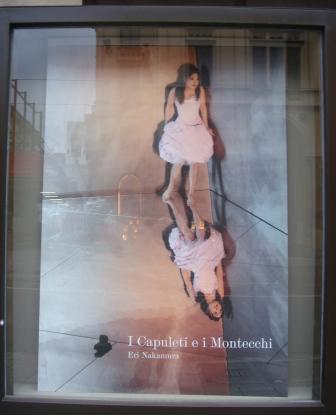
 Julieta foi cantada pelo soprano japonês Eri Nakamura. Esta foi a grande surpresa da noite. Já a havia ouvido aqui, onde não me impressionou.


 Desta vez foi bem diferente. Teve uma interpretação fabulosa. A voz é de uma potência impressionante e de uma beleza ímpar. Mantém a qualidade em todos os registos, nomeadamente quando sobe para as notas mais agudas. O legato é também de grande qualidade e, nos duetos com Romeu, foi melhor, embora as duas vozes se conjugassem bem. Em cena foi quase uma artista de circo pois teve que cantar em posições de equilíbrio pouco estável por diversas vezes, quer em pé no lavatório do quarto no 1º acto, quer em cima da moldura no 2º acto. Ao que os encenadores obrigam os cantores!


 Lembro-me que, há cerca de 2 anos, me desloquei a Londres para ver I Capuleti e i Montecchi com Anna Netrebko e Elina Garanca. Na récita anterior à que assisti a Netrebko havia cancelado (tinha sido mãe há poucos meses) e fora substituída por Eri Nakamura, na altura estudante do programa Jette Parker para jovens artistas da Royal Opera House. Suspirei de alívio quando o espectáculo começou e tive a certeza que era a Netrebko que ia cantar. Essa foi uma récita daquelas que nunca esquecerei, mas hoje verifiquei que a Nakamura também está à altura do papel.


Tebaldo foi interpretado pelo tenor americano Dimitri Pittas Foi o elo mais fraco da noite. Apesar de ter cantado de forma decente, a voz perdia qualidade e potência quando cantava notas mais agudas e era notório o esforço do cantor para as manter audíveis.


 O baixo americano Steven Humes teve também uma boa prestação tanto cénica como vocal. Ofereceu-nos uma voz redonda, forte, expressiva e muito agradável.


 Como já referi neste blogue, sou um grande apreciador de belcanto e Bellini é, neste campo, o compositor que mais aprecio. Foi, por isso, com muita satisfação que voltei a ouvir esta ópera, apesar de encenada de uma forma totalmente inesperada.


****


I Capuleti ei Montecchi - Bayerische Staatsoper, Munich, April 2011

I Capuleti e i Montecchi is an opera by Vincenzo Bellini with libretto by Felice Romani.
The story is based on the tragic love of Romeo and Juliet.

The summary of the story can be read here

Vincent Boussard was the director. The “fashion” of the singers to be dressed by famous fashion designers has also arrived to Munich. In this case, the designer was Christian Lacriox.  The ladies were, in fact, with flashy dresses. Juliet had an exuberant light cream and blue dress and, despite having always walked barefoot throughout the performance, there were there green shoes for her, although she never put them on. Women's choir dresses were very colourful, the choir singers often stumbled on them because the scenery in these parts had a big staircase. They looked like Victorian prostitutes, but anyway ...

The staging, though with remarkable visual impact, was bizarre. In the first scene there are multiple cells of horses hanging from the ceiling and the men sing dressed in suit and tall hat. There's nothing else on stage. The first appearance of Juliet is in her bedroom and on the stage there are only a small statue ornament suspended from the top and a sink. She perches on the sink and there, in precarious balance, spends much of the scene, singing the beautiful aria Oh! Quante volte. in that position. Romeo appears and whenever both are present, throughout the opera, Juliet seems to avoid him at all costs. Most of the remaining scenes are with the stage surrounded by a giant frame, an effect very similar to that seen recently here

The final scene in the tomb is also bizarre. Romeo enters and finds Juliet "dead," lying on the floor. At one point, before she wakes up, Romeo pulls her by the arm and she stands, motionless, as if petrified. To pull her, Romeo gave a mighty fall backwards, but this was a minor hilarious accident of the night. After both have poisoned themselves and die, they walk at a slow pace for the proscenium arch and the curtain falls.
It was indeed a different staging.

Conductor Yves Abel was remarkable and the Orchestra of the Bayerische Staatsoper corresponded with high quality. Harp, cello, flute and oboe solos were noticeable, enriching the melodic beauty of the score. In the end, during curtain calls, Yves Abel had the courtesy to make stand up each of these instrument soloists, which was nice to see.

Romeo was played by the young Irish mezzo-soprano Tara Erraught, who replaced Vesselina Kasarova. I did not know this singer before and she left me a good impression. The voice is firm and very audible. In the low register it is firm and very nice but it looses melodic quality in the high register. She avoids shouting, despite singing in effort. Artistically she was unimpressive, but the character does not help (after all she is a woman) and the staging even less.

Juliet was sung by Japanese soprano Eri Nakamura. She was the big surprise of the night. I had already heard her here, and she did not impress me. This time was different. She had a fabulous interpretation. The voice is of impressive power and beauty. She maintains quality in all registers, especially when she sings top notes. The legato is also of great quality and, in duets with Romeo, she was better, though the two voices were in perfect harmony.
On stage she was almost a circus performer because she had to sing in unstable equilibrium positions several times, either standing on the sink of her bedroom in the first act, either on top of the frame in Act 2.
About two years ago, I went to London to see I Capuleti ei Montecchi with Anna Netrebko and Elina Garanca  In the performance prior to that I had attended Netrebko canceled (she had been mother a few months before) and had been replaced by Eri Nakamura, at the time a student of the Jette Parker Young Artists program of the Royal Opera House. I was relieved when the performance began and I confirmed I was going to have Netrebko on stage. This was one of those performances I will never forget, but today I consider that Nakamura is also a good interpreter of the role.

Tebaldo was played by American tenor Dimitri Pittas. He was the weakest of the night. Despite having sung in a decent manner, the voice lost quality and power when he sang high notes and the singer's effort to keep them audible was notorious.

American bass Steven Humes also had a good performance both artistic and vocal. He offered us a round strong, expressive and very nice voice.

As I mentioned in this blog, I'm a big fan of belcanto and Bellini is the composer who I most appreciate. It was therefore with great satisfaction that I had the chance to see this opera again, though staged in totally unexpected manner.

****