Mostrar mensagens com a etiqueta Lance Ryan. Mostrar todas as mensagens

quinta-feira, 17 de março de 2016

O CREPÚSCULO DOS DEUSES / GÖTTERDÄMMERUNG, Gran Teatro del Liceu, Barcelona, Março / March 2016

(in English below)

O Crepúsculo dos Deuses de R. Wagner foi levado à cena em Março de 2016 no Liceu de Barcelona. A encenação foi de Robert Carsen. Não vi nenhuma das 3 outras óperas deste Anel, pelo que não consigo enquadrar esta última no que se terá passado anteriormente.

No início há uma sala desactivada, com parte da mobília empilhada ou tapada e presa com cordas, os fios dourados que traçam o destino que as Nornas tecem, prendendo algumas peças. Aparecem como empregadas domésticas inicialmente a lavar o chão.
Toda a ópera decorre essencialmente em três cenários. Um espaço aberto (o rochedo) onde estão depositados despojos militares, entre eles roupas, armas, capacetes e espadas. É aqui que surgem inicialmente Siegfried (vestido de camuflado) e Brünhilde, e será também neste cenário que ocorrerá o diálogo entre Brünhilde e Waltraute.
O palácio dos Gibichung é uma enorme sala de uma instalação militar com bandeira vermelha com faixa branca a meio e lareira ao fundo e com uma grande secretaria central. Gunther é o militar de mais alta patente e está rodeado por outros. Hagen está vestido à civil. Siegfried quando chega vem desarranjado, ao contrário de todos os militares impecavelmente fardados. Não sabe o que é o agrafador ou o telefone que estão sobre a secretária.
O 1º acto termina no cenário já referido em que Siegfried, transformado pelo elmo em Gunther, procura Brünhilde. Nesta produção é o próprio Gunther que aparece, faz os movimentos bocais como se cantasse, mas quem canta é o Siegfried nos bastidores. A ideia não resulta cenicamente.


No 2º acto, novamente no grande salão militar, Brünhilde chega vestida de noiva, e não é reconhecida por Siegfried, que está com Gutrune, impecavelmente vestida. O coro é um grande grupo de militares, em determinado momento agitando muitas bandeiras idênticas. Aqui o efeito cénico é excelente. As analogias com o nazismo são evidentes, mas a cena poderia passar-se em qualquer outro enquadramento.

O 3º acto abre com as filhas do Reno sujas, a lavarem-se na água de um Reno poluído, com toda a espécie de materiais velhos: pneus, armas, um televisor, rodas empenadas, alguidares, etc. É neste cenário que Siegfried é assassinado por Hagen (com o cabo de uma bandeira) e levado, morto, para a grande secretária do salão militar. Surge Brünhilde mas a cortina desce e ela interpreta em palco o impressionante final sem qualquer suporte visual até à imolação pelo fogo que surge de todos os lados do palco.

A direcção musical, excelente, foi do maestro Josep Pons. A Orquestra Sinfónica e, sobretudo, o Coro do Gran Teatre del Liceu estiveram ao mais alto nível, como raramente se ouvem no Liceu.


Num conjunto de cantores de primeira água, as 3 Nornas (Cristina Faus, Pilar Vásquez, Jacquelyn Wagner) cantaram bem mas foram as que menos impressionaram. Já as 3 Filhas do Reno (Isabel Gaudí, Anna Alàs i Jové, Marina Pinchuk) foram óptimas. 


Alberich foi interpretado de forma banal pelo barítono Oskar Hillebrandt, num papel pequeno. 
A mezzo Michaela Schuster foi uma grande Waltraute, de voz firme, bem colocada e expressão cénica impecável.
 Gutrune foi cantada pela soprano Jacquelyn Wagner. Esteve muito bem e tem uma excelente figura, o que ajudou à personagem. Vocalmente foi uma das menos fortes porque a voz, bonita e lírica, não é encorpada e, ocasionalmente, foi abafada pela orquestra.


O tenor Lance Ryan foi o Siegfried. Cantou bem mas não é o heldentenor que se deseja para a personagem porque lhe falta corpo vocal. Tem figura de Siegfried, cumpre todas as notas, mas há quem o faça de forma mais imponente. Contudo, foi uma boa interpretação.


O Gunther do barítono Samuel Youn foi óptimo. O cantor tem uma voz potente e bem timbrada, muito agradável e afinada. Esteve também muito bem no desempenho cénico.
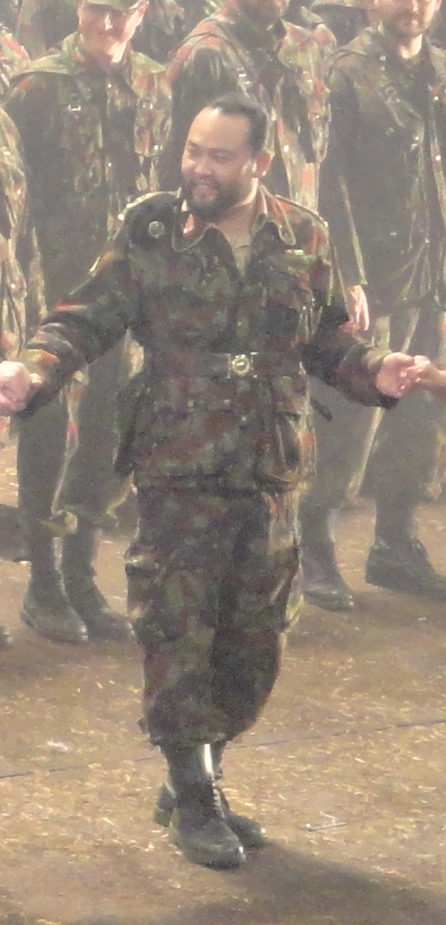

O baixo Hans-Peter König foi absolutamente fabuloso como Hagen. É o melhor da actualidade neste papel. Voz poderosíssima e de uma beleza invulgar, interpretação absolutamente irrepreensível, cénica e vocal.


E que dizer da Brünhilde do soprano Iréne Theorin? Que foi a melhor da noite? Que foi excelente tanto cénica como vocalmente? Que interpretou a personagem de forma absolutamente impecável e convincente? Que a voz foi imponente e sempre sobre a orquestra? Que na cena da imolação, sozinha em palco, foi comovente e arrasadora? Sim, foi tudo isso! Uma das melhores interpretações que vi e ouvi até hoje da personagem. Fabulosa!


Um Crepúsculo dos Deuses ao mais alto nível no Liceu de Barcelona.


*****


TWILIGHT OF THE GODS / Götterdämmerung, Gran Teatro del Liceu, Barcelona, ​​March 2016

The Twilight of the Gods by R. Wagner was on stage in March 2016 in Liceu de Barcelona. The staging was Robert Carsen. I did not see any of the three previous operas of this ring so I cannot fit in the latter that will have passed before.

At the beginning there is a disabled room, with part of the furniture stacked or covered and secured with ropes, the golden threads with which the Norns trace the destiny (presented as maids initially washing the floor). The whole opera takes place essentially in three scenarios. An open space (the rock) which has deposited military remains, including clothing, weapons, helmets and swords. It is here that initially Siegfried (dressed in camouflaged) and Brünhilde, appear, and will also be in this scenario that the dialogue between Brünhilde and Waltraute will occur.
The Gibichung’s Palace is a huge room of a military set with a red flag with white band in the middle, a fireplace in the background and a large central desk. Gunther is a high-ranking militar and is surrounded by others. Hagen is dressed in civilian clothes. Siegfried arrives deranged, in opposition to all impeccably uniformed military men. He does not know what is the staple or the phone on the desk. The 1st act ends in the scenario mentioned above in which Siegfried, transformed by the helmet in Gunther, looks for Brünhilde. In this production it is Gunther himself that appears, make the mouth movements like singing, but who is singing is Siegfried behind the scenes. The idea does not result well.

In the 2nd act again in the great military hall, Brünhilde arrives dressed as a bride, and is not recognized by Siegfried, who is with an elegantly dressed Gutrune. The choir is a large group of military people, at some point wielding many identical flags. Here the scenic effect is excellent. The analogies with Nazism are evident, but the scene could happen in any other framework.
The 3rd act opens with the dirty daughters of the Rhine washing themselves in the water of a polluted Rhine with all sorts of debris: tires, weapons, a TV, warped wheels, bowls, etc. It is in this scenario that Siegfried is murdered by Hagen (with the handle of a flag) and led, dead, to the large desk military hall. Brünhilde appears but the curtain comes down and she sings in the final stunning immolation scene without any visual support. Finally fire that comes from all sides of the stage.

The excellent musical direction was the conductor Josep Pons. The Symphony Orchestra and, above all, the Gran Teatre del Liceu Choir were at the highest level, as I rarely heard at the Liceu.

The three Norns (Cristina Faus, Pilar Vásquez, Jacquelyn Wagner) sang well but were less impressive than the 3 daughters of the Rhine (Isabel Gaudí, Anna Alàs i Jové, Marina Pinchuk) that were great.

Alberich was interpreted by the baritone Oskar Hillebrandt, in a small banal role. Mezzo Michaela Schuster was a great Waltraute, with a firm voice, well tuned and impeccable scenic expression.

Gutrune was sung by soprano Jacquelyn Wagner. She was very good and has a nice figure, which helped to the character. Vocally she was one of the less impressive because the voice, beautiful and lyrical, is not full-bodied and occasionally was drowned out by the orchestra.

Tenor Lance Ryan was Siegfried. He sang well but is not the heldentenor you want for the character because he lacks vocal potency. He looks like a Siegfried, sings well all the notes, but a more imposing singer would fit better. However, it was a good interpretation.

Baritone Samuel Youn was an impressive Gunther. The singer has a powerful, very nice and refined voice. He was also very good on stage.

Bass Hans-Peter König was absolutely fabulous as Hagen. At present times, he is the best present in thisrole. Powerful and unusually beauty voice. His performance was absolutely irreproachable, scenic and vocal.

And what about soprano Iréne Theorin’s Brünhilde? Was she the best of the night? Was she excellent both scenic as vocally? She played the character absolutely flawless and convincing? Her voice was imposing and always above the orchestra? At the scene of the immolation, alone on stage, was she touching and overwhelming? Yes, it was all! One of the best performances I have ever seen and heard of this Brünhilde. Fabulous!

A Twilight of the Gods at the highest level in the Liceu de Barcelona.


*****

terça-feira, 19 de fevereiro de 2013

SIEGFRIED, Bayerische Staatsoper, Munique, Janeiro de 2013 / Munich, January 2013


(review in English below)

Siegfried é a terceira ópera do ciclo do Anel do Nibelungo de Richard Wagner. A encenação é de Andreas Kriegenburg.

No Anel esta é a ópera em que a natureza é dominante. Toda a acção se passa em grutas, floresta e montanhas. E as abordagens de Kriegenburg são, mais uma vez, impressionantes. Os elementos cénicos são construídos pelos figurantes, resultando num efeito surpreendentemente eficaz.

No 1º acto, a gruta do nibelungo Mime é montada em palco pelos figurantes que transportam, cada um, uma grande placa rectangular que, no seu conjunto, formam a gruta. No centro está a bigorna.

(fotografia / photo Wilfried Höse, Bayerische Staatsoper)

Mime criou Siegfried para o usar na recuperação do anel que está na posse de Fafner, agora transformado em dragão por efeito do elmo. Só alguém que não saiba o que é o medo, como Siegfried, o poderá enfrentar. Mime tenta reconstruir a espada Nothung, mas não consegue.

(fotografia / photo Wilfried Höse, Bayerische Staatsoper)

(fotografia / photo Wilfried Höse, Bayerische Staatsoper)

Conta a Siegfried a sua história e, sempre que refere um pormenor relevante, a gruta desfaz-se e vêem-se os figurantes representar o que Mime relata. Por exemplo quando diz que a mãe, Sieglinde, morreu de parto, vê-se no fundo do palco Sieglinde a parir.
Wotan surge disfarçado de viajante e propõe a Mime que ambos coloquem três perguntas um ao outro. Quem não acertar, morre.

(fotografia / photo Wilfried Höse, Bayerische Staatsoper)

 Wotan responde facilmente às perguntas de Mime: quem vive no interior da terra, à superfície e nas alturas. Em cada resposta, a gruta é retirada e, no fundo do palco, vêem-se os figurantes a representar os nibelungos escravizados, depois os gigantes sobre os cubos humanos e, finalmente, Walhall. O efeito cénico é magnífico. Mime não acerta na 3ª pergunta: quem voltará a forjar a espada Nothung.
Siegfried reconstrói a espada e os figurantes representam na perfeição todos os utensílios de uma fundição.

(fotografia / photo Wilfried Höse, Bayerische Staatsoper)

 No 2º acto Alberich está próximo da gruta de Fafner, na expectativa de recuperar o anel.

(fotografia / photo Wilfried Höse, Bayerische Staatsoper)

Mime pede a Siegfried para matar o dragão. A representação do dragão é fantástica. Aparece suspenso, de cor vermelha, constituído por um conjunto de figurantes que formam a enorme cabeça.

(fotografia / photo Wilfried Höse, Bayerische Staatsoper)

(fotografia / photo Wilfried Höse, Bayerische Staatsoper)

 Não sabendo o que é o medo, Siegfried enfrenta-o e mata-o com a espada.

(fotografia / photo Wilfried Höse, Bayerische Staatsoper)

Ao provar acidentalmente o seu sangue, percebe o que lhe diz uma ave. A cantora tem um leque em cada mão que movimenta simulando o bater de asas

(fotografia / photo Wilfried Höse, Bayerische Staatsoper)

. Diz-lhe que se deve apoderar do anel e do elmo e que Mime o pretende matar. Siegfried mata-o.

(fotografia / photo Wilfried Höse, Bayerische Staatsoper)

A ave leva-o pela floresta até ao rochedo onde está Brünhilde e diz-lhe que a deverá acordar. As árvores são formadas por figurantes suspensos, noutro efeito cénico de invulgar eficácia e beleza.

(fotografia / photo Wilfried Höse, Bayerische Staatsoper)

O 3º acto inicia-se com o aparecimento de Erda, totalmente vestida e pintada de branco, assim como o grupo de figurantes que a acompanham. Volta a dizer ao viajante (Wotan) que o fim dos deuses está próximo. Siegfried reconhece nele o assassino do pai e quebra-lhe a lança com a espada Nothung.

(fotografia / photo Wilfried Höse, Bayerische Staatsoper)

No que, para mim, é a parte menos conseguida da encenação de todo o Anel, Siegfried atravessa o rio (?), efeito representado por um grande e ruidoso plástico que cobre todo o palco e, depois, o fogo, e vê pela primeira vez uma mulher, Brünhilde.

(fotografia / photo Wilfried Höse, Bayerische Staatsoper)

(fotografia / photo Wilfried Höse, Bayerische Staatsoper)

Acorda-a com um beijo e os dois apaixonam-se. A última cena passa-se num cenário em que há uma cama no centro e todo o palco está coberto por um pano encarnado, simbolizando o fogo. Mas o efeito final é desinteressante.

(fotografia / photo Wilfried Höse, Bayerische Staatsoper)

O tenor canadiano Lance Ryan foi Siegfried. Cantou bem o papel embora a voz, apesar de grande, não seja particularmente imponente. Uma voz mais heróica seria melhor, mas onde estão elas nos dias de hoje? Ryan manteve a qualidade interpretativa ao longo da récita e, mesmo no final do 3º acto, no diálogo com a recém chegada (ao palco) Brünhilde, esteve ao mais alto nível. O cantor tem uma excelente figura, tem corpo de Siegfried, e movimenta-se muito bem em palco, o que ajudou muito.


 Ulrich Ress, tenor alemão, foi um Mime marcante. O timbre é perfeito para o papel, a voz sempre bem projectada e sob absoluto controlo. Foi um dos melhores da noite e, cenicamente, esteve também superlativo.


 O barítono alemão Thomas J Mayer foi um Wanderer de grande classe, tanto vocal como cénica. Foi sempre audível sobre a orquestra, tem uma voz encorpada e foi muito expressivo na interpretação.


 Tomasz Konieczny, baixo-barítono polaco, fez do Alberich um verdadeiro gangster (como a encenação pede). Vocalmente é extraordinário mas gostei mais do seu Wotan na Valquíria.


 Foram também intérpretes de grande categoria o baixo norte-americano Steven Humes como Fafner, o soprano russo Anna Virovlansky que deu voz à ave e o contralto chinês Qiulin Zhang como Erda.


 A Brünhilde da noite foi o soprano norte-americano Catherine Naglestad que cantou com grande poderio vocal, sobretudo no registo mais agudo. Teve uma boa presença cénica, ao nível do Siegfried de Lance Ryan.


Um Siegfried sensacional!


*****


SIEGFRIED, Bayerische Staatsoper, Munich, January 2013

Siegfried is the third opera of the Nibelung’s Ring cycle of Richard Wagner. The staging was by Andreas Kriegenburg.

This is the opera where nature dominates. All the action takes place in caves, forests and mountains. And Kriegenburg’s approaches are again striking. The scenic elements are constituted by supernumeraries resulting in a surprisingly good way.

In the 1st act, the cave of the Nibelung Mime is built on stage by supernumeraries, each carrying a large rectangular plate which, taken together, form the cave which has in the center, the anvil.
Mime grew up Siegfried to use him in the recovery of the ring that is in possession of Fafner, now transformed into a dragon, by the effect of the helmet. Only someone who does not know what fear is, as Siegfried, may face the dragon. Mime tries to rebuild the sword Nothung, but can not. He tells his history Siegfried and wheneverhr refers to a relevant detail, the cave disassembles and the supernumeraries perform backstage what Mime reports. For example when he says that his mother, Sieglinde, died in childbirth, we see backstage Sieglinde giving birth.
Wotan appears disguised as a traveler and proposes Mime to put three questions to each other. Who fails, dies. Wotan responds readily to Mime’s questions: who are those who live within the earth, on the surface and above in a castle. In each response, the cave is disassembled and backstage, the supernumeraries are seen to represent the enslaved Nibelungs, the giants on human cubes and finally Walhall.
The scenic effect is magnificent. Mime misses the 3rd question: who will again forge the sword Nothung.
Siegfried reconstructs the sword and the supernumeraries represent perfectly all the utensils of a foundry.

In 2nd act Alberich is near Fafner's cave, hoping to recover the ring. Mime asks Siegfried to slay the dragon. The representation of the dragon is fantastic. It appears suspended, in red, comprising a set of supernumeraries forming the massive head. Not knowing what fear is, Siegfried kills him with the sword. When accidentally he tastes his blood, he understands what a bird sings. The singer playing the bird has a fan in each hand that moves simulating the flapping of bird wings. The bird tells him he should grab the ring and the helmet and that Mime intends to kill him. Siegfried kills Mime. The bird takes him through the forest to the cliff where Brunhilde is and tells him to wake her up. Trees are formed by suspended extranumeraries, another effect of unusual scenic beauty and effectiveness.
The 3rd act begins with the appearance of Erda, painted in white, like the group of supernumeraries that come with her. She tells again the traveler (Wotan) that the end of the gods is near. Siegfried recognizes him as the murderer of his father and breaks his spear with the sword Nothung.
In the least effective part of the staging of the entire Ring, Siegfried crosses the river (?) an effect represented by a large and noisy plastic that runs through the stage and then the fire, and sees a woman (Brünhilde) for the first time. He wakes her with a kiss and the two fall in love. The last scene is set in a scenario where there is a bed in the center and the entire stage is covered by a red cloth, symbolizing the fire.
But the final effect is uninteresting.
Canadian tenor Lance Ryan was Siegfried. He sang the role well although the voice, though large, is not particularly beautiful. A more heroic voice would be better, but where are they today? Ryan maintained the vocal quality along the performance and even at the end of the 3rd act, in the dialogue with the fresh (for singing) Brünhilde. The singer has a good figure, he has a body of Siegfried, and moves well on stage, which helped a lot.

Ulrich Ress, German tenor, was a remarkable Mime. His timbre is perfect for the role, the voice always well projected and under absolute control. He was one of the best of the night, and artistically he was also superlative.

 German baritone Thomas J Mayer was a great class Wanderer, both vocal and on stage. He was always audible over the orchestra, has a voluminous voice and was very expressive throughout the performance.

Tomasz Konieczny, Polish bass-baritone, played Alberich as a real gangster (as the staging called). Vocally he was extraordinary but I prefered his Wotan in Die Walküre.
Also excellent were North-American bass Steven Humes as Fafner, Russian soprano Anna Virovlansky as the bird, and Chinese contralto Zhang Qiulin as Erda.

The Brünhilde the evening was North-American soprano Catherine Naglestad who sang with great vocal power, especially in the higher register. She had a good stage presence, to the level of Lance Ryan’s Siegfried.
A sensational Siegfried!

*****