Mostrar mensagens com a etiqueta Gounod. Mostrar todas as mensagens

segunda-feira, 23 de maio de 2022

FAUST, Teatro Nacional de São Carlos, Lisboa / Lisbon, Maio / May 2022


(review in English below)

No Teatro Nacional de São Carlos pudemos assistir à ópera Faust de Charles Gounod numa produção originária da Ópera de Las Palmas, encenada por Alfonso Romero Mora, sob a direcção do maestro Antonio Pirolli

Foi o melhor espectáculo de ópera desta temporada, ao nível dos grandes espectáculos de ópera internacionais. Tanto o Coro do Teatro de São Carlos como a Orquestra Sinfónica Portuguesa estiveram muito bem.


A encenação foi fantástica! Foi a prova que, com imaginação e competência, conseguem criar-se espectáculos de grande qualidade cénica com poucos recursos. Saliento alguns aspectos: Logo no início, um pêndulo enorme marca o ritmo da vida, que é parado pelo Mefistófeles quando chega a acordo com o velho Faust e o transforma num jovem. No final da ópera, quando tudo termina, o pêndulo volta a aparecer e a retomar o seu curso. 

Há também logo no início uma banheira antiga, (objecto purificador?), onde o velho Faust é lavado por uma enfermeira no lar onde está. A banheira voltará a aparecer quando Marguerite surge com o filho abandonado por Faust. Mais tarde, será aí que a criança morrerá afogada pela mãe, enlouquecida. 

Para mim a cena de maior impacto é a cena da igreja do IV acto, quando Marguerite reza a Deus em frente a uma estátua da Pietá e rodeada de um grupo de religiosos. O diálogo é estabelecido com Mefistófeles que manipula um padre (morto) que canta e faz os gestos condenatórios. Mais tarde Mefistófeles coloca-se sobre a estátua e, nesse momento, vê-se que as figuras são vivas porque se movimentam. O efeito é magnífico e de uma beleza invulgar.

Muito mais se poderia destacar. Também houve pequenos apontamentos que não gostei como, logo no início, a lavagem do velho Faust. Não teria sido necessário um nu integral do figurante. Felizmente que, mais tarde, com a criança, esta ficou de cuecas. 

Mas foi uma encenação excelente, a melhor de todas as que vi desta ópera!


Quanto aos cantores solistas, também estiveram muito bem. Faust foi o tenor Mario Bahg de voz com timbre agradável e bem audível. Foi pouco emotivo na componente cénica, mas esteve bem.

Anunciaram antes do início do espectáculo que o barítono Rubén Amoretti não estaria fisicamente bem. Mas foi um Méfistófeles excelente com voz bonita, potente e sempre afinada, aliada a uma excelente presença cénica, muito ajudada pela caracterização.


A soprano Irina Lungu fez uma Marguerite de qualidade superior, tanto na vertente cénica como na vocal, onde mantém um voz de qualidade assinalável, afinada e muito bem colocada.


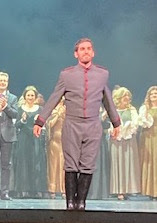
O barítono André Baleiro foi um Valentin de excepção. Para mim o melhor cantor da noite. É jovem, a figura ajuda muito, e tem uma voz enorme e sabe utilizá-la na perfeição. Foi um privilégio assistir à sua interpretação. E o público reconheceu-o no final.


A Mezzo Cátia Moreso este ano já nos ofereceu interpretações de topo. Não foi o caso hoje. Esteve bem mas, frequentemente, as notas saíram mais gritadas que cantadas, o que prejudicou a actuação.

A terminar, Luís Rodrigues (Wagner) e Patrícia Quinta (Marthe) cumpriram sem destoar.

Um excelente espectáculo de ópera!


****


FAUST, Teatro Nacional de São Carlos, Lisbon May 2022

At the Teatro Nacional de São Carlos we were able to watch the opera Faust by Charles Gounod in a production originally from the Opera de Las Palmas, directed by Alfonso Romero Mora, under the direction of conductor Antonio Pirolli.

It was the best opera performance this season, at the level of the great international opera shows. Both the São Carlos Theater Choir and the Portuguese Symphony Orchestra performed very well.

The staging was fantastic! It was a proof that, with imagination and competence, it is possible to create shows of great scenic quality with few resources. I emphasize some aspects: Right at the beginning, a huge pendulum marks the rhythm of life, which is stopped by Mephistopheles when he comes to terms with the old Faust and transforms him into a young man. At the end of the opera, when everything is over, the pendulum reappears and resumes its course.
There is also at the very beginning an old bathtub, (purifying object?), where old Faust is washed by a nurse in the nursing home where he is. The bathtub will reappear when Marguerite appears with her son abandoned by Faust. Later, it will be there that the child will be drowned by the mother, maddened.
For me, the scene with the greatest impact was the scene in the church of the IV act, when Marguerite prays to God in front of a statue of the Pietá and surrounded by a group of religious. The dialogue is established with Mephistopheles who manipulates a (dead) priest who sings and makes the condemning gestures. Later Mephistopheles places himself on top of the statue and, at that moment, it is seen that the figures are alive because they move. The effect is magnificent and of an unusual beauty.
Much more could be highlighted. There were also minor points that I didn't like, such as, right at the beginning, the washing of the old Faust. A full nude of the extra would not have been necessary. Fortunately, later on, with the child, he was left in his underwear. But it was an excellent staging, the best I've ever seen of this opera!

As for the soloist singers, they were also very good. Faust was the tenor Mario Bahg with a pleasant and audible voice. He was less emotional in the scenic component, but he was fine.

They announced before the start of the show that baritone Rubén Amoretti would not be physically well. But he was an excellent Mephistopheles with a beautiful, powerful and always in tune voice, combined with an excellent stage presence, greatly helped by the figure.

Soprano Irina Lungu was a Marguerite of superior quality, both in the scenic and vocal aspects, where she maintains a voice of remarkable quality, in tune and very well placed.

Baritone André Baleiro was an exceptional Valentin. For me the best singer of the night. He is young, the figure helps a lot, and he has a huge voice and knows how to use it perfectly. It was a privilege to watch his performance. And the audience recognized him in the end.

Mezzo Cátia Moreso this year has already offered us top interpretations. That was not the case today. She was ok, but often the notes were more shouted than sung, which hampered the performance.

Luís Rodrigues (Wagner) and Patrícia Quinta (Marthe) were ok in their short roles.

An excellent opera show!

****


quarta-feira, 26 de junho de 2019

FAUST, Royal Opera House, Londres / London, Maio / May 2019


(review in English below)

A Royal Opera House voltou a apresentar a encenação de David McVicar da opera Faust de C-F Gounod (libretto de Jules Barbier e Michel Carré). 


Esta produção já foi comentada no blogue aqui. Como referido então, a encenação é muito vistosa mas tem algumas bizarrias e uma cena orgiática de gosto muito duvidoso perto do final.


O maestro Dan Ettinger foi banal na direcção da orquestra que não esteve perfeita. Os cantores, com uma excepção, foram banais. E foram uma sombra em relação aos que vi e ouvi em 2011, num elenco de luxo: Vittorio Grigolo, René Pape, Angela Gheorghou e o saudoso Dmitri Hvorostovsky.


Michael Fabiano (Faust) tem uma má dicção do francês e canta com uma emissão algo irregular e teve manifestas dificuldades no registo mais agudo, quase cantou em falsete. Erwin Schrott (Méphistophélès), mais à vontade em palco, também não foi regular na linha de canto. Irina Lungu (Marguerite) que substituiu Diana Damrau, foi dura e nada expressiva. Carole Wilson (Marthe) e Germán Alcántara (Wagner) cumpriam sem impressionar. Contudo houve duas grandes interpretações, ao nível da qualidade habitual deste teatro, mas que não salvaram a récita, a jovem  Hongni Wu (Siébel), fantástica e Stéphane Degout (Valentin), excelente em cena, na interpretação vocal muito emotiva e sempre bem audível e, na verdade, o único que cantou em francês perceptível.


**


FAUST, Royal Opera House, London, May 2019

The Royal Opera House presented again David McVicar's staging of C-F Gounod's opera Faust (libretto by Jules Barbier and Michel Carré). This production has already been commented in the blog here. As stated then, the staging is very showy but has some bizarre and an orgiastic scene of very dubious interest near the end.

Conductor Dan Ettinger was banal in the direction of the orchestra that was not perfect. The singers, with one exception, performed without impressing. And they were a shadow over what I saw and heard in 2011, with a luxury cast: Vittorio Grigolo, René Pape, Angela Gheorghou and Dmitri Hvorostovsky.

Michael Fabiano (Faust) has a bad diction of French and sings with a somewhat irregular emission and had manifest difficulties in the top register, almost sang in falsetto. Erwin Schrott (Méphistophélès), more at ease on stage, was also not regular on the singing. Irina Lungu (Marguerite) who replaced Diana Damrau, was harsh and not expressive. Carole Wilson (Marthe) and Germán Alcántara (Wagner) performed without impressing. However, there were two top quality interpretations in the usual quality of this theater, but they did not save the performance: Hongni Wu (Siébel) was fantastic, and Stéphane Degout (Valentin), excellent on stage, in a very emotional and always well audible vocal performance and, in fact, the only one who sung in understandable French.

**

sábado, 16 de março de 2019

ROMEU E JULIETA (Charles Gounod), Fundação Gulbenkian, Março / March 2019


(text in English below)

Romeu e Julieta (Roméo et Juliette) de Charles Gounod é uma ópera (com prólogo e cinco actos) com libretto de Jules Barbier e Michael Carré, baseada na obra homónima de William Shakespeare.


A Fundação Gulbenkian ofereceu-nos esta ópera numa versão encenada. Apesar das limitações da sala (não é um teatro de ópera), a orquestra foi colocada num plano inferior e a encenação tirou partido de toda a versatilidade do moderno palco do Grande Auditório.


O espectáculo foi encenado por Vincent Huget (com coreografia de Aurélie Maestre, figurinos de Clémence Pernoud e desenho de luz de Bertrand Couderc). A acção decorre no palco com poucos adereços que incluíram estátuas, uma delas sempre presente, e blocos escuros que servem de pedras tumulares ou de cama, mas com movimentações dinâmicas ao longo do espectáculo. O guarda roupa espelha bem a diferença dos mais ricos e poderosos (Capuletos, família a que pertence a Julieta) para os pobres (Montéquios, família do Romeu). Criou-se com grande eficácia um ambiente soturno e pesado, adequado ao desenrolar da ópera. Só não gostei da parte em que o padre (Frei Lourenço) casa o par solista ao lado de um cadáver que está a lavar e na frente da viúva. Escapou-me algo aqui pois não creio que seja apenas mau gosto do encenador.


A direcção da Orquestra Gulbenkian foi do maestro titular, Lorenzo Viotti, que, num toque fresco de juventude, calçava “ténis”. Maestro e orquestra muito bem e o Coro Gulbenkian, que apareceu vindo da plateia, esteve em grande nível, como é habitual. E cabem-lhe algumas das intervenções mais significativas.


Todos os cantores solistas eram jovens, o que ajudou muito tanto na credibilidade das interpretações como na movimentação cénica. A soprano Vannina Santoni foi uma Julieta que não começou bem mas, após o primeiro acto, melhorou muito. Tem uma voz muito potente, de timbre bonito, mas que parece perder algum controlo no registo mais agudo e também tende para a estridência. Mas foi muito boa.

O Tenor Georgy Vasiliev foi um Romeu algo contido, de voz agradável, mas com um registo médio irregular. Nos duetos com a Julieta (são vários e incluem algumas das partes musicais mais belas, como o Nuit d’Hyménée no quarto acto) foi notória a diferença de potência vocal entre os dois.

O baixo Jean Teitgen foi um dos melhores cantores da noite, com uma interpretação excelente do Frei Laurent. Também os barítonos John Brancy (Mercúcio) e Andrew Foster-Williams (Capuleto) foram muito bons, com vozes magníficas e óptimas interpretações cénicas. Marco Alves dos Santos foi um Tebaldo notável, Cecília Rodrigues um Stéphano fresco e jovial, e Carolina Figueiredo uma Gertrudes muito correcta.  Em intervenções menores também participaram Pedro Casanova (Páris), André Henriques (Grégorio) e Manuel Gamito (Benvolio).


Foi um espectáculo muito bom, mas deixo mais uma vez uma nota muito negativa sobre o público, desta vez não pelas tosses, mas pelos telemóveis. Os que me rodeavam passaram todo o tempo a acender os telemóveis e a responder a mensagens e, inevitável, durante a cena da morte do Romeu, um tocou demoradamente porque estava dentro da mala de uma mulher que demorou a encontra-lo. 

É chocante a falta de respeito pelos outros num grupo de pessoas que, admitimos, seriam educadas!


***


ROMEO AND JULIET (Charles Gounod), Gulbenkian Foundation, March 2019

Romeo and Juliet (Roméo et Juliette) by Charles Gounod is an opera (with prologue and five acts) with libretto by Jules Barbier and Michael Carré, based on the work of the same name by William Shakespeare.

The Gulbenkian Foundation offered us this opera in a staged version. Despite the limitations of the room (not an opera house), the orchestra was placed on a lower plane and the staging took advantage of all the versatility of the modern stage of the Grand Auditorium.

The opera was staged by Vincent Huget (with choreography by Aurélie Maestre, costumes by Clémence Pernoud and drawing by Bertrand Couderc). The action takes place on a stage with few props that included statues, one of them always present, and dark gray blocks that serve as bedrock or graves, but with dynamic movements throughout the show. The dresses look very different from the richer and more powerful ones (Capulets, family to which Juliet belongs) to the poor (Monequies, Romeo's family). A dark and heavy atmosphere was created with great efficiency, adequate to the opera's unfolding. I just do not like the part where the priest (Frei Lourence) marries the couple next to a corpse that he is washing and in front of the widow. Something escaped me here because I do not think it's just bad option for the director.

The direction of the Gulbenkian Orchestra was by the young conductor, Lorenzo Viotti, who, in a fresh youthful tone, wore "tennis". Conductor and orchestra very well and the Gulbenkian Choir, that appeared from the audience, was in great level, as usual. And they have some of the most significant interventions.

All the soloist singers were young, which helped a lot both in the credibility of the interpretations and in the scenic movement. Soprano Vannina Santoni was a Juliet that did not start well but, after the first act, she improved a lot. She has a very powerful voice, of beautiful timbre, but that seems to lose some control in the most acute register and also tends towards stridency. But she was very good.

Tenor Georgy Vasiliev was a somewhat restrained Romeo, with a pleasant voice, but with a medium irregular register. In the duets with Juliet (there are several and include some of the most beautiful musical parts, such as the Nuit d'Hyménée in the fourth act) was notorious for the difference in vocal power between the two.

Bass Jean Teitgen was one of the best singers of the evening, with an excellent interpretation of Frei Laurent. Also baritones John Brancy (Mercutio) and Andrew Foster-Williams (Capulet) were very good, with magnificent voices and great scenic interpretations. Marco Alves dos Santos was a remarkable Tebald, Cecília Rodrigues a fresh and jovial Stéphano, and Carolina Figueiredo a very correct Gertrud. In smaller interventions also participated Pedro Casanova (Páris), André Henriques (Gregory) and Manuel Gamito (Benvolio).

It was a very good performance but, once again, I leave a very negative note about the public, this time not for the coughs, but for the mobile phones. Those around me spent all their time turning on their cell phones and responding to messages and, inevitably, during the scene of Romeo's death, one rang for a long time because it was inside a woman's suitcase who was slow to find it. 

It is shocking the lack of respect for others in a group of people who, we admit, would be cultured!

***

domingo, 23 de setembro de 2018

FAUST de Charles Gounod — Teatro Real, Madrid, 22/09/2018

(Review in English below)

Assisti à ópera Faust, produção que abre a temporada do Teatro Real de MadridCharles Gounod estreou a ópera em 1859 que teve como libretistas a dupla Jules Barbier Michel Carré que partiram da peça Faust et Marguerite inspirada no Faust de Goethe.

A ópera tem estado menos frequentemente no repertório atual do que nos anos que se seguiram à estreia, provavelmente por ser musicalmente interessante, mas ter um drama e texto algo inconsistentes.


A produção trazida ao Teatro Real é a que Álex Ollé (La Fura dels Blaus) estreou em 2014 em Amesterdão. Trata-se de uma produção muito intensa visualmente, com múltiplos números que pretendem modernizar a ópera e que o fazem com qualidade e sem desvirtuar a indicações cénicas originais. Traz a ação para o nosso século e para um laboratório que trabalha o projeto “Homunculus Project”. Recorrendo a um vestuário vistoso, a um jogo de luzes intenso, a diversos painéis que se vão transformando, a encenação proposta permite o desenrolar da ação de forma fluida e caricaturiza alguns estereótipos sociais. Sem ser genial, sugere uma leitura alternativa que vale a pena explorar.


Orquestra do Teatro Real soou de forma luxuosa sob a direção de Dan Ettinger que pecou pontualmente pelo ritmo e volume excessivos. O Coro do Teatro Real esteve imaculado, oferecendo momentos de grande qualidade.

A figura principal da abertura da temporada de Madrid é Piotr Beczala que foi um Faust apaixonado, dramaticamente convincente, e com uma voz poderosíssima de agudos estratosféricos que apenas pecou pelo seu francês peculiar.

A Marguerite de Marina Rebeka esteve fantástica (mais consistente que Beczala), exibindo uma voz cheia e de agudos fáceis, destacando eu a interpretação do “Il ne revient pas” do IV ato.

O Mefistófeles de Luca Pisaroni esteve um pouco abaixo vocalmente se comparado com Beczala ou Rebeka, apresentando alguma dificuldade no registo agudo e, apesar de cenicamente ter estado bem, não conseguiu ser muito diabólico.

O Valentin de Stéphane Degout foi magnífico e, no meu entender, o melhor da récita pela qualidade vocal (excelente em toda a tessitura) e intensidade dramática. Um barítono de invulgar qualidade.

O Siebel de Serena Malfi foi de grande qualidade, apesar de ter tido um ou outro agudo mais estridente.


Valeu, pois, bem a pena a deslocação à capital espanhola e ao Teatro Real.

__________________
(Review in English)

I attended the opera Faust which is the production that pretend to open the Madrid’s opera season in a glamorous way. Charles Gounod premiered the opera in 1859 with a libretto by Jules Barbier and Michel Carré based on the play Faust et Marguerite inspired by Goethe’s Faust.

This opera has been less frequently performed than in the years following the premiere, probably because of a drama and text that are somewhat inconsistent, despite the unquestionable musical quality.

The production brought to Teatro Real is Álex Ollé’s Faust premiered in 2014 at Amsterdam. It is a visually very intense production, intending to modernize the opera without detracting from the original scenic indications. Ollé’s production brings the action to our century and to a laboratory that works on the "Homunculus Project". Using a showy clothing, an intense palette of lights, different panels permanently in transformation, the proposed staging allows the unfolding of the action in a fluid way and try to caricature some social stereotypes. Despite it’s not a genial production, the alternative reading proposed worth to be explored.

The Orchestra sounded luxuriously under the direction of Dan Ettinger who sinned punctually due to excessive rhythm and volume. The Choir was immaculate, offering moments of great quality.

The main figure of the season is Piotr Beczala who was a passionate, dramatically convincing Faust, with a very powerful voice of stratospheric highs that only sinned for his peculiar French.

Marina Rebeka's Marguerite was fantastic (more consistent than Beczala). She has a beautiful voice and terrific high notes, and I highlight the interpretation of "Il ne revient pas" from IV act as her best moment.

The Mephistopheles of Luca Pisaroni was, if compared to Beczala or Rebeka, vocally not so convincing, presenting some difficulty in the acute register and, although he had been well cenically, he was not so diabolical as I would expect.

Stéphane Degout's Valentin was magnificent and, in my opinion, the best performer of the cast for vocal quality (excellent throughout the whole tessitura) and dramatic intensity. A baritone of unusual quality.

Serena Malfi's Siebel was of high quality, despite some harsh high notes.

This Faust worth well the trip to the Spanish capital and to Teatro Real.