(Review in English below)

Dois pontos essenciais em relação à récita de hoje:
1) Como é que é possível que esta ópera não esteja mais frequentemente em cena nos palcos dos grandes teatros de ópera?!?!? Porquê?!?!?
2) A Ópera de Amsterdão conseguiu instalar uma Königskinder, de E. Humperdinck de uma qualidade que, a meu ver, devia ficar imortalizada em vídeo porque seria de referência para esta obra. Não me vou perder no resumo da história porque poderá ser lido na wikipedia ou site similar.
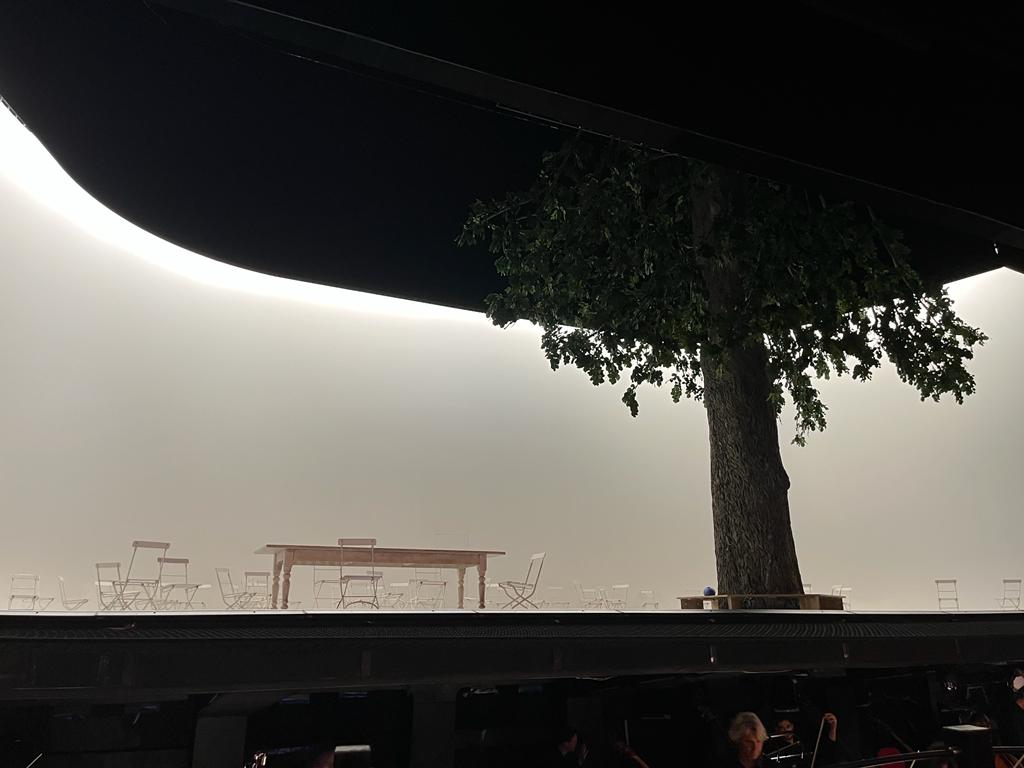
A encenação de Christof Loy é de uma simplicidade e de uma fidelidade ao texto incríveis. Sob fundo branco que permanece na quase totalidade da ópera, excepto no dueto final entre as personagens principais, onde se eleva para deixar visualizar um nevão ligeiro (3º acto é no Inverno), a casa da bruxa (intacta no 1º acto, vandalizada/velha no 3º) e uma árvore (florida no 1º acto, seca no 3º), com uns gansos de madeira puxados a cordel, uma coroa de flores e uma de jóias, é o que chega para contar uma história. Sob este palco um grupo de cantores/actores, dançarinos e coro de crianças (dentro de palco e no fosso) de uma qualidade interpretativa vocal e cénica exímia e homogénea, ao mais ínfimo detalhe e com um guarda roupa de bom gosto onde predomina o branco/creme.


A música de Humperdinck é linda, cheia de leitmotiv (ou não fosse ele um grande admirador de Wagner) e potente do ponto de vista dramático, principalmente nos 1º e 3º actos. Loy aproveita-se bem disso e no início do 3º acto, durante a entrada orquestral lindíssima, projecta em filme tudo aquilo que se passou na história mas que não tem acção cénica de palco na versão original - o encarceramento do violinista por ser culpado de ter perguntado à bruxa quem seria o novo rei, o julgamento deste e da bruxa, a que desta resulta a sua morte na fogueira, excelentemente caracterizada, sob olhar dos populares que são todos os que entram no 2º acto da ópera; em ambos os julgamentos os réus (violinista e bruxa) olham para um padre para apoio e que se limita a baixar os olhos e contrair os masséteres; e a libertação do violinista após a morte da bruxa não sem antes ser enchido de pancada pela guarda e sair a coxear em direcção ao ambiente que será o do 3º acto (vive na casa vandalizada da bruxa). Em palco, uma violinista vestida de fato preto, completou o elenco, fazendo os diversos solos de violino que a obra apresenta e com um lirismo marcante.

Marc Albrecht dirigiu de uma forma emotiva e precisa uma orquestra portentosa. O facto de o fosso não ter muro a separar da plateia, permite que o som se alastre de forma ainda mais exuberante pela sala o que, num momento ou outro, reduziu um pouco as vozes em palco mas sem comprometer o aproveitamento global.


Nos cantores, pouco há a dizer a não ser que todos foram brutalmente espectaculares, aliás como já referi. Daniel Behle, meu bem conhecido do mundo wagneriano de Bayreuth, é perfeito para este papel, na sua capacidade de lirismo vocal. Olga Kulchynska tem uma voz lindíssima, bem colocada, emotiva. O seu rezar aos falecidos pais para que estes lhe tirem o feitiço da bruxa, no final do 1º acto, numa das passagens mais bonitas desta ópera, foi idílico, ajudada por Loy na beleza ao deixar cair pétalas/confetti sobre si (originalmente seria uma estrela). Conhecedor das várias (poucas) gravações que há desta ópera, o que hoje aqui ouvi foi melhor do que até agora há registado. Doris Soffel teve uma presença de palco fortíssima, actriz sólida, vocalmente ainda forte apesar dos seus já 74 anos. E Josef Wagner… que grande barítono, que voz apaixonante, que grande actor. A voz é perfeita para um Wolfram, um Amfortas, um Sachs e até mesmo um Wotan. Percebo porque tem cantado muito o Mandrika da Arabella - a voz é perfeita para o papel, tal como a de Franz Grundheber na célebre gravação de Jeffrey Tate, a minha favorita. Todos os outros ao mais alto nível mas destaco o coro de crianças e uma delas (que penso ser a filha do fazedor de vassouras): Isabel Houtmortels. Voz tão bonita, cristalina, de arrepiar!!!


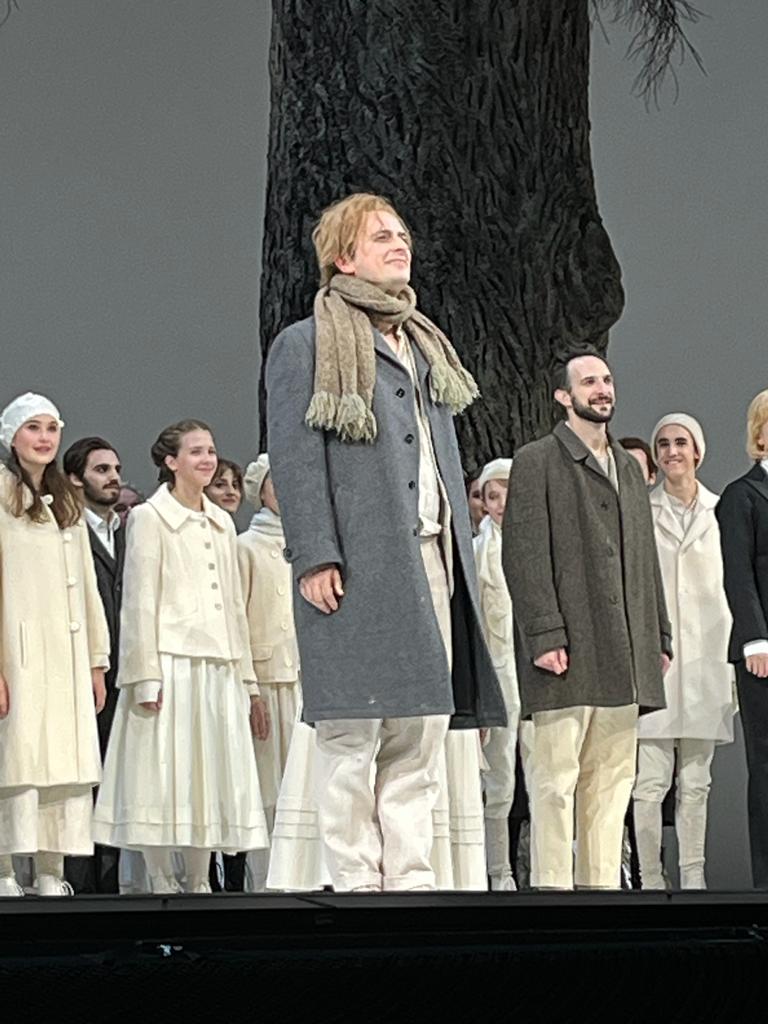


Foi muito bom voltar a esta casa, 9 anos depois e para um tesouro operático que espero que muitos dos teatros de ópera saibam vir a reencontrar.


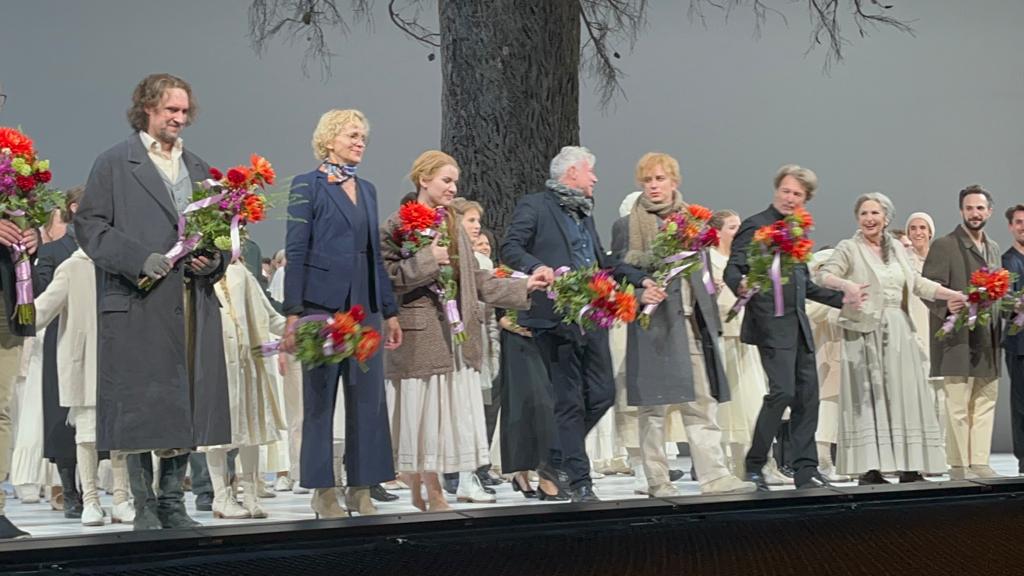
(Texto de Eagner_fanatic)
KÖNIGSKINDER, De Nationale Opera, Amsterdam, October 2022
Two essential points regarding today's performance:
1) How is it possible that this opera is not more frequently on the stage of the great opera theaters?!?!? Why?!?!?
2) The Amsterdam Opera managed to set a Königskinder of a quality that, in my opinion, should be immortalized on video because it would be a reference for this work. I won't get lost in the summary of the story because it can be read on wikipedia or similar site.
Christof Loy's staging is incredibly simple and faithful to the text. Against a white background that remains in almost the entirety of the opera, except for the final duet between the main characters, where it rises to reveal a light snowfall (3rd act is in winter), the witch's house (intact in the 1st act, vandalized/old in the 3rd) and a tree (flowering in the 1st act, dry in the 3rd), with some wooden geese pulled on string, a wreath of flowers and a wreath of jewels, is what is enough to tell a story. Under this stage, a group of singers/actors, dancers and children's choir (onstage and in the pit) of an excellent and homogeneous vocal and scenic interpretive quality, down to the smallest detail and with a tasteful wardrobe where white predominates. /cream.
Humperdinck's music is beautiful, full of leitmotifs (or were he not a great admirer of Wagner) and powerful from a dramatic point of view, especially in the 1st and 3rd acts. Loy makes good use of this and at the beginning of the 3rd act, during the beautiful orchestral entrance, he projects on film everything that happened in the story but which does not have scenic stage action in the original version - the violinist's imprisonment for being guilty of having asked the witch who would be the new king, the judgment of him and the witch, which resulted in his death at the stake, excellently characterized, under the gaze of the popular people who are all who enter the 2nd act of the opera; in both trials the defendants (fiddler and witch) look to a priest for support, who simply lowers his eyes and contracts his masseters; and the release of the violinist after the witch's death, not before being beaten by the guard and limping towards the environment that will be that of the 3rd act (he lives in the witch's vandalized house). On stage, a violinist dressed in a black suit, completed the cast, performing the various violin solos that the work presents and with a striking lyricism.
Marc Albrecht directed a portentous orchestra in an emotional and precise way. The fact that the pit does not have a wall separating the audience, allows the sound to spread even more exuberantly through the room, which, at one time or another, reduced the voices on stage a little but without compromising the overall use.
As for the singers, there is little to say other than that they were all brutally spectacular, as I mentioned before. Daniel Behle, my acquaintance from the Wagnerian world of Bayreuth, is perfect for this role, in his capacity for vocal lyricism. Olga Kulchynska has a beautiful, well-heard, emotional voice. Her praying to her deceased parents to remove the witch's spell, at the end of the 1st act, in one of the most beautiful passages of this opera, was idyllic, helped by Loy in her beauty by dropping petals/confetti on her (originally it would be a star). Knowing the various (few) recordings of this opera, what I heard here today was better than what has been recorded so far. Doris Soffel had a very strong stage presence, a solid actress, vocally still strong despite her 74 years. And Josef Wagner… what a great baritone, what a passionate voice, what a great actor. The voice is perfect for a Wolfram, an Amfortas, a Sachs and even a Wotan. I can see why he's been singing Arabella's Mandrika a lot—his voice is perfect for the role, as is Franz Grundheber's on Jeffrey Tate's famous recording, my favorite. All the others are at the highest level, but I highlight the children's choir and one of them (who I think is the daughter of the broom maker): Isabel Houtmortels. Voice so beautiful, crystal clear, chilling!!!
It was great to return to this opera house, 9 years later, and to an operatic treasure that I hope many of the opera theaters will know how to find again.