Mostrar mensagens com a etiqueta Corinne Winters. Mostrar todas as mensagens

quarta-feira, 6 de setembro de 2017

LA TRAVIATA, Royal Opera House, Londres / London, Julho / July 2017

(review in English below)

A “velha” encenação de Richard Eyre de La Traviata da Royal Opera House não deverá estar muito distante do que Verdi terá concebido para esta sua opera. É clássica, muito fiel ao libreto, esplendorosa e de grande impacto visual. O primeiro acto e a segunda cena do segundo estão magnificamente encenadas em ambientes luxuosos, quer nos cenários como no guarda-roupa, em contraste absoluto com o 3º acto, onde apenas existem as camas da Annina e da Violetta, esta manchada de sangue resultante das hemoptises próprias da fase terminal da tuberculose, a mesa de cabeceira com um jarro e uma bacia, e pouco mais, tudo rodeado por janelas de pé alto com portadas que apenas deixam entrar alguns raios de luz.


A direcção musical foi de grande categoria e esteve a cargo do maestro Maurizio Benini. Coro e orquestra estiveram ao melhor nível.


A jovem soprano norte-americana Corinne Winters foi uma Violetta de grande categoria. Começou mal, com dois pequenos desacertos, mas rapidamente os ultrapassou tendo tido uma interpretação em crescendo. Foi perfeita do 2º acto até ao final. Muito expressiva, voz cheia e de grande versatilidade, bem adaptada à personagem. A figura não poderia ser melhor, bonita, alta e magra, o que muito contribuiu para uma interpretação muito credível da Violetta.


O tenor brasileiro Atalla Ayan foi um Alfredo muito bom. Tem uma voz potente e de timbre muito agradável, sempre afinada e bem audível sobre a orquestra. Foi excelente na representação da personagem, muito ágil em palco e com sempre com grande expressividade cénica.


Também o barítono romeno George Petean teve uma interpretação superior como Georgio Germon. Tem uma voz poderosa, com um timbre bonito e o cantor usa-a com grande classe, fazendo-se sempre ouvir em todos os registos. Representou bem mas foi o menos impressionante.


Dos cantores secundários destacaria o jovem baixo britânico David Shipley do Jette Parker Young Artists Programme da ROH no papel de Dr Grenvil. Voz magnífica, belíssima e com um registo grave como não é vulgar ouvir-se. Um cantor a seguir.
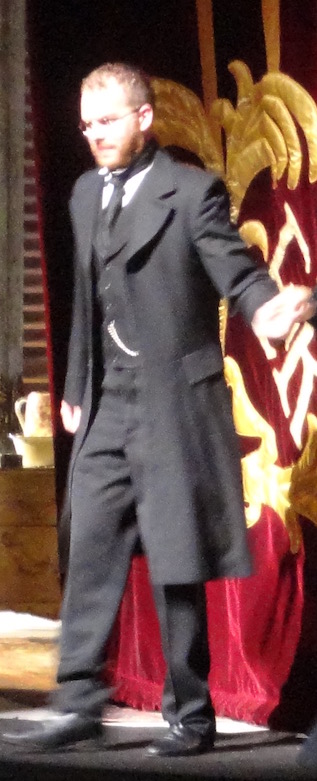


Também cumpriram Sarah Pring como Annina, Jeremy White como Marquês D’Obigny, Samuel Sakker como Gastone, Angela Simkin como Flora e Gyula Nagy como Barão Douphol, os dois últimos também do Jette Parter Programme.


Teria sido uma excelente récita, não estivesse eu sentado ao lado de uma mulher holandesa que trauteava as áreas mais conhecidas (e são muitas) e à frente de um jovem casal peruano que não parou de falar durante o espectáculo, apesar de serem avisados para se calarem. Na ROH nunca me tinha acontecido!


****


LA TRAVIATA, Royal Opera House, London, July 2017

The "old" staging by Richard Eyre of La Traviata at the Royal Opera House should not be too far from what Verdi will have imagined for this opera. It is classic, very faithful to the libretto, splendorous and of great visual impact. The first act and the second scene of the second are magnificently staged in luxurious settings, including the dresses, in absolute contrast to the 3rd act, where only the beds of Annina and Violet. Violetta´s bed stained with blood resulting from hemoptysis of the terminal phase of tuberculosis, the bedside table with a pitcher and basin, all surrounded by high-rise windows with shutters that only let in a few rays of light.

The musical direction was of great category and was in charge of the maestro Maurizio Benini. Choir and orchestra were at the best level.

Young American soprano Corinne Winters was a Violetta of great category. She started with two small mistakes, but quickly overtook them having had a growing interpretation. She was perfect from the 2nd act until the end. Very expressive, full voice and great versatility, well adapted to the character. The figure could not be better, beautiful, tall and lean, which greatly contributed to a very credible interpretation of Violetta.

Brazilian tenor Atalla Ayan was a very good Alfredo. He has a very pleasant and powerful voice, always tuned and well audible over the orchestra. He was excellent in the representation of the character, very agile on stage and always with great scenic expressiveness.

Also Romanian baritone George Petean had a superior interpretation as Georgio Germon. He has a powerful voice, with a beautiful tone and the singer uses it with great class, always making homself heard in all the registers. On stage he was also well well but was the least impressive of the main soloists.

Among the secondary singers I would highlight young British bass David Shipley of Jette Parker Young Artists Program of ROH who played Dr. Grenvil. Magnificent voice, beautiful and with a low record as it is not common to hear. A singer to follow.

The other singers were all ok, Sarah Pring as Annina, Jeremy White as Marquis D'Obigny, Samuel Sakker as Gastone, Angela Simkin as Flora and Gyula Nagy as Baron Douphol, the latter two also of the Jette Parter Program.

It would have been an excellent performance if I had not been sitting next to a Dutch woman who was trawling the best known areas (and there are many) and in front of a young Peruvian couple who did not stop talking during the performance, despite being warned to shut up. At the ROH it had never happened to me!


****

domingo, 25 de setembro de 2016

COSÌ FAN TUTTE, Royal Opera House, Londres / London, Setembro / September 2016


(review in English below)

A nova produção da opera de Mozart Così fan Tutte é mais um triunfo da prestigiada Royal Opera House de Londres.

A encenação do jovem Jan Philipp Gloger é interessante, original e muito agradável, embora misture épocas o que, por vezes, quebra a continuidade da acção. Gloger recorre, mais uma vez, ao espectáculo dentro do espectáculo.


Logo durante a abertura aparecem os cantores solistas, vestidos à época, a agradecer os aplausos do público, fazendo os gestos que habitualmente os cantores e as cantoras fazem nesta ocasião. Depois percebemos que estes não são os cantores solistas. Os dois casais aparecem na plateia e são espectadores da Royal Opera.

Don Alfonso será um dirigente da peça de teatro que decorrerá até final. Guglielmo e Ferrando vão para a guerra. O quadro com uma estação de comboios de meados do século passado é bem conseguido. Reaparecem disfarçados num bar moderno e aí começam a conquista das suas noivas. Noutro quadro aparece o jardim do Éden, com muitas maçãs, dinheiro e a serpente. Há também quadros em que a acção decorre num ambiente de teatro barroco.


Já no final, a festa do casamento é muito dinâmica. Num grande painel luminoso em que está escrito COSÌ FAN TUTTE, retiram algumas lâmpadas do E e passa a COSÌ FAN TUTTI.


A encenação é vistosa, alegre, muito diversificada, mas um pouco confusa. Uma das mensagens principais que o encenador pretende dar é que a instabilidade das emoções humanas não se aplica apenas no feminino, mas a todos e em todas as épocas.


O maestro russo Semyon Bychkov foi muito bom, embora tenha imposto alguns tempos excessivamente lentos. A orquestra esteve ao mais alto nível.


Os cantores solistas foram todos excelentes. Os dois pares de noivos eram jovens, o que deu grande credibilidade à interpretação cénica e permitiu alguns momentos de erotismo bem conseguidos.

O baixo-barítono italiano Alessio Arduini foi um Guglielmo de voz bonita, firme e potente. Presença sempre muito ágil e insinuante, muito favorecido pela sua figura.


O tenor alemão Daniel Behle fez um Ferrando muito credível e mais romântico. Na belíssima aria Un’aura amorosa foi magnífico, com um registo agudo de invulgar beleza.


Corinne Winters, soprano americana, foi a Fiordiligi indecisa de voz quente e belo soprano. Esteve particularmente bem nas árias Come scoglio e, sobretudo, Per pietà, ben mio, perdona tocante na sensibilidade e tristeza. Fantástica.


A mezzo americana Angela Brower foi uma Dorabella de voz lírica e firme que esteve sempre bem e afinada ao longo de toda a récita.


O barítono alemão Johannes Martin Kränzle fez um Don Alfonso seguro e muito bem adaptado à personagem.


A soprano espanhola Sabina Puértolas foi uma Despina enérgica e de grande qualidade, vocal e cénica.


A Royal Opera apostou na juventude (produtor e cantores) e, mais uma vez, ganhou.


*****


Così fan Tutte, Royal Opera House, London

The new production of Mozart's opera Così fan tutte is another triumph of the prestigious Royal Opera House in London.

The staging by young director Jan Philipp Gloger is interesting, unique and very pleasant, although it mixes different periods of time that sometimes breaks the continuity of the action. Gloger uses, again, a show within the show.

Just in the opening the soloists singers appear, dressed in Mozart’s time, and thank the applause of the audience, making the gestures usually singers make on this occasion. Quickly we realize that these are not the soloists. The two couples appear in the audience and are members of the audience of the Royal Opera.

Don Alfonso is a director of the play and will run until the end. Guglielmo and Ferrando go to war. The setting with a train station in the middle of last century is well managed. Disguised, they reappear in a modern bar and then begin the conquest of their brides. In another setting the garden of Eden appears, with many apples, money and the serpent. There are also settings in which the action takes place in a baroque theater environment.

At the end, the wedding party is very dynamic. In a large display panel where it is written COSÌ FAN TUTTE, the removal some lamps from the E and turns into COSÌ FAN TUTTI.

The staging is fine, cheerful, very diverse, but a little confusing. One of the main messages that the director wants to give is that the instability of human emotions does not only apply only to women, but to all and at all times.

Russian maestro Semyon Bychkov was very good, although some times he imposed excessively slow tempi. The orchestra was at the highest level.

The soloists were all excellent. The two couples were young, which gave great credibility to the stage interpretation and allowed some moments of eroticism.

Italian bass-baritone Alessio Arduini was a Guglielmo with a beautiful, firm and powerful voice. His presence always very agile and ingratiating, much favored by his figure.

German tenor Daniel Behle was a more romantic and very credible Ferrando. The beautiful aria Un'aura amorosa was magnificent, with a top register of unusual beauty.

Corinne Winters, American soprano, was a fragile Fiordiligi with a warm beautiful soprano voice. She was particularly well in the arias Come scoglio and especially Per pieta, ben mio, perdona that she sang with touching sensitivity and sadness. Fantastic.

American mezzo Angela Brower was a lyrical Dorabella with firm voice that was always in tune throughout the performance.

German baritone Johannes Martin Kränzle was a firm and very well suited to the character of Don Alfonso, and Spanish soprano Sabina Puértolas was an energetic Despina with high quality, vocal and scenic.

The Royal Opera bet on youth (director and singers) and, once again, won.


*****

quarta-feira, 20 de janeiro de 2016

LA BOHÈME, English National Opera, Novembro de 2015


(in English below)

Depois de resistir muitos anos, acabei por assistir a um primeiro espectáculo de ópera na English National Opera, companhia residente no Coliseu de Londres. Aqui todas as óperas são cantadas em inglês. Neste teatro o público pode levar os copos com as bebidas compradas no intervalo para a sala, o que é outro aspecto muito negativo porque há sempre alguém por perto a levar um copo à boca e a pousá-lo no chão.


Vi La Bohème, de Puccini. A encenação de Benedict Andrews tem pouco impacto. Trás a acção para os anos 60 – 70 do século passado, em ambientes casuais (aqui bem), mas há muitas incoerências cénicas (por exemplo baguetes de pão embrulhadas individualmente, garrafas de água de plástico). Mas o pior foi mesmo ter sido cantado em inglês. Nunca consegui abstrair-me desse facto, apesar da beleza da partitura musical.

A direcção musical foi de Xian Zhang e os cantores foram o melhor da récita. Todos cantavam bem, eram jovens, magros e ágeis, condições que dão grande credibilidade ao espectáculo.
Mimi foi interpretada pelo soprano Corinne Winters. Esteve sempre afinada, a voz é bem audível, muito expressiva, e foi excelente em palco.


O tenor Zach Borichevsky foi um Rodolfo com um timbre muito bonito e uma projecção vocal excelente, para além de ter transmitido grande emotividade.


O Marcello do barítono Duncan Rock também esteve sempre ao mais alto nível, com uma voz potente e muito agradável. Num patamar mais abaixo mas, ainda assim, de qualidade, estiveram o soprano Rhian Lois como Musetta, o baixo Nicholas Masters como Colline e o barítono Ashley Riches como Schaunard.


Um bom espectáculo, sobretudo à custa dos cantores.

***


La Bohème, English National Opera, November 2015

After resisting many years, I ended up watching a first opera performance by the English National Opera, at the London Coliseum. Here all the operas are sung in English. In this theater the audience can take the glasses with drinks bought at the intermission into the main room, which is another very negative issue because there is always someone around to take a glass to his mouth and put it down on the floor.

I saw La Bohème by Puccini. The staging of Benedict Andrews has little impact. The action was placed around the years 60-70 of the last century, in common settings (here OK), but there are several inconsistencies (eg baguettes of bread wrapped individually, plastic water bottles). But the worst was even been sung in English. I never got me abstract thereof, despite the beauty of the musical score.

The musical direction was Xian Zhang and the singers were the best in the performance. All sang very well, they were young, lean and agile, conditions that give great credibility to the show.
Mimi was interpreted by soprano Corinne Winters. She was always in tune, the voice is well audible and she was excellent on stage. The tenor Zach Borichevsky was a Rodolfo with a beautiful timbre, emotive and excellent vocal projection. Baritone Duncan Rock’s Marcello always sang at the highest level.
A level below but still with good quality, were soprano Rhian Lois as Musetta, bass Nicholas Masters as Colline, and baritone Ashley Riches as Schaunard.

A good performance, especially at the expense of the singers.


***