Mostrar mensagens com a etiqueta George Gagnidze. Mostrar todas as mensagens

segunda-feira, 16 de janeiro de 2023

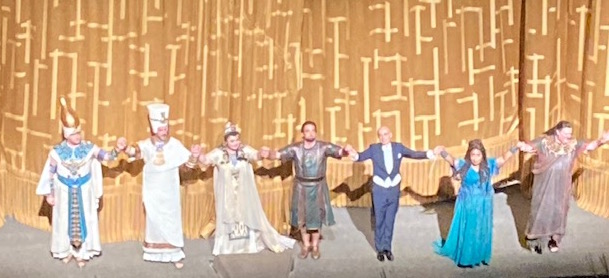
AIDA, METropolitan OPERA, Dezembro / December 2022

(Review in English below)

É a última vez que a monumental encenação clássica da Aida, de Sonja Frisell, estará em cena na Metropolitan Opera. É uma produção grandiosa, que ilustra como nenhuma outra o significado de “grande ópera” que, embora datada, tem cenários sumptuosos, muitos elevadores, centenas de elementos em palco incluindo cavalos que, nesta noite, um deles quase destruiu uma parte do cenário mas conseguiu, a custo, ser controlado. É um contraste absoluto com a encenação deplorável que vi há poucos meses em Londres.
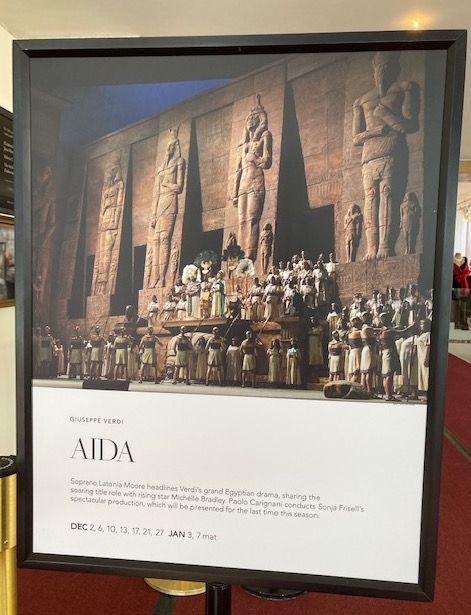


O maestro foi Paolo Carignani e a Orquestra e o Coro tiveram interpretações excelentes. A ópera presta-se a isso.
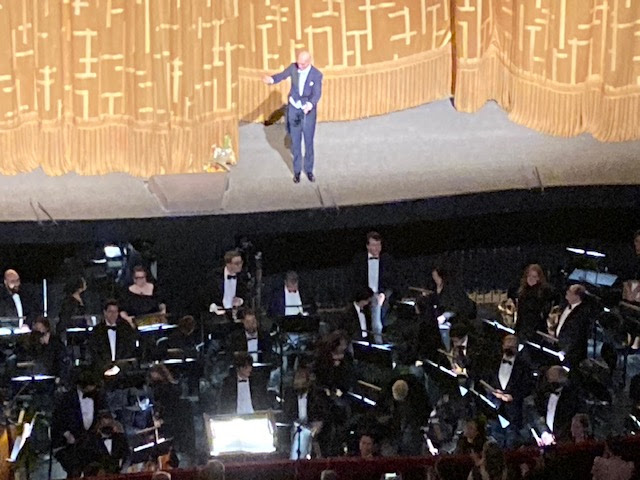

De entre os solistas, algumas diferenças qualitativas. Começando pelos melhores, brilhou a mezzo Olesya Petrova que foi uma Amneris de excelência. Voz poderosa, registo grave impressionante e sempre afinada.

Também o Radamés de Brian Jadge esteve ao mais alto nível, tanto na interpretação vocal como cénica. Muito bom.


Os baixos Alexandros Stavrakakis (Rei) e, sobretudo, Christian Van Horn (Ramfis) também marcaram muito positivamente as suas interpretações vocais.  


O barítono George Granitze fez um Amonastro algo estático mas muito bem no canto, sempre correcto e bem audível.
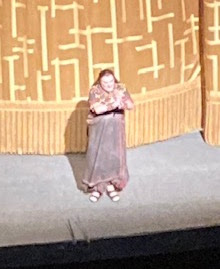

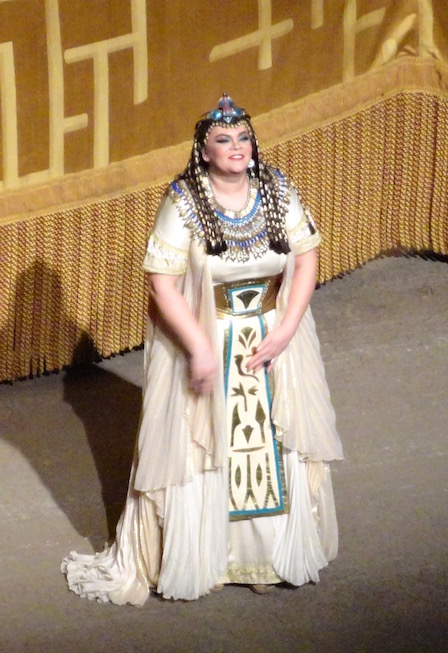
A grande decepção foi a Aida de Latonia Moore. Em cena foi muito estática e no canto esteve muito abaixo do desejável. Cantou alto, foi bem audível, mas a Aida é muito mais que potência vocal. Falhou várias notas, foi pouco expressiva e a aria principal do 3º acto foi um desastre, sobretudo no (ausente) registo agudo! Como cantora “da casa” foi muito aplaudida, mas esperava-se muito melhor!


Com outra Aida teria sido um espctáculo próximo da perfeição.
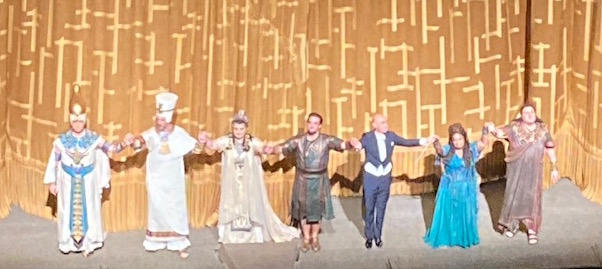


****

AIDA, MEtropolitan OPERA, December 2022

It is the last time that Sonja Frisell's monumental classic production of Aida will be staged at the Metropolitan Opera. It is a grandiose production, illustrating like no other the meaning of “grand opera” which, although dated, has sumptuous sets, many elevators, hundreds of elements on stage including horses. Tonight one of them almost destroyed part of the set but managed, with difficulty, to be controlled. It is an absolute contrast to the deplorable staging I saw in London a few months ago.

The maestro was Paolo Carignani and the Orchestra and Chorus had excellent performances. Opera lends itself to this.

Among the soloists, some qualitative differences. Starting with the best, mezzo Olesya Petrova was an Amneris of excellence. Powerful voice, impressive bass register and always in tune.

Brian Jadge's Radamés was also at the highest level, both in vocal and scenic interpretation. Very good.

Bass Alexandros Stavrakakis (King) and, above all, Christian Van Horn (Ramfis) also marked their vocal interpretations very positively.

The baritone George Granitze made an Amonastro somewhat static but very good in the singing, always correct and very audible.

The big disappointment was Latonia Moore's Aida. On stage she was very static and in the singing she was far below desirable. She sang loudly, it was very audible, but Aida is much more than vocal power. She missed several notes, was not very expressive and the main aria of the 3rd act was a disaster, especially in the (absent) high register! As a “house” singer, she was highly applauded, but much better should be expected!

With a different Aida it would have been a performance close to perfection.


****

quinta-feira, 24 de novembro de 2022

TOSCA, METropolitan OPERA, New York, Outubro / October 2022

(review in English below)

A Tosca de G Puccini voltou a ser posta em cena na Metropolitan Opera de Nova Iorque, na magnífica e sumptuosa produção de David McVicar que, depois da curta e muito má recepção da anterior encenação desta ópera (da autoria de Luc Bondy, muito feia e um perfeito exemplo do eurotrash que, por estes lados, não é nada apreciado) mostrou ser capaz de fazer uma abordagem clássica com a mesma qualidade de outras mais modernas que tem assinado.


Dirigiu a Orquestra (que, surpreendentemente, não esteve isenta de falhas, sobretudo nos metais) o maestro Carlo Rizzi. O Coro foi excelente.


A soprano Aleksandra Kurzak foi uma Tosca magnífica, tanto na representação cénica como vocal. Tem uma voz muito bonita, agudos seguros e não forçados e ouve-se sempre sobre a orquestra. Foi, de longe, a melhor da noite.

O tenor Michael Fabiano cumpriu o papel de Cavaradossi sem grande brilho vocal. Em cena esteve bem, mas a emissão foi por vezes irregular e tem um timbre algo agreste.

O Scarpia do barítono George Gagnidze foi muito ajudado pela encenação mas o cantor foi muito estático, algo monocórdico, pouco emotivo e sempre que a orquestra tocava mais alto, deixava de se ouvir. 

Nos papéis secundários, com interpretações correctas mas sem impressionar, estiveram Kevin Short (Cesare Angelotti), Patrick Carfizzi (Sacristão), Rodell Rosel (Spoletta), Christopher Job (Sciarrone) e Paul Corona (carcereiro). O pastor jovem foi Davida Dayle.


***

TOSCA, METROpolitan OPERA, New York, October / October 2022

G Puccini's Tosca was revived at the Metropolitan Opera in New York, in the magnificent and sumptuous production of David McVicar who, after the short and very bad reception of the previous staging of this opera (by Luc Bondy, very ugly and a perfect example of the eurotrash that, in these geographic areas, is not appreciated at all) has shown to be able to make a classic approach with the same quality as the more modern ones he has signed.

Conductor Carlo Rizzi directed the Orchestra (which, surprisingly, was not without faults, especially in the metals). The Choir was excellent.

Soprano Aleksandra Kurzak was a magnificent Tosca, both on stage and vocal representation. She has a very beautiful voice, steady and unforced highs and we always hear her over the orchestra. She was by far the best of the night.

Tenor Michael Fabiano interpreted the role of Cavaradossi without great vocal brilliance. On stage he was fine, but the singing was sometimes irregular and has a somewhat harsh tone.

Baritone George Gagnidze's Scarpia was greatly helped by the staging, but the singer was very static, somewhat monotonous, not very emotional and whenever the orchestra played louder, he stopped being heard.

In the supporting roles, with correct but unimpressive performances, were Kevin Short (Cesare Angelotti), Patrick Carfizzi (Sacristan), Rodell Rosel (Spoletta), Christopher Job (Sciarrone) and Paul Corona (gaoler). The young sheppard was Davida Dayle.

***

quinta-feira, 21 de março de 2019

IT TRITTICO, METropolitan OPERA, Dezembro / December 2018


(review in English below)

Nunca tinha visto a produção do Il Trittico da Metropolitan Opera. A encenação de Jack O’Brien das 3 óperas de Puccini é globalmente muito boa, embora na Gianni Schicchi seja inferior às outras. 


O maestro foi o Bertrand de Billy que nos ofereceu uma abordagem convencional mas muito agradável, com a Orquestra ao seu habitual alto nível.


Contra uma cortina encarnada, as fotografias ficaram sempre péssimas.


IL TABARRO
Um cenário espectacular, uma enorme barcaça num canal de Paris, debaixo de uma ponte. Os cantores solistas todos bons. Amber Wagner impressionante como Giorgetta em potencia e qualidade vocal, não tanto na interpretação cénica, parecia igualmente apaixonada pelo Michele e pelo Luigi.
George Granidze muito bom na interpretação cénica e vocal do Michele, o marido traído. Marcelo Álvarez algo irregular na emissão como Luigi. Tiveram também óptimas interpretações vocais MaryAnn McCormik (Frugola), Tony Stevenson (Tinca) e Maurizio Murar (Talpa). Começou muito bem a tarde de ópera.


SUOR ANGELICA
Novamente um cenário espectacular, os jardins interiores de um convento. 


Esta é uma ópera muito dramática, de uma cantora só, mas todas as outras intervenientes foram excelentes, nomeadamente Maureen McKay como Genoveva, MaryAnn McCormick como Madre superiora 


e Stephanie Blythe, uma princesa gélida e cruel de voz avassaladora.


A grande intérprete da ópera, e da récita, foi a Kristine Opolais como Suor Angelica. Grande agilidade em cena e vocalmente impressionante. Uma voz bonita, afinada, muito emotiva e sempre sobre a orquestra. 


A segunda ópera excelente!


GIANNI SCHICHI
Quando tudo parecia que o espectáculo iria ser memorável, eis que surge uma terceira ópera decepcionante! Num cenário vulgar para esta ópera, o quarto do recém falecido Buoso Donati, a comicidade foi muito básica e de gosto discutível, quase sempre sem graça. No final aparece um jardim sobre Florença, a única nota mais original.
E os cantores foram quase todos fracos. O Rinuccio de Atalla Ayan mal se ouviu, o Simone de Maurizio Muraro cantou sempre no mesmo tom, a Lauretta da Kristina Mkhitaryan cumpriu sem o menor deslumbre e o Gianni Schicchi do Placido Domingo, num papel de barítono que não é o seu, apenas se ouviu no registo mais agudo. 


A Zita da Stephanie Blythe sim, ouviu-se bem, mas nada mais que isso. Uma decepção a finalizar o espectáculo.


***


IT TRITTICO, METropolitan OPERA, December 2018

I had never seen the Metropolitan Opera production of Il Trittico. Jack O'Brien's direction of Puccini's three operas is overall very good, although in Gianni Schicchi it is much inferior to the others. The conductor was Bertrand de Billy who offered us a conventional but very nice approach, with the Orchestra to its usual high level.
Against a red curtain, the photographs were always bad.

IL TABARRO
A spectacular scenery, a huge boat on a canal in Paris, under a bridge. The soloist singers were all good. Impressive Amber Wagner as Giorgetta in power and vocal quality, not so much in the stage interpretation, seemed equally in love with Michele and Luigi.
George Granidze was very good at the scenic and vocal interpretation of Michele, the betrayed husband. Marcelo Alvarez somehow irregular in the emission as Luigi. There were also excellent vocal performances by MaryAnn McCormik (Frugola), Tony Stevenson (Tinca) and Maurizio Murar (Talpa). It was a very good start of the operatic evening.

SUOR ANGELICA
Again a spectacular setting, the interior gardens of a convent. This is a very dramatic opera of a single singer, but all the other singers were excellent, notably Maureen McKay as Genoveva, MaryAnn McCormick as Mother Superior and Stephanie Blythe, a cold and cruel princess with an overwhelming voice.
The great interpreter of the opera, and of the night, was Kristine Opolais as Suor Angelica. She had great agility on stage and vocally she was impressive. A beautiful voice, tuned, very emotional and always above the orchestra. The second opera was excellent!

GIANNI SCHICHI
When it all seemed like the night was going to be memorable, here comes a third disappointing opera! In a vulgar scenario for this opera, the room of the recently deceased Buoso Donati, the comedy sketches were very basic and debatable, almost always bland. At the end there was a garden over Florence, the only more original note.
And the singers were almost all weak. Atalla Ayan’s Rinuccio was barely heard, Maurizio Muraro’s Simone always sang in the same tone, Kristina Mkhitaryan’s Lauretta was ok but without emotion, and Placido Domingo’s Gianni Schicchi, in a role of baritone that is not his, was only well heard in the top register. And yes, Stephanie Blythe's Zita was heard, but nothing more. A disappointment end the operatic evening.

***

domingo, 14 de maio de 2017

AIDA, METropolitan Opera, Março / March 2017


(review in English below)


A Aida da Metropolitan Opera é um espectáculo deslumbrante, daqueles que precisamos de ver de tempos a tempos para confirmar a grandiosidade da ópera como arte total e completa. A encenação de Sonja Frisell é explícita, clássica e grandiosa, com dezenas de pessoas em palco, cavalos e muitos adereços que enriquecem visualmente a acção.


O maestro Daniele Rustioni dirigiu superiormente os excelentes Orquestra e Coro da Metropolitan Opera.


Quanto aos cantores solistas, o soprano Krassimira Stoyanova fez uma Aida soberba, sempre afinada e bem audível. A cantora tem uma voz de timbre muito bonito e sabe usá-la na perfeição. Uma das melhores Aidas da actualidade.


Também ao mais alto nível esteve o tenor espanhol Jorge de León como Radamés. Foi excelente em palco e a voz é de qualidade assinalável e sempre audível em perfeita afinação.


O baritono George Gagnidze, não deslumbrando, cumpriu como Amonastro.


O mezzo Violeta Urmana foi uma Amneris peculiar. No primeiro acto mal se ouviu, no segundo melhorou substancialmente e no quarto foi excelente. Talvez fruto da experiência, guardou-se para o fim, quando mostrou que ainda tem uma voz respeitável e capaz de se sobrepor a uma orquestra como esta.


O Rei foi interpretado por Morris Robinson que mostrou qualidades vocais de excepção, ao contrário de James Morris que fez um Ramfis que não deixa memória.

No cômputo final, uma grande récita.


*****


AIDA, METropolitan Opera, March 2017

The Aida of the Metropolitan Opera is a breathtaking spectacle, one that we need to see from time to time to confirm the grandiosity of opera as a total and complete art. Sonja Frisell's staging is explicit, classic and grandious, with dozens of people on stage, horses and many props that visually enrich the action.

Maestro Daniele Rustioni has conducted the excellent Orchestra and Choir of the Metropolitan Opera.

As for the soloist singers, soprano Krassimira Stoyanova made a superb Aida, always tuned and well audible. The singer has a very beautiful timbre voice and knows how to use it perfectly. One of the best Aidas of our times.

Also at the highest level was Spanish tenor Jorge de León as Radamés. He was excellent on stage and the voice is of remarkable quality and always audibly in perfect tuning.

Baritone George Gagnidze, not dazzling, was a correct as Amonastro.

Mezzo Violeta Urmana was a peculiar Amneris. In the first act she was barely heard, in the second she improved substantially and the fourth she was excellent. Perhaps the result of experience, she kept to the end, when she showed that she still has a respectable voice capable of overlapping an orchestra like this one.

The King was interpreted by Morris Robinson who showed excellent vocal qualities, unlike James Morris who was a weak a Ramfis.

All together, a great performance.


*****