Mostrar mensagens com a etiqueta Lawrence Brownlee. Mostrar todas as mensagens

terça-feira, 13 de fevereiro de 2018

SEMIRAMIDE, Royal Opera House, Londres / London, Dezembro / December 2017


 (review in English below)

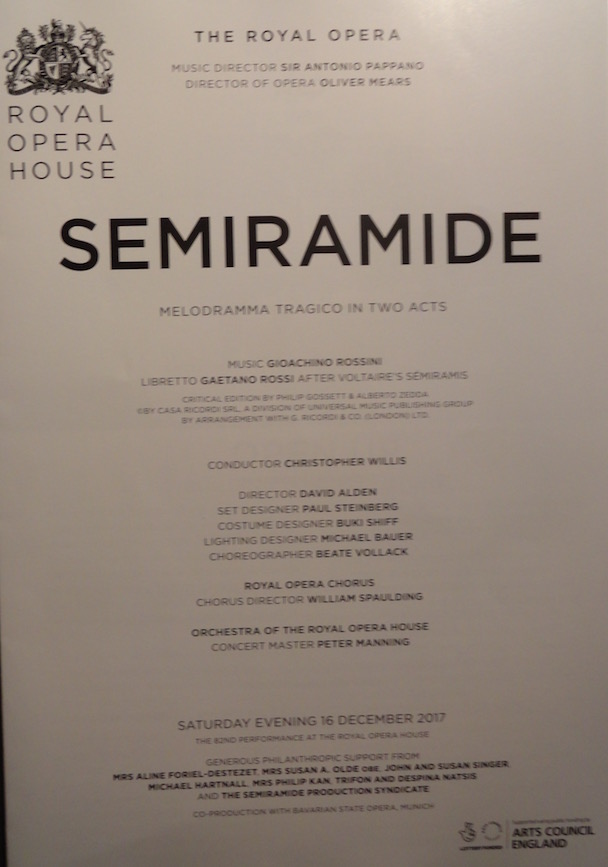
A opera Semiramide de G Rossini foi apresentada numa nova produção de David Alden na Royal Opera House de Londres em Novembro de 2017.


No templo de Baal o padre Oroe é informado que os babilónios e outros povos esperam que a rainha Semiramide, viúva do rei Nino, anuncie o nome do sucessor do trono, com quem se casará. Idreno, um príncipe indiano é um dos candidatos e Assur é outro, que sempre foi leal a Semiramide ao longo dos anos. Contudo, ela adia a decisão porque espera um jovem comandante das suas forças, Arsace. Este chega, está apaixonado pela princesa Azema que também o ama desde que foi salva por ele. Contudo, Assur e o Idreno são dois rivais dado que ambos querem também casar com Azema. Oroe informa Arsace que o rei Nino foi traído e assassinado. Semiramide reune todos em volta do túmulo do rei Nino e anuncia que se casará com Arsace que será o próximo rei e que Idreno se casará com Azema. Há uma tempestade, o túmulo abre-se e ouve-se a voz do rei dizer que Arsace será rei mas antes terá que ser vingado um crime que foi cometido.
Semiramide e Assur recriminam-se mutuamente pela morte do rei em que ambos participaram. Oroe revela a Arsace a sua verdadeira identidade, Ninia, filho do Rei Nino e de Semiramide e dá-lhe a espada que fora de Nino para se vingar. Arsace revela a Semiramide que é seu filho e perdoa-lhe o crime que ela cometeu. Dirige-se ao túmulo de Nino para matar Assur, mas na escuridão acaba por apunhalar Semiramide, que morre. Oroe evita que se mate e o povo aclama-o como novo rei da Babilónia.

A encenação procura representar um país ditatorial actual, com o culto da personalidade do líder, que todos veneram, lêem e obedecem cegamente. A ópera inicia-se com uma enorme estátua do líder morto no centro (de que inicialmente só se vê a metade inferior). Nos grandes painéis laterias e posterior aparecem fotografias do líder (de óculos escuros) isolado, com a mulher ou com a mulher e o filho em criança. O líder é Nino, ex-marido de Semiramide assassinado por ela em conluio com Assur e a criança é o filho de ambos, que desaparece e é dado como presumivelmente morto, mas regressa como Arsace, um comandante vitorioso por quem Semiramide se apaixona e com quem quer casar. A figura da criança, com um cavalo de peluche, está frequentemente presente. O chão, os painéis e o próprio palco por vezes estão cobertos por telas ou cortinas com desenhos de padrões islâmicos e os trajos dos elementos do coro, os masculinos com grandes turbantes e os femininos com a cabeça coberta, são também muito sugestivos.
Aparece um enorme lustre como nas grandes salas onde se reúnem os comités dos partidos comunistas ditatoriais e os painéis são dinâmicos, permitindo uma encenação original e interessante.


A direcção musical foi do maestro Christopher Willis.


No papel principal, Semiramide, a mezzo Joyce DiDonato foi arrasadora! É uma cantora que muito aprecio e, mais uma vez, esteve no seu melhor. Tem uma voz magnífica e é uma cantora rossiniana por excelência. Abordou a partitura com elegância, desenvoltura, sentimento e mostrou uma coloratura invejável. Em palco tem sempre uma presença electrizante.


Também ao mais alto nível esteve a mezzo Daniela Barcellona como Arsace, o comandante guerreiro por quem Semiramide se apaixona e quer casar mas que é, afinal, o seu filho desaparecido. A voz é também muito poderosa, melodiosa e afinada. Nos duetos com a DiDonato, as duas foram fabulosas.


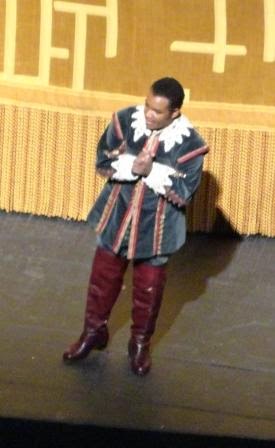
Outra voz de topo foi a do tenor Lawrence Brownlee que interpretou o príncipe indiano Idreno. Teve uma excelente presença cénica, muito bem caracterizado e a voz é de invulgar beleza, de tenor lírico com agudos abertos e luminosos.


O príncipe Assur, cúmplice de Semiramide no assassinato do marido e pretendente ao trono, foi interpretado pelo baixo Mirco Palazzi. Foi mais uma boa interpretação, tanto cénica como vocal.


Nos papéis secundários outro baixo de voz imponente foi Bálint Szabó que interpretou o padre Oroe. A soprano Jacquelyn Stucker como Azema, Konu Kim como Mitrane e a voz de Simon Shibambu, como espírito do rei Nino assassinado completaram o elenco.


Um espectáculo notável!


*****


SEMIRAMIDE, Royal Opera House, December 2017

G Rossini's opera Semiramide was staged in a new production by David Alden at the Royal Opera House in London in November 2017.

In the temple of Baal the high priest Oroe is informed that the Babylonians and other peoples expect that the queen Semiramide, widow of the king Nino, announces the name of the successor of the throne, with whom she will marry. Idreno, an Indian prince, is one of the candidates, and Assur is another, who has always been loyal to Semiramide over the years. However, she postpones the decision because she expects a young commander of her forces, Arsace. He arrives, is in love with the princess Azema who also loves him since he saved her in the past. However, Assur and Idreno are two rivals since both also want to marry Azema. Oroe tells Arsace that King Nino was betrayed and murdered. Semiramide reunites all around the tomb of king Nino and announces that she will marry Arsace that will become the next king, and that Idreno will marry Azema. There is a storm, the tomb opens and the king's voice is heard to say that Arsace will be king but beforehand a crime that has been committed will have to be avenged.
Semiramide and Assur reproach each other for the death of the king in which both participated. Oroe reveals to Arsace his true identity, Ninia, son of King Nino and of Semiramide and gives him the Nino’s sword to take revenge. Arsace reveals to Semiramide that he is her son and forgives the crime she committed. He goes to the tomb of Nino to kill Assur, but in the darkness he ends up stabbing Semiramide, who dies. Oroe avoids that he kills himself and the people acclaim him as the new king of Babylon.

The staging seeks to represent a current dictatorial country, with the cult of the leader's personality, which everyone venerates, reads and obeys blindly. The opera begins with a huge statue of the dead leader in the centre (from which only the lower half is initially seen). On the large side and back panels appear photographs of the leader (of dark glasses) alone, with his wife, and with his wife and son as a child. The leader is Nino, Semiramide's ex-husband assassinated by her in collusion with Assur and the child is their son, who disappeared and was given as presumably dead, but returns as Arsace, a victorious commander whom Semiramide falls in love with and wants to marry. The figure of the child, with a stuffed horse, is often present on stage. The floors, panels, and the stage itself are covered with screens or curtains with Islamic patterns, and the choral elements, male with large turbans and female heads with covered heads, are also very suggestive.
The panels are dynamic, a very suggestive chandelier appears similar to the ones in large rooms where the committees of the current dictatorial communist parties meet, and the stage is very dynamic, allowing an original and interesting staging.

The musical direction was by maestro Christopher Willis.

In the lead role, Semiramide, mezzo Joyce DiDonato was fabulous! She is a singer who I really appreciate and, once again, she was at her best. She has a magnificent voice and is a Rossinian singer by excellence. She approached the score with elegance, resourcefulness, emotion and showed an enviable coloratura. On stage she has always an electrifying presence.

Also at the top level was mezzo Daniela Barcellona as Arsace, the warrior commander for whom Semiramide falls in love and wants to marry but that is, after all, his missing son. The voice is also very powerful, melodious and in tune. In the duets with DiDonato, the two were fantastic.

Another top voice was that of  tenor Lawrence Brownlee who played the Indian prince Idreno. He has an excellent stage presence, very well characterized and the voice is of unusual beauty, of lyrical tenor with open and luminous top notes.

Prince Assur, accomplices of Semiramide in the murder of her husband and pretending to the throne, was interpreted by the bass Mirco Palazzi. It was another good interpretation, both vocal and on stage.

In the secondary roles there was another imposing bass, Bálint Szabó who played high priest Oroe. Soprano Jacquelyn Stucker as Azema, Konu Kim as Mitrane, and the voice of Simon Shibambu as the ghost of the murdered King Nino completed the cast.

A remarkable performance!


*****

sábado, 20 de setembro de 2014

I PURITANI, METropolitan Opera, Nova Iorque, Abril de 2014 / METropolitan Opera, New York, April 2014

(review in English below)

I Puritani é uma ópera de V Bellini com libretto de Carlo Pepoli que esteve em cena na Primavera de 2014 na Metroplolitan Opera de Nova Iorque.


A encenação de Sandro Sequi é clássica e convencional, datada, muito estática e pouco estimulante. Sendo eu um apreciador das encenações clássicas, confesso que achei que esta não beneficiou o espectáculo, apesar de não ter sido minimalista. O guarda-roupa também não ajudou porque foi sempre muito formal. Mas o que mais negativamente me marcou foi a falta de dinâmica da acção. Para além de passagens das tropas pelo palco, quase nada mais aconteceu no que ao movimento cénico respeita.

A Orquestra esteve muito bem, dirigida pelo maestro italiano Michele Mariotti. O coro, como habitualmente, foi uma das mais valias da récita.


Em relação aos solistas, as interpretações foram bastante díspares.

Imediatamente antes do início, fomos informados que Mariusz Kwiecien estava doente mas, ainda assim, cantaria. O papel de Riccardo interpretado pelo barítono polaco foi, para mim, o melhor da noite. Já lá vai o tempo em que ficava apreensivo quando surgiam estes avisos. Já me aconteceu várias vezes mas tenho assistido sempre a interpretações de grande nível, como foi o caso. Esteve bem vocalmente, voz expressiva e sempre sobre a orquestra. Em cena também muito bem (dentro do que a encenação o permite), ajudado pela sua boa figura.


O tenor Lawrence Brownlee fez um Arturo digno. Tem uma voz bonita, embora perca qualidade nas notas mais agudas. No registo mais grave quase não se ouve e não conseguiu transmitir a emoção que a personagem exige.


A decepção foi o soprano russo Olga Peretyatko, apresentada no programa como a grande sensação do espectáculo. Elvira, a personagem, tem várias crises de loucura intercaladas com lucidez, o que a torna, no mínimo, ridícula. Mas presta-se a grandes interpretações belcantistas, o que não foi o caso nesta noite. A senhora até tem uma voz bonita, mas é pequenininha. Sempre que a orquestra soou um pouco mais forte, mal se ouviu. Chegava com aparente facilidade às notas mais agudas, mantendo qualidade, não fora a questão da falta de potência (fatal num teatro da dimensão do Met). Também achei que não transmitiu a graciosidade necessária quando a cena o exige. Contudo, na ária mais conhecida do 2º acto, Qui la voce, esteve muito bem.


O baixo Michele Pertusi foi um Giorgio digno, de voz melodiosa e bem audível, tendo impressionado sobretudo na Cinta di fiori no 2º acto.


Muito bem esteve Elizabeth Bishop como Enrichetta, apesar de o papel ser pequeno. Voz forte, sempre bem colocada e de timbre muito agradável.

Um bom espectáculo mas que ficou muito aquém das minhas expectativas.


***


I Puritani, Metropolitan Opera , New York , April 2014

I Puritani is an opera by V Bellini with libretto by Carlo Pepoli that was on the scene in Spring 2014 at the Metroplolitan Opera in New York.

The staging by Sandro Sequi is classic and conventional, dated, very static and not interesting. I like classical approaches in staging but I admit that this one did not benefit the opea, despite not having been minimal. The dresses did not help because they were always very formal. But what struck me most negatively was the lack of dynamic action. Besides the passage of troops across the stage, almost nothing happened in regards to the scenic movement.

The orchestra was very good, conducted by Italian conductor Michele Mariotti. The chorus, as usual, was one of the major highlights of the performance.

Regarding the soloists, the performances were quite disparate .

Immediately before the start, we were told that Mariusz Kwiecien was ill but still he would sing. The role of Riccardo played by the Polish baritone was, for me, the best of the night. I used to be apprehensive when these warnings came, it happened to me several times, but in almost all of them I have always heard great interpretations, as was the case. Kwiecien was well, vocally expressive voice, and always above the orchestra. Also on stage he was very well (within the limitations imposed by the staging), helped by his good figure .

Tenor Lawrence Brownlee was
​​a decent Arturo. He has a nice voice, though it looses some quality in the higher notes. In the lower register we barely could hear him and he could not always convey the emotion that the character requires.

The disappointment of the night was Russian soprano Olga Peretyatko, presented in the program as the greatest sensation of the opera. Elvira has several bouts of madness interspersed with lucidity (which makes her at ridiculous). But Elvira is prone to excellent belcanto interpretations, which was not the case tonight. The singer has a nice voice, but it's very small. Whenever the orchestra sounded a bit stronger, she could be barely heard. She reached the top notes with apparent ease, keeping vocal quality, but she lost all power (fatal in a theatre with the size of the Met). I also found that she did not transmit the gracefulness necessary when the scene demanded it. However, in the best known aria from Act 2, Qui la voce, she was well.

Bass Michele Pertusi was a sound Giorgio with melodious and very audible voice, having impressed especially in Cinta di fiori in the 2nd act .

Elizabeth Bishop was fine as Enrichetta, despite the role being small. She showed a strong voice, always tuned and with very pleasant timbre.

An acceptable performance that fell short of my expectations.

***

domingo, 13 de março de 2011

ARMIDA – METropolitan OPERA, Nova Iorque, Março de 2011

(review im English below)

Foi com grande satisfação que tive oportunidade de voltar ao Met, onde pude assistir a três espectáculos de ópera (Roméo et Juliette, Lucia di Lammermoor e Armida) em três dias consecutivos.

Das três darei opinião neste espaço. Começo pela Armida, que o Alberto Velez Grilo também viu e sobre a qual escreveu uma excelente crítica no seu blogue Outras Escritas. Guardarei o texto sobre a Lucia di Lammermoor para depois da apresentação da ópera na Gulbenkian (Met Live no próximo Sábado) pois estou com curiosidade em comparar as duas formas tão distintas de assistir ao espectáculo.


Armida é uma ópera de G. Rossini com libretto de Giovanni Schmidt, baseada no poema épico Gerusalemme Liberata de Torquato Tasso. Conta a história de uma princesa árabe de Damasco, Armida, que se apaixona por um cruzado cristão, Rinaldo, que tenta seduzir através dos seus poderes mágicos e, assim, neutralizar os cruzados. Mas, depois de o seduzir num mundo ilusório de prazer, é por ele abandonada, destruindo o palácio do prazer e desaparecendo.


A encenação, de Mary Zimmerman, tem partes interessantes, como o início num oásis perto de Jerusalém onde o palco é rodeado por muros de pedra e, por detrás deles, se vê um templo. Mas outras são algo bizarras, sobretudo o palácio do prazer de Armida no 2º acto em que aparecem, entre outras, criaturas masculinas vestidas de diabos com cornos, rabo comprido e tutus. Não percebi se a intenção da encenadora era ridicularizar a situação ou tentar colocá-la num mundo de magia com algumas originalidades de gosto discutível. Este acto é dominado por um bailado que dura quase meia hora e não acrescenta nada de significativo ao espectáculo, mas aqui a culpa não é da encenadora. O início do 3º acto, no jardim encantado de Armida, com um campo de papoilas de belo efeito cénico, também não se revelou tão interessante quanto a primeira impressão sugeria.


O maestro Riccardo Frizza, especialista em Rossini, foi eficaz mas não encantou. A orquestra do Met esteve, como sempre, em grande nível e o Coro também merece uma palavra de grande apreço, dada a sua excelente interpretação.

O difícil papel de Armida, personagem principal da ópera, é um verdadeiro tour de force para a intérprete que, ao longo da récita, passa por períodos de felicidade, sedução, paixão, ódio e desespero. Foi interpretado pelo soprano americano Renée Fleming. É uma cantora por quem tenho enorme respeito, pois já me proporcionou momentos interpretativos inesquecíveis. Tem um timbre único e uma voz cremosa de grande beleza (o termo não é meu mas parece-me muito bem aplicado). Contudo, não é uma cantora “rossiniana” e isso foi muito evidente na récita. A coloratura, essencial em Rossini, não existiu e, como já havia referido há tempos quando a ouvi na Traviata, acho que iniciou a fase de declínio vocal. A ária mais famosa da ópera, D’amore al dolce impero, no 2º acto, não foi interpretada como um trecho de belcanto. Achei que a voz, mantendo a beleza, foi pequena, teve pouca agilidade (essencial em Rossini) e revelou falta de força. Artisticamente, contudo, continua a ter uma boa presença em palco.


Lawrence Brownlee, tenor americano de timbre claro, foi Rinaldo, o melhor cantor da récita. A voz lírica é de uma beleza notável e, este sim, capaz de uma coloratura adequada a Rossini, aparentemente alcançada sem esforço e recheada de notas agudas de grande qualidade. Vocalmente transmitiu as diferentes emoções da personagem, embora lhe faltasse a força em algumas passagens. Artisticamente, não teve um bom desempenho. Mas a sua ária de remorso, a solo no 3º acto, foi o momento alto da noite.


Em papeis menores (de cruzados) mas significativos ouviram-se mais quatro tenores:
Goffredo, um comandante das forças cristãs interpretado pelo americano John Osborn. Esteve bem, sem encantar. A voz é de timbre claro e os agudos fáceis e quase sempre audíveis.


Gernando que só canta no 1º acto, foi o italiano Antonino Siragusa, que mal se ouviu.

Carlo, que canta só no 3º acto, foi o inglês Barry Banks. Fez-se ouvir bem e mostrou uma voz de qualidade, sobretudo no registo mais agudo.

Ubaldo, que também só canta no 3º acto, foi interpretado pelo Sul Africano Kobie van Resenburg, outro cantor que mal se ouviu.


Um espectáculo interessante mas que ficou aquém das minhas expectativas.


***


Armida - Metropolitan Opera, New York, March 2011

It was with great satisfaction that I had the opportunity to return to the Met, where I could watch three opera performances (Roméo et Juliette, Lucia di Lammermoor and Armida) on three consecutive days.

I will review the three in this blog. I start with Armida, that was also seen by Alberto Velez Grilo and about which he wrote an excellent review on his blog Outras Escritas. I will keep the review of Lucia di Lammermoor for after the presentation of the opera at Gulbenkian (Met Live next Saturday) because I'm curious to compare the two distinct forms to see the performance.

Armida is an opera by G. Rossini with libretto by Giovanni Schmidt, based on the epic poem Gerusalemme Liberata by Torquato Tasso. It tells the story of an Arab princess of Damascus, Armida, who falls in love for a christian crusader, Rinaldo. She tries to seduce him through her magical powers and thus neutralize the crusaders. But after seducing him in an illusory world of pleasure, she is abandoned by him, destroying the pleasure palace and flying away in a rage.

The production by Mary Zimmerman has interesting parts, such as the first scene on an oasis near Jerusalem where the stage is surrounded by stone walls and behind them a temple can be seen. But other parts are somewhat bizarre, particularly Armida's pleasure palace in Act 2 in which appear, among others, male creatures dressed as devils with horns, long tails and tutus. I did not realize if the stage director's intention was to ridicule the situation or try to put it in a world of magic with some questionable options. This act is dominated by a ballet that lasts almost half an hour and adds nothing relevant to the show, but here the fault is not of the stage director. The beginning of the 3rd act, the enchanted garden of Armida, with a field of poppies has a beautiful scenic effect, but afterword it has not proved to be as interesting as the first impression would suggest.

Maestro Riccardo Frizza, a Rossini specialist, was effective but he did not thrilled the audience. The Met Orchestra was, as always, at a high level of performance and the Choir also deserves a word of great consideration, given their excellent interpretation.

The difficult role of Armida, opera's main role, is a tour de force for the singer who, along the performance, lives through periods of happiness, seduction, passion, hatred and despair. It was interpreted by American soprano Renée Fleming. She is a singer for whom I have enormous respect, as she gave me unforgettable moments of marvellous interpretations in the past. She has a unique timbre and a creamy voice of great beauty (the term is not mine but it seems very well chosen). However, she is not a "rossinian" singer and that was very evident throughout the performance. The coloratura, essentially on Rossini, did not exist. As I have already mentioned when I heard her in La Traviata, I think she is in the beginning of the decline of her great vocal capacities. The most famous aria from the opera D’amore al dolce impero, in Act 2, was not interpreted as a belcanto text. I found the voice small, although keeping the beauty, with little flexibility (essential in Rossini) and lacking power. Artistically, however, she continues to be very good.

Lawrence Brownlee, American tenor with a light timbre interpreted Rinaldo. He was the best singer of the performance. His lyric voice is beautiful and is able for the appropriate Rossini coloratura, apparently achieved without effort and full of top notes of great quality. Vocally he was able to convey the different emotions of the character, although it lacked power in some parts. However, artistically, he was poor. But his aria of remorse, the solo in the 3rd act, was the highlight of the evening.

In smaller but significant roles (knight crusades) we have heard four other tenors:
Goffredo, a Christian army commander played by the American John Osborn had a good performance. The timbre was clear and top notes appeared easily and he was almost always audible.

Gernando who only sings in the 1st act, was the Italian Antonino Siragusa. He was barely heard.

Carlo, who sings only in the 3rd act, was the English Barry Banks. He was well heard and proved to have a voice of quality, especially in the upper register.

Ubaldo, who also sings only in the 3rd act was interpreted by the South African Kobie van Resenburg, another singer who was almost not audible.

An interesting show but below my expectations.
***