Mostrar mensagens com a etiqueta Mihoko Fujimura. Mostrar todas as mensagens

quinta-feira, 5 de junho de 2014

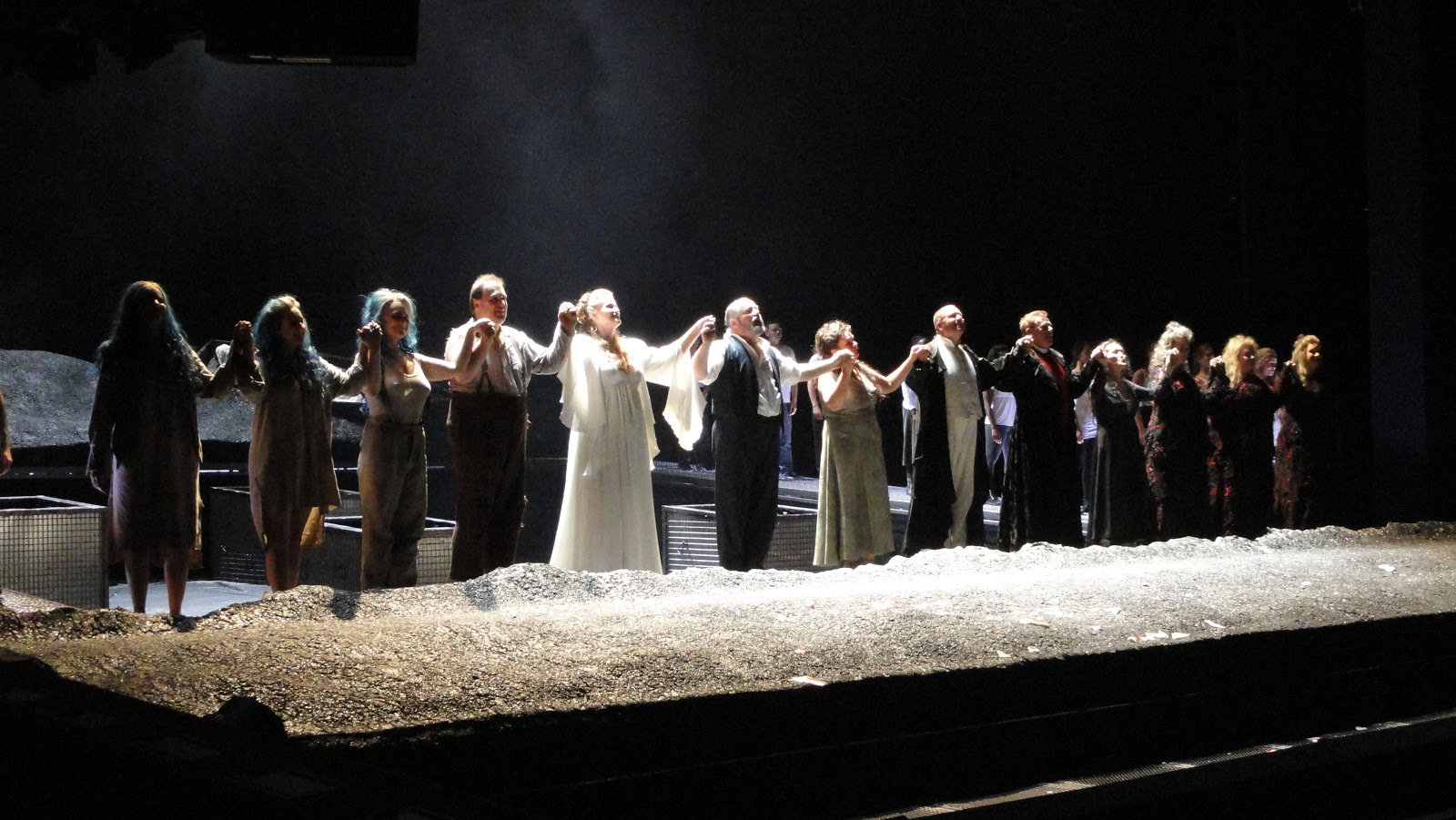
DIE WALKÜRE / A VALQUÍRIA, Liceu, Barcelona, Maio de 2014 – Elenco 1

(review in english below)

Assisti em Barcelona a duas récitas da ópera Die Walküre de R. Wagner, com elencos distintos. Neste primeiro texto relato as minhas impressões sobre uma delas.

A encenação de R Carsen, desinteressante e austera, traz a acção para a segunda guerra mundial. Tudo se passa em diferentes cenários do campo de batalha, com excepção do início do 2º acto, num imponente salão de inspiração nazi. A ópera é desprovida de qualquer misticismo, quase todas as personagens são figuras militares (apenas Fricka e Brünhilde são civis).
As incoerências cénicas são muitas. A espada Nothung está num tronco totalmente a despropósito no contexto (um acampamento militar), dado todos usarem metrelhadoras e outras armas de fogo. O início do 3º acto é muito mau. As valquírias, vestidas de senhoras e ensaiando brincadeiras de criança, beijam os heróis estropiados e mortos e estes a levantam-se, tipo zombies, e sobem umas escadas ao fundo do palco. Mas o pior é o fogo sagrado, dividido entre uma pequena vela pífia colocada a meio do palco (que numa das récitas se apagou de imediato) e uma pequeníssima linha de chamas ao fundo, de intensidade tipo “campingás” (que nem se via das primeiras filas da plateia, segundo me disse um amigo).

A Orquestra Sinfónica do Liceu esteve aquém do desejável, muito por culpa do maestro Josep Pons. As notas falhadas e fora de tempo foram uma constante (e não apenas nos metais), o ritmo foi quase sempre empastelado, sem variações rítmicas significativas e, sobretudo, sem transmitir emoção.


 Klaus Florian Vogt foi um Siegmund de grande qualidade vocal e cénica. O tenor alemão tem uma voz belíssima e muito clara, à partida menos adequada para uma personagem viril como é Siegmund. Mas, graças às suas qualidades técnicas e cénicas, foi muito credível, a ligação com a Sieglinde foi excelente (apesar da encenação desfavorável) e brindou-nos com uma interpretação de qualidade superior. Foi muito convincente quando chamou por Wälse e o no Winterstürme foi tocante.


 A Sieglinde de Anja Kampe esteve ao mesmo nível. A soprano (lírica) alemã foi sensacional na interpretação. Voz poderosa, harmoniosa, cheia de nuances enriquecedoras que proporcionaram uma interpretação de elevada qualidade, também muito apoiada nas excelentes capacidades cénicas.


 O Hunding de Eric Halfvarson completou um primeiro acto excelente. Uma personagem de voz cavernosa, potente e assustadora, como se exige neste papel.


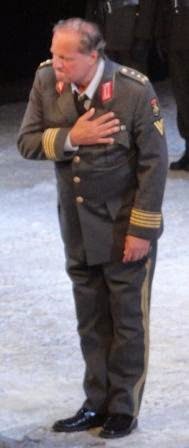
 O mezzo japonês Mihoko Fujimura fez uma Fricka com classe mas não perfeita. Revelou alguma instabilidade vocal, sobretudo no início, mas cantou o papel de forma convincente e com boa projecção vocal.


 Albert Dohmen impôs-se como Wotan e mostrou que a idade não significa menor qualidade interpretativa. O cantor alemão pode estar em fim de carreira mas tem um timbre muito bonito, canta sempre sobre a orquestra e só no registo mais agudo quebra ligeiramente. Foi excelente e transmitiu toda a força interpretativa de uma personagem vencida e, no final, rendida à filha Brünhilde.


 Irene Theorin foi soberba como Brünhilde. Vocalmente fabulosa, a soprano sueca fez uma interpretação de referência. Segura e alegre no início, gélida no anuncio da morte a Siegmund, e frágil, assustada e resignada no final, no diálogo com o pai. A voz é magnífica, apiana com uma qualidade invulgar nos sopranos dramáticos e esteve sempre ao mais alto nível.


 Nas Valquírias as interpretações foram muito distintas no que à qualidade respeita, mas saliento a voz magnífica de Daniela Köhler (Helmwige) que cantou os Hojotoho com uma qualidade superior à que já tenho ouvido a algumas Brünhildes.


 Uma récita em grande, ao contrário da que ouvi ao outro elenco, sobre a qual escreverei algo posteriormente.


*****


Die Walküre, Liceu, Barcelona, May 2014 - Cast 1

I saw in Barcelona two performances of the opera Die Walküre by R. Wagner , with different casts .
In this first article reporting my impressions of them .

The staging by R Carsen, uninteresting and austere, brings the action to the second world war. Everything happens in different scenarios of the battlefield, with the exception of the beginning of the 2nd act, an imposing hall with nazi inspiration. The opera is devoid of any mysticism, almost all the characters are military figures (only Fricka and Brunhilde are civilians).
The staging inconsistencies are frequent. The sword Nothung is on a trunk not adequate to the context (a military camp) because everyone uses machine guns and other firearms  The start of the 3rd act is very bad. The Valkyries, dressed as ladiesm rehearse children's games, kissing the dead heroes and these arise, like zombies, and go up some stairs to the back of the stage. But the worst is the sacred fire, split between a small and ridiculous candle placed in the middle of the stage (in one of the performances it went out immediately) and a tiny line of flames in the background,(which is not even seen from first rows of the audience, a friend told me) .

The Symphony Orchestra of the Liceu was below desired level, much because of the conductor Josep Pons. Wrong notes and timings were constant (not only in the metals), the rhythm was often jammed, without significant variations, and especially without transmitting emotion.

Klaus Florian Vogt was a Siegmund of great vocal and scenic quality. The German tenor has a beautiful and very light voice, less suitable for a strong character like Siegmund . But thanks to his technical and scenic qualities, he was very credible, the connection with Sieglinde was excellent (despite the unfavorable staging) and presented us with a performance of superior quality. He was very convincing when calling Wälse and in Winterstürme he was touching.

Anja Kampe 's Sieglinde was at the same top level. The German soprano was sensational in the performance. She has a powerful, harmonious, full of enriching nuances voice that provided an interpretation of top quality, very well supported by her excellent acting capabilities.

The Eric Halfvarson’s Hunding completed an excellent first ac . A performer of cavernous, powerful and scary voice, as required in this role.

Japanese mezzo Mihoko Fujimura was
​​a Fricka with class but not perfect. She revealed some vocal instability, especially at the beginning, but she sang the role convincingly and with good vocal projection .

Albert Dohmen was imposing as Wotan and showed that age does not mean lower performance quality. The German singer may be close to the end of his career but nevertheless he has a very beautiful timbre, always sings about the orchestra and only in the very top notes he breaks slightly. He was excellent and conveyed all interpretive power of an unsuccessful Wotan and, in the end, rendered to his daughter Brünhilde .

Irene Theorin was superb as Brunhilde. Vocally fabulous, the Swedish soprano was a reference in the role. She was confident and happy at the beginning, icy when announcing the death to Siegmund, and fragile, scared and resigned at the end, in the dialogue with her father. The voice is magnificent, she reaches piano notes with an unusual quality in the dramatic sopranos, and has always been at the highest level.

In the Valkyries interpretations were very different in regards to quality, but the magnificent voice of Daniela Köhler ( Helmwige ) who sang the Hojotoho better than some Brünhildes I have heard before deserves a special reference

An excellent performance, unlike that of the other cast, on which I will write something in a few days.

*****

quarta-feira, 2 de janeiro de 2013

CREPÚSCULO DOS DEUSES (GOTTERDAMMERUNG) – Royal Opera House – 2 Novembro 2012


O Crepúsculo dos Deuses é, sem duvida, um monumento musical e encerra o Ciclo do Anel que cada vez mais acredito que tem de ser visto como Wagner o entendia, ou seja, em sequência e com poucos dias de intervalo entre as operas. Só assim nos sentimos envoltos na sua trama emocional, nos seus símbolos, na sua magia, e ao mesmo tempo, se nos clarifica a evolução da história. Podemos também criar novas dúvidas e novas interpretações se nos dermos ao trabalho de pensar e não ver a história na sua faceta mais superficial.

Wagner é brutal mas... Isso já todos sabemos, não?

Acho que, pelo menos com este quarto ciclo da sequência de quatro que a Royal Opera levou a cena em Setembro a Novembro de 2012, se fez história em Covent Garden. Nunca assisti a tamanha ovação sabedora no final de cada récita e acho que a Orquestra e Pappano nunca estiveram tão bem em Wagner. A Orquestra esteve sublime neste Crepúsculo, com particular atenção para aquilo que por vezes falha e que são os metais. O dueto entre Brunnhilde e Siegfried, a viagem pelo Reno, a Morte de Siegfried, a marcha fúnebre e o final foram marcantes e da melhor qualidade musical a que já assisti ao vivo em Wagner.

Stefan Vinke continua de forma especial, a personificar um Siegfried inocente. A sua confiança e despreocupação são transmitidas em expressões físicas que lhe saem com uma naturalidade impressionante. A voz transparece esse sentido e talvez por isso seja prazeroso ouvi-lo.


Podem existir outras Brunnhildes na actualidade que possam superar Susan Bullock mas serão poucas. A sua presença em palco, a sua paixão pela representação e por cantar, e a química que revela em palco com Vinke, elevam-na a um patamar de grandeza que era o que esperava encontrar da sua parte. Muitos terão preferido outras Brunhildes, outros não gostarão da voz de Bullock, mas essas opiniões divergentes existirão sempre e principalmente neste papel. Para mim foi um prazer ouvi-la.


John Tomlinson é uma lenda viva! O seu Hagen é soberbo! A voz de Tomlinson nunca teve grande profundidade fruto do seu timbre especial mas a forma como puxa e ainda consegue arrancar um “Hoihos” com personalidade é impressionante.  E toda a sua postura e interpretação do papel, a astúcia, a malvadez, a artimanha, tudo se revela no mais pequeno detalhe, no olhar, no gesto. Se surpreendeu em 2007 ao dizer “sim” a cantar Wotan no lugar de Terfel numa altura em que já não estaria tão vocalmente confortável no papel, em 2012 marca este Anel com o seu Hunding e Hagen colossais!


Wolfgang Koch continuou a surpreender pela positiva com o seu Alberich embora não seja esta a ópera de maior relevo para esta personagem.


Mihoko Fujimura, um dos links com o Anel de 2007, regressou em grande para o pequeno papel mas detentor de passagem vocal das mais agradáveis do Anel.


O mesmo não se pode dizer de Peter Coleman Wright como Gunther, também ele repetindo papel de 2007. A voz perdeu forca, a caracterização da personagem, tal como o seu Donner embora um pouco menos, revela alguma falta de afirmação masculina necessária para a credibilidade da personagem. Iain Paterson, teria sido uma aposta mais de acordo com a qualidade geral.


Rachel Willis Sorensen esteve muito bem como Gutrune, assim como as Norn e as Rheinmaidens.


Da encenação fica-me só uma desilusão. O que cenicamente vemos na marcha fúnebre é demasiado fraco em relação à preocupação geral e melhorada desta reposição com os leitmotivs. Se em 2007 Siegfried se levantava e caminhava sob fundo preto, algo pobre e pouco interessante, em 2012 Siegfried mantém-se inerte no chão e aparece o que me pareceu ser o Wanderer que, após se ouvir o tema da espada, cai de joelhos e deixa de ter foco de luz. Não tem muito nexo Wotan aparecer aqui, na minha opinião. Tal como Waltraute diz a Brunhilde, Wotan permanece em Walhalla esperando o fim dos deuses.

Em resumo, este Anel foi excelente! Uma Orquestra e direcção de grande qualidade, um melhorar de alguns pormenores da encenação original, com uma excelente direcção de actores e a preocupação pelo detalhe e valorização dos leitmotivs, e um leque de cantores em excelente forma vocal e interpretativa. A Royal Opera a mostrar porque é um dos melhores locais fazedores de Ópera e, sem dúvida, onde não me canso de voltar. Talvez o mesmo tenha sentido Bryn Terfel que, inesperadamente surgiu no final da récita, no palco para participar nos agradecimentos, e vinha, tal como é hábito nestes fanáticos deste blog, com uma câmara de vídeo em punho, a guardar este momento para o futuro.

Esta casa de Ópera é especial para mim porque foi nela que assisti pela primeira vez a uma Ópera ao vivo, curiosamente A Valquíria desta produção. Foi aqui e foi esta produção o primeiro Anel completo a que assisti. Mas penso que em nada este valor sentimental me faz exagerar em tudo o que aqui disse. Se para outros isso parecer, não nos esqueçamos que um espectáculo de ópera, ou de outra coisa qualquer, vale o que vale, desde que para nós valha alguma coisa e tenha a magia de nos fazer felizes!


TWILIGHT OF THE GODS (Götterdämmerung) - Royal Opera House - November 2, 2012


The Twilight of the Gods is, without doubt, a musical monument and terminating the Ring Cycle that increasingly believe that has to be seen as Wagner understood it, ie, in sequence and with a few days between the operas. Just so we feel enveloped in its emotional plot, in its symbols, its magic, and at the same time, if we clarify the evolution of history. We can also create new questions and new interpretations if we bother to think and not see the story in its most superficial aspect.

Wagner is brutal but ... That we all know, no?

I think, at least with this fourth cycle of the sequence of four that the Royal Opera took to scene in September to November 2012, history was made in Covent Garden. Never saw such a knowledgeable ovation at the end of each night and I think Pappano and the Orchestra have never been so well in Wagner. The Orchestra was sublime in Twilight, with particular attention to what sometimes fails - the metals. The duet between Siegfried and Brunnhilde, Siegfried’s trip on the Rhine, Death of Siegfried, the funeral march and the end were remarkable and the best quality musical I have ever seen live in Wagner.

Stefan Vinke continues in a special way, to impersonate an innocent Siegfried. His confidence and light living are transmitted in physical expressions in a very natural stunning way. The voice transpires that sense and so maybe it is such a pleasurable listening.


There may be other Brunnhildes nowadays that can overcome Susan Bullock but will be few. His stage presence, his passion for singing and acting, and chemistry that reveals on stage with Vinke, elevate her to a level of greatness that was what I expected to find. Many have preferred other Brunhildes, others will not like the voice of Bullock, but these divergent opinions will always exist and especially on this role. For me it was a pleasure to hear her.


John Tomlinson is a living legend! His Hagen is superb! Tomlinson's voice never had deep sound due to his special timbre but the way he sings and still manages to pull his "Hoihos" with personality is amazing. And his whole attitude and interpretation of the role, cunning, malice, a ruse, all is revealed in the smallest detail, the look, the gesture. If he surprised in 2007 to say "yes" to sing Wotan in place of Terfel at a time when it was no longer so comfortable in the role vocally, in 2012 he marks this Ring with his colossal Hunding and Hagen!


Wolfgang Koch continued to surprise positively with his Alberich although this is not the best of the 4 operas to evaluate this role.


Mihoko Fujimura, one of the links with the 2007 Ring, returned in great style to the small role of Waltraute but where the most enjoyable passages of the Ring, full of leitomivs, is sung.


The same cannot be said about Peter Coleman Wright as Gunther, also repeating this role as in 2007. The voice lost strength, the characterization of the role, such as his Donner, although somewhat less, reveals a lack of male affirmation necessary for the credibility of the character. Iain Paterson, would have been more in line with the overall quality.


Rachel Willis Sorensen was very good as Gutrune as well the Norn and the Rheinmaidens.


The staging was a disappointment to me only in one aspect. What we can scenically see in the funeral march is too weak in relation to this general concern and improved choices with leitmotifs. In 2007 Siegfried stood up and walked under a black background, something poor and uninteresting, Siegfried in 2012 remains inert on the ground and appears what seemed to be the Wanderer on the backstage, who after listening to the theme of the sword, falls to his knees and no longer has a focus light. Not much nexus for Wotan to appear here, in my opinion. As Waltraute says to Brunnhilde, Wotan remains in Walhalla awaiting the end of the gods.

In summary, this Ring was excellent! An orchestra and a direction of great quality, a few details to improve the original staging, with excellent direction of actors and concern for detail and appreciation of leitmotifs, and a range of singers in excellent vocal form and interpretation. The Royal Opera showed that it is one of the best places to see opera and undoubtedly where I never tire returning to. Perhaps it makes sense that Bryn Terfel, unexpectedly appeared at the final curtain call, on stage to participate in the acknowledgments, and went, as usual with the fanatics of this blog, with a video camera in hand, to save this moment for the future.

This opera house is special to me because it was where for the first time I attended a live opera, The Valkyrie curiously the same of this production in 2005. It was here and with this production my first complete Ring. But I believe that this sentimental value did not make me exaggerate any of my comments. If it seemed that way to some of you, let us not forget that an opera performance, or a performance of something else, worths for what it worths, as long as if for us it worths something and has the magic to make us happy!