Mostrar mensagens com a etiqueta Richard Paul Fink. Mostrar todas as mensagens

sábado, 21 de setembro de 2013

GÖTTERDÄMMERUNG, METropolitan OPERA, Nova Iorque Maio de 2103 / May 2013


 Como já referi anteriormente, conto-me entre os apreciadores desta encenação de Lepage, pela originalidade e eficácia conseguidas.


 Nesta última ópera do Anel, mais uma vez a encenação foi muito bem conseguida. De entre as partes mais interessantes incluo a encenação das Nornas a tecerem a corda do destino, Grane, o fantástico cavalo de Brünhilde (fabuloso), a chegada de Siegfried no Reno ao palácio dos Gibichung e, depois da morte de Siegfried, Gunther lava a mão suja de sangue na água cristalina que corre e, toda ela, vai ficando progressivamente vermelha. Também a construção da pira funerária para o Siegfried é interessante, mas o incêndio final nem tanto. Contudo, outro efeito bem conseguido é a destruição de Valhalla, com o aparecimento das estátuas às quais, caem sucessivamente as cabeças.


 O coro, que só intervém nesta ópera, foi absolutamente excepcional. A orquestra, sob a batuta de Fabio Luisi, óptima.


 As três Nornas Ronnita Miller, Michaela Martens e Heidi Melton também tiveram interpretações vocais superiores e de grande homogeneidade.


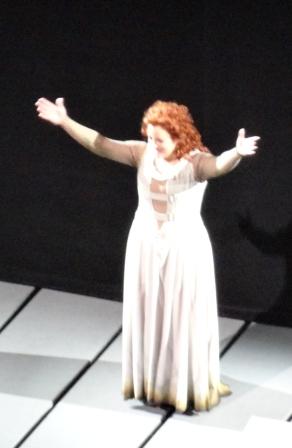
 A Brünhilde de Deborah Voight esteve muito bem, embora algo contida no início. Talvez a cantora se estivesse a poupar para o final que foi de grande categoria.


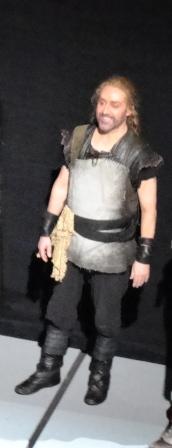
 O tenor sueco Lars Cleveman, foi um Siegfried diferente daquele que nos ofereceu na ópera anterior. Esteve muito bem no primeiro acto, quando se ouviu perfeitamente e emprestou emotividade interpretativa ao papel. Quebrou muito no segundo, onde teve um interpretação ao nível da que fez na ópera Siegfried e, esteve bem novamente no terceiro acto. O cantor não é ajudado pela figura porque é baixo e magro, não deixando a imagem do herói fisicamente forte que associamos à personagem.


O baixo-barítono escocês Iain Paterson interpretou um Gunther correcto mas sem nada de excitante a salientar.


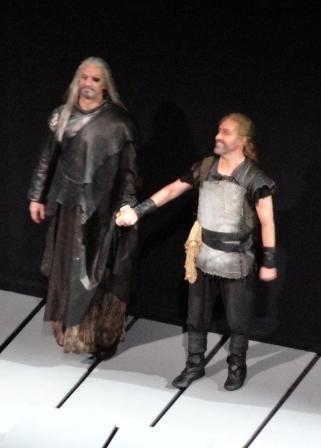
 Já o baixo alemão Hans-Peter König foi, mais uma vez, insuperável como Hagen. Para mim o melhor cantor da noite e não há melhor para este papel na actualidade. Tem uma voz lindíssima e gigante. Foi magistral!


O soprano norte americano Wendy Bryn Harmer, foi óptima como Gutrune, sempre perfeitamente audível e afinada, para além de também ter tido uma prestação cénica acima da generalidade dos outros solistas.


 O mezzo norte americano Karen Cargill foi uma Waltraute muito competente. O Alberich de Richard Paul Fink voltou a não impressionar positivamente e as filhas do Reno, Dísella Làrusdóttir, Jennifer Johnson Cano, Renée Tatum estiveram, novamente, muito bem.


Terminou da melhor forma este Anel da METropolitan Opera.

*****


Götterdämmerung, Metropolitan Opera, New York May 2103

As I mentioned earlier, I am among the admirers of this staging by Lepage due to the originality and effectiveness achieved. In the latter opera of the Ring cycle the staging was again very effective. The most interesting parts include the staging of the Norns weaving the rope of destiny, Grane, the fantastic Brunhilde’s horse (fabulous), Siegfried's arrival through the Rhine at Gibichung’s palace, and after the death of Siegfried, Gunther washing his bloody hand in the clear water flowing, and all of it becoming progressively red. Also the construction of the funeral pyre for Siegfried is interesting, but not so the fire. Yet another aspect is very effective, the destruction of Valhalla, with successively falling heads of the statues.

The choir, which only appears in this last opera, was absolutely outstanding.

The three Norns, Ronnita Miller, Michaela Martens and Heidi Melton had superior vocal performances and great homogeneity.

Deborah Voight´s Brunhilde was very good, although somewhat contained in the beginning. Perhaps the singer was saving her voice for the end, which was great.

Swedish tenor Lars Cleveman was a different Siegfried from that offered in the opera before. He did very well in the first act, when he was heard perfectly and sang with emotion. He broke in the second lot, where he had a level of interpretation similar to his interpretation in the opera Siegfried, but he did well again in the third act. The singer is not helped by his figure because he is short and thin, which is not the expected for the physically strong hero we associate with the character.


Scottish bass-baritone Iain Paterson sung a correct Gunther but he did nothing exciting to note.

In contrast, German bass Hans-Peter König was, once again, unsurpassed as Hagen. For me he was the best singer of the night and there is no better than him for this role in present times. He has a beautiful giant voice. Masterful!

North American soprano Wendy Bryn Harmer was great as Gutrune. She was always perfectly audible and tuned, besides also having had an artistic performance well above most other soloists.

North American mezzo Karen Cargill was a very competent Waltraute. Richard Paul Fink’s Alberich again failed to impress positively, and the daughters of the Rhine, Dísella Lárusdóttir, Jennifer Johnson Cano, and Renee Tatum were, again, very well.

This Metropolitan Opera Ring ended in the best way.

*****

domingo, 15 de setembro de 2013

SIEGFRIED, METropolitan OPERA, Nova Iorque, Maio de 2013


 A ópera do Anel em que a natureza está sempre presente beneficia muito da abordagem cénica de Lepage. O primeiro acto tem um efeito visual marcante, com a cabana de Mime de um lado do palco e, do outro, a floresta com um riacho em que a água corre pelo palco e onde as folhas das árvores esvoaçam ao sabor do vento.
No segundo acto o dragão é o objecto menos conseguido, parece uma bóia de criança. Mas tudo o resto é de belo efeito, nomeadamente as várias intervenções da ave que Siegfried ouve.
O terceiro acto também começa com imagens de forte impacto visual e quer o diálogo de Wotan com Erda, quer com Siegfried são muito bem conseguidos. Já a cena final do despertar de Brünhilde é muito estática, apesar de eficaz.


O tenor norte americano Robert Brubaker foi um Mime excepcional. Tem um timbre peculiar que se adapta perfeitamente à personagem. Nunca cantando em forte, foi sempre claramente audível pois a técnica de projecção vocal é exímia. Cenicamente foi irrepreensível. Um dos melhores da noite.


Siegfried foi interpretado pelo tenor sueco Lars Cleveman. Este deve ser um dos papéis wagnerianos em que mais difícil é, na actualidade, encontrar cantores à altura da elevada exigência interpretativa. Cleveman fez o que pôde mas não é o Siegfried ideal. Tem uma figura frágil e a voz, embora agradável, por vezes fica abafada pela orquestra. Ainda assim aguentou-se, sem quebrar, até ao final.


O Wanderer do baixo barítono norte americano Greer Grimsey foi muito bom, na continuação da excelente interpretação que o cantor já tinha tido como Wotan na Valquíria. Voz também de timbre peculiar mas bem domada pelo cantor e sempre audível e afinada. A interpretação cénica foi irrepreensível.


O baixo-barítono norte americano Richard Paul Fink confirmou que está aquém dos restantes solistas na interpretação que fez de Alberich. Foi o menos impressionante dos cantores da noite. Frequentemente não se ouvia e a voz não tem qualquer qualidade atractiva.

Excepcional foi o baixo alemão Hans-Peter König que, nesta ópera, foi Fafner. É um cantor de elite que está no auge das suas fabulosas potencialidades. A voz é de uma beleza invulgar e de uma potência avassaladora.


O soprano americano Lisette Oropesa foi um pássaro da floresta muito competente, de voz cristalina e muito agradável.


Repetiu uma boa actuação como Erda o mezzo americano Meredith Arwady. É detentora de uma voz potente e com um registo grave impressionante.


 Finalmente o soprano norte americano Deborah Voight voltou a interpretar a Brünhilde. Apesar de, nesta ópera, só cantar no final, achei que transpareceu algum cansaço vocal e foi ocasionalmente agreste, sobretudo nas notas mais agudas, que não soaram agradáveis.


****


SIEGFRIED, Metropolitan Opera, New York, May 2013

The Ring’s opera where nature is always present benefits a lot from the scenic approach of Lepage.
The first act has a remarkable visual effect with Mime's hut on one side of the stage and on the other, the forest with a stream where the water runs across the stage and where the leaves flutter in the wind.
In the second act the dragon is ridiculous but everything else is of fine effect, namely the various parts when Siegfried hears the bird.
The third act also begins with images of strong visual impact and both the dialogue between Erda and Wotan, and between Siegfried and Wotan wants are very good. The final scene of the awakening of Brunhilde is very static, although effective.

North American tenor Robert Brubaker was an exceptional Mime. He has a peculiar tone that fits the character. Never singing in forte, he was always clearly audible as the technique of vocal projection excels. Artistically he was blameless. One of the best of the night.

Siegfried was played by Swedish tenor Lars Cleveman. This must be one of the most difficult Wagnerian roles and, today, to find singers up to the high standards of interpretation is very difficult. Cleveman did his best but he is not the ideal Siegfried. He has a fragile figure and the voice, though pleasant, sometimes gets drowned out by the orchestra. Still, he held up without breaking until the end.

The Wanderer by North American bass baritone Greer Grimsey was very good, in the continuation of the excellent interpretation that the singer had had as Wotan in Valkyrie. His voice has a peculiar timbre but well controlled by the singer and always audible and tuned. The artistic performance was very good.

North American bass-baritone Richard Paul Fink confirmed that he lags behind other soloists in his interpretation of Alberich. He was the least impressive of the singers of the night. Often he was not heard and the voice does not have any attractive quality.

Exceptional was the German bass-baritone Hans-Peter König that in this opera was Fafner. He is an elite singer at the height of his fabulous potential. The voice is of an unusual beauty and an overwhelming power.


American soprano Lisette Oropesa was a very competent bird of the forest, with  a crystal clear and very nice voice.

American mezzo Meredith Arwady repeated her good performance as Erda. She has a powerful voice and impressive low record.

Finally, North American soprano Deborah Voight was Brunhilde again. Although, in this opera, she sings only in the end, I thought she revealed some vocal fatigue and was occasionally harsh, especially in the high notes, which did not sound pleasant.

****