

(review in English below)
A ópera Otello de G. Verdi abriu a temporada de 2015-2016 da Metropolitan Opera.

Numa encenação de
Bartlett Sher, assistimos a um
espectáculo que praticamente só valeu pelas vozes, dado que no palco, sempre escuro,
pouco de interessante se passou. Com 6 estruturas translúcidas e móveis, os
cenários mudavam com frequência mas o efeito era pouco eficaz. Os cantores
vagueavam entre eles, com eficácia duvidosa e, por vezes, até pareciam confusos
em relação à direcção que deviam tomar, como foi manifestamente o caso do dueto
de Otello com Iago no 2º acto. Num palco desta dimensão, foi uma abordagem
cénica ineficaz.

Esta produção
gerou grande debate porque, pela primeira vez, o mouro Otelo não apareceu de
cara pintada de escuro. Não me pareceu nada de relevante, apesar das
referencias no libreto. E esse facto, levado à letra, seria um debate delicado
e perigoso, que extravasa a encenação da ópera.
A direcção do
maestro canadiano Yannic Nézet-Séguin foi
segura e de qualidade, permitindo à excelente Orquestra da Metropolitan Opera mais uma óptima interpretação. O Coro esteve também em bom nível.

O tenor letão Aleksandrs Antonenko foi um Otello de
qualidade. Não é um cantor que eu admire e confesso que logo à partida ia
predisposto a não gostar. Mas ultrapassei o preconceito. O grito inicial Esultate! fez prometer muito, mas a voz
é relativamente pequena e não tem um timbre cativante, embora o cantor tenha
conseguido projectá-la com eficácia. Em cena esteve muito estático e foi pouco
emotivo, tanto nos momentos de glória como quando corroído pelo ciúme.
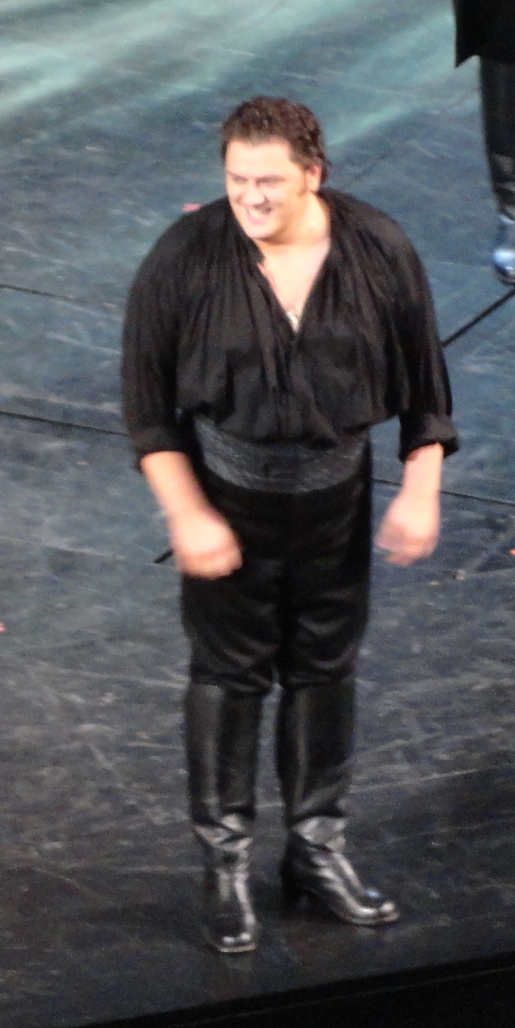
Já o Iago do
barítono sérvio Zeljko Lucic foi
muito melhor na voz e na prestação cénica. É um dos melhores barítonos verdianos
da actualidade e, mais uma vez, aqui o demonstrou. Conseguiu transbordar
maldade e cinismo ao longo de toda a récita, como a personagem exige. A voz foi
sempre imponente (embora com ligeira quebra no registo mais grave), bem colocada e de assinalável beleza tímbrica.

A grande
revelação da récita foi a Desdemona da soprano búlgara Sonya Yoncheva. Foi a melhor interpretação da noite. A cantora tem
uma voz belíssima, sempre afinada e com uma potência invulgar. Conseguiu
transmitir o que se espera da Desdemona inocente e vítima do ciúme doentio do
marido. Se esteve muito bem em toda a récita, no último acto foi insuperável,
com uma Ave Maria preciosa.
Fantástica!


O Cassio do tenor
americano Dimitri Pittas foi decente
tanto na prestação vocal como cénica. Nos papéis secundários Jenifer Johnson Cano fez uma Emilia muito expressiva, Jeff Mattsey foi um Montano competente e Chad Shelton um Roderigo eficaz.


No cômputo final,
um bom espectáculo, numa encenação desinteressante.


****
OTELLO -
Metropolitan Opera, October 2015

The opera Otello by G. Verdi opened the 2015-2016 season of the Metropolitan Opera.
The staging
by Bartlett Sher, was always dark
and not interesting. Six translucent and mobile structures made scenarios
changed often, but the effect was less than impressive. The singers wandered
among and around them, with doubtful efficacy and sometimes even seemed
confused about the direction they should take, as was clearly the case of the
duet of Otello and Iago in the 2nd act.
This
production generated great debate because, for the first time, the Moor Otello
did not appear painted dark face. It did not seem relevant, despite the
references in the libretto. And that fact, taken literally, would be a delicate
and dangerous debate that goes beyond the staging of this opera.
Canadian
conductor Yannic Nézet-Séguin was of
high quality, enabling the excellent Orchestra
of the Metropolitan Opera to deliver another excellent interpretation. The Choir was also at the highest level.
Latvian
tenor Aleksandrs Antonenko was a good
Otello. He is not a singer I admire and I confess that at the outset I was
predisposed to dislike him. But I overtook the prejudice. His initial cry Esultate! promised a lot, but his voice
is relatively small, has not a captivating tone, but he was able to project it
effectively. On stage he was very static and unemotional, both in times of
glory as when corroded by jealousy.
Iago by
Serbian baritone Zeljko Lucic was
excellent in voice and on stage. He is one of the best Verdian baritones of our
time and, once again, he demonstrated it. He could spill over evil and cynicism
throughout the performance, as the character requires. The voice was always
impressive (although not so exciting in the lower register) and with a very beautiful timbre.
The great
revelation was the Bulgarian soprano Sonya
Yoncheva as Desdemona. She was the best performer of the night. The singer
has a gorgeous voice, always in tune and with an unusual power. She managed to
convey what is expected of an innocent Desdemona and the victim of her
husband's insanely jealous. If she has been very well throughout the performance,
in the last act she was unsurpassed, with a precious Ave Maria. Fantastic!
American
tenor Dimitri Pittas was a very
decent Cassio both in vocal performance as on stage. In supporting roles Jenifer Johnson Cano was an efficient Emilia,
Jeff Mattsey a competent Montano,
and Chad Shelton an effective Roderigo.
Overall, a
good performance in an unattractive staging.
****


.jpg)
.jpg)
.jpg)


