Mostrar mensagens com a etiqueta Andrea Chénier. Mostrar todas as mensagens

segunda-feira, 27 de junho de 2022

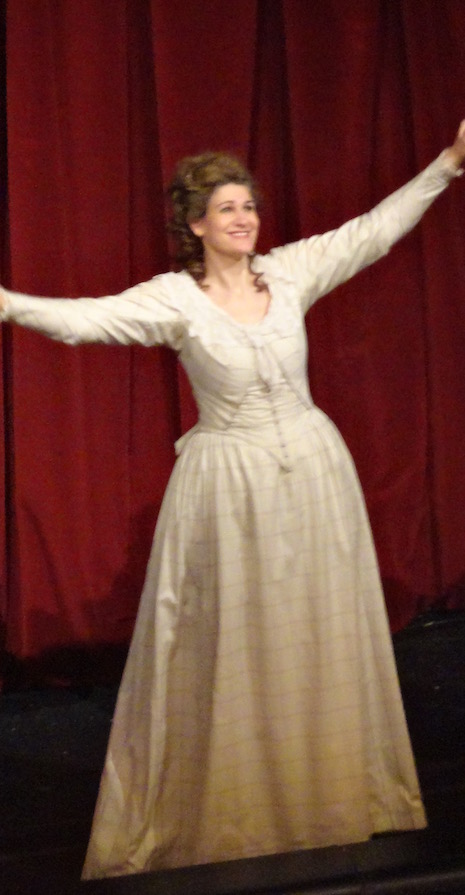
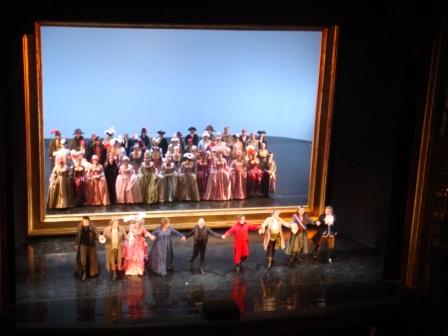
ANDREA CHÉNIER, Teatro de São Carlos, Lisboa / Lisbon, Junho / June 2022

(Text in English below)

A ópera que muito gosto Andrea Chénier de U Giordano com libreto de Luigi Illica retrata o período da Revolução Francesa, suas esperanças e horrores. Numa festa no castelo da família, a jovem aristocrata Maddalena de Coigny, filha da condessa, é presenteada com um poema pelo generoso poeta Andrea Chénier, que defende a liberdade, amor e poesia. O mordomo Gérard queixa-se do luxo em que a família vive e demite-se. Em Paris começa a revolução mas os convidados ignoram-no. Anos mais tarde, o antigo mordomo, agora um revolucionário que quer vingar-se da opressão e injustiça, luta com Chénier por Maddalena, por quem estão ambos apaixonados. Gérard, contudo, avisa o poeta que é procurado como contra-revolucionário. Num tribunal revolucionário Chénier é condenado e Gérard é obrigado a assinar a condenação. Maddalena oferece-se em troca da vida de Chénier e comove Gérard quando relata a crueldade do povo francês no terror da revolução, ao assistir à morte da sua mãe, queimada viva. Aceita o amor de Chénier e são ambos condenados à morte pela guilhotina.

A encenação de Sarah Schinasi foi convencional, simples e eficaz. 

A Orquestra Sinfónica Portuguesa, sob a direcção de Antonio Pirolli, cumpriu com qualidade, merecendo realce a harpista Carolina Coimbra que tocou maravilhosamente nesta partitura em que a harpa é instrumento essencial e tem alguma da mais bela música.

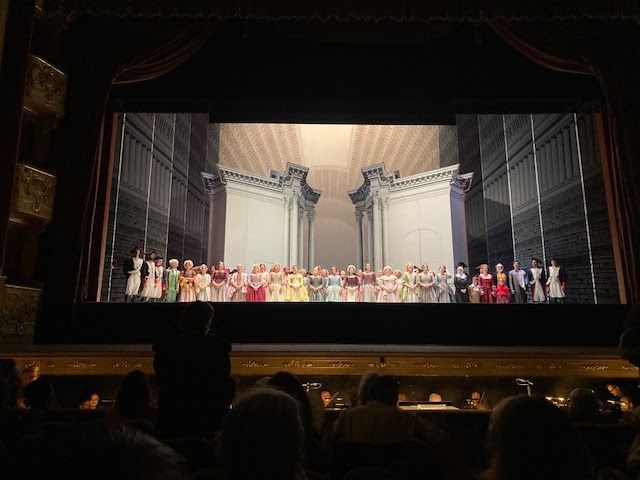


Um protagonista importante é o povo francês (representado pelo coro) com um papel decisivo na evolução dos acontecimentos revolucionários. O Coro do Teatro de São Carlos esteve bem.


Em relação aos solistas, infelizmente, a récita deixou muito a desejar.

O barítono Claudio Sgura foi Gérard e o único com um desempenho capaz. Tem uma voz bem audível e de timbre agradável. Na ária do 3º acto Nemico della patria foi emotivo e convincente.

O tenor Marco Berti foi um Andrea Chénier com má presença em palco. A voz está muito desgastada, o timbre é agradável mas, em esforço, perde qualidade porque ou não aguenta ou grita. E emotividade foi algo que nunca transpareceu.

A soprano Svetla Vassileva, em substituição de Elisabete Matos, foi uma Maddalena pouco dada a representações cénicas e com uma prestação vocal muito aquém do desejável. Ou não se ouvia ou, no registo mais agudo, a estridência incomodava. A belíssima aria La mamma morta foi decepcionante. (Sei que ter Maria Callas como referência para esta ária é impiedoso para as outras cantoras, mas... non troppo). E emoção foi algo inexistente, viver ou morrer foi idêntico em palco. 


Nos papéis secundários estiveram Maria Luísa de Freitas (Bersi), Cátia Moreso (Condessa de Coigny / Madelon), José Corvelo (Roucher), Christian Luján (Mordomo / Fouquier Tinville) sempre bem, Luis Rodrigues (Mathieu) também bem, Sérgio Martins (Abade) e João Oliveira ( Dumas / Schmidt).

Uma última nota sobre as biografias apresentadas nos programas de sala. Os cantores solistas são sempre os mais aclamados em todo o mundo, sempre requisitados para os grandes teatros de ópera mundiais, etc. etc.  Haja algum pudor no que se escreve!! Nem todo o público que ainda resiste e vai ao São Carlos é desconhecedor do mundo da ópera...


*


ANDREA CHÉNIER, Teatro de São Carlos, Lisbon, June 2022

The opera I really like Andrea Chénier by U Giordano with a libretto by Luigi Illica portrays the period of the French Revolution, its hopes and horrors. At a party in the family castle, the young aristocrat Maddalena de Coigny, daughter of the countess, is presented with a poem by the generous poet Andrea Chénier, who defends freedom, love and poetry. The butler Gérard complains about the luxury in which the family lives and resigns. In Paris the revolution begins but the guests ignore him. Years later, the former butler, now a revolutionary who wants revenge for oppression and injustice, fights with Chénier for Maddalena, with whom they are both in love. Gérard, however, warns the poet that he is wanted as a counter-revolutionary. In a revolutionary court Chénier is condemned and Gérard is forced to sign the sentence. Maddalena offers herself in exchange for Chénier's life and moves Gérard when he recounts the cruelty of the French people in the terror of the revolution, when he witnessed the death of his mother, burned alive. She accepts Chénier's love and they are both sentenced to death by the guillotine.

Sarah Schinasi's staging was conventional, simple and effective. The Orquestra Sinfónica Portuguesa, under the direction of Antonio Pirolli, performed with quality, with emphasis on the harpist Carolina Coimbra who played wonderfully in this score in which the harp is an essential instrument and has some of the most beautiful music.

An important protagonist is the French people (represented by the choir) with a decisive role in the evolution of revolutionary events. The Coro do Teatro de São Carlos did well.

Concerning the soloists, unfortunately, the performance left a lot to be desired.

Baritone Claudio Sgura was Gérard and the only one with a capable performance. He has a very audible voice and a pleasant timbre. In the aria of the 3rd act Nemico della patria was emotional and convincing.

Tenor Marco Berti was an Andrea Chénier with poor stage presence. The voice is very worn, the timbre is pleasant but, with effort, it loses quality because it either can't stand it or screams. And emotionality was something that never transpired.

Soprano Svetla Vassileva, replacing Elisabete Matos, was a Maddalena little given to scenic representations and with a vocal performance that was far from desirable. Either you couldn't hear it or, in the highest register, the shrill was annoying. The beautiful aria La mamma morta was disappointing. (I know that having Maria Callas as a reference for this aria is ruthless for the other singers, but... non troppo). And emotion was non-existent, living or dying was identical on stage.

In the supporting roles were Maria Luísa de Freitas (Bersi), Cátia Moreso (Countess de Coigny / Madelon), José Corvelo (Roucher), Christian Luján (Butler / Fouquier Tinville) always well, Luis Rodrigues (Mathieu) also well, Sérgio Martins ( Priest) and João Oliveira (Dumas / Schmidt).

A final note about the biographies presented in the programs. Soloist singers are always the most acclaimed all over the world, always in demand for the world's great opera houses, etc. etc. Some modesty in what is written should exist!! Not all the public that still resists and goes to Teatro São Carlos is unaware of the opera world...

*


terça-feira, 1 de maio de 2018

ANDREA CHÉNIER, Viena Staatsoper, Abril / April 2018


(review in English below)

A opera Andrea Chénier de Umberto Giordano esteve em cena na Ópera Estatal de Viena, tendo como atractivo principal a participação de Jonas Kaufmann como protagonista. Os bilhetes esgotaram num ápice quando a bilheteira abriu online e, no mercado negro, atingiam preços proibitivos.

A Ópera de Viena informa (verbalmente e em cartazes) que não se responsabiliza pela venda dos bilhetes que é feita por dezenas de indivíduos de países de leste, mascarados de Mozart, que o fazem á volta de todo o teatro. Se paramos para olhar para um cartaz, esteja ele onde estiver à volta do teatro, somos imediatamente abordados. Não percebo como isto é permitido, mas é sempre assim.


Depois desta primeira nota negativa, uma muito positiva. Numa das laterias do teatro está instalado um écran gigante que transmite em directo muitas das óperas em cena (foi o caso desta) permitindo a quem não conseguiu comprar bilhetes poder ter uma ideia do que se passa na sala.


A Anja Harteros, durante os aplausos, confrontada com a filmagem mesmo atrás da cortina, puxou operador de câmera para o palco, num momento hilariante.


A velha encenação de Otto Schenk é muito clássica, kitsch, desinteressante. A Orquestra da òpera de Viena foi bem dirigida pelo maestro Marco Armiliato  que, contudo, não se preocupou excessivamente com os cantores.


Quanto aos solistas, alguma heterogeneidade. O barítono Roberto Frontali fez um Carlo Gérard de grande qualidade. A interpretação cénica foi convincente e a voz é cheia, afinada e sempre bem projectada.


O Roucher do barítono Orhan Yildiz cumpriu sem deslumbrar.

Das interpretações femininas a Bresi da soprano Ilseyar Khayrullova de voz muito agradável e suave foi interessante e correcta, a Condessa de Coigny da mezzo Donna Ellen foi algo agreste e a Madelon da mezzo Zoryana Kushpler foi óptima, com uma voz grave imponente e excelente presença cénica.

Verdadeiramente sensacional e, de longe, a melhor da noite foi a soprano Anja Harteros como Maddalena di Coigny. É uma cantora de que muito gosto e hoje foi, talvez, uma das melhores interpretações que lhe ouvi. A voz é de uma beleza única e no registo mais agudo é impressionante na qualidade, suavidade e segurança. Na belíssima ária La mamma morta quase chegou ao nível divinal da Callas, a minha referencia neste trecho. Absolutamente fantástica.


Deixo para o fim o tenor Jonas Kaufmann que, como sabem os leitores regulares deste blogue, é um dos meus cantores favoritos e era a grande estrela da noite. Foi uma decepção. Tem uma voz de timbre único, grave mas com agudos fabulosos e esta característica é intrínseca e manteve-se. Mas fez um Andrea Chénier sem alma, com pouca entrega na interpretação e vocalmente deixou-se afogar pela orquestra com frequência. Foi uma pena, mas admito que também os cantores tenham dias menos bons e este foi, seguramente, um deles. Ainda assim tinha umas dezenas de pessoas à sua espera na stage door, muitas delas com flores e outros presentes mas, para decepção de todos e após mais de 1,5 horas de espera, chegou a informação de que foi o único que saiu por outra porta. Ele lá saberá porquê...


Um espectáculo aquém das minhas elevadas expectativas.


****


ANDREA CHÉNIER, Vienna Staatsoper, April 2018

Umberto Giordano’s opera Andrea Chénier was on stage at the Vienna State Opera, with the main attraction being the participation of Jonas Kaufmann as the protagonist. Tickets sold out at a glance when the box office opened online and on the black market hit prohibitive prices.

The Vienna State Opera reports (verbally and on posters) that it is not responsible for the sale of the tickets which is made by dozens of Eastern European ndividuals masked as Mozart from around the theater. If we stop to look at a poster, wherever it is around the theater, we are immediately approached. I do not understand how this is allowed, but it is always like this.

After this first negative note, a very positive one. On one side of the theater is installed a giant screen that transmits live many of the operas on the scene (it was the case of this one) allowing those who could not buy tickets to get an idea of ​​what is going on in the room.

Anja Harteros, during the applause, confronted with filming right behind the curtain, pulled the camera operator to the stage in a hilarious moment.

Otto Schenk's old staging is classic, kitsch, uninteresting. The Orchestra of the Vienna State Opera was well directed by maestro Marco Armiliato, who, however, did not care too much about the singers.

As for the soloists, some heterogeneity. Baritone Roberto Frontali was a Carlo Gérard of great quality. The stage interpretation was convincing and the voice is full, tuned and always well-projected.

Baritone Orhan Yildiz did not dazzle as Roucher.

From the female interpretations, Bresi of soprano Ilseyar Khayrullova sang with a very pleasant, correct and smooth voice, the Countess of Coigny by mezzo Donna Ellen was somewhat harsh and Madelon from mezzo Zoryana Kushpler was excellent, with an imposing low registation and excellent stage presence.

Truly sensational and by far the best of the evening was soprano Anja Harteros as Maddalena di Coigny. She is a singer I really like and today was perhaps one of the best interpretations I heard. The voice is of a unique beauty and in the highest register she is impressive in quality, softness. In the beautiful aria La mamma morta she almost reached the divine level of Callas, my reference in this area Absolutely fantastic.

I leave to the end tenor Jonas Kaufmann who, as the regular readers of this blog know, is one of my favorite singers and was the great star of the night. He was disappointing. He has a unique voice, with a strong low register but with fabulous top notes and this characteristic is intrinsic and maintained. But he interpreted a soulless and underpower Andrea Chénier vocally drowned by the orchestra often. It was a pity, but I admit that the singers also have less good days and this was, without a doubt, one of them. Yet there were dozens of people waiting for him on the stage door, many of them with flowers and other gifts, but to everyone's disappointment and after more than 1.5 hours of waiting, the information came that he was the only one who left by another door. He will know why...

****

segunda-feira, 6 de dezembro de 2010

ANDREA CHÉNIER – Kungliga Operan, Estocolmo, Novembro de 2010

(review in english below)

Andrea Chénier é uma bela ópera de Umberto Giordano pertencente ao verismo musical italiano, com libretto de Luigi Illica.


Retrata o período da Revolução Francesa, suas esperanças e horrores. Numa festa no castelo da família, a jovem aristocrata Maddalena de Coigny, filha da condessa, é presenteada com um poema pelo generoso poeta Andrea Chénier, que defende a liberdade, amor e poesia. O mordomo Gérard queixa-se do luxo em que a família vive e demite-se. Em Paris começa a revolução mas os convidados ignoram-no. Anos mais tarde, o antigo mordomo, agora um revolucionário que quer vingar-se da opressão e injustiça, luta com Chénier por Maddalena, por quem estão ambos apaixonados. Gérard, contudo, avisa o poeta que é procurado como contra-revolucionário. Num tribunal revolucionário Chénier é condenado e Gérard é obrigado a assinar a condenação. Maddalena oferece-se em troca da vida de Chénier e comove Gérard quando relata a crueldade do povo francês no terror da revolução, ao assistir à morte da sua mãe, queimada viva. Aceita o amor de Chénier e são ambos condenados à morte pela guilhotina.

A encenação de Dmitri Bertman foi excelente. Uma ideia aparentemente simples, um quadro gigante ao qual se arranca a tela e toda a acção se passa à frente e atrás da moldura, que vai mudando de posição. O efeito cénico é brilhante.
O quadro que abre a cena é uma reprodução de um dos célebres retratos nús de Marie-Louise O’Murphy, pelo pintor francês François Boucher.
Marie-Louise O’Murphy, por François Boucher (Museu Wallraf-Richartz, Colónia)


Marie-Louise O’Murphy, por François Boucher (Museu do Louvre, Paris)


O maestro Pier Giorgio Morandi dirigiu superiormente a Orquestra da Ópera Real de Estocolmo que teve uma prestação de elevado nível. A orquestração da obra é brilhante e colorida e a orquestra conseguiu dar-nos tudo isso com invulgar qualidade.


Nesta ópera outro protagonista importante é o povo francês (representado pelo coro) com um papel decisivo na evolução dos acontecimentos revolucionários. O Coro da Ópera Real de Estocolmo esteve afinadíssimo, sempre à altura dos muitos momentos corais de grande efeito.


O tenor Lars Cleveman foi Andrea Chénier. Esteve bem em palco, a voz era forte mas não muito versátil, o timbre agradável mas, em esforço, perdia alguma qualidade. Nos duetos com Maddalena houve alguns desencontros. Mas, ainda assim, foi muito credível.

O soprano Angela Rotondo, em substituição de Katarina Dalayman (o que foi uma pena), foi uma Maddalena de Coigny pouco dada a representações cénicas mas com pretenções vocais. Na primeira parte e no registo médio cantou bem, mas nos agudos tendia para a estridência. Na belíssima aria La mamma morta esteve muito bem no princípio mas no final, onde a exigência é maior, optou por não dizer algumas palavras para ganhar fôlego para gritar outras. (Ter Maria Callas como referência para esta ária é impiedoso para as outras cantoras!). Foi pena esta opção na ária mais importante da personagem. Aliás, notei na cantora uma necessidade de emitir notas agudas finais sonoras que, frequentemente, eram mais gritadas que cantadas. Como já referi, teve desacertos com o tenor, mas admito que o tempo para ensaios não tenha abundado, dado ter sido uma substituta de última hora.

O barítono Ola Eliasson foi Gérard e, no que respeita aos solistas, foi o melhor. A voz era poderosa, de notável beleza, não desafinava nem gritava e era muito expressiva, sobretudo nos momentos mais dramáticos.


(parte das fotografias são do programa da Ópera Real de Estocolmo)

Os restantes solistas com papeis mais pequenos estiveram bem, merecendo referência a condessa de Coigny / Madelon, cantada pelo excelente mezzo Marianne Eklöf.

Foi um prazer inesperado rever esta ópera de que tanto gosto e que já não via há alguns anos.


****


ANDREA CHÉNIER - Kungliga Operan, Stockholm, November 2010


Andrea Chénier is an excellent opera by Umberto Giordano with libretto by Luigi Illica belonging to the Italian verismo period.

It is based on the period of the French Revolution, their hopes and horrors. At a party at the family castle, the young lady Maddalena de Coigny, daughter of the countess, is presented with a poem by the generous poet Andrea Chénier, who likes freedom, love and poetry. Gerard, the butler, complains of the luxury in which the family lives and resigns. The revolution begins in Paris but the guests ignore it. Years later, the butler, now a revolutionary who wants revenge for the oppression and injustice, fights with Chénier for Maddalena. Gerard, however, warns the poet that he is chased as a counterrevolutionary. In a revolutionary court, Chénier is sentenced to death and Gerard is required to sign the condemnation. Maddalena offers herself in exchange for the life of Chénier and Gerard is moved when she describes the cruelty of the French people in the terror of the revolution, while watching her mother's death, burned alive. She accepts the love of Chenier and both are sentenced to death.

The production by Dmitri Bertman was excellent. A seemingly simple idea, a giant painting of which the frame remains on stage, often changing position, and all the action takes place ahead and behind it.The scenic effects are brilliant. The painting that opens the scene is a reproduction of one of the famous nude portrait of Marie-Louise O'Murphy by French painter Francois Boucher.

Conductor Pier Giorgio Morandi directed the Orchestra of the Royal Opera of Stockholm which had a high quality performance. The orchestration of the work is bright and colorful and the orchestra managed to give us all that with quality.

Another important protagonist in this opera is the French people (represented by the choir), with a decisive role in the evolution of revolutionary events.The Choir of the Royal Opera of Stockholm was superb, always up to the many moments of great choral effect.

Tenor Lars Cleveman was Andrea Chenier. He had a good performance on stage, his voice was strong but not very versatile, the timbre pleasant but, in effort, losing some quality. In the duets with Maddalena there were some disencounters.

Soprano Angela Rotondo, replacing Katarina Dalayman (which was a pity), was Maddalena de Coigny. She was not a good dramatic actress but she had vocal credits. In her first interventions she was ok but in the high notes she tended to scream. On the beautiful aria La mamma morta she did very well at first but, in the end, where the demand is higher, she has chosen not to sing some words to get breath to scream others. (To have Maria Callas as a reference for this aria is merciless to the other singers!). It was a pity that this option was chosen for the most important aria of her character. Furthermore, I noticed in her an intention to deliver the final high top notes sound, which often became more shouted than sung.

Gérard was played by baritone Ola Eliasson and he was the best of the soloists, His voice was powerful, of great beauty, not detuning nor screaming, and he was very expressive, especially in the most dramatic moments.

The other soloists in smaller roles had good performances. Countess of Coigny / Madelon, sung by Marianne Eklöf deserves a special mention as she was an excellent mezzo on stage.

It was an unexpected pleasure for me to review this opera that I like so much and that I had not seen for years.

****