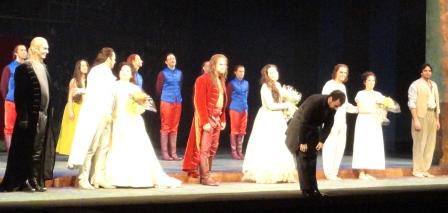
Mostrar mensagens com a etiqueta Marco Spotti. Mostrar todas as mensagens

terça-feira, 20 de dezembro de 2016

GUILLAUME TELL, METropolitan Opera, Outubro / October 2016


 (review in English below)
Uma nova produção da monumental opera Guillaume Tell, última obra de G. Rossini, esteve em cena na Metropolitan Opera de Nova Iorque.


A encenação de Pierre Audi, originária da Dutch National Opera, é vazia e abstracta. A ópera retrata a guerra entre suíços (oprimidos) e austríacos (opressores) na idade média até à libertação da Suiça, encabeçada pelo arqueiro Guilherme Tell. Tudo se passa entre grandes pedras e rochas, que vão mudando de posição ao longo da récita. Os dois grupos rivais são facilmente identificados, os suíços sempre vestidos de cinzento claro (o que os faz confundir com o fundo do cenário, espelhado e também dessa cor), e os austríacos de negro.


Fabio Luisi dirigiu o espectáculo e, mais uma vez, houve uma excelente interpretação da Orquestra e também do Coro, omnipresente em toda a ópera. Os solistas foram de grande qualidade.


O baixo-barítono canadiano Gerald Finley foi o protagonista Guilherme Tell e cantou e interpretou o papel ao mais alto nível. A voz é cheia de matizes coloridas e o cantor usou-a com elegância e emotividade.


O papel mais exigente é o de Arnold, interpretado pelo tenor norte americano Bryan Hymel. A personagem requer um tenor lírico e heróico, o que Hymel cumpre na perfeição. A voz é clara e algo nasalada mas é poderosa e afinada em todos os registos. Foi particularmente impressionante na ária Asile héreditaire do 4º acto.
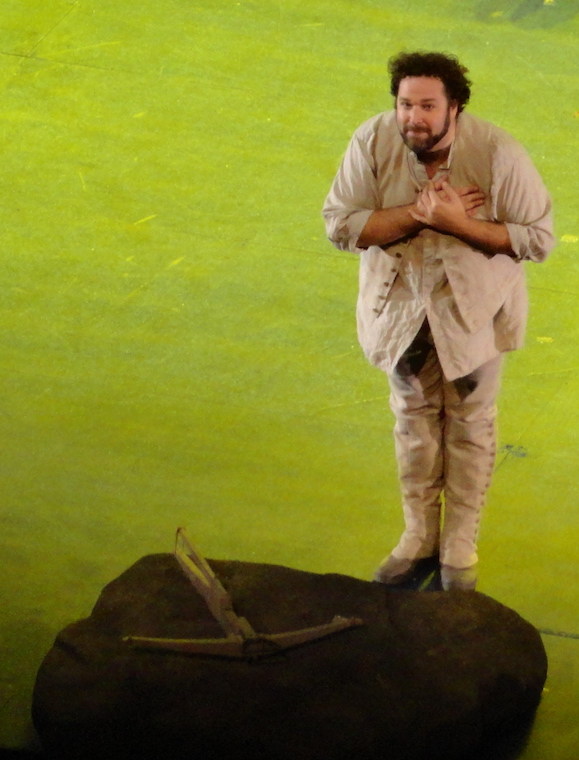


O baixo-barítono canadiano John Relyea foi o vilão Gesler de voz grave, potente e autoritária, bem adequada à personagem.


Outro baixo de grande qualidade foi a sul coreano Kwanchul Youn que interpretou o Melcthal, pai assassinado de Arnold.
 Finalmente Walter teve outra interpretação de classe, do baixo italiano Marco Spotti.


As senhoras também estiveram em grande destaque. A jovem soprano norte americana Janai Brugger foi um Jemmy, filho de Tell, de excelente qualidade, tanto cénica como vocal.


Hedwige foi interpretada com correcção pela mezzo norte americana Maria Zifchak.


Deixei para o fim a soprano letã Marina Rebeka que foi a pricesa austríaca Mathilde. Cantou ao mais alto nível, a voz é bem timbrada e sempre perfeitamente audível, com um fraseado impecável. Transmitiu dramatismo e vulnerabilidade à interpretação da personagem, entre a paixão por um inimigo e a fidelidade ao seu povo. A ária principal do 3º acto Pour notre amour, plus d’espérance foi impressionante.


Um excelente espectáculo na Met Opera


*****


GUILLAUME TELL, Metropolitan Opera, October 2016

A new production of the monumental opera Guillaume Tell, last work of G. Rossini, was on stage at the Metropolitan Opera in New York.

The production of Pierre Audi, originally from the Dutch National Opera, is empty and abstract. The opera depicts the war between Swiss (oppressed) and Austrian (oppressors) in the Middle Ages until the liberation of Switzerland, headed by archer William Tell. Everything takes place between large stones and rocks that change position along the performance. The two rival groups are easily identified, the Swiss always on light grey dresses (which makes them confused with the background scenery, mirrored and also grey), and the Austrians in black.

Fabio Luisi directed and, again, there was an excellent performance of the Orchestra and the omnipresent Choir, throughout the opera. The soloists were of great quality.

Canadian bass-baritone Gerald Finley was William Tell and sang and played the role at the highest level. The voice is full of colorful hues and the singer used it with elegance and emotion.

The most demanding role is that of Arnold, interpreted by North American tenor Bryan Hymel. The character requires a lyrical and heroic tenor, which Hymel meets perfectly. The voice is clear and somewhat nasal but powerful and tuned in all registers. He was particularly impressive in the aria Asile héréditaire the 4th act.

Canadian bass-baritone John Relyea was Gesler the villain, powerful and authoritative voice, well-suited to the character.

Another high quality bass was the South Korean Kwanchul Youn who played Melcthal the murdered father Arnold.

Finally Walter was another class interpretation, by Italian bass Marco Spotti.

The ladies were also in great prominence. The young American soprano Janai Brugger was Jemmy, son of Tell, of excellent quality, both on stage and vocal.

Hedwige was interpreted with correction by North American mezzo Maria Zifchak.

I left for the end of the Latvian soprano Marina Rebeka who was that the Austrian pricess Mathilde. She sang at the highest level, the voice is always perfectly audible, with impeccable phrasing. She transmitted drama and vulnerability to the interpretation of the character, between the passion for an enemy and fidelity to his people. The main aria of the 3rd act Pour notre amour, plus d'espérance was impressive.

An excellent performance at the Met Opera


*****

terça-feira, 31 de janeiro de 2012

Don Giovanni, Royal Opera House, Londres, Janeiro de 2012

(review in english below)

Don Giovanni é uma ópera de W A Mozart (encomendada depois do sucesso de Le nozze di Fígaro) também com libretto de Lorenzo da Ponte.

A ópera está recheada de árias e ensembles marcantes. Relata a história de um sedutor compulsivo que escapa a tudo e a todos, excepto à morte. Don Giovanni, para além das múltiplas conquistas que são recordadas pelo seu criado Leoporello, seduz Donna Anna, noiva de Don Ottavio e filha do Commendatore que assassina. Donna Elvira foi outra conquista que abandonou e Zerlina, uma camponesa noiva de Masetto, é mais um alvo. Depois de múltiplas peripécias, incluindo a troca de identidade com Leoporello, a estátua do Commendatore convida-o a arrepender-se, o que recusa, acabando devorado pelas chamas do inferno.

A encenação de Francesca Zambello é de grande qualidade. No centro do palco há uma estrutura que roda, bem concebida e com escadas de acesso à parte superior. Ao rodar vai dando origem aos diferentes cenários. O fogo é uma presença frequente ao longo da récita e Don Giovanni acaba consumido pelas chamas num cenário de impressionante efeito visual.


 O maestro grego Constantinos Carydis esteve bem e conseguiu que a excelente Orquestra da Royal Opera House nos brindasse com uma bela interpretação. Ouviu-se Mozart!


 O baixo italiano Marco Spotti foi um Commendatore de voz muito grave, forte e cavernosa, como se espera neste breve papel.

O barítono canadiano Gerald Finley foi um Don Giovanni muito convincente. A voz é bem timbrada e bem audível. Foi muito credível no papel do protagonista. Cenicamente esteve bem, apesar de a encenação ajudar muito.


 Leoporello foi interpretado pelo baixo barítono italiano Lorenzo Regazzo. Apesar de ter sido um óptimo actor, foi o único cantor que destoou dos restantes. A voz não tem nenhuma característica particularmente atractiva e, sobretudo, é pouco potente e deixa-se facilmente abafar pela orquestra. Uma pena.

O tenor norte americano Matthew Polenzani foi um Don Ottavio excepcional. Voz sempre afinada, com um timbre belíssimo e uma interpretação de um lirismo marcante, sobretudo no registo mais agudo.

Também o jovem baixo barítono checo Adam Plachetka foi um Massetto de qualidade superior. Voz potente e muito bonita, muito expressivo e excelente actor.


 Nas senhoras reinou a excelência. O soprano russo Hibla Gerzmava foi uma Dona Anna deslumbrante, com uma interpretação ao nível que nos habituou. Apesar de por vezes ter um vibrato excessivo, a voz é expressiva, de grande potência, sempre afinada, excelente em toda a extensão vocal.


 O mezzo-soprano sueco Katarina Karneus foi uma Dona Elvira marcante. Possuidora de um timbre invulgar e atraente, interpretou a personagem com autoridade, foi sempre bem audível e muito credível. Cenicamente foi uma das melhores.


 Zerlina foi interpretada pelo soprano grego Irini Kyriakidou . Voz clara, límpida e muito lírica, deu graciosidade à personagem e brilho à representação.


 Um excelente Don Giovanni que inicia o ciclo Mozart / da Ponte que a Royal Opera vai levar à cena nas próximas semanas e que o wagner_fanatic vai ter a sorte de saborear na íntegra.


****


Don Giovanni, Royal Opera House, London, January 2012

Don Giovanni is an opera by Mozart (commissioned after the success of Le nozze di Fígaro) also with a libretto by Lorenzo da Ponte.

The opera is full of striking arias and ensembles. It tells the story of a compulsive seducer that escapes everyone and everything except death. Don Giovanni, in addition to the many lovers that are mentioned by his servant Leoporello, seduce Donna Anna, Don Ottavio’ fiancee and daughter of the Commendatore who he murders. Donna Elvira is another lover that he abandoned, and Zerlina, a peasant engaged to Masetto, is another target. After many adventures, including the exchange of identity with Leoporello, the statue of the Commendatore invites him to sorrow, which he refuses and ends devoured by the flames of hell.

The staging of Francesca Zambello is of great quality. At the center of the stage there is a well-designed rotating structure with ladders to the top. When it rotates, it originates different scenarios. Fire is a frequent presence along the performance and Don Giovanni ends up consumed by flames in a staging of stunning visual effect.

Greek conductor Constantinos Carydis was good and the excellent Orchestra of the Royal Opera House gave us with an excellent performance. We heard Mozart!

Italian bass Marco Spotti was a Commendatore with a very strong bass voice, as expected in this short role.

Canadian baritone Gerald Finley was a very convincing Don Giovanni. His voice háas a nice timbre and is always heard. He was very credible in the protagonist role. Artistically he was well, though the staging helped a lot.

Leoporello was interpreted by Italian bass-baritone Lorenzo Regazzo.  Despite being a good actor, he was the only singer that was not at the high level as all the others. His voice had no particularly attractive feature and, above all, it was not powerful and was easily drown out by the orchestra.
A pity.

North American tenor Matthew Polenzani was an exceptional Don Ottavio. His voice, always in tune, has a beautiful timbre and his performance was very lyrical, particularly evident in the upper registers.

Also the young Czech bass baritone Adam Plachetka was a great Massetto. He has a powerful and beautiful voice, and he is very expressive and an excellent actor.

Among the ladies excellence was the rule. Russian soprano Hilba Gerzmava was a stunning Dona Anna, with a performance to the level that she uses to offer the public. She has an expressive voice of great power, always in tune, and excellent throughout all her vocal range.

Swedish mezzo-soprano Katarina Karnéus was a remarkable Dona Elvira. She possesses an unusual and attractive timbre, she was outstanding in her performance, always well audible and very credible. Artistically she was one of the best.

Zerlina was interpreted by Greek soprano Irini Kyriakidou. She has a light voice, clear and very lyrical, and she was very gracious and bright in her performance.

It was an excellent Don Giovanni that starts the cycle Mozart / da Ponte that the Royal Opera will offer in the coming weeks, and that wagner_fanatic will be lucky enough to enjoy in full.

****

sábado, 30 de julho de 2011

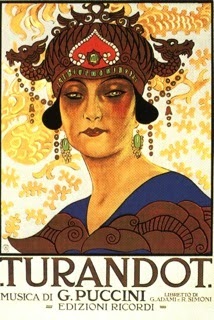
TURANDOT – Teatro Scala, Milão, Maio de 2011


Turandot foi a derradeira ópera de G. Puccini que morreu antes de a terminar. Foi acabada (o último dueto e o final) por Franco Alfano. O libretto é de Giuseppe Adami e Renato Simoni, segundo a obra Turandotte do veneziano Carlo Gozzi.

Na China antiga, numa praça de Pequim, o povo aguarda a execução do príncipe da Pérsia, o último a tentar conquistar a fria e distante princesa Turandot. Para o conseguir há que ultrapassar uma prova que consiste na resolução de três enigmas. Na confusão, um velho, Timur, cai ao chão e é ajudado por uma jovem escreva Liù. Calaf ajuda-o e reconhece nele o seu pai, o rei Tártaro deposto. Liù está secretamente apaixonada por Calaf. A execução do príncipe da Pérsia consuma-se e Calaf fica encantado com a beleza de Turandot e, contrariando os conselhos de Timur, Liù e dos três ministros imperiais, Ping, Pang e Pong, decide tocar o gongo, anunciando a intenção de se sujeitar à prova.

Turandot surge altiva e diz que a sua castidade e crueldade se destinam a vingar o sofrimento de uma antiga princesa. Mas Calaf soluciona os três enigmas e Turandot, desesperada, pede que a libertem da sua obrigação. Calaf diz-lhe que, se ela descobrir o seu nome até ao amanhecer, ele morrerá.
Ninguém dorme em Pequim e Turandot tenta desesperadamente saber o nome. Liù diz-lhe que só ela o sabe mas não o dirá. Turandot pergunta donde lhe vem tanta força e Liu diz-lhe que é do amor. Apunhala-se mortalmente, impressionando todos.
Calaf beija Turandot e revela-lhe o seu nome. Perante a população e o imperador, Turandot anuncia que sabe o nome do estrangeiro, é Amor. Abraçam-se e acabam felizes.


Na boa tradição italiana, a récita do dia anterior fora cancelada por greve, situação vivida aqui pelo meu colega de blogue wagner_fanatic há meses. Escapei por um dia a esta experiência desagradável mas, em Itália, há sempre que contar com estes percalços!


A encenação de Giorgio Barberio Corsetti é clássica e eficaz. Tem momentos de grande inovação dado que os diferentes cenários vão aparecendo no palco em plena execução da ópera, vindos de baixo ou de trás. O espectáculo foi também enriquecido com a actuação de acrobatas chineses ao longo de toda a récita. Contudo, não deixou de ter algumas perplexidades. Por exemplo o adorno na cabeça da Princesa Turandot era igual ao dos outros elementos do povo. Pequim parecia mais um lugarejo rural do que a capital do império, dadas as pequenas dimensões das casas que constituíam os cenários.


O maestro italiano Daniele Callegari teve um desempenho banal ao qual a Orquestra do Scala respondeu com qualidade. O Coro do Scala foi excepcional e, dada a sua importância no espectáculo, representando o povo de Pequim, foi o “melhor personagem” da récita.


O tenor americano Stuart Neill foi um Calaf contido no primeiro acto mas brilhante no terceiro. A famosíssima ária Nessum dorma saiu-lhe muito bem e obteve um estrondoso aplauso. A voz é heróica e poderosa, embora o timbre não seja cativante. Cenicamente foi fraco e a figura (excessivamente obeso) também não ajudou. Preocupou-se apenas com o canto e conseguiu atingir um patamar muito bom.


Timur foi interpretado pelo baixo italiano Marco Spotti que teve uma boa prestação tanto vocal como cénica. A voz é de inegável beleza e o cantor teve uma presença em palco marcante.

Maija Kovalevska, soprano da Letónia, foi uma Liù comovente e de excepcional qualidade. A voz é doce, de uma beleza invulgar, mas cheia e muito lírica. Cenicamente esteve perfeita. Foi a melhor intérprete da récita.


A princesa Turandot foi interpretada pelo soprano americano Lise Lindstrom. A figura é excelente, alta e magra e teve uma presença marcante, dada a expressividade que emprestou à personagem. A voz é poderosa e de timbre claro. Contudo, acho que seria ainda mais benéfica uma interpretação mais dramática e menos lírica.


Ping, Pang e Pong foram os italianos Angelo Veccia, Luca Casalin e Carlo Bosi que tiveram interpretações banais, sem interesse.


****


Turandot - Teatro alla Scala, Milan, May 2011

Turandot was the last opera by G. Puccini. He died before finishing it. It was finished (the last duet and the finale) by Franco Alfano. The libretto is by Giuseppe Adami and Renato Simoni, after Turandotte by the Venetian Carlo Gozzi.

In ancient China, in a square in Beijing, the people await the execution of Prince of Persia, the last to try to seduce the cold and distant princess Turandot. To achieve this it is necessary to overcome a proof that consists in solving three enigmas posed by the princess. In the confusion, an old man, Timur, falls to the ground and is helped by a young woman slave, Liù. Calaf helps her and recognizes his father, the deposed Tartar king. Liù is secretly in love with Calaf. The execution of Prince of Persia is done and Calaf is impressed by the beauty of Turandot and, against the advice of Timur, Liù and the three imperial ministers, Ping, Pang and Pong, he decides to play the gong, announcing the intention to undergo the proof. Turandot appears and says proudly that her chastity and cruelty are intended to avenge the suffering of an ancient princess. But Calaf solves the three enigmas. Turandot, desperate, calls for the release of her obligation. Calaf tells her that if she finds out her name until dawn, he will die. No one sleeps in Beijing and Turandot tries desperately to know the name of the man. Liù tells her that only she knows it, but she will not tell her, even after being tortured. Turandot asks her where does her strength comes from and Liù tells her that it is from love. Liù stabs herself to death, impressing everyone. Calaf kisses Turandot and tells her his name. To the people and the emperor, Turandot announces that she knows the name of the foreigner. It is Love, she says. They embrace and all ends up in happiness.

In the good Italian tradition, the performance of the previous day had been canceled due to a strike, a situation lived by my blog colleague wagner_fanatic a few months ago. I escaped for one day to this unpleasant experience, but in Italy, there is always the risk of these disappointing events.
 
The staging by Giorgio Barberio Corsetti is classic and effective. There are moments of great innovation as different scenarios are appearing on stage during the performance, from below or behind stage. The performance of Chinese acrobats was also spectacular and very interesting. However, there were some perplexities. For example, the headdress of Princess Turandot was equal to the other elements of the people. Beijing seemed more a rural village than the capital of the empire, given the small size of the houses and other settings of the scenarios.

Italian conductor Daniele Callegari was trivial, without enthusiasm, but Scala Orchestra responded with quality. The Scala Choir was exceptional and, given its importance in the opera, representing the people of Beijing, it was the "best character" on stage.

American tenor Stuart Neill was a contained Calaf in the first act but brilliant in the third. The very famous aria Nessum dorma was very well interpreted and he got a thunderous applause. The voice is powerful and heroic, though the tone is not appealing. Artistically he was not convincing and the figure (obese) did not help. He was only concerned with the singing and in it he achieved a high level.

Timur was Italian bass Marco Spotti. He had a good performance both vocal and artistic. The voice is of undeniable beauty and the singer had a striking presence on stage.

Maija Kovalevska, Latvian soprano, was a moving Liù of exceptional quality. The voice is sweet, very lyrical and unusually beautiful. On stage she was perfect. She was the best soloist of the performance.

Princess Turandot was interpreted by American soprano Lise Lindstrom. Shi is tall and slim and had also an excellent artistic performance on stage. The voice is powerful and has a clear timbre. However, I think it would be even more beneficial a more dramatic and less lyrical interpretation.

Ping, Pang and Pong were the Italians Angelo Veccia, Luca Casalin and Carlo Bosi. They had trivial uninteresting performances.

****