Mostrar mensagens com a etiqueta Janai Brugger. Mostrar todas as mensagens

quinta-feira, 27 de outubro de 2022

MEDEIA, METropolitan OPERA, New York, Outubro / October 2022

(Review in English below)

A opera Medeia de L Cherubini foi pela primeira vez apresentada na Metropolitan Opera, numa encenação de David McVicar


O espectáculo passa-se num palco com placards em ângulo, que abrem periodicamente deixando ver o que se passa no interior. No fundo há um enorme espelho angulado, que permite um efeito visual interessante. É uma encenação bem conseguida, que também acentua a exclusão da Medeia da comunidade de forma muito eficaz.

Medeia é abandonada por Jasão, de quem tem 2 filhos, que vai casar com Glauce, filha do Rei Creonte.  Ameaça Jasão que mata a Glauce se o casamento se concretizar e pede-lhe para voltar para ela, tendo em consideração os filhos. É rejeitada e jura vingar-se. A multidão quer a morte de Medeia e Jasão diz-lhe que abandone Corinto. Ela pede para ficar apenas um dia, para se despedir dos filhos. À criada Neris confessa os seus planos. Dá-lhe para entregar a Glauce, como prenda de casamento, uma túnica e uma tiara envenenadas, que a matarão. Néris tenta dissuadí-la a poupar os filhos mas o desejo de vingança é superior. Tranca-se num templo, mata os filhos e incendeia o templo, lançando-se às chamas.


O maestro Carlo Rizzi dirigiu a Orquestra e Coro que tiveram desempenhos notáveis.


Esta ópera é “one woman show”. O papel de Medeia é longo, exigente e central. A soprano Sondra Radvanovsky teve um desempenho excelente, não só na presença em palco como, sobretudo, na interpretação vocal. Tem uma voz enorme, talvez uma das maiores da actualidade. Esteve sempre bem, com um registo médio brutal, agudos longos e imponentes, e foi muito expressiva e convincente nos diversos sentimentos que a personagem expressa.


Os restantes solistas estiveram também ao mais alto nível. Saliento a criada Néris interpretada por Ekaterina Gubanova que, mais uma vez, foi excelente. Voz afinada sempre sobre a orquestra e com momentos de grande lirismo.

O tenor Matthew Polenzani foi um Giascone correcto, com boa presença e um registo vocal médio sólido mas com algum esforço nos agudos que saíam de menor qualidade.

Outro grande cantor foi o barítono Michele Pertusi como Creonte. Uma boa presença em palco e uma voz forte e bem timbrada. 

A soprano Janai Brugger cumpriu como Glauce, apesar de ter uma intervenção relativamente pequena.


No final até houve chuva de papelinhos!! (ou não estivéssemos nos EUA...).


****

MEDEA, METROPOLITAN OPERA, New York, October 2022

L Cherubini's opera Medea was first performed at the Metropolitan Opera, staged by David McVicar.

The action takes place on a stage with angled billboards, which periodically open to reveal what is going on inside. In the background there is a huge angled mirror, which allows for an interesting visual effect. It's a well-crafted staging that also accentuates Medea's exclusion from the community very effectively.

Medea is abandoned by Jason, with whom she has 2 children, who is going to marry Glauce, daughter of King Creon. Medea threatens Jasen saying that she will kill Glauce if the marriage takes place and asks him to return to her, considering their 2 children. She is rejected and swears revenge. The crowd asks for Medea's death and Jason asks her to leave Corinth. Medea asks to stay just one more day, to say goodbye to her children. To her maid Neris she confesses her plans. She asks her to give Glauce, as a wedding gift, a poisoned tunic and loom, which will kill her. Neris tries to dissuade her from killing her children, but her desire for revenge is superior. She locks herself in a temple, kills her children, sets the temple on fire and throws herself into the flames.

Conductor Carlo Rizzi directed the Orchestra and Choir that had remarkable performances.

This opera is “one woman show”. Medea's role is long, demanding and central to the entire opera. Soprano Sondra Radvanovsky had an excellent performance, not only in her stage presence but, above all, in her vocal performance. She has a huge voice, perhaps one of the greatest today, and she was very convincing. She was always well, with a fabulous midrange, long and imposing highs, having been very expressive in the various feelings that the character expresses.

The other soloists were also at the highest level. I would like to highlight the servant Neris played by Ekaterina Gubanova who, once again, was excellent. Voice always tuned over the orchestra and with moments of great lyricism.

Tenor Matthew Polenzani was a correct Giascone, with good presence and a solid mid-vocal register, but occasionally showing some effort in the highs that came out of lesser quality.

Another great singer was baritone Michele Pertusi as Creon. A good presence on stage and a powerful and well-toned voice.

Soprano Janai Brugger performed as Glauce, despite having a relatively small intervention.

****


terça-feira, 20 de dezembro de 2016

GUILLAUME TELL, METropolitan Opera, Outubro / October 2016


 (review in English below)
Uma nova produção da monumental opera Guillaume Tell, última obra de G. Rossini, esteve em cena na Metropolitan Opera de Nova Iorque.


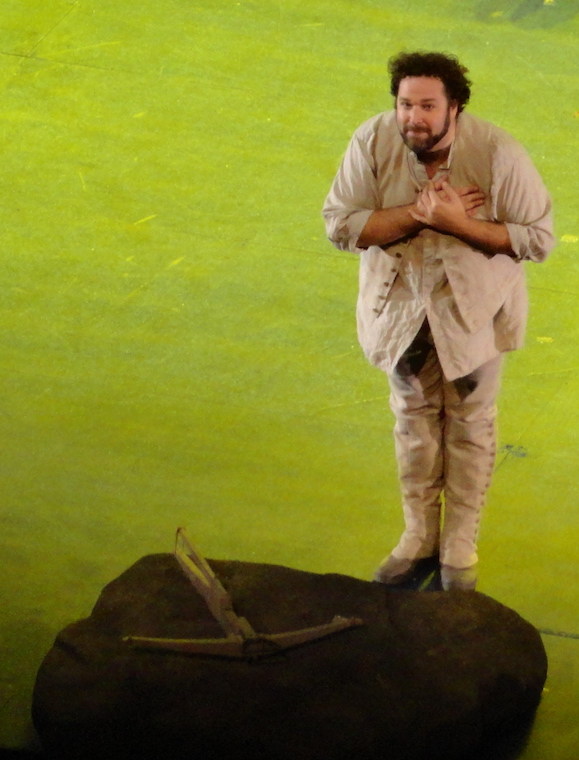
A encenação de Pierre Audi, originária da Dutch National Opera, é vazia e abstracta. A ópera retrata a guerra entre suíços (oprimidos) e austríacos (opressores) na idade média até à libertação da Suiça, encabeçada pelo arqueiro Guilherme Tell. Tudo se passa entre grandes pedras e rochas, que vão mudando de posição ao longo da récita. Os dois grupos rivais são facilmente identificados, os suíços sempre vestidos de cinzento claro (o que os faz confundir com o fundo do cenário, espelhado e também dessa cor), e os austríacos de negro.


Fabio Luisi dirigiu o espectáculo e, mais uma vez, houve uma excelente interpretação da Orquestra e também do Coro, omnipresente em toda a ópera. Os solistas foram de grande qualidade.


O baixo-barítono canadiano Gerald Finley foi o protagonista Guilherme Tell e cantou e interpretou o papel ao mais alto nível. A voz é cheia de matizes coloridas e o cantor usou-a com elegância e emotividade.


O papel mais exigente é o de Arnold, interpretado pelo tenor norte americano Bryan Hymel. A personagem requer um tenor lírico e heróico, o que Hymel cumpre na perfeição. A voz é clara e algo nasalada mas é poderosa e afinada em todos os registos. Foi particularmente impressionante na ária Asile héreditaire do 4º acto.


O baixo-barítono canadiano John Relyea foi o vilão Gesler de voz grave, potente e autoritária, bem adequada à personagem.


Outro baixo de grande qualidade foi a sul coreano Kwanchul Youn que interpretou o Melcthal, pai assassinado de Arnold.
 Finalmente Walter teve outra interpretação de classe, do baixo italiano Marco Spotti.


As senhoras também estiveram em grande destaque. A jovem soprano norte americana Janai Brugger foi um Jemmy, filho de Tell, de excelente qualidade, tanto cénica como vocal.


Hedwige foi interpretada com correcção pela mezzo norte americana Maria Zifchak.


Deixei para o fim a soprano letã Marina Rebeka que foi a pricesa austríaca Mathilde. Cantou ao mais alto nível, a voz é bem timbrada e sempre perfeitamente audível, com um fraseado impecável. Transmitiu dramatismo e vulnerabilidade à interpretação da personagem, entre a paixão por um inimigo e a fidelidade ao seu povo. A ária principal do 3º acto Pour notre amour, plus d’espérance foi impressionante.


Um excelente espectáculo na Met Opera


*****


GUILLAUME TELL, Metropolitan Opera, October 2016

A new production of the monumental opera Guillaume Tell, last work of G. Rossini, was on stage at the Metropolitan Opera in New York.

The production of Pierre Audi, originally from the Dutch National Opera, is empty and abstract. The opera depicts the war between Swiss (oppressed) and Austrian (oppressors) in the Middle Ages until the liberation of Switzerland, headed by archer William Tell. Everything takes place between large stones and rocks that change position along the performance. The two rival groups are easily identified, the Swiss always on light grey dresses (which makes them confused with the background scenery, mirrored and also grey), and the Austrians in black.

Fabio Luisi directed and, again, there was an excellent performance of the Orchestra and the omnipresent Choir, throughout the opera. The soloists were of great quality.

Canadian bass-baritone Gerald Finley was William Tell and sang and played the role at the highest level. The voice is full of colorful hues and the singer used it with elegance and emotion.

The most demanding role is that of Arnold, interpreted by North American tenor Bryan Hymel. The character requires a lyrical and heroic tenor, which Hymel meets perfectly. The voice is clear and somewhat nasal but powerful and tuned in all registers. He was particularly impressive in the aria Asile héréditaire the 4th act.

Canadian bass-baritone John Relyea was Gesler the villain, powerful and authoritative voice, well-suited to the character.

Another high quality bass was the South Korean Kwanchul Youn who played Melcthal the murdered father Arnold.

Finally Walter was another class interpretation, by Italian bass Marco Spotti.

The ladies were also in great prominence. The young American soprano Janai Brugger was Jemmy, son of Tell, of excellent quality, both on stage and vocal.

Hedwige was interpreted with correction by North American mezzo Maria Zifchak.

I left for the end of the Latvian soprano Marina Rebeka who was that the Austrian pricess Mathilde. She sang at the highest level, the voice is always perfectly audible, with impeccable phrasing. She transmitted drama and vulnerability to the interpretation of the character, between the passion for an enemy and fidelity to his people. The main aria of the 3rd act Pour notre amour, plus d'espérance was impressive.

An excellent performance at the Met Opera


*****