Mostrar mensagens com a etiqueta Quinn Kelsey. Mostrar todas as mensagens

domingo, 8 de janeiro de 2023

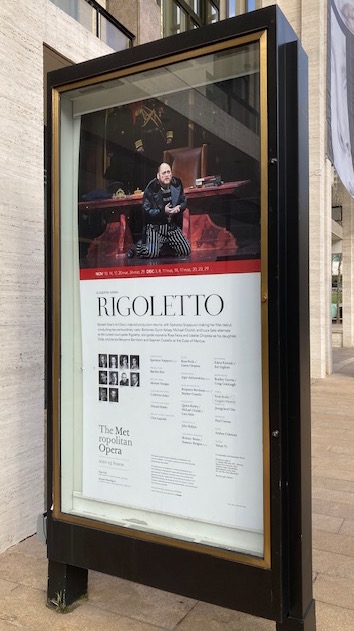
RIGOLETTO, METropolitan Opera, Dezembro / December 2022

(review in English below)

A realização de Bartlett Sher da ópera Rigoletto de Verdi foi novamente levada à cena na Metropolitan Opera de Nova Iorque. 

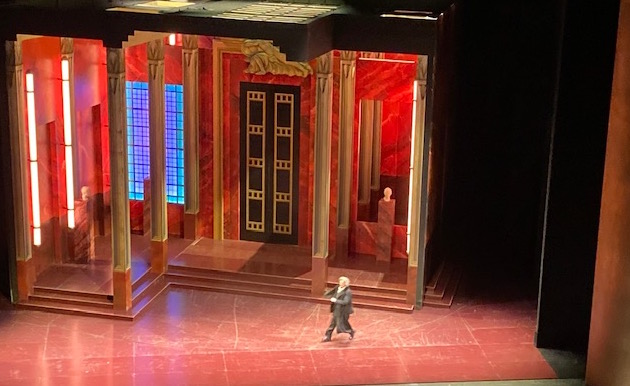
A acção passa-se na Alemanha, na república de Weimar, mas é uma encenação clássica, vistosa e onde as componentes principais da opera estão presentes e representadas de forma bem perceptível.


A direcção musical de Speranza Scappucci não esteve à altura do espectáculo. Houve vários desencontros entre a orquestra e os cantores e os ritmos impostos nem sempre foram os mais adequados à acção. Foi pena porque a Orquestra e o Coro estiveram em grande.


Desta vez aconteceu algo raro na ópera, todos os solistas foram excelentes!

O tenor francês Benjamin Bernheim foi um Duque fabuloso. Tem uma voz ampla, fresca, timbre muito bonito, potencia impressionante e grande musicalidade. E em palco foi um verdadeiro actor, a figura jovem e magra ajuda muito.


A soprano italiana Rosa Feola fez uma Gilda perfeita. Voz sempre audível sobre a orquestra, afinada, bonita e expressiva. Em palco também esteve perfeita.


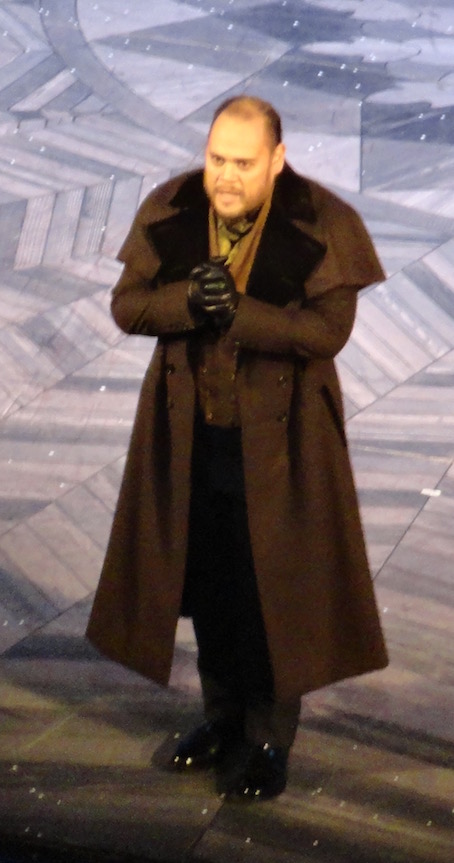
O barítono norte-americano Quinn Kelsey foi um Rigoletto como há muito tempo não via ao vivo. É um papel difícil, actualmente há poucos cantores que o cantam e representam correctamente e Kelsey é um deles. Foi fantástico.


Merecem também destaque pelas suas óptimas actuações Bradley Garvin como Monterone,


o fantástico John Relyea como Sparafucile,


e a impressionante Aigul Akhmetshina como Maddalena.


Um espectáculo fabuloso.


*****


RIGOLETTO, MEtropolitan Opera, December 2022


Bartlett Sher's performance of Verdi's opera Rigoletto was again performed at the Metropolitan Opera in New York.

The action takes place in Germany, in the Republic of Weimar, but it is a classic, showy staging and where the main components of the opera are present and represented in a very perceptible way.

Speranza Scappucci's musical direction was not up to the performance. There were several disagreements between the orchestra and the singers and the imposed rhythms were not always the most suitable for the action. It was a pity because the Orchestra and the Chorus were grate.

This time something rare happened in opera, all the soloists were excellent!

French tenor Benjamin Bernheim was a fabulous Duke. He has a wide, fresh voice, very beautiful timbre, impressive power and great musicality. And on stage he was a real actor, the young and thin figure helps a lot.

The Italian soprano Rosa Feola made a perfect Gilda. Voice always audible over the orchestra, in tune, beautiful and expressive. On stage she was also perfect.

The American baritone Quinn Kelsey was a Rigoletto like I haven't seen live in a long time. It's a difficult role, nowadays there are few singers who sing and represent it correctly and Kelsey is one of them. He was fantastic.

They also deserve mention for their excellent performances Bradley Garvin as Monterone, the fantastic John Relyea as Sparafucile, and the stunning Aigul Akhmetshina as Maddalena.

A fabulous performance.

*****

quinta-feira, 13 de dezembro de 2018

LA TRAVIATA, METropolitan OPERA, Dezembro / December 2018


(review in English below)

A Metropolitan Opera estreou esta semana uma nova produção de La Traviata de Verdi.


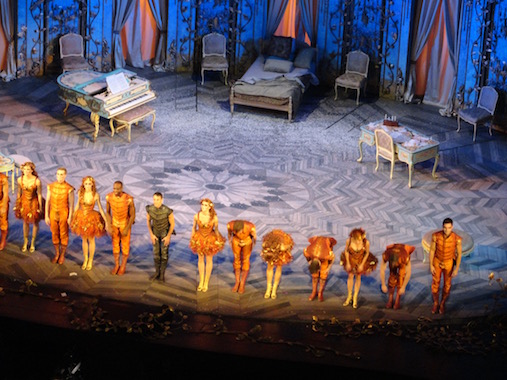
Na encenação de Michael Mayer, a ópera começa com a Violetta moribunda, na cama, como acabará no final. O flashback ilustra as memórias da Violetta, aprisionada no leito de morte. Toda a acção se passa no século XIX, num salão ricamente decorado ao estilo barroco, com motivos vegetais e com portas altas. Guarda roupa a condizer.


O cenário é sempre idêntico. No salão está, ao centro, a cama, num dos lados um piano e uma mesa, no outro uma secretaria e um banco redondo. Nada mais e tudo permanece no mesmo lugar do início ao fim.


Segundo o encenador, ao longo do espectáculo temos representadas as 4 estações do ano na decoração do salão. A primavera quando a Violeta surge e se apaixona pelo Alfredo. Aparecem no tecto uns ramos garridamente floridos. 


O verão, quando ambos vivem juntos no campo, são as decorações florais das paredes do salão que se destacam destas e avançam um pouco. O outono, quando dominam os problemas com o pai, Giorgio Germont, surgem no tecto ramos com apenas folhas castanhas. 


O inverno, no final, cai neve quando a Violetta está a morrer no leito.
É uma abordagem aceitável mas muito estática.

O maestro titular Yannick Nézet-Séguin foi excelente na direcção da orquestra e dos cantores.


Os bailarinos foram também óptimos.


Os solistas foram fantásticos. A soprano Diana Damrau fez uma das melhores Violetta Valéry que vi recentemente. Tem uma voz magnífica em todos os registos, bem audível sobre a orquestra, muito emotiva e uma representação cénica insuperável! Esteve sempre ao mais alto nível neste longo e difícil papel. Fabulosa!


O tenor Juan Diego Flórez é um cantor exímio e, por isso, esteve muito bem como Alfredo Germont. Contudo, a potência vocal não é a adequada a este teatro e, por vezes, soou baixo. E enganou-se uma vez no 3º acto. No registo mais agudo é admirável mas, no registo médio, a voz não sobressai. Em cena foi excelente, a figura elegante e ainda jovem também ajuda muito.


O barítono Quinn Kelsey foi o Giorgio Germont. Pensava que ia ser o elo mais fraco, mas enganei-me totalmente. Foi excelente! Tem um vozeirão que parecia estar ligado a um amplificador. O timbre é muito agradável e esteve sempre afinado. Em palco foi um pouco estático, mas a encenação não dava para mais.


Os cantores secundários foram mais irregulares, destacando-se pela positiva Maria Zifchak como uma óptima Annina. Kristin Chávez fez uma Flora regular e Kevin Short um Dr. Grenvil para esquecer.


No cômputo final foi um excelente espectáculo, sobretudo devido ao maestro, coro, orquestra e solistas principais.


****


LA TRAVIATA, METropolitan OPERA, December 2018

The Metropolitan Opera premiered this week a new production of Verdi's La Traviata.

In Michael Mayer's production, the opera begins with the dying Violet in bed, as she will end at the end. The flashback illustrates Violetta's memories, trapped on the deathbed. All the action takes place in the 19th century, in a room richly decorated in baroque style, with vegetable motifs and high doors. Dresses to match.

The scenery is always the same. In the hall is, in the center, the bed, on one side a piano and a table, on the other another table and a round bench. Nothing else and everything stays in the same place from start to finish.

According to the director, throughout the show we have represented the 4 seasons of the year in the decoration of the hall. Spring when Violetta falls in love with Alfredo. A few blooming branches appear on the ceiling. Summer, when the two of them live together in the countryside. The floral decorations on the walls stand out from these and advance a bit. Autumn, when problems arise with Alfredo’s father, Georgio Germont. In the ceiling some branches with only brown leaves appear. Winter in the end, with snow falling when Violetta is dying. It is an acceptable but very static approach.

Music director maestro Yannick Nézet-Séguin was excellent conducting the orchestra and the singers.

The dancers were great too.

The soloists were fantastic. Soprano Diana Damrau was one of the best Violetta Valery I've seen recently. She has a magnificent voice in every register, always well audible over the orchestra, very emotional and an unsurpassed stage performance! She was always been at the highest level in this long and difficult role. Fabulous!

Tenor Juan Diego Flórez is an exquisite singer and was very well as Alfredo Germont. However, his vocal power is not always appropriate to this theater and sometimes he sounded underpowered. And he made a mistake in act 3. In the higher register he was admirable, but in the medium register, the voice did not stand out. On stage he was excellent, the elegant and still young figure also helps a lot.

Baritone Quinn Kelsey was Giorgio Germont. I thought he was going to be the weakest link, but I totally misled myself. He was excellent! He has a voice that seemed to be connected to an amplifier. The timbre is very nice and has always been tuned. On stage he was a bit static, but the staging did not allow much more.

The supporting singers were more irregular, standing out for the positive Maria Zifchak as a great Annina. Kristin Chavez was a regular Flora and Kevin Short was a Dr. Grenvil to forget.

Overall it was an excellent performance, mainly due to the conductor, the choir, the orchestra and the main soloists.

****

quinta-feira, 11 de outubro de 2018

AIDA, METropolitan Opera, Outubro / October 2018


 (review in English below)

A Aida de Verdi tem na encenação da Metropolitan Opera, da autoria de Sonja Frisell, adaptada por Stephen Pickover, um dos espectáculos mais imponentes que se pode ver em ópera nos dias de hoje. A acção passa-se no Egipto dos faraós e a riqueza e diversidade da encenação são impressionantes. Para quem nunca viu ópera, este será um excelente espectáculo para começar. Os motivos egípcios da época estão sempre presentes nos cenários grandiosos, nos intervenientes e nos adereços, culminando no final do 2º acto com cavalos e mais de cem pessoas em palco. Só não se percebe por que razão as estátuas apresentam tantos sinais de desgaste, dada a época em que a ópera ocorre.


O maestro Nicola Luisotti teve uma boa direcção da Orquestra e Coro da Metropolitan Opera e respeitou os cantores, que se ouviram sempre.


A Aida de Anna Netrebko foi colossal! Já não tenho palavras para elogiar esta cantora de excepção. Tudo nela é perfeito, a representação cénica, a voz de timbre maravilhoso, actualmente muito mais encorpada, mantendo agudos fabulosos e transmitindo aquela sensação deliciosa que, por mais alto que cante, nunca grita. Sim, no reportório não wagneriano há a Netrebko e as outras sopranos.


Outra intérprete fabulosa foi a mezzo Anita Rachvelishvili como Amneris. Que voz! Uma extensão invejável, afinada em todos os registos, com graves de fazer tremer o chão. No último acto, onde a sua participação é mais relevante, foi de cortar a respiração.


O Amonastro do barítono Quinn Kelsey também esteve ao melhor nível, é um cantor que nunca desilude, com voz potente, bem colocada e de timbre muito agradável.


Os dois baixos tiveram interpretações excelentes, Dmitry Belosselskiy como Ramfis e Ryan Speedo Green como rei. Apesar de terem papéis mais curtos, na qualidade estiveram ao nível dos solistas principais.


Deixo para o fim o tenor Aleksandrs Antonenko que interpretou o Radames. Não foi mau, foi péssimo! É um cantor que tem um timbre excessivamente nasalado de que nunca gostei e sempre tive dificuldade em compreender por que razão é convidado para as grandes catedrais da ópera. Nesta récita nada se aproveitou. Esteve muito mal, com vibrato excessivo, um timbre feio e foi quase sempre estridente porque gritou em vez de cantar. Cenicamente um mono sem emoções. E teve a ousadia de se fazer aos aplausos (comportamento já menos vezes visto na actualidade) no final da ária de abertura Celeste Aida. Nos duetos com a Netrebko ou com a Rachvelishvili o contraste foi chocante.


Termino referindo que a perfeição em ópera existe, mas é muito rara. Nesta récita estariam reunidas todas as condições para que ela acontecesse, não fosse a presença do Antonenko! 


****


AIDA, METropolitan Opera, October 2018

Verdi's Aida in the staging of the Metropolitan Opera, by Sonja Frisell, adapted by Stephen Pickover, is one of the most impressive shows that can be seen in opera nowadays. The action takes place in Egypt of the pharaohs and the richness and diversity of the staging is impressive. For those who have never seen opera, this will be a great opera to start with. The Egyptian motifs of the time are always present in the grandiose settings, the actors and the props, culminating at the end of the 2nd act with horses and more than one hundred people on stage. I only do not understand why the statues present so many signs of wear, given the time when the opera takes place.

Maestro Nicola Luisotti had a good direction of the Orchestra and Choir of the Metropolitan Opera and respected the singers, who could be always heard.

Anna Netrebko's Aida was colossal! I no longer have words to praise this exceptional singer. Everything is perfect, the scenic representation, the wonderful timbre of the voice, now much more full-bodied, maintaining fabulous pop notes and conveying that delicious sensation that, no matter how loud you sing, never screams. Yes, in the non Wagnerian repertoire there is Netrebko and the other sopranos.

Another fabulous interpreter was mezzo Anita Rachvelishvili as Amneris. What a voice! An enviable extension, tuned in all registers, with a low register to make the floor shake. In the last act, where her participation is most relevant, she was breathtaking.

Baritone Quinn Kelsey as Amonastro was also at the top level, a singer who never disappoints, with a powerful voice, well tuned and with a very pleasant tone.

The two basses had excellent performances, Dmitry Belosselskiy as Ramfis and Ryan Speedo Green as king. Although they had shorter roles, in quality they were at the level of the main soloists.

I leave to the end tenor Aleksandrs Antonenko who played Radames. He was not bad, he sucked! He is a singer who has an excessively nasal timbre that I have never liked and I have always found it difficult to understand why he is invited to the great opera cathedrals. In this performance nothing was taken advantage of. He was very bad, with excessive vibrato, an ugly timbre and was almost always strident because he shouted instead of singing. On stage, like a statue without emotions. And he had the audacity to ask for the applause (a behavior already less seen today) at the end of the opening aria Celeste Aida. In the duets with Netrebko or with Rachvelishvili the contrast was shocking.

I will conclude by saying that perfection in opera exists, but it is very rare. This performance would meet all the conditions for it to happen, but Antonenko's presence did not permit it! But it still deserves the highest rating for the two female interpretations of another world, for the excellent performances of the baritone and the basses, the orchestra and choir, and the staging.

****