Mostrar mensagens com a etiqueta Giuseppe Filianoti. Mostrar todas as mensagens

domingo, 2 de dezembro de 2012

LA CLEMENZA DI TITO – METLive – 1 de Dezembro 2012

(review in english below)


Uma semana depois de podermos ouvir a excelente récita de A Flauta Mágica de Mozart no Grande Auditório da Fundação Calouste Gulbenkian, directamente do MET, pudemos assistir ontem à ópera La Clemenza di Tito apresentando-se assim, em curto espaço de tempo, as duas últimas óperas de Mozart, escritas em 1791, ano da sua morte.

A encenação de Jean-Pierre Ponelle data de 1984 e, ao bom estilo do MET, privilegia o ambiente clássico e terreno da ópera, com cenários imperiais e guarda-roupa de bom gosto estético.


A récita foi de grande nível, lamentando-se talvez apenas o facto de se estar em Lisboa a assistir através de sistema vídeo, e não se estar realmente em Nova Iorque.

Giuseppe Filianoti fez um Tito interessante, tendo surpreendido essencialmente no segundo acto. Na ária “Del piu sublime soglio” notou-se alguma descoordenação como o tempo de Bicket em duas passagens e vacilou nos extremos da tessitura em 2 ou 3 ocasiões no curso total da ópera mas no global revelou segurança vocal, expressividade e um timbre idealmente doce para Mozart. Depois dos horríveis agudos do seu Rigoletto que eu e o FanaticoUm tivemos a oportunidade de ouvir ao vivo no MET em 2011, a par com excelentes representações em que já o ouvi ao vivo noutros papéis, acho que Filianoti é um excelente cantor embora com margem de manobra vocal em situação de stress limitada tornando-o presentemente sempre uma dúvida de prestação.

O quarteto de vozes femininas esteve estratosférico!!!


Elina Garanca está absolutamente sublime, sem mácula, com um timbre vocal cada vez mais meloso e bonito, e ao mesmo tempo forte e encorpado, envolto numa capacidade técnica impressionante. A maternidade é, sem dúvida, um tónico para a voz.

Kate Lindsey, fazendo parelha nos papéis masculinos com Garanca, apaixonou pela sua entrega, beleza de timbre, segurança e ligeireza física.

Barbara Frittoli está igualmente brutal do ponto de vista vocal. Uma senhora em palco.


Lucy Crowe foi uma excelente surpresa, numa angelical interpretação de Servillia que me tocou pela ternura no dueto com Annio e pela expressividade na célebre ária “S’altro che lagrime”.


Oren Gradus fez um Publio eficaz.

A Orquestra do MET sob a direcção de Harry Bicket esteve, mais uma vez, fantástica, transmitindo toda a serenidade e magia da música de Mozart.


Quem quiser ouvir alguns excertos de algumas das melhores árias desta ópera pode visitar http://www.fanaticosdaopera.blogspot.pt/2012/04/la-clemenza-di-tito-teatro-real-de.html na nossa crítica à produção da Temporada 2011-2012 do Teatro Real de Madrid.


LA CLEMENZA DI TITO - METLive - December 1, 2012


A week after we could hear the excellent The Magic Flute by Mozart at the Main Auditorium of the Calouste Gulbenkian, directly from the MET, we could watch La Clemenza di Tito showing up well, in a short period of time, the last two Mozart operas, written in 1791, the year of his death.

The staging of Jean-Pierre Ponelle dates from 1984 and in the good style of the MET, favors the classic environment of the opera, with imperial sets and a tasteful wardrobe.


Giuseppe Filianoti made an interesting Tito, surprising mainly in the second act. In the aria "Del piu sublime soglio" some incoordination with the pace of Bicket was noted in two passages and at the extremes of his tessitura he faltered on 2 or 3 occasions in the whole course of the opera but revealed, globally, vocal security and expressiveness. After the horrible high notes of his Rigoletto that FanaticoUm and I had the opportunity to hear live at the MET in 2011, along with excellent representations already heard live in other roles, I think Filianoti is an excellent singer but with some vocal leeway in situations of stress making, these days, a constant doubt on the expected quality of his performances.


The quartet of female voices was stratospheric!!


Elina Garanca is absolutely sublime, unblemished, with a vocal timbre increasingly mellow and beautiful, and at the same time strong and stocky, wrapped in a stunning technical ability. Motherhood is undoubtedly a tonic for the voice.


Kate Lindsey, doing the other male role, was superb by her passion for delivery, beauty of tone, physical safety and lightness.

Barbara Frittoli was equally brutal from the vocal standpoint – a Dame on stage.


Lucy Crowe was a great surprise with an angelic interpretation of Servillia who touched me tenderly in the duet with Annio and with the expressiveness in the famous aria "S'altro che lagrime".


Oren Gradus made an effective Publio.

The MET Orchestra under the baton of Harry Bicket was, again, fantastic, conveying all the serenity and magic of Mozart's music.


If you would like to hear some excerpts from some of the best arias of this opera you can visit http://www.fanaticosdaopera.blogspot.pt/2012/04/la-clemenza-di-tito-teatro-real-de.html, where you can find our review on the production from the Teatro Real de Madrid, season 2011-2012.

sexta-feira, 13 de julho de 2012

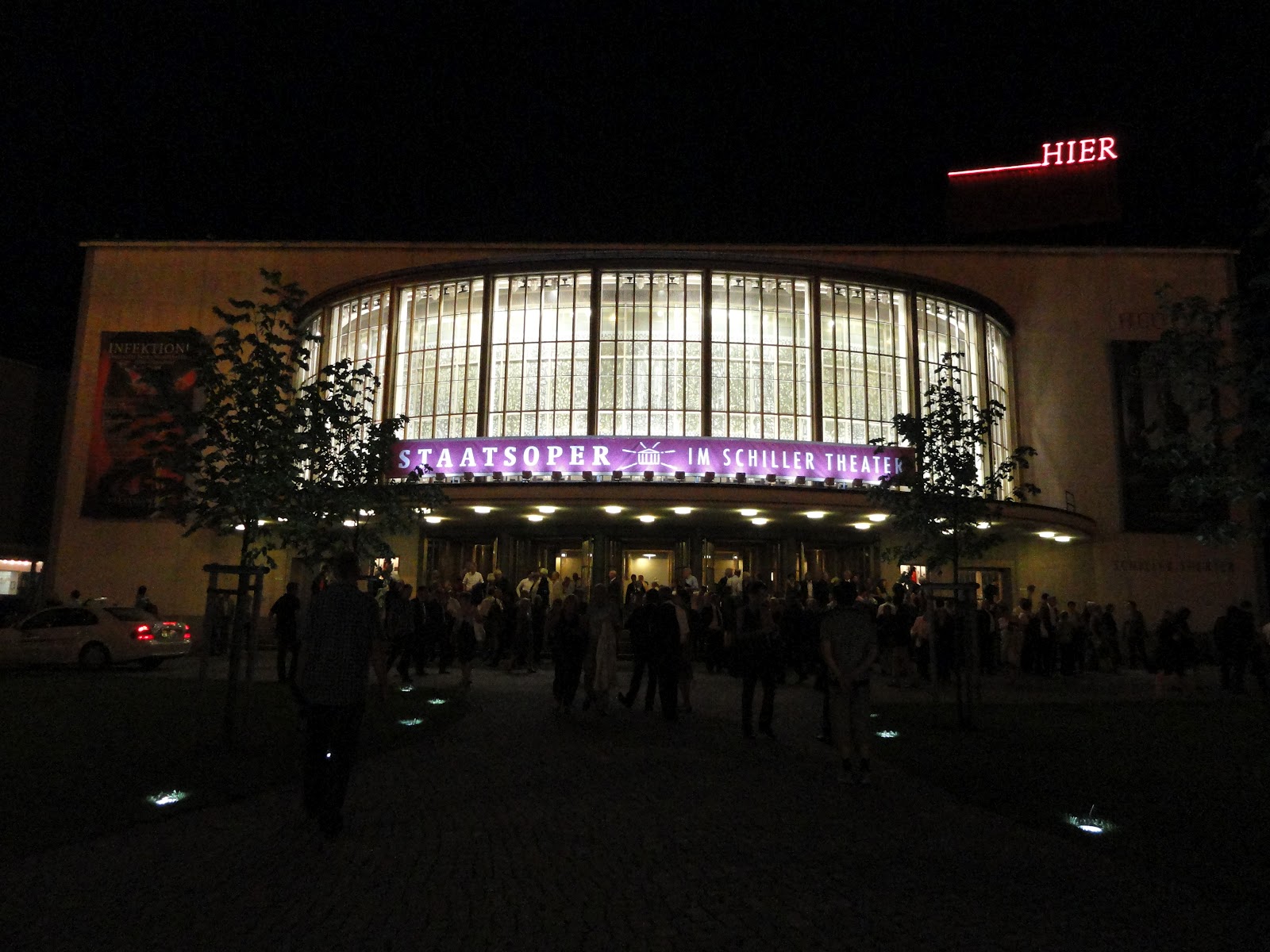
DON GIOVANNI – Schiller Theater, Berlim – 6 Julho 2012


(review in english below)

Inicialmente anunciada como a mesma produção da abertura da Temporada do Scala de Milão, cedo se percebeu que Robert Carsen a adaptara excessivamente a este Teatro e que não funcionaria no Teatro Schiller em Berlim. E ainda bem porque a alternativa foi a excelente produção de Claus Guth de Salzburgo. 

A acção do Don Giovanni passa-se aqui numa floresta, com um Don que acaba por ser ferido com uma arma de fogo na luta com o Comendador e que vai desfalecendo ao longo da ópera, morrendo em choque hemorrágico no final da mesma, caíndo numa cova sepulcra cavada pelo fantasma do Comendador. Pelo meio, um Leporello com aspecto de dependência tóxica, uma paragem de autocarro à antiga, um automóvel, muitas latas de cerveja, numa encenação que nos envolve com uma noção de continuidade cénica que é dada pelo esquema rotativo do palco. É claro que algumas coisas funcionam menos bem e não se enquadram totalmente no texto mas são poucas e facilmente esquecidas quando tudo o resto é realmente inovador e concepcionalmente diferente do habitual – a marca de Guth.

Christopher Maltman foi um Don exímio. Vocalmente perfeito conseguiu também caracterizar, sem excessos, a evolução clínica da personagem até ao momento final da sua morte. Ficou patente a vasta experiência que tem nesta encenação. Apenas se esqueceu do início da letra no “Meta di voi qua vadano”.


Erwin Schrott faz um Leporello magnífico. Naturalidade cómica associada a uma plasticidade vocal impressionante são o que o melhor o define. Talvez pudesse ter dado um ar de maior pavor na cena do diálogo com a estátua do Comendador e no “Ah padron ciam tutti morti”, mas a estátua, feita de ramos finos e árvore, e a própria aparência natural do Comendador também não transmitiam muito temor...

Dorothea Roschmann foi sublime como Donna Elvira. Eu, pessoalmente, adoro a voz desta alta especialista mozartiana e derreto-me facilmente ao seu timbre.


Maria Bengtsson substituiu uma Anna Netrebko cansada e a desejar mais tempo útil com o filho Thiago. Compreende-se e aceita-se quando quem a substitui interpreta Donna Anna do modo como Bengtsson a interpretou. A voz é de uma beleza que se enquadra com a aparência física e a interpretação é fluente e expressiva, não faltando as nuances melosas exigidas nas suas arias.


Anna Prohaska, na sua aparente fragilidade física, tem vindo a afirmar-se como uma excelente nova revelação operática. Esteve muito bem como Zerlina e a sua voz é perfeita para Mozart.


Stefan Kocan foi também excelente como Masseto, com timbre agradável e muito rigoroso em termos interpretativos.


Guiseppe Filianoti tem tido maus períodos desde que me cativou na produção de Laurent Pelly do Elixir do Amor, em Londres e Paris. O seu Duque no Rigoletto do MET da temporada passada foi horrível, com marcadas falhas nos agudos. Neste Don voltou a ganhar o meu respeito, estando ao nível do que de ele se espera. Sem falhas, as árias “Dalla sua pace” e “Il mio tesoro” foram sublimes, de grande beleza.

Alexander Tsymbalyuk tem uma voz profunda e por isso perfeita para o papel de Comendador mas deixa transparecer um leve vibrato que me incomoda ligeiramente.


Daniel Barenboim esteve fantástico, esboçando sorrisos à interpretação de Schrott na ária do catálogo, conduzindo a orquestra com alegria. O som produzido foi terrífico, transmitindo certamente um deleite extrassensorial a todos, como a mim me proporcionou. Aponto-lhe só o mesmo que achei na transmissão televisiva do Don do Scala em Dezembro: o “Non ti fidar o misera” foi muito lento...


Um pormenor importante, e a primeira vez que vi acontecer, foi a ópera terminar com a morte de Don Giovanni, sem o componente moralizador final.


Esta récita é o exemplo clássico de como em Ópera tudo conta e uma encenação conceptualmente inovadora mas coerente pode, com vozes de grande nível (não necessariamente estrelas conhecidíssimas como aqui) podem tornar a Ópera num fascínio mesmo para aqueles que ainda não cederam a esta paixão.


DON GIOVANNI - Schiller Theater, Berlin - July 6, 2012


Initially billed as the same production that opened the season at La Scala in Milan, it quickly became apparent that Robert Carsen excessively adapted ideas to this opera house would not work in the Schiller Theater in Berlin. And thank goodness because the alternative was the excellent production from Salzburg by Claus Guth

The action of Don Giovanni is set in a forest, with a Don injured with a firearm in the fight with the Commendatore and will faint along the opera, dying in hemorrhagic shock at the end of it, falling in a grave dug by the ghost of the Commendatore. In between, a Leporello with toxic dependency, an old bus stop, a car, many cans of beer, a scenario that involves us with a sense of continuity which is given by scenic rotational stage. Of course, some things work less well and do not fit completely in the text but they are few and easily forgotten when everything else is really innovative and conceptionally different from the usual - the signature of Guth.

Christopher Maltman’s Don was superb. Vocally perfect, he was also capable of showing, without excesses, the clinical evolution of the character until the final moment of his death. It was shown that he has extensive experience in this production. Just forgot the beginning of the text in the "Meta di voi qua vadano."


Erwin Schrott makes a magnificent Leporello.. A natural comic sense associated with an impressive vocal plasticity are what best defines him. Maybe he could have given a more deep sense of fear at the scene of the dialogue with the statue of the Commendatore and in the passage "Ah padron siam tutti morti”,  but the statue, made of thin branches of tree, and the very natural look of the Commendatore also did not transmit a lot of fear ...

Dorothea Roschmann was sublime as Donna Elvira. I personally love the voice of this expert in Mozart and I melt ​​easily to the sound of her voice.


Maria Bengtsson replaced a tired and want more time with his son Thiago Anna Netrebko. This is understood and accepted when the substitute who plays Donna Anna does it like Maria Bengtsson did. The voice is of a beauty that fits with the physical appearance and the interpretation is fluent and expressive, without lacking the nuances required in her mellow arias.


Anna Prohaska, in her apparent physical frailty, has been asserting herself as a great new operatic revelation. She as a very good Zerlina and her voice is perfect for Mozart.


Stefan Kocan’s Masseto was excellent as well, with a nice tone and very strict in terms of interpretation.


Guiseppe Filianoti has had bad periods since he captivated me in Laurent Pelly's production of L’Elisir d’amore in London and Paris. His Duke in the Rigoletto at the MET last season was horrible, with marked high notes failure. In this Don he regained my respect, being at the expected level. Without faults, the arias "Dalla their pace" and "Il mio tesoro" were sublime, of great beauty.

Alexander Tsymbalyuk has a deep voice and so perfect for the role of the Commendatore but reveals a slight vibrato that bothers me a bit.


Daniel Barenboim was fantastic, drawing smiles at Schrott in his the interpretation of the catalog aria, conducting the orchestra with joy. The sound was terrific, certainly conveying extrasensory feelings to everyone as it did to me. I point you just the same I did regarding the Scala production: the "Non ti fidar o misera" was too much slow ...


An important detail, and the first time I saw it happen was that the opera ends with the death of Don Giovanni, without the final moralizing component.


This performance is the classic example of how everything counts in Opera and a conceptually innovative production but coherent one may, with high level voices (not necessarily stars like in here) can make Opera a fascination even for those who have not yet yielded to this passion .